
BuddhistCatholicContemplativeEvangelicalGeneral ChristianHinduJewishLatter-day SaintMuslimNew VisionsProgressive Christian
Beliefs
- Buddhist
- Catholic
- Contemplative
- Evangelical
- General Christian
- Hindu
- Jewish
- Latter-day Saint
- More Voices
- Muslim
- New Visions
- Pagan
- Progressive Christian
Topics
- Religion News
- Food and Religion
- Sports and Religion
- Religious Art
- Religious Music and Entertainment
- Religious Events
- History and Religion
- Style and Religion
- Politics and Religion
- Women in Religion
- Recreation Outdoors and Religion
- Business Finance and Religion
- Careers Workplace and Religion
- Education and Religion
- Family Parenting and Religion
- Health Fitness and Religion
- Home and Religion
- Relationships and Religion
- Technology and Religion
- Travel and Religion
Columnists
- Buddhist Columnists
- Business Finance and Religion Columnists
- Careers Workplace and Religion Columnists
- Catholic Columnists
- Contemplative Columnists
- Education and Religion Columnists
- Evangelists Columnists
- Family Parenting and Religion Columnists
- General Christian Columnists
- Health Fitness and Religion Columnists
- Hindu Columnists
- History and Religion Columnists
- Home and Religion Columnists
- Jewish Columnists
- More Voices Columnists
- Latter Day Columnists
- Muslim Columnists
- New Visions Columnists
- Nonreligious Columnists
- Pagan Columnists
- Politics and Religion Columnists
- Progressive Columnists
- Recreation Outdoors and Religion Columnists
- Relationships and Religion Columnists
- Religion News Columnists
- Religious Art Columnists
- Religious Events Columnists
- Religious Music and Entertainment Columnists
- Sports and Religion Columnists
- Style and Religion Columnists
- Technology and Religion Columnists
- Travel and Religion Columnists
- Women in Religion Columnists
Resource Library
- 2026 Calendar
- Library of World Religions
- The 100 Most Holy Places on Earth
- Patheos Answers
- Podcasts
- Videos
- Faith Leaders Database
- Anglican Episcopalian
- Bahai
- Baptist
- Buddhism
- Christianity
- Confucianism
- Eastern Orthodoxy
- Hinduism
- Holiness and Pentecostal
- ISKCON
- Islam
- Judaism
- Lutheran
- Methodist
- The Church of Jesus Christ of Latter-day Saints
- New Age
- Paganism
- Presbytarian and Reformed
- Protestantism
- Religion Behind the Scenes
- Roman Catholic
- Scientology
- Shia Islam
- Sikhism
- Sufism
- Sunni Islam
- Taoism
- Zen
- See all religions
Research Tools
 Ad-Free & Subscriber Log-In Subscription Support
Ad-Free & Subscriber Log-In Subscription Support
Follow Patheos 

- Trending:
- Forgiveness
- |
- Marriage
- |
- Consciousness
- |
- Death Penalty
- |
- Election
- |
- Halloween
 Catholic News
- Home
- Catholic
- Religion News
- The government’s new religious freedom guidance: What does it mean?
The government’s new religious freedom guidance: What does it mean?
Last updated on: October 6, 2017 at 9:31 pm by CNA Daily News
The government’s new religious freedom guidance: What does it mean? 2017-10-06T21:31:00+00:00 CNA Daily News
Patheos Explore the world's faith through different perspectives on religion and spirituality! Patheos has the views of the prevalent religions and spiritualities of the world.
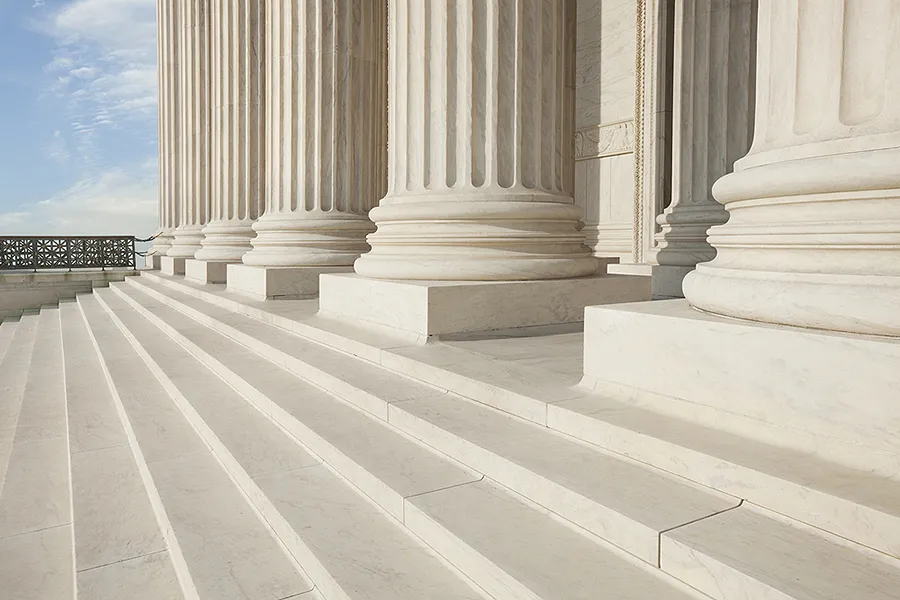
Washington D.C., Oct 6, 2017 / 03:31 pm (CNA).- All eyes were on the Department of Health and Human Services on Friday, as the Trump administration announced a major broadening of exemptions to the federal contraception mandate, prompting cheers from religious freedom proponents nationwide.
Less noticed was another critical development in the U.S. religious liberty landscape: Attorney General Jeff Sessions issued government-wide legal guidance outlining 20 principles of religious liberty that, the Department of Justice says, should govern all administrative agencies and executive departments in their work.
Sessions had been instructed to “issue guidance interpreting religious liberty protections in federal law” by an executive order signed by President Trump in May.
The 25-page document released by the attorney general will please many religious liberty advocates. Its bold language highlights the crucial role of religious freedom in American life. It could also have an impact on pending legal disputes across the country.
Early in the memo, the guidance asserts, “Religious liberty is not merely a right to personal religious beliefs or even to worship in a sacred place. It also encompasses religious observance and practice.” Religious freedom proponents have argued for this definition avidly in recent years, amid fears that the idea was being eroded, especially as the phrase “freedom of worship” often replaced “freedom of religion” in the Obama administration.
The document goes on to state that religious liberty extends not only to persons, but to organizations, and that religious freedom is not surrendered when an individual participates in the marketplace or interacts with government – two key points argued in the HHS mandate debate over the last six years.
This second point – that individuals do not have to remove themselves from civil society in order to retain their right to religious freedom – could also have implications in several high-profile lawsuits, largely revolving around the freedom of service providers such as florists, cake bakers, and photographers to decline same-sex weddings, based on their religious beliefs about marriage.
Six of the 20 religious liberty principles in Sessions’ document are dedicated to the Religious Freedom Restoration Act, known as RFRA.
Enacted in 1993, RFRA is one of the primary legislative pillars upon which religious freedom arguments have rested in the last two decades. It says that the federal government may not substantially burden the free exercise of religion, unless there is a compelling state interest in doing so, and it is carried out in the least-restrictive manner possible.
RFRA applies only to the federal government, although in recent years, similar laws have increasingly been proposed or passed in state legislatures.
The guidance explains that RFRA “applies to all sincerely-held religious beliefs,” and the government does not have the authority to second-guess the reasonableness of a religious conviction. It affirms that in evaluating RFRA claims, courts must use what is known as “strict scrutiny” – the highest level of judicial review, under which only the most serious of government interests are permitted to infringe upon a fundamental constitutional right.
It also says that the law “applies even where a religious adherent seeks an exemption from a legal obligation requiring the adherent to confer benefits on third parties,” making it clear that RFRA applies in cases such as the HHS mandate.
The document takes a firm stand in insisting that RFRA be taken seriously and interpreted robustly. It’s worth noting that this is a return to ideas widely held just 25 years ago: when RFRA was enacted in 1993, it has nearly unanimous support from both parties and was signed into law by Bill Clinton.
Also significant, the guidance explicitly affirms the right of religious organizations to “employ only persons whose beliefs and conduct are consistent with the employers’ religious precepts.” This is a victory for faith-based employers, among them Catholic schools who have faced opposition for asking employees to sign codes of conduct agreeing to abide by Catholic teaching on issues such as sexuality.
Today’s guidance also confirms that government cannot interfere with the autonomy of religious organizations. This idea was reinforced by the Supreme Court in Hosanna-Tabor v. EEOC – a rare unanimous ruling in 2012 in which the court upheld the “ministerial exception” that allows religious organizations to hire and fire ministers without interference from the government.
Finally, the document released by Sessions said that religious organizations must have equal footing in applying for federal aid or grant programs – they may not be denied participation in these programs when the money is going toward activities that are not explicitly religious in nature.
This has been an important issue in the weeks after Hurricane Harvey with a group of Houston churches suing the Federal Emergency Management Agency, claiming they had been denied disaster relief grants due to their religious status.
The principle was also at play earlier this year, when the Supreme Court ruled in favor of a Lutheran church that was seeking to make safety improvements on its playground through a state reimbursement program. The church had initially been turned away because of its religious affiliation.
Now that the attorney general has issued the guidance, it is up to each agency and department to implement the principles as they make employment decisions, develop regulations, administer programs and write up contracts and grants.
The fight over the proper role of religious liberty in the nation is far from over, however. The document has already been criticized by its opponents as oppressive to women and the LGBT community.
The broad effect of the guidance will continue to unfold in the coming months. Challenges to it will undoubtedly arise as well. The ultimate outcome remains to be seen. But in the meantime, religious liberty proponents can find encouragement in some of the strongest language on the issue coming from a presidential administration in decades.
Previous Post

October 6, 2017
How the US can protect human rights in China
Next Post
October 6, 2017 New religious freedom protections draw praise from experts
Browse Our Archives
Select a Category Americas Asia - Pacific Europe Middle East - Africa Uncategorized US Vatican
Select a Month November 2017 October 2017 September 2017 August 2017 July 2017 June 2017 May 2017 April 2017 March 2017 February 2017 January 2017 December 2016 November 2016 October 2016 September 2016 August 2016 July 2016 June 2016 May 2016 April 2016 March 2016 February 2016 January 2016 December 2015 November 2015 October 2015 September 2015 August 2015 July 2015 June 2015 May 2015 April 2015 March 2015 February 2015 January 2015 December 2014 November 2014 October 2014 September 2014 August 2014 July 2014 June 2014 May 2014 April 2014 March 2014 February 2014 January 2014 December 2013 November 2013 October 2013 September 2013 August 2013 July 2013 June 2013 May 2013 April 2013 March 2013 February 2013 January 2013 December 2012 November 2012 October 2012 September 2012 August 2012 July 2012 June 2012 May 2012
TAKE THE
Religious Wisdom Quiz
Who was the wife of Abraham?
Select your answer to see how you score.
Rebecca Sarah Rachel Leah
Related posts from Catholic News

US bishops' new child protection program aims to...

Wealthy foundation aims to redefine religious freedom—and Christianity,...

Victims of Islamic State in focus at UN...

Catholic University of America offers free tuition to...
TRENDING AT PATHEOS Catholic

Creation, Preservation, and Teleology in Catholic Theology
As I write this, it is very early Monday morning. Like millions...

The Parable Of The Sower And The Word...
One of Christ’s most famous parables is that of the sower who...

Rejecting Doom: Christian Hope And Human Action
Christianity is a religion of hope. We are to have hope and...

Why I Choose the Eucharist Over the Sermon
Choose the Eucharist, Not the Sermon What are we supposed to get...

5 Design Elements Found in Spiritually Rooted Homes
Putting Spirituality Into Home Decor Our homes are more than our living...

Credo: A Story of God Told with the...
About 10 years ago, I began to imagine a personal "Credo" that...
view all Catholic blogs
Ad-Free & Subscriber Log-In Subscription Support
- About Us
- 2026 Calendar
- Videos
- Podcasts
- Library of World Religions
- Faith In Media Tracker
- Advertise With Us
- Write for Us
- Privacy Policy
- Terms of Service
- Do Not Sell My Data
- Contact Us
- Radiant Digital
- Manage Newsletter Subscriptions
- Unsubscribe From Notifications
- Sitemap
Copyright 2008-2026, Patheos. All rights reserved.
Subscription Support Ad-Free & Subscriber Log-In
Follow Patheos