
BuddhistCatholicContemplativeEvangelicalGeneral ChristianHinduJewishLatter-day SaintMuslimNew VisionsProgressive Christian
Beliefs
- Buddhist
- Catholic
- Contemplative
- Evangelical
- General Christian
- Hindu
- Jewish
- Latter-day Saint
- More Voices
- Muslim
- New Visions
- Pagan
- Progressive Christian
Topics
- Religion News
- Food and Religion
- Sports and Religion
- Religious Art
- Religious Music and Entertainment
- Religious Events
- History and Religion
- Style and Religion
- Politics and Religion
- Women in Religion
- Recreation Outdoors and Religion
- Business Finance and Religion
- Careers Workplace and Religion
- Education and Religion
- Family Parenting and Religion
- Health Fitness and Religion
- Home and Religion
- Relationships and Religion
- Technology and Religion
- Travel and Religion
Columnists
- Buddhist Columnists
- Business Finance and Religion Columnists
- Careers Workplace and Religion Columnists
- Catholic Columnists
- Contemplative Columnists
- Education and Religion Columnists
- Evangelists Columnists
- Family Parenting and Religion Columnists
- General Christian Columnists
- Health Fitness and Religion Columnists
- Hindu Columnists
- History and Religion Columnists
- Home and Religion Columnists
- Jewish Columnists
- More Voices Columnists
- Latter Day Columnists
- Muslim Columnists
- New Visions Columnists
- Nonreligious Columnists
- Pagan Columnists
- Politics and Religion Columnists
- Progressive Columnists
- Recreation Outdoors and Religion Columnists
- Relationships and Religion Columnists
- Religion News Columnists
- Religious Art Columnists
- Religious Events Columnists
- Religious Music and Entertainment Columnists
- Sports and Religion Columnists
- Style and Religion Columnists
- Technology and Religion Columnists
- Travel and Religion Columnists
- Women in Religion Columnists
Resource Library
- 2026 Calendar
- Library of World Religions
- The 100 Most Holy Places on Earth
- Patheos Answers
- Podcasts
- Videos
- Faith Leaders Database
- Anglican Episcopalian
- Bahai
- Baptist
- Buddhism
- Christianity
- Confucianism
- Eastern Orthodoxy
- Hinduism
- Holiness and Pentecostal
- ISKCON
- Islam
- Judaism
- Lutheran
- Methodist
- The Church of Jesus Christ of Latter-day Saints
- New Age
- Paganism
- Presbytarian and Reformed
- Protestantism
- Religion Behind the Scenes
- Roman Catholic
- Scientology
- Shia Islam
- Sikhism
- Sufism
- Sunni Islam
- Taoism
- Zen
- See all religions
Research Tools
 Ad-Free & Subscriber Log-In Subscription Support
Ad-Free & Subscriber Log-In Subscription Support
Follow Patheos 

- Trending:
- Forgiveness
- |
- Marriage
- |
- Consciousness
- |
- Death Penalty
- |
- Election
- |
- Halloween
 Catholic News
- Home
- Catholic
- Religion News
- Religious, secular experts unite in call to protect child safety online
Religious, secular experts unite in call to protect child safety online
Last updated on: October 6, 2017 at 6:12 pm by CNA Daily News
Religious, secular experts unite in call to protect child safety online 2017-10-06T18:12:00+00:00 CNA Daily News
Patheos Explore the world's faith through different perspectives on religion and spirituality! Patheos has the views of the prevalent religions and spiritualities of the world.
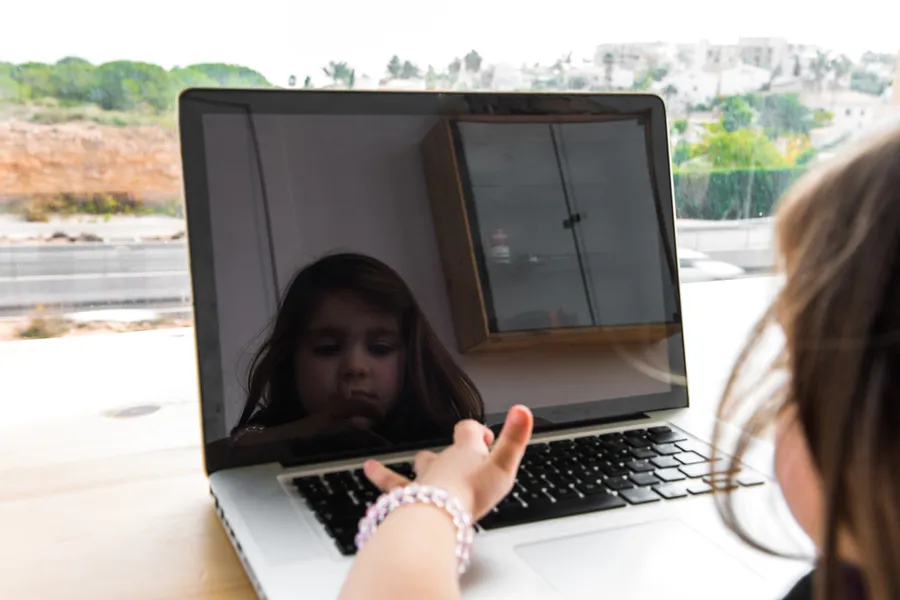
Rome, Italy, Oct 6, 2017 / 12:12 pm (CNA/EWTN News).- In a joint declaration on the need to protect youth on the internet, leaders and experts from various fields stressed the need Friday to raise awareness of digital dangers and to collaborate on child protection.
“Every child’s life is unique, meaningful and precious and every child has a right to dignity and safety,” an Oct. 6 joint declaration from participants in a Rome conference on promoting online safety for children read.
However, “today, global society is failing its children.” Instead of being protected, “millions of children are being abused and exploited in tragic and unspeakable ways, and on an unprecedented scale all over the world,” the declaration lamented.
Titled “Pope Francis – A society can be judged by the way it treats its children,” the declaration was drafted by the participants in the conference and presented to Pope Francis during their audience with him Oct. 6.
The conference, held Oct. 3-6 and dedicated to the theme “Child Dignity in the Digital World,” was the first of its kind on a global scale, drawing social scientists, civic leaders, religious leaders, and representatives from major tech companies.
It was organized by the Pontifical Gregorian University's Center for Child Protection in collaboration with the UK-based global alliance WePROTECT and the organization “Telefono Azzurro,” and addressed concerns surrounding abuse prevention, pornography, the responsibility of internet providers and the media, and ethical governance.
The declaration included 13 action points for the future directed at different sectors of society, including technology companies, law enforcement, governments, and religious leaders.
Key areas highlighted for protecting minors in the future were the fields of education and building awareness of the internet and the risks involved. Participants also advocated for more stringent laws and accountability for online crimes, training of medical and educational personnel in how to look for signs of abuse, and swifter reporting of suspected instances of abuse.
They also asked that major tech companies invest in developing new technologies aimed at protection and identification of online victims, as well as broader efforts to rescue victims and educate youth on what behaviors could put them in harm's way.
“Technology’s exponential advancement and integration into our everyday lives is not only changing what we do and how we do it, but who we are,” the declaration read.
And while many of these changes are positive, “we face the dark side of this new-found world, a world which is enabling a host of social ills that are harming the most vulnerable members of society.”
Numerous benefits have come from the internet, but alongside these have also grown content that is “increasingly extreme and dehumanizing is available literally at children’s fingertips.”
“The proliferation of social media means insidious acts, such as cyber-bullying, harassment and sextortion, are becoming commonplace,” the document read, noting that both the range and scope of online child sexual abuse and exploitation “is shocking.”
“Vast numbers of sexual abuse images of children and youth are available online and continue to grow unabated,” participants said, adding that the “detrimental impact of pornography on the malleable minds of young children” is yet another increasing and “significant online harm.”
“We embrace the vision of an internet accessible by all people. However, we believe the constitution of this vision must recognize the unwavering value of protecting all children,” the said. And while the challenges are “enormous,” the response “must not be gloom and dismay.”
Instead, “we must work together to seek positive, empowering solutions for all. We must ensure that all children have safe access to the internet to enhance their education, communications and connections.”
Technology companies and governments have shown great leadership in this fight, they said, stressing that representatives of this field “must continue to innovate to better protect children.”
Families, neighborhoods and various communities around the world must also be awakened to the issue and the reality of the impact of the internet on children, including the risks.
Emphasizing the need for collaboration, participants stressed that online abuse and exploitation “is a problem that cannot be solved by one nation or one company or one faith acting alone, it is a global problem that requires global solutions.”
“It requires that we build awareness, and that we mobilize action from every government, every faith, every company and every institution.”
The declaration concluded saying that “the world faces unprecedented challenges if it is to preserve the rights and dignity of children and protect them from abuse and exploitation.”
These challenges “require new thinking and approaches, heightened global awareness and inspired leadership,” it read, and issued a global appeal for everyone “to stand up for the protection of the dignity of children.”
In an Oct. 6 news briefing with journalists after the audience with Pope Francis closing the conference, Fr. Hans Zollner SJ, president of the CCP, said the conference was “very intense and very successful.”
“There was a unique sense of unity” among participants across the board, he said, explaining that he “felt absolutely enthused about the way people were interacting, networking and comping up with interactive proposals.”
Also present at the news briefing was Baroness Sheila Hollins, a professor and member of the Pontifical Commission for the Protection of Minors.
In her comments, she said that when historians look back at the digital age, they will most likely say it was the age that “changed the world in one generation,” and we'll be judged on “did we do enough?”
She spoke of the need to engage at various levels in order to address the problem, particularly with youth themselves, who are the “digital natives” most familiar with new forms of technology and therefore are the best interlocutors.
Another suggestion that came out of working groups was a possible encyclical on “on childhood and the social environment,” given the rapid changes society is undergoing.
Hollins also noted a proposal made by Cardinal Luis Antonio Tagle of Manila, who during a keynote speech suggested an in-depth study be made on childhood from an anthropological, philosophical, and theological perspective, keeping in mind the different cultural perceptions of childhood, and that while some things are forbidden in some cultures, they might be acceptable in others.
Dr. Ernie Allen, Chair of the International Advisory Board for WePROTECT, said that the organization intends to get the topic of the digital world and safety concerns on the table at relevant events in the coming years, such as the 2018 Synod of Bishops on youth, the 2018 World Meeting of Families in Dublin, and the 2019 World Youth Day in Panama.
Previous Post

October 6, 2017
Vietnamese native appointed auxiliary bishop of Orange
Next Post
October 6, 2017 How the US can protect human rights in China
Browse Our Archives
Select a Category Americas Asia - Pacific Europe Middle East - Africa Uncategorized US Vatican
Select a Month November 2017 October 2017 September 2017 August 2017 July 2017 June 2017 May 2017 April 2017 March 2017 February 2017 January 2017 December 2016 November 2016 October 2016 September 2016 August 2016 July 2016 June 2016 May 2016 April 2016 March 2016 February 2016 January 2016 December 2015 November 2015 October 2015 September 2015 August 2015 July 2015 June 2015 May 2015 April 2015 March 2015 February 2015 January 2015 December 2014 November 2014 October 2014 September 2014 August 2014 July 2014 June 2014 May 2014 April 2014 March 2014 February 2014 January 2014 December 2013 November 2013 October 2013 September 2013 August 2013 July 2013 June 2013 May 2013 April 2013 March 2013 February 2013 January 2013 December 2012 November 2012 October 2012 September 2012 August 2012 July 2012 June 2012 May 2012
TAKE THE
Religious Wisdom Quiz
Which Christian group is known for not celebrating holidays or birthdays?
Select your answer to see how you score.
Methodists Orthodox Episcopalians Jehovah's Witnesses
Related posts from Catholic News

Sixty Vincentians martyred during Spanish Civil War to...

Filipinos gather in Rome to promote bishop's beatification...

UK bishop calls for prayers as MPs urge...

On All Souls' Day, Pope Francis prays for...
TRENDING AT PATHEOS Catholic

Rejecting Doom: Christian Hope And Human Action
Christianity is a religion of hope. We are to have hope and...

It’s What Comes From Within Which Matters
One of the most difficult things for us to understand is why...

Why I Choose the Eucharist Over the Sermon
Choose the Eucharist, Not the Sermon What are we supposed to get...

5 Design Elements Found in Spiritually Rooted Homes
Putting Spirituality Into Home Decor Our homes are more than our living...

Credo: A Story of God Told with the...
About 10 years ago, I began to imagine a personal "Credo" that...

The Anatomy of Divine Revelation in Catholic Thought
The claim that God has made Himself known to human beings is...
view all Catholic blogs
Ad-Free & Subscriber Log-In Subscription Support
- About Us
- 2026 Calendar
- Videos
- Podcasts
- Library of World Religions
- Faith In Media Tracker
- Advertise With Us
- Write for Us
- Privacy Policy
- Terms of Service
- Do Not Sell My Data
- Contact Us
- Radiant Digital
- Manage Newsletter Subscriptions
- Unsubscribe From Notifications
- Sitemap
Copyright 2008-2026, Patheos. All rights reserved.
Subscription Support Ad-Free & Subscriber Log-In
Follow Patheos