
BuddhistCatholicContemplativeEvangelicalGeneral ChristianHinduJewishLatter-day SaintMuslimNew VisionsProgressive Christian
Beliefs
- Buddhist
- Catholic
- Contemplative
- Evangelical
- General Christian
- Hindu
- Jewish
- Latter-day Saint
- More Voices
- Muslim
- New Visions
- Pagan
- Progressive Christian
Topics
- Religion News
- Food and Religion
- Sports and Religion
- Religious Art
- Religious Music and Entertainment
- Religious Events
- History and Religion
- Style and Religion
- Politics and Religion
- Women in Religion
- Recreation Outdoors and Religion
- Business Finance and Religion
- Careers Workplace and Religion
- Education and Religion
- Family Parenting and Religion
- Health Fitness and Religion
- Home and Religion
- Relationships and Religion
- Technology and Religion
- Travel and Religion
Columnists
- Buddhist Columnists
- Business Finance and Religion Columnists
- Careers Workplace and Religion Columnists
- Catholic Columnists
- Contemplative Columnists
- Education and Religion Columnists
- Evangelists Columnists
- Family Parenting and Religion Columnists
- General Christian Columnists
- Health Fitness and Religion Columnists
- Hindu Columnists
- History and Religion Columnists
- Home and Religion Columnists
- Jewish Columnists
- More Voices Columnists
- Latter Day Columnists
- Muslim Columnists
- New Visions Columnists
- Nonreligious Columnists
- Pagan Columnists
- Politics and Religion Columnists
- Progressive Columnists
- Recreation Outdoors and Religion Columnists
- Relationships and Religion Columnists
- Religion News Columnists
- Religious Art Columnists
- Religious Events Columnists
- Religious Music and Entertainment Columnists
- Sports and Religion Columnists
- Style and Religion Columnists
- Technology and Religion Columnists
- Travel and Religion Columnists
- Women in Religion Columnists
Resource Library
- 2026 Calendar
- Library of World Religions
- The 100 Most Holy Places on Earth
- Patheos Answers
- Podcasts
- Videos
- Faith Leaders Database
- Anglican Episcopalian
- Bahai
- Baptist
- Buddhism
- Christianity
- Confucianism
- Eastern Orthodoxy
- Hinduism
- Holiness and Pentecostal
- ISKCON
- Islam
- Judaism
- Lutheran
- Methodist
- The Church of Jesus Christ of Latter-day Saints
- New Age
- Paganism
- Presbytarian and Reformed
- Protestantism
- Religion Behind the Scenes
- Roman Catholic
- Scientology
- Shia Islam
- Sikhism
- Sufism
- Sunni Islam
- Taoism
- Zen
- See all religions
Research Tools
 Ad-Free & Subscriber Log-In Subscription Support
Ad-Free & Subscriber Log-In Subscription Support
Follow Patheos 

- Trending:
- Forgiveness
- |
- Marriage
- |
- Consciousness
- |
- Death Penalty
- |
- Election
- |
- Halloween
 Catholic News
- Home
- Catholic
- Religion News
- Pope offers clarifications on new process for liturgical translations
Pope offers clarifications on new process for liturgical translations
Last updated on: October 22, 2017 at 6:43 pm by CNA Daily News
Pope offers clarifications on new process for liturgical translations 2017-10-22T18:43:00+00:00 CNA Daily News
Patheos Explore the world's faith through different perspectives on religion and spirituality! Patheos has the views of the prevalent religions and spiritualities of the world.
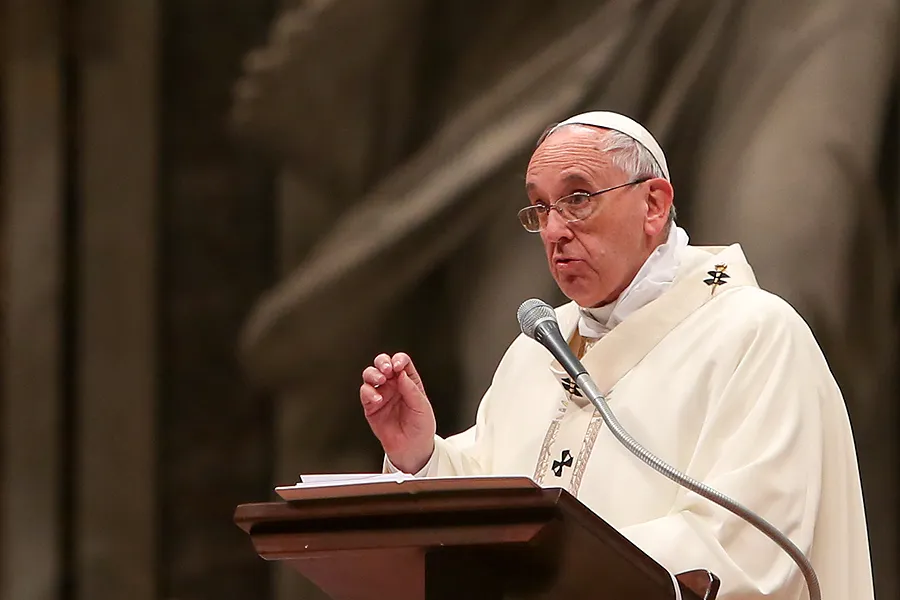
Vatican City, Oct 22, 2017 / 12:43 pm (CNA/EWTN News).- In a letter responding to questions raised by Cardinal Robert Sarah on the new process of translating liturgical texts from Latin into vernacular languages, Pope Francis offered several points of clarification.
The Pope discussed points regarding the approval of new translations and the relationship between translations and Latin texts.
He clarified that while in the past, it was the task of the Vatican's liturgical office to judge whether or not a translation is faithful to the original Latin, episcopal conferences themselves have now been given the faculty of “judging the goodness and consistency of one and the other term in the translations from the original, in dialogue with the Holy See.”
Dated Oct. 15, the Pope's letter was in response to one he had received from Cardinal Sarah, Prefect of the Congregation for Divine Worship and the Discipline of the Sacraments, at the end of September thanking the Pope for his recent motu proprio “Magnum Principium” (MP) on the translation of liturgical texts, and offering a commentary on how to interpret the motu proprio.
The motu proprio, published Sept. 9, granted episcopal conferences the task of both preparing and approving texts that had been “faithfully” translated from the original Latin, while cementing the role of the Apostolic See in confirming the translations approved by bishops.
In his commentary, Cardinal Sarah had argued that the new process for translating liturgical texts still follows the rules put into place with the 2001 Instruction Liturgiam Authenticam (LA), which said the vernacular versions must faithfully reflect the language and structure of the Latin texts.
Sarah also looked at the role of the Holy See and bishops' conferences in both “recognizing” (recognitio) and “confirming” (confirmatio) modifications to liturgical texts, arguing that the term “recognitio” used in the new canons involves adaptions of texts, while “confirmatio” involves translations.
Because of this, the terms are different, even if they are “interchangeable with respect to the responsibility of the Holy See,” Sarah said. He also argued that the “recognitio” of liturgical texts implies a preliminary consultation with the Holy See before translation processes begin, with the “confirmatio” of the Holy See being the final step.
In his letter to Cardinal Sarah, the Pope thanked him for his commitment and for sending the commentary, but offered some simple “observations” on the commentary “which I consider to be important, especially for the proper application and understanding of the motu proprio and to avoid any misunderstanding.”
The first point Francis made was that his motu proprio Magnum Principium “abolished” the process for translating used by the Congregation for Divine Worship and the Discipline of the Sacraments after LA was published in 2001. Magnum Principium, he said, “sought to change” this process.
The Pope said of the terms “recognitio” and “confirmatio,” that it cannot be said that they are “strictly synonymous or interchangeable or that they are interchangeable at the level of responsibility of the Holy See.”
The distinction between “recognitio” and “confirmatio,” he said, emphasizes “the different responsibility” that the Apostolic See and episcopal conferences have in liturgical translations.
“Magnum Principium no longer claims that translations must conform on all points to the norms of LA, as was done in the past,” the Pope said, explaining that because of this, individual numbers in LA have to be “carefully re-understood.”
He said this includes numbers 79-84, which deal specifically with the requirement for a vernacular translation to have the “recognitio” of Rome. These numbers, Francis said, “have been abrogated,” and “re-formulated” with the publication of MP.
The “confirmatio” of the Vatican, then, “no longer supposes a detailed word-by-word examination,” he said, except in obvious cases which can be brought to the bishops for further reflection. This, the Pope said, applies to texts such as the Eucharistic Prayers or sacramental formulas.
Pope Francis said the new norms imply “a triple fidelity,” first of all to the original Latin text, to the particular languages the text is translated into, and to the comprehension of the text by its recipients.
In this sense, the “recognitio” of the texts only implies “the verification and preservation of conformity” to the Code of Canon Law and the communion of the Church, he said.
Francis also emphasized that in the process of translating liturgical texts, there should be no “spirit of imposition” on bishops conferences of a translation done by the Vatican's liturgical department.
The Pope said “it is wrong to attribute to the 'confermatio' the purpose of the 'recognitio,'” which is to “verify and safeguard” in accordance with the law. He also stressed that the “confirmatio” is not “merely a formal act, but necessary for the edition of the translated liturgical book,” and is granted after the version has been submitted to the Apostolic See for a confirmation of the bishops' approved text.
Pope Francis closed his letter noting that Cardinal Sarah's commentary had been published on several websites, and asked that the cardinal transmit his response to the same outlets, as well as to members and consultors of the Congregation for Divine Worship.
Previous Post

October 22, 2017
Venezuelan bishops denounce pro-government bias in elections
Next Post
October 22, 2017 Can the Beatitudes inspire great cinema? These filmmakers think so.
Browse Our Archives
Select a Category Americas Asia - Pacific Europe Middle East - Africa Uncategorized US Vatican
Select a Month November 2017 October 2017 September 2017 August 2017 July 2017 June 2017 May 2017 April 2017 March 2017 February 2017 January 2017 December 2016 November 2016 October 2016 September 2016 August 2016 July 2016 June 2016 May 2016 April 2016 March 2016 February 2016 January 2016 December 2015 November 2015 October 2015 September 2015 August 2015 July 2015 June 2015 May 2015 April 2015 March 2015 February 2015 January 2015 December 2014 November 2014 October 2014 September 2014 August 2014 July 2014 June 2014 May 2014 April 2014 March 2014 February 2014 January 2014 December 2013 November 2013 October 2013 September 2013 August 2013 July 2013 June 2013 May 2013 April 2013 March 2013 February 2013 January 2013 December 2012 November 2012 October 2012 September 2012 August 2012 July 2012 June 2012 May 2012
TAKE THE
Religious Wisdom Quiz
In Revelation, what is the correct sequence of events in the End Times?
Select your answer to see how you score.
Dragon cast to earth, beast rises from sea, false prophet rises from earth, mark of the beast given Beast rises from sea, dragon cast to earth, mark of the beast given, false prophet rises False prophet rises, dragon cast to earth, beast rises from sea, mark of the beast given Mark of the beast given, dragon cast to earth, beast rises, false prophet rises
Related posts from Catholic News

How do we help trafficking victims re-enter society?...

More than just giving – World Day of...
New book reveals details of John Paul I’s...

Despite reports, Pope Francis isn’t opening the door...
TRENDING AT PATHEOS Catholic

The Parable Of The Sower And The Word...
One of Christ’s most famous parables is that of the sower who...

Rejecting Doom: Christian Hope And Human Action
Christianity is a religion of hope. We are to have hope and...

Why I Choose the Eucharist Over the Sermon
Choose the Eucharist, Not the Sermon What are we supposed to get...

5 Design Elements Found in Spiritually Rooted Homes
Putting Spirituality Into Home Decor Our homes are more than our living...

Credo: A Story of God Told with the...
About 10 years ago, I began to imagine a personal "Credo" that...

The Anatomy of Divine Revelation in Catholic Thought
The claim that God has made Himself known to human beings is...
view all Catholic blogs
Ad-Free & Subscriber Log-In Subscription Support
- About Us
- 2026 Calendar
- Videos
- Podcasts
- Library of World Religions
- Faith In Media Tracker
- Advertise With Us
- Write for Us
- Privacy Policy
- Terms of Service
- Do Not Sell My Data
- Contact Us
- Radiant Digital
- Manage Newsletter Subscriptions
- Unsubscribe From Notifications
- Sitemap
Copyright 2008-2026, Patheos. All rights reserved.
Subscription Support Ad-Free & Subscriber Log-In
Follow Patheos