
BuddhistCatholicContemplativeEvangelicalGeneral ChristianHinduJewishLatter-day SaintMuslimNew VisionsProgressive Christian
Beliefs
- Buddhist
- Catholic
- Contemplative
- Evangelical
- General Christian
- Hindu
- Jewish
- Latter-day Saint
- More Voices
- Muslim
- New Visions
- Pagan
- Progressive Christian
Topics
- Religion News
- Food and Religion
- Sports and Religion
- Religious Art
- Religious Music and Entertainment
- Religious Events
- History and Religion
- Style and Religion
- Politics and Religion
- Women in Religion
- Recreation Outdoors and Religion
- Business Finance and Religion
- Careers Workplace and Religion
- Education and Religion
- Family Parenting and Religion
- Health Fitness and Religion
- Home and Religion
- Relationships and Religion
- Technology and Religion
- Travel and Religion
Columnists
- Buddhist Columnists
- Business Finance and Religion Columnists
- Careers Workplace and Religion Columnists
- Catholic Columnists
- Contemplative Columnists
- Education and Religion Columnists
- Evangelists Columnists
- Family Parenting and Religion Columnists
- General Christian Columnists
- Health Fitness and Religion Columnists
- Hindu Columnists
- History and Religion Columnists
- Home and Religion Columnists
- Jewish Columnists
- More Voices Columnists
- Latter Day Columnists
- Muslim Columnists
- New Visions Columnists
- Nonreligious Columnists
- Pagan Columnists
- Politics and Religion Columnists
- Progressive Columnists
- Recreation Outdoors and Religion Columnists
- Relationships and Religion Columnists
- Religion News Columnists
- Religious Art Columnists
- Religious Events Columnists
- Religious Music and Entertainment Columnists
- Sports and Religion Columnists
- Style and Religion Columnists
- Technology and Religion Columnists
- Travel and Religion Columnists
- Women in Religion Columnists
Resource Library
- 2026 Calendar
- Library of World Religions
- The 100 Most Holy Places on Earth
- Patheos Answers
- Podcasts
- Videos
- Faith Leaders Database
- Anglican Episcopalian
- Bahai
- Baptist
- Buddhism
- Christianity
- Confucianism
- Eastern Orthodoxy
- Hinduism
- Holiness and Pentecostal
- ISKCON
- Islam
- Judaism
- Lutheran
- Methodist
- The Church of Jesus Christ of Latter-day Saints
- New Age
- Paganism
- Presbytarian and Reformed
- Protestantism
- Religion Behind the Scenes
- Roman Catholic
- Scientology
- Shia Islam
- Sikhism
- Sufism
- Sunni Islam
- Taoism
- Zen
- See all religions
Research Tools
 Ad-Free & Subscriber Log-In Subscription Support
Ad-Free & Subscriber Log-In Subscription Support
Follow Patheos 

- Trending:
- Forgiveness
- |
- Marriage
- |
- Consciousness
- |
- Death Penalty
- |
- Election
- |
- Halloween
 Catholic News
- Home
- Catholic
- Religion News
- How should a Catholic respond to mass shootings?
How should a Catholic respond to mass shootings?
Last updated on: October 5, 2017 at 11:05 pm by CNA Daily News
How should a Catholic respond to mass shootings? 2017-10-05T23:05:00+00:00 CNA Daily News
Patheos Explore the world's faith through different perspectives on religion and spirituality! Patheos has the views of the prevalent religions and spiritualities of the world.
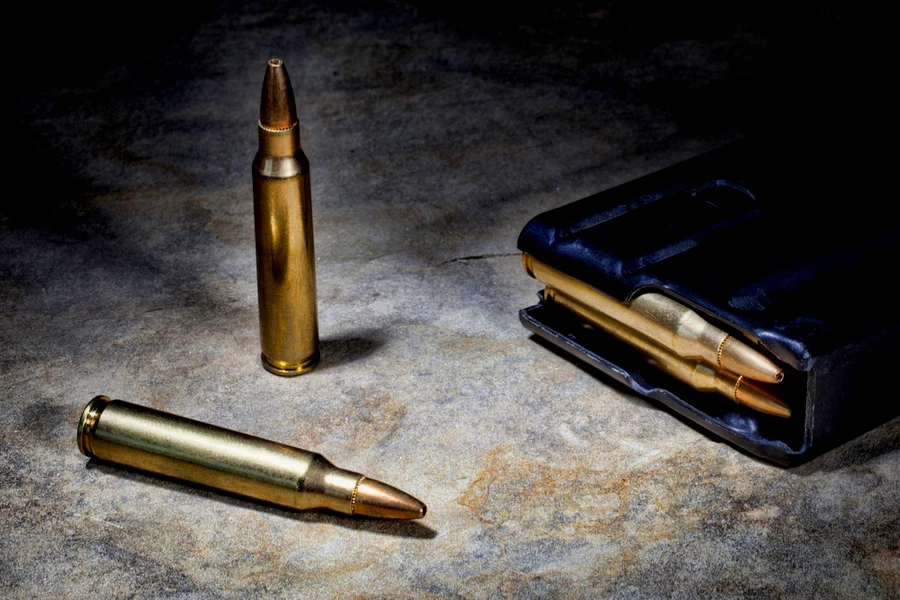
Washington D.C., Oct 5, 2017 / 05:05 pm (CNA/EWTN News).- When Monsignor Robert Weiss gathered with parents in Connecticut, after 11 children were killed in a nearby shooting, the room went silent and one person called for prayer.
“And so everyone just fell on their knees or joined hands with each other, or formed a circle,” Monsignor Weiss said. “I think they realized at that point anything else was beyond their control.”
Monsignor Weiss is the pastor of St. Rose of Lima parish in Newtown, Conn. The site of the shooting was Sandy Hook Elementary School, where in December of 2012, 26 people were killed.
Since then, other mass shootings have scarred the American psyche, occurring in places like San Bernardino, Calif., Orlando, Fla., and now Las Vegas, Nev., where on October 1, 58 people were killed. It has been called the deadliest mass shooting in modern U.S. history.
On Wednesday, almost five years after the Sandy Hook shooting, Monsignor Weiss spoke with CNA about the importance of prayer after such a tragedy. Prayer is a necessary resort for all those affected by such tragedies, he said, when they can’t comprehend the evil and when human consolation can only do so much.
Prayer as a response to tragedies has been denigrated by some as meaningless or secondary, when compared to advocating for policy aimed at preventing gun violence or improving access to mental health care.
The day after a shooting in San Bernardino, Calif. killed 14 on Dec. 2, 2015, the cover of the New York Daily News said “God isn’t fixing this,” in response to politicians and public figures offering their “thoughts and prayers” to the victims of the tragedy, but allegedly taking insufficient action to prevent such tragedies from occurring in the future.
Yet, without discounting the role of human action in response to these tragedies, humans can only do so much, Monsignor Weiss told CNA.
“To whom do you go? Do you rely on yourself? Because there’s no way you can individually handle these kinds of experiences. Times like this is when you’re called to be a community,” he said. He recalled professionals telling him in the wake of the Sandy Hook shooting that “we can only do so much for these people” to help them heal from the tragedy.
“There is only one place to turn, and it’s to turn to the Lord and find some sort of understanding of this,” he said.
On Sunday evening, 64 year-old Stephen Paddock shot and killed at least 58 people at a country music festival in Las Vegas, Nev. and wounded almost 500. He shot with high-powered rifles outfitted with “bump stocks” from his 32nd-floor suite at the Mandalay Bay Resort, across the street from the Route 91 Harvest Festival outdoor venue.
Paddock was retired and divorced, and had a girlfriend. He owned rental properties and was a frequent gambler at local casinos.
After he shot down at the concert venue, a SWAT team broke into Paddock’s room and found him dead from a self-inflicted gunshot wound. Medical and mental health professionals went into action helping victims with physical and psychological wounds.
Dr. Stephen Sharp is a Las Vegas local and a faculty member of Divine Mercy University, a Catholic graduate school of psychology and counseling. Sharp commended the Las Vegas community for its proactive response to the tragedy.
The first responders in Las Vegas had trained for such a tragedy “for a long time,” he said, as authorities had predicted that the city could be a target for such an event. First responders and hospitals were prepared for the rapid influx of trauma patients, he said.
And, he noted, mental health and trauma professionals were able to provide a quick response.
In light of previous shootings, where the perpetrator was later judged to have serious mental health issues, the question of Stephen Paddock’s mental health has been asked in the wake of Sunday’s shooting.
There are reports, like ABC News’ citation of a person briefed on the investigation, that Paddock’s mental faculties had possibly deteriorated in the months leading up to the shooting, with his “increasingly slovenly” appearance and loss of weight, as well as an obsession with his girlfriend’s ex-husband.
Yet no official determination has been made about Paddock’s mental health, and Sharp cautioned against speculation
“To establish a mental health or mental illness issue or a diagnosis requires quite a bit of psychological input and assessment and testing,” he said. “It’s too early to jump to that conclusion, and by making that leap, I truly believe that we would be damaging the mental health community more than we would be helping.”
Rather, Sharp said, focus should be drawn to the provision of long-term mental health care to victims of the shooting and their families. “The effects of this kind of trauma go on for months, if not years, so people need to be in place to help folks for a long time,” he said.
Monsignor Weiss sees a need for professional care in the Newtown community years after the 2012 Sandy Hook shooting.
“We had issues in our schools starting Monday, with the whole thing coming back again,” he said of the Las Vegas shooting. High school students were crying after “they suppressed so much of the fear they experienced [in 2012],” he said. “It’s deadly to suppress the emotion, the grief.”
“You’ve got to get help, you’ve got to find someone you can trust, and you’ve got to talk about this. You just can’t suppress it and say it’s going to go away, because it’s not going away,” he said.
A mass shooting also has a ripple effect, Sharp said, because in addition to the 58 dead in Las Vegas and the hundreds injured, there were thousands of concert-goers who witnessed the atrocity and experienced the trauma of being in the line of fire.
And the many family and friends of the dead and injured are themselves affected by the tragedy, he said: “It’s like a pebble in the pond that creates a tsunami on the other side of the pond, because this will go on for a long time.”
“These lives will never be the same,” he reflected. “The 22,000 people who were at the concert will never be the same. It’s changed their life forever, on some level, that we can’t even predict or know how that’s going to turn out for them.”
Americans should explore the cultural or societal factors behind the number of mass shootings, he said.
“I think it’s more of a societal concern than it is of an individual’s mental health concern,” he stated. “My question is why are we seeing wave after wave of these kinds of events?”
Another issue usually debated in the wake of a mass shooting is access to guns, and gun laws.
Paddock reportedly had 23 guns with him in his hotel suite, and CNN reported he had 50 pounds of explosives and 1,600 rounds of ammunition in his car parked in the hotel lot. He passed gun background checks and did not possess a criminal record.
The U.S. bishops have stated their support for certain gun laws, like in April of 2013, four months after the Sandy Hook shooting, when then-chair of the domestic justice and human development committee Bishop Stephen Blaire of Stockton wrote members of Congress.
Among the policies Bishop Blaire cited for support were “universal background checks for all gun purchases,” restrictions on civilian purchases of “high-capacity ammunition magazines,” and an “assault weapons” ban. He cited Pope Francis’ call “to ‘change hatred into love, vengeance into forgiveness, war into peace’.”
In their 2000 statement “Responsibility, Rehabilitation and Restoration,” on crime and criminal justice, the U.S. Conference of Catholic Bishops supported certain gun laws in the name of safety.
“As bishops, we support measures that control the sale and use of firearms and make them safer (especially efforts that prevent their unsupervised use by children or anyone other than the owner), and we reiterate our call for sensible regulation of handguns,” the bishops stated.
The bishops have been “clear that gun control policies are part and parcel of the common good,” Professor David Cloutier, a theology professor at the Catholic University of America in Washington, D.C., told CNA.
In fact, the U.S. bishops have called for gun control measures since at least 1975, when they called for “a coherent national firearms policy responsive to the overall public interest and respectful of the rights and privileges of all Americans.”
Yet how should calls for gun control be interpreted in light of the Church’s recognition of a legitimate right to self-defense? Paragraph 2264 of the Catechism of the Catholic Church states that "it is legitimate to insist on respect for one's own right to life. Someone who defends his life is not guilty of murder even if he is forced to deal his aggressor a lethal blow."
Just war theory presumes against violence, Cloutier said, but does not prohibit it absolutely, and using guns as a means of self-defense is seen in the same light.
“In terms of using weapons to defend yourself, there’s a presumption of civility,” he said, “that is, there’s a presumption that in a society, you have civil relationships with other people that won’t require violence.”
And this fundamental approach Catholics must have toward society is one of “civil friendship,” he said, which is taught in the Compendium on Social Doctrine of the Church.
Furthermore, he said, access to certain high-capacity or semi-automatic weapons, like those “that were used in Las Vegas,” he said, could be questioned outright.
“It’s hard for me to see what prudential judgement is possible in favor of the broad ownership of such weapons,” Cloutier said. The Compendium of Social Doctrine also states that the proliferation of these types of weapons around the world “exacerbates conflicts” and “encourages terrorism,” he said.
Ultimately, Cloutier said, “a presumption doesn’t indicate that there should be a ban on guns, it doesn’t indicate that there isn’t some sort of right to own certain kinds of guns.”
“It simply suggests that there is a certain vision of society that challenges certain presumptions about why we should own guns.”
Previous Post

October 5, 2017
Want Ghana to be transformed? Proclaim your faith, says local bishop
Next Post
October 6, 2017 Threats force Catholic families out of their homes in Northern Ireland
Browse Our Archives
Select a Category Americas Asia - Pacific Europe Middle East - Africa Uncategorized US Vatican
Select a Month November 2017 October 2017 September 2017 August 2017 July 2017 June 2017 May 2017 April 2017 March 2017 February 2017 January 2017 December 2016 November 2016 October 2016 September 2016 August 2016 July 2016 June 2016 May 2016 April 2016 March 2016 February 2016 January 2016 December 2015 November 2015 October 2015 September 2015 August 2015 July 2015 June 2015 May 2015 April 2015 March 2015 February 2015 January 2015 December 2014 November 2014 October 2014 September 2014 August 2014 July 2014 June 2014 May 2014 April 2014 March 2014 February 2014 January 2014 December 2013 November 2013 October 2013 September 2013 August 2013 July 2013 June 2013 May 2013 April 2013 March 2013 February 2013 January 2013 December 2012 November 2012 October 2012 September 2012 August 2012 July 2012 June 2012 May 2012
TAKE THE
Religious Wisdom Quiz
What is the main lesson of the Parable of the Net?
Select your answer to see how you score.
Angels are everywhere Only some are chosen God's kingdom includes many; judgment will sort them Earthly riches corrupt
Related posts from Catholic News

US bishops' new child protection program aims to...

Wealthy foundation aims to redefine religious freedom—and Christianity,...

Victims of Islamic State in focus at UN...

Catholic University of America offers free tuition to...
TRENDING AT PATHEOS Catholic

Rejecting Doom: Christian Hope And Human Action
Christianity is a religion of hope. We are to have hope and...

It’s What Comes From Within Which Matters
One of the most difficult things for us to understand is why...

Why I Choose the Eucharist Over the Sermon
Choose the Eucharist, Not the Sermon What are we supposed to get...

5 Design Elements Found in Spiritually Rooted Homes
Putting Spirituality Into Home Decor Our homes are more than our living...

Credo: A Story of God Told with the...
About 10 years ago, I began to imagine a personal "Credo" that...

The Anatomy of Divine Revelation in Catholic Thought
The claim that God has made Himself known to human beings is...
view all Catholic blogs
Ad-Free & Subscriber Log-In Subscription Support
- About Us
- 2026 Calendar
- Videos
- Podcasts
- Library of World Religions
- Faith In Media Tracker
- Advertise With Us
- Write for Us
- Privacy Policy
- Terms of Service
- Do Not Sell My Data
- Contact Us
- Radiant Digital
- Manage Newsletter Subscriptions
- Unsubscribe From Notifications
- Sitemap
Copyright 2008-2026, Patheos. All rights reserved.
Subscription Support Ad-Free & Subscriber Log-In
Follow Patheos