
BuddhistCatholicContemplativeEvangelicalGeneral ChristianHinduJewishLatter-day SaintMuslimNew VisionsProgressive Christian
Beliefs
- Buddhist
- Catholic
- Contemplative
- Evangelical
- General Christian
- Hindu
- Jewish
- Latter-day Saint
- More Voices
- Muslim
- New Visions
- Pagan
- Progressive Christian
Topics
- Religion News
- Food and Religion
- Sports and Religion
- Religious Art
- Religious Music and Entertainment
- Religious Events
- History and Religion
- Style and Religion
- Politics and Religion
- Women in Religion
- Recreation Outdoors and Religion
- Business Finance and Religion
- Careers Workplace and Religion
- Education and Religion
- Family Parenting and Religion
- Health Fitness and Religion
- Home and Religion
- Relationships and Religion
- Technology and Religion
- Travel and Religion
Columnists
- Buddhist Columnists
- Business Finance and Religion Columnists
- Careers Workplace and Religion Columnists
- Catholic Columnists
- Contemplative Columnists
- Education and Religion Columnists
- Evangelists Columnists
- Family Parenting and Religion Columnists
- General Christian Columnists
- Health Fitness and Religion Columnists
- Hindu Columnists
- History and Religion Columnists
- Home and Religion Columnists
- Jewish Columnists
- More Voices Columnists
- Latter Day Columnists
- Muslim Columnists
- New Visions Columnists
- Nonreligious Columnists
- Pagan Columnists
- Politics and Religion Columnists
- Progressive Columnists
- Recreation Outdoors and Religion Columnists
- Relationships and Religion Columnists
- Religion News Columnists
- Religious Art Columnists
- Religious Events Columnists
- Religious Music and Entertainment Columnists
- Sports and Religion Columnists
- Style and Religion Columnists
- Technology and Religion Columnists
- Travel and Religion Columnists
- Women in Religion Columnists
Resource Library
- 2026 Calendar
- Library of World Religions
- The 100 Most Holy Places on Earth
- Patheos Answers
- Podcasts
- Videos
- Faith Leaders Database
- Anglican Episcopalian
- Bahai
- Baptist
- Buddhism
- Christianity
- Confucianism
- Eastern Orthodoxy
- Hinduism
- Holiness and Pentecostal
- ISKCON
- Islam
- Judaism
- Lutheran
- Methodist
- The Church of Jesus Christ of Latter-day Saints
- New Age
- Paganism
- Presbytarian and Reformed
- Protestantism
- Religion Behind the Scenes
- Roman Catholic
- Scientology
- Shia Islam
- Sikhism
- Sufism
- Sunni Islam
- Taoism
- Zen
- See all religions
Research Tools
 Ad-Free & Subscriber Log-In Subscription Support
Ad-Free & Subscriber Log-In Subscription Support
Follow Patheos 

- Trending:
- Forgiveness
- |
- Marriage
- |
- Consciousness
- |
- Death Penalty
- |
- Election
- |
- Halloween
 Catholic News
- Home
- Catholic
- Religion News
- For global ‘peripheries,’ poverty can lead to online exploitation
For global ‘peripheries,’ poverty can lead to online exploitation
Last updated on: October 8, 2017 at 5:52 pm by CNA Daily News
For global ‘peripheries,’ poverty can lead to online exploitation 2017-10-08T17:52:00+00:00 CNA Daily News
Patheos Explore the world's faith through different perspectives on religion and spirituality! Patheos has the views of the prevalent religions and spiritualities of the world.
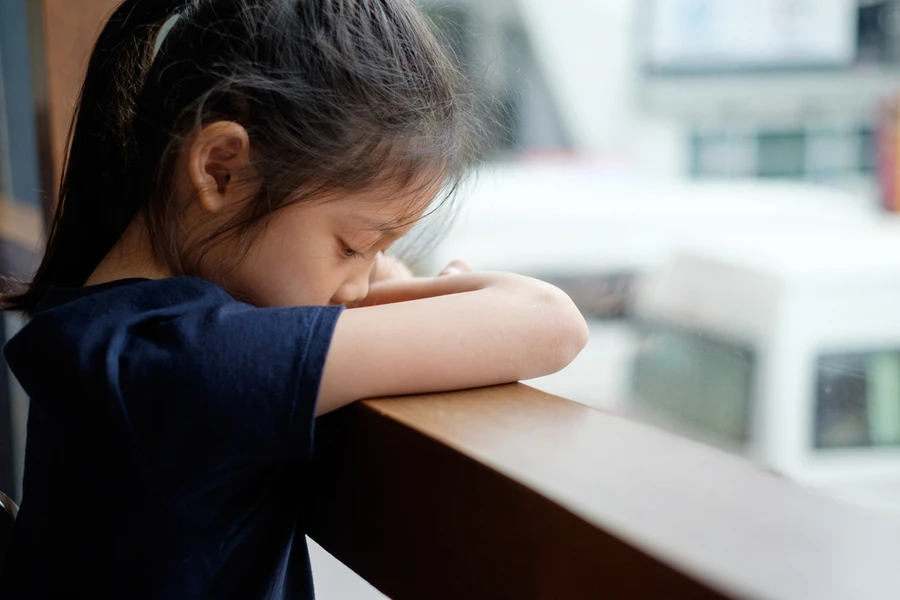
Vatican City, Oct 8, 2017 / 11:52 am (CNA/EWTN News).- While the challenge of protecting children online is one faced throughout the world, Church leaders from Asia and Africa said that the developing world faces the compounding problem of poverty.
“Online sexual income is one of the many faces and one of the many consequences of poverty,” Cardinal Luis Antonio Tagle said in an Oct. 5 keynote speech at a conference on protecting children online.
“Dehumanizing poverty, addressing the problem of dehumanizing poverty in a humanizing way, deserves the attention of all sectors of each country in Asia,” he said, explaining that in some cases, parents from poor families choose to exploit their children online “to earn money,” believing, whether out of ignorance or willful denial, that there is no harm done.
“What a shame, what a scandal, to see the poor dehumanized many times over, now turning to dehumanizing ways to gain a bit of humanity,” he said.
Businesses and industries ought “to be disturbed by economic growth or wealth generation that excludes the greater part of the population of the world,” he said, noting that “while business enterprises increase their profits though online shopping and online transactions, the lives of poor children are destroyed by online exploitation. Can we please think about that?”
Archbishop of Manila in the Philippines, Cardinal Tagle was a keynote speaker during an Oct. 3-6 conference titled “Child Dignity in the Digital World,” focusing on protecting children in an increasingly global and connected world.
The conference is organized by the Pontifical Gregorian University's Center for Child Protection (CCP) in collaboration with the UK-based global alliance WePROTECT and the organization “Telefono Azzurro,” which is the first Italian helpline for children at risk.
Vatican Secretary of State Cardinal Pietro Parolin opened the conference on day one, and other participants include social scientists, civic leaders, and religious representatives. Discussion points include prevention of abuse, pornography, the responsibility of internet providers and the media, and ethical governance.
Beside Cardinal Tagle on the panel Cardinal John Njue, Archbishop Nairobi, Kenya, both of whom spoke on safeguarding minors in the developing world, offering the specific perspectives of Asia and Africa, respectively.
Asia
In his speech, Tagle began by noting that while the conference focuses on the digital world, in Asia child exploitation “does not happen only online,” and pointed to the various forms of exploitation that children, who are “the most vulnerable,” endure due to ethnic and religious conflicts, poverty and migration.
Citing information gathered on the Philippines from the International Justice Mission in Manila, Tagle said “it is wise not to equate online sexual exploitation of children with other forms of trafficking in human persons.”
While the two were at one time included under the same general heading, there was a slow realization that “online sexual exploitation of children deserves its own heading, because it has its unique configuration.”
In the Philippines specifically, he said, the main perpetrators of online child exploitation are sadly the parents, or other adults who know them, such as family members or neighbors.
Generally speaking, Tagle said the main victims of online sexual exploitation in the Philippines are younger than those of human trafficking, ranging in age from 10 months to 15-years old, with more boys being victimized online than in physical human trafficking.
He also pointed to the cooperation of other parties, including Western Union and PayPal, which he said both collect international payments for exploitation.
Complicating the situation, he said, is increasing access to the internet and anonymity of contacts, as well as a basic lack of knowledge about the lasting effects of this type of abuse on the victims.
While some laws do exist regarding such crimes, Cardinal Tagle said that more work must be done in educating the public about these laws and enforcing them, as well as to coordinate efforts of police, local government, families, schools, and faith-based groups.
Offering some points for reflection, Tagle said he believes there is a need in Asia specifically, and likely other regions, for “a serious anthropological, philosophical and, for us, theological study on the humanity of the child.”
He explained that in some cultures, “a child is considered a possession of the adults, therefore an object that can be disposed of by the adults according to their whims and desires.”
“Of course this is camouflaged by some acceptable cultural norms like obedience to elders, elders just exercising their responsibility over the children, the responsibility of children to augment the income of their family,” and so forth, he said, so a “holistic view of the child” is needed.
In comments to CNA after his talk, Tagle said he has a “nagging feeling” that while people throughout the world speak about “the dignity of the child,” many might still have a misunderstood vision of the child that is deeply rooted in cultural practices and norms.
“There might be a conflict between the slogans. I don't want the dignity of children to be just a slogan,” he said. “So can we unearth, can we be honest, especially in our different cultures and in our different religious traditions: What is a child? … Can we be frank? What is our compelling vision?”
There is no universally accepted standard for what constitutes abuse, he said, so in order to eventually arrive at a consensus, “you have to go through cultures,” which is why an anthropological and philosophical study might be necessary.
There might be some cultures that justify abuse through accepted norms, “so how do you confront that culture?” he asked, adding that beyond legislation, “there is a deeper law that people have been following for centuries which is their culture, so you have to address that.”
In his talk, Tagle further reflected on this point. “We need an auto-critique: how does my culture affect my view of children and my behavior toward them?” he said, noting that in some cultures it is accepted that a young girl may be raped in order to restore honor to her family.
The cardinal said he was “aghast” to hear about this, but “it is embedded in the culture,” and this shows the need for dialogue and self-critique, not only for government officials and academics, but for parents, educators, and families as well.
He also said, based on his personal experience in the Philippines, that there is a need for a “serious study on the relation between the virtual, the digital and the real.”
This, he said, is because “some parents say they allow their children to be used online since 'it is only virtual.' There is no 'real' contact.” This could easily be an excuse, he said, but noted that it could also come from a genuine lack of knowledge “about what the virtual reality is.”
“So we need to hear the stories of children who have been asked to do sexual acts before cameras for viewing, for them to be able to bring across the reality of what is happening through virtual reality.”
Africa
Offering the perspective on the safeguarding of minors in Africa was Cardinal John Njue, Archbishop of Nairobi, which Pope Francis visited in 2015 as part of his first tour of the African continent.
In his speech, Njue painted a general picture of a continent that in many ways is still digitally illiterate, and where issues related to sex are largely taboo, but which also falls prey to the same sorts of abuses and exploitation experienced in other parts of the world, including online.
“The digital world, being a new phenomenon, has found a gray ground of abuse in Africa, where the majority of older generations expected to protect minors are not computer literate, leaving their children exposed to cyber-abuse of all kinds,” he said.
Naming just a few of the online dangers that have affected African youth, Njue cited cyber-bullying, 'sexting,' online grooming and gambling for money, as well as a number of suicides that have taken place as a result of the online “Blue Whale Challenge,” in which youth are encouraged to join the game and carry out a number of different challenges, the final one being suicide.
Njue said that according to statistics from communications representatives in Kenya, mobile access among citizens increased to 88.1 percent in 2016, with 37.8 million subscribers to online mobile services.
Other gains were seen in the general internet data market, which spiked to 31.9 million people going digital. However, “telecommunications offices remain largely unregulated, and children remain vulnerable,” he said.
Generally speaking, Njue said that as far as Africa goes, “safeguarding of minors has been neglected in our society.”
In many ways it is a “culture of silence,” he said, explaining that even for parents to bring up human sexuality with their children “is a taboo subject in most of our communities in Kenya, and Africa at large.”
Needed infrastructure is also lacking in many African countries, he said, explaining that law enforcement officers “are not adequately trained and equipped” to deal with cyber-abuse, while the majority of adults “are not computer literate, and therefore are at a disadvantage in knowing what their children are doing with their computers and mobile phones.”
Some have taken advantage of this lack of awareness to promote inappropriate sexual content even through cartoons, with children watching the shows in front of their parents, who are often unconcerned “out of ignorance.”
Poverty, he said, is also a key cause of exploitation, and children are often left alone, as parents are frequently out of the house all day for work.
“This exposes the vulnerable children to all kinds of abuses with no one to protect them from the perpetrators,” Njue said, adding that political strife on the African continent such as the conflicts in Sudan, Somalia, the Democratic Republic of the Congo and the Central African Republic compound the problem, leaving women and children “in danger of all forms of abuse.”
There is also a lack of advocacy and a lack of funds for awareness-raising, he said, because many people are afraid to speak out in a society “which views issues of sexual abuse as taboo, not to be discussed in the open.”
As far as what can be done, Njue echoed Pope Francis' frequent call for greater training of Church personnel and the enactment of laws “to ensure that these sins have no place in their Church. This is why we are here.”
Laws ought to be more stringent, he said, and the faithful, particularly in schools and educational institutes, must also be educated on the dangers involved in internet activities to so that children do not fall victim to abuse or bullying online.
When in 2011 the Congregation for the Doctrine of the Faith requested that all bishops' conferences issue guidelines for safeguarding minors, Kenya responded by issuing a document titled “Safeguarding children, policies and procedures,” Njue said.
However, he said that due to “a lack of data and expertise,” the Kenyan bishops’ conference, as well as others in Africa, “are not able to do much in safeguarding children from cyber-bullying. This is where the conference needs help.”
In terms of action points that could be implemented, Njue said governments must set up a “singular body” that monitors the internet, as was done in the UK, and which takes down websites found to publish and disseminate child pornography.
Parents must also be more pro-active in monitoring what their children do online, he said. And laws must be implemented to handle cases where the child is both the “victim and the perpetrator of cyber-crime” by 'sexting' lewd images of themselves on apps like WhatsApp or Snapchat, he said, and again pointed to models already existing in the UK.
Elders, chiefs and local administration in various villages also ought to be informed of digital risks, and educational institutions ought to push media channels to ensure that television companies are offering appropriate content at times when families might be watching, he said.
As far as the Church goes, Njue said she must first of all accompany children by giving them a solid education in Christian values, “thus empowering and creating a good foundation of morals in them.”
The Church should also take advantage of the various groups, associations, movements and educational institutions she runs in order to educate children on cyber-bullying and sexual abuse to ensure their protection. Similarly, clergy and religious should also be given adequate information on risks and prevention.
Njue also called for heavy investment for counseling and rescue services for victims, and for greater cooperation with the state and with law enforcement to ensure proper training and that all cases “are followed to the end.”
“The safeguarding of minors is a multi-faceted social problem that requires the synergy of all disciplines to bring about prevention,” Njue said, stressing that regional and international collaboration are necessary throughout Africa “if we are to respond to the challenges of child online abuse in a digitally, culturally diverse world.”
Sexual abuse is a problem “across all borders,” he said. “From the poorest remote village in Africa, Asia and Latin America, to the richest countries in the developed world, there is no exclusion.”
Because of this, “it is our cardinal duty and obligation to see to it that children are protected from all forms of sexual abuses, including cyber-bullying and pornographic movies, and to fully implement the laws and regulations to the letter,” Njue said.
He insisted that the Church, and society as a whole, “should advertise zero-tolerance to any form of abuse of minors,” and voiced his hope that the conference would “be the beginning of a new journey.”
Previous Post

October 8, 2017
Australian bishops meet in Rome as Church reels from recent crisis
Next Post
October 8, 2017 Why this young woman spoke up against 'Men for Choice'
Browse Our Archives
Select a Category Americas Asia - Pacific Europe Middle East - Africa Uncategorized US Vatican
Select a Month November 2017 October 2017 September 2017 August 2017 July 2017 June 2017 May 2017 April 2017 March 2017 February 2017 January 2017 December 2016 November 2016 October 2016 September 2016 August 2016 July 2016 June 2016 May 2016 April 2016 March 2016 February 2016 January 2016 December 2015 November 2015 October 2015 September 2015 August 2015 July 2015 June 2015 May 2015 April 2015 March 2015 February 2015 January 2015 December 2014 November 2014 October 2014 September 2014 August 2014 July 2014 June 2014 May 2014 April 2014 March 2014 February 2014 January 2014 December 2013 November 2013 October 2013 September 2013 August 2013 July 2013 June 2013 May 2013 April 2013 March 2013 February 2013 January 2013 December 2012 November 2012 October 2012 September 2012 August 2012 July 2012 June 2012 May 2012
TAKE THE
Religious Wisdom Quiz
In which Psalm do we find "Your word is a lamp to my feet..."?
Select your answer to see how you score.
Psalm 119 Psalm 23 Psalm 90 Psalm 27
Related posts from Catholic News

How do we help trafficking victims re-enter society?...

More than just giving – World Day of...

New book reveals details of John Paul I’s...

Despite reports, Pope Francis isn’t opening the door...
TRENDING AT PATHEOS Catholic

Rejecting Doom: Christian Hope And Human Action
Christianity is a religion of hope. We are to have hope and...

It’s What Comes From Within Which Matters
One of the most difficult things for us to understand is why...

Why I Choose the Eucharist Over the Sermon
Choose the Eucharist, Not the Sermon What are we supposed to get...

5 Design Elements Found in Spiritually Rooted Homes
Putting Spirituality Into Home Decor Our homes are more than our living...

Credo: A Story of God Told with the...
About 10 years ago, I began to imagine a personal "Credo" that...

The Anatomy of Divine Revelation in Catholic Thought
The claim that God has made Himself known to human beings is...
view all Catholic blogs
Ad-Free & Subscriber Log-In Subscription Support
- About Us
- 2026 Calendar
- Videos
- Podcasts
- Library of World Religions
- Faith In Media Tracker
- Advertise With Us
- Write for Us
- Privacy Policy
- Terms of Service
- Do Not Sell My Data
- Contact Us
- Radiant Digital
- Manage Newsletter Subscriptions
- Unsubscribe From Notifications
- Sitemap
Copyright 2008-2026, Patheos. All rights reserved.
Subscription Support Ad-Free & Subscriber Log-In
Follow Patheos