
BuddhistCatholicContemplativeEvangelicalGeneral ChristianHinduJewishLatter-day SaintMuslimNew VisionsProgressive Christian
Beliefs
- Buddhist
- Catholic
- Contemplative
- Evangelical
- General Christian
- Hindu
- Jewish
- Latter-day Saint
- More Voices
- Muslim
- New Visions
- Pagan
- Progressive Christian
Topics
- Religion News
- Food and Religion
- Sports and Religion
- Religious Art
- Religious Music and Entertainment
- Religious Events
- History and Religion
- Style and Religion
- Politics and Religion
- Women in Religion
- Recreation Outdoors and Religion
- Business Finance and Religion
- Careers Workplace and Religion
- Education and Religion
- Family Parenting and Religion
- Health Fitness and Religion
- Home and Religion
- Relationships and Religion
- Technology and Religion
- Travel and Religion
Columnists
- Buddhist Columnists
- Business Finance and Religion Columnists
- Careers Workplace and Religion Columnists
- Catholic Columnists
- Contemplative Columnists
- Education and Religion Columnists
- Evangelists Columnists
- Family Parenting and Religion Columnists
- General Christian Columnists
- Health Fitness and Religion Columnists
- Hindu Columnists
- History and Religion Columnists
- Home and Religion Columnists
- Jewish Columnists
- More Voices Columnists
- Latter Day Columnists
- Muslim Columnists
- New Visions Columnists
- Nonreligious Columnists
- Pagan Columnists
- Politics and Religion Columnists
- Progressive Columnists
- Recreation Outdoors and Religion Columnists
- Relationships and Religion Columnists
- Religion News Columnists
- Religious Art Columnists
- Religious Events Columnists
- Religious Music and Entertainment Columnists
- Sports and Religion Columnists
- Style and Religion Columnists
- Technology and Religion Columnists
- Travel and Religion Columnists
- Women in Religion Columnists
Resource Library
- 2026 Calendar
- Library of World Religions
- The 100 Most Holy Places on Earth
- Patheos Answers
- Podcasts
- Videos
- Faith Leaders Database
- Anglican Episcopalian
- Bahai
- Baptist
- Buddhism
- Christianity
- Confucianism
- Eastern Orthodoxy
- Hinduism
- Holiness and Pentecostal
- ISKCON
- Islam
- Judaism
- Lutheran
- Methodist
- The Church of Jesus Christ of Latter-day Saints
- New Age
- Paganism
- Presbytarian and Reformed
- Protestantism
- Religion Behind the Scenes
- Roman Catholic
- Scientology
- Shia Islam
- Sikhism
- Sufism
- Sunni Islam
- Taoism
- Zen
- See all religions
Research Tools
 Ad-Free & Subscriber Log-In Subscription Support
Ad-Free & Subscriber Log-In Subscription Support
Follow Patheos 

- Trending:
- Forgiveness
- |
- Marriage
- |
- Consciousness
- |
- Death Penalty
- |
- Election
- |
- Halloween
 Catholic News
- Home
- Catholic
- Religion News
- Europe at a crossroads
Europe at a crossroads
Last updated on: October 19, 2017 at 12:01 pm by CNA Daily News
Europe at a crossroads 2017-10-19T12:01:00+00:00 CNA Daily News
Patheos Explore the world's faith through different perspectives on religion and spirituality! Patheos has the views of the prevalent religions and spiritualities of the world.
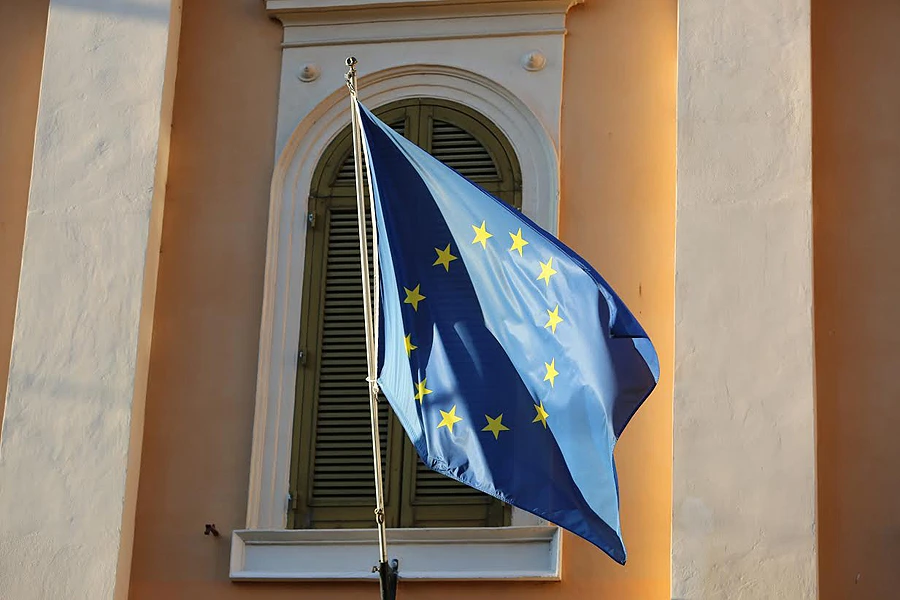
Paris, France, Oct 19, 2017 / 06:01 am (CNA/EWTN News).- On Sunday, the people of Austria elected a new government. At 31 years of age, Sebastian Kurz is poised to become Europe's youngest head of government. The Chancellor-to-be of Austria is a Catholic who says of himself that he has a cross hanging in his apartment and that "the faith is very important to me", though he doesn't make it to church as often as he would like to.
Kurz won his landslide victory by doing two things. Firstly, emphasising a strong national identity in general, and secondly, taking a harder line on mass immigration in particular – at least by Western European standards. Like it or lump it – and much of the German speaking media is indeed aghast at the outcome – Austria's election result, for all its idiosyncrasies, is part of a broader revolt against the EU and what it stands for.
On Oct. 7, a week before Austrians went to the polls, ten intellectuals from eight European nations published a call for "A Europe we can believe in". This "Paris Statement", they declared, purports "to actively recover what is best in our tradition", and to build a "peaceful, hopeful and noble future together". Comprising more than 4,000 words, the manifesto is reminiscent of what the popes have warned Europe about time and again: losing her Christian soul.
As Pope Francis put it when addressing the European Parliament Nov. 25, 2014: "In many quarters we encounter a general impression of weariness and aging, of a Europe which is now a ‘grandmother’, no longer fertile and vibrant. As a result, the great ideas which once inspired Europe seem to have lost their attraction, only to be replaced by the bureaucratic technicalities of its institutions."
Three years later, this European malaise has broken out in a rash, from the streets of Barcelona to the bureaucracies in Brussels and Berlin, from the shiny offices of London’s City to the beaches of Lampedusa.
As the Paris Statement warns, Europe is facing a challenge of epic, indeed, historic proportions, of which the demographic decline, institutional distrust, rise in populism and independence movements, waves of unregulated mass immigration and rising concerns over Islamism are all but symptoms.
What is at stake, according to its signatories – which include the Catholic philosophers Robert Spaemann (a friend and advisor to Pope Francis's predecessors), Rémi Brague (a Ratzinger Prize winner), and Ryszard Legutko (a member of the Polish government) – goes deeper: If Europe abandons her Christian roots, rather than drawing on them for renewal, Europe's peoples and cultures will lose their "home".
What is meant by "home" – the word used in the German version, Heimat, expresses it more starkly – is not just a place or a roof over your head. It is ontological: A place of being-at-home, of belonging. The opposite is not just homelessness, but annihilation, be it cultural or physical – a point brought home by the plight of Christians in the Middle East.
From Oct 9-13, government officials, religious community leaders and non-governmental organisations, including Alliance Defending Freedom (ADF), met in Budapest for an International Consultation on Christian Persecution.
ADF Executive Director Paul Coleman said during the conference lead-up: "In the Middle East, ISIS has deliberately targeted Christian communities for destruction. We went to Beirut, Amman and Erbil to meet with Christian refugees from Iraq. We spoke with them, cried with them, prayed with them. We documented their testimonies, and provided this evidence to those in power. Successive governments and recently even the United Nations are recognising that ISIS is committing genocide."
Addressing the 300 participants from 30 nations, Hungary's head of government, Prime Minister Viktor Orbán, said that while the “intellectual discrimination” against Christians in Europe is “painful but tolerable,” the physical suffering endured by those in Africa and the Middle East is being ignored by an “apathetic Europe” that “denies its Christian roots.”
“A group of Europe’s intellectual and political leaders want to create a mixed society that would completely change the continent’s cultural and ethnic identity, and Christian nature, within just a few generations,” Orbán said. “Hungary, however, is doing the opposite of what Europe is currently doing.”
British intellectual Sir Roger Scruton, one of the signatories of the Paris Statement, agrees with this stance.
"Poland and Hungary are on the right track. You only have to see the dogmatism and cruelty of the Islamic revival in Africa and the Middle East to recognize how threatened we are", the philosopher told CNA in an email interview.
Even critics of the Paris Statement agree that there are valid reasons for this existential angst for Europe. If anything, they scold the scholars for not being clearer about it. “What is Europe?” Matthew Walther asks in "The Week”, and then continues: “For me Hilaire Belloc put it best: ‘Europe is the faith, and the faith is Europe’” – and, laconically, Walther adds: “He should have said ‘was’."
Not everyone is as pessimistic – least of all the popes. In the early 2000s, Saint John Paul II eloquently, albeit unsuccessfully, appealed for the European Union’s constitution to mention Europe’s Christian roots.
Undeterred, the then-Prefect of the Congregation of the Doctrine of the Faith, Cardinal Joseph Ratzinger, continued the struggle. In a 2004 interview with Le Figaro magazine, Cardinal Ratzinger judged the EU’s decision to avoid any mention of God a mistake.
As Pope Benedict XVI, he then used the occasion of his very first general audience in 2005 to point out "the inalienable Christian roots of [Europe’s] culture and civilisation”. Later that year, visiting Cologne for World Youth Day, he urged one million people attending mass there to recover their Christian roots. Time and again, he emphasised that the future of Christianity is a bright one in Europe – albeit only in the long term.
For now, Europe is at a crossroads; and the actual role of the Church in helping the continent rediscover its Christian soul is clear, at least to Roger Scruton.
"The Catholic Church should do what it is called to do, namely preach the gospel and defend the faith", he told CNA.
Previous Post

October 19, 2017
Excluding people with disabilities makes Church 'incomplete'
Next Post
October 19, 2017 Pope to Methodists: Reconciliation is more than talk – it needs action
Browse Our Archives
Select a Category Americas Asia - Pacific Europe Middle East - Africa Uncategorized US Vatican
Select a Month November 2017 October 2017 September 2017 August 2017 July 2017 June 2017 May 2017 April 2017 March 2017 February 2017 January 2017 December 2016 November 2016 October 2016 September 2016 August 2016 July 2016 June 2016 May 2016 April 2016 March 2016 February 2016 January 2016 December 2015 November 2015 October 2015 September 2015 August 2015 July 2015 June 2015 May 2015 April 2015 March 2015 February 2015 January 2015 December 2014 November 2014 October 2014 September 2014 August 2014 July 2014 June 2014 May 2014 April 2014 March 2014 February 2014 January 2014 December 2013 November 2013 October 2013 September 2013 August 2013 July 2013 June 2013 May 2013 April 2013 March 2013 February 2013 January 2013 December 2012 November 2012 October 2012 September 2012 August 2012 July 2012 June 2012 May 2012
TAKE THE
Religious Wisdom Quiz
Who said, 'Let my people go'?
Select your answer to see how you score.
Joshua Moses Aaron Elijah
Related posts from Catholic News

Sixty Vincentians martyred during Spanish Civil War to...

Filipinos gather in Rome to promote bishop's beatification...

UK bishop calls for prayers as MPs urge...

On All Souls' Day, Pope Francis prays for...
TRENDING AT PATHEOS Catholic

Rejecting Doom: Christian Hope And Human Action
Christianity is a religion of hope. We are to have hope and...

It’s What Comes From Within Which Matters
One of the most difficult things for us to understand is why...

Why I Choose the Eucharist Over the Sermon
Choose the Eucharist, Not the Sermon What are we supposed to get...

5 Design Elements Found in Spiritually Rooted Homes
Putting Spirituality Into Home Decor Our homes are more than our living...

Credo: A Story of God Told with the...
About 10 years ago, I began to imagine a personal "Credo" that...

The Anatomy of Divine Revelation in Catholic Thought
The claim that God has made Himself known to human beings is...
view all Catholic blogs
Ad-Free & Subscriber Log-In Subscription Support
- About Us
- 2026 Calendar
- Videos
- Podcasts
- Library of World Religions
- Faith In Media Tracker
- Advertise With Us
- Write for Us
- Privacy Policy
- Terms of Service
- Do Not Sell My Data
- Contact Us
- Radiant Digital
- Manage Newsletter Subscriptions
- Unsubscribe From Notifications
- Sitemap
Copyright 2008-2026, Patheos. All rights reserved.
Subscription Support Ad-Free & Subscriber Log-In
Follow Patheos