
BuddhistCatholicContemplativeEvangelicalGeneral ChristianHinduJewishLatter-day SaintMuslimNew VisionsProgressive Christian
Beliefs
- Buddhist
- Catholic
- Contemplative
- Evangelical
- General Christian
- Hindu
- Jewish
- Latter-day Saint
- More Voices
- Muslim
- New Visions
- Pagan
- Progressive Christian
Topics
- Religion News
- Food and Religion
- Sports and Religion
- Religious Art
- Religious Music and Entertainment
- Religious Events
- History and Religion
- Style and Religion
- Politics and Religion
- Women in Religion
- Recreation Outdoors and Religion
- Business Finance and Religion
- Careers Workplace and Religion
- Education and Religion
- Family Parenting and Religion
- Health Fitness and Religion
- Home and Religion
- Relationships and Religion
- Technology and Religion
- Travel and Religion
Columnists
- Buddhist Columnists
- Business Finance and Religion Columnists
- Careers Workplace and Religion Columnists
- Catholic Columnists
- Contemplative Columnists
- Education and Religion Columnists
- Evangelists Columnists
- Family Parenting and Religion Columnists
- General Christian Columnists
- Health Fitness and Religion Columnists
- Hindu Columnists
- History and Religion Columnists
- Home and Religion Columnists
- Jewish Columnists
- More Voices Columnists
- Latter Day Columnists
- Muslim Columnists
- New Visions Columnists
- Nonreligious Columnists
- Pagan Columnists
- Politics and Religion Columnists
- Progressive Columnists
- Recreation Outdoors and Religion Columnists
- Relationships and Religion Columnists
- Religion News Columnists
- Religious Art Columnists
- Religious Events Columnists
- Religious Music and Entertainment Columnists
- Sports and Religion Columnists
- Style and Religion Columnists
- Technology and Religion Columnists
- Travel and Religion Columnists
- Women in Religion Columnists
Resource Library
- 2026 Calendar
- Library of World Religions
- The 100 Most Holy Places on Earth
- Patheos Answers
- Podcasts
- Videos
- Faith Leaders Database
- Anglican Episcopalian
- Bahai
- Baptist
- Buddhism
- Christianity
- Confucianism
- Eastern Orthodoxy
- Hinduism
- Holiness and Pentecostal
- ISKCON
- Islam
- Judaism
- Lutheran
- Methodist
- The Church of Jesus Christ of Latter-day Saints
- New Age
- Paganism
- Presbytarian and Reformed
- Protestantism
- Religion Behind the Scenes
- Roman Catholic
- Scientology
- Shia Islam
- Sikhism
- Sufism
- Sunni Islam
- Taoism
- Zen
- See all religions
Research Tools
 Ad-Free & Subscriber Log-In Subscription Support
Ad-Free & Subscriber Log-In Subscription Support
Follow Patheos 

- Trending:
- Forgiveness
- |
- Marriage
- |
- Consciousness
- |
- Death Penalty
- |
- Election
- |
- Halloween
 Catholic News
- Home
- Catholic
- Religion News
- Christians play vital role in Middle East – the view from Lebanon
Christians play vital role in Middle East – the view from Lebanon
Last updated on: October 24, 2017 at 9:35 pm by CNA Daily News
Christians play vital role in Middle East – the view from Lebanon 2017-10-24T21:35:00+00:00 CNA Daily News
Patheos Explore the world's faith through different perspectives on religion and spirituality! Patheos has the views of the prevalent religions and spiritualities of the world.
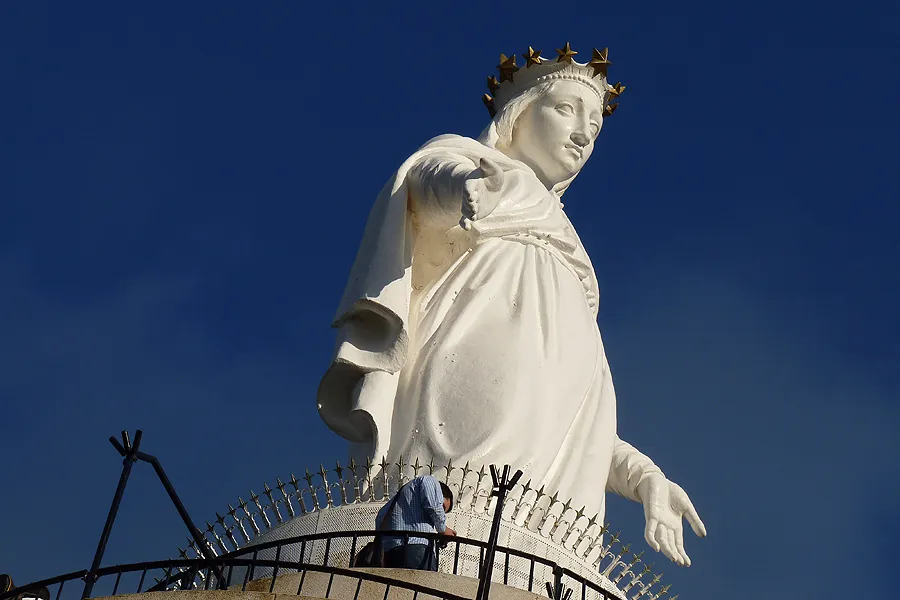
Byblos, Lebanon, Oct 24, 2017 / 03:35 pm (Aid to the Church in Need).- The Church in Lebanon is working to aid the 1.5 million Syrian refugees in Lebanon, the great majority of whom are Muslim, and the Bishop of the Maronite Eparchy of Jbeil recently told Aid to the Church in Need about these efforts.
Bishop Michel Aoun teaches sacramental theology at the Holy Spirit University in Beirut and serves as the liaison for the country’s Catholic patriarchs and bishops with Caritas Lebanon.
He spoke with papal charity Aid to the Church in Need on a recent visit to New York. He spoke in particular on the local Churches' role in coming to the aid of the 1.5 million Syrian refugees in Lebanon, an influx that has posed enormous challenges for a country whose own population is just 4.5 million.
Please read below the text of Aid to the Church in Need's interview with Bishop Aoun:
What is the situation at present—are the refugees being integrated somehow?
The refugees are everywhere, along the border with Syria, and in every town and village across the entire country. They are not in refugee camps. These people get some support from international organizations, but they also are seeking work. That is a problem: a Syrian will work for a lot less money than would a Lebanese. As a result, the country is getting poorer. For Caritas it is a special challenge; we are called to help the Syrians, which upsets the Lebanese, who are saying they themselves increasingly need support. Syrian Christians, on the other hand, have local connections, are helped by Churches, etc. The Muslim refugees pose the biggest challenge.
What has been the approach of Caritas in Lebanon?
In conjunction with our partners in Europe and elsewhere, we are allotting at least 30 percent or sometimes even 40 percent of our budget to fund projects in support of vulnerable Lebanese – for example, in supporting schools. That is a good thing. We are also focusing on projects that benefit the Lebanese, as well as the Syrian refugees. In addition, we support Lebanese communities that have a particularly hard time coping, such as those living along the Syrian border; we help them with modest economic development, education, or supply of water, so that local residents are not forced to migrate to the big cities like Beirut. It is important to keep these villages vibrant, so that they simply do not lose all their residents.
With violence abating, to some extent, in Syria, is the refugee crisis in Lebanon easing? Are Syrians – Muslims and Christians – beginning to return home?
That process has not yet begun, much as we want that to happen. Those Muslims who are in Lebanon are opposed to the Assad regime; the majority is Sunni. They await action on the part of the international community so that they can be sure that they will be given protection from being persecuted by the Syrian regime.
There is another issue. These refugees have now spent some four years in Lebanon and have gotten used to a better way of life than the one they left behind. Some are reluctant to leave also because Lebanon offers certain liberties that the dictatorship in Syria, a totalitarian system, would never allow.
Is the additional Sunni presence in Lebanon a threat to Lebanon’s stability?
Lebanon must preserve a certain balance, an equilibrium. Absorbing such a large number of Sunnis could thus pose a threat to that equilibrium. Neither the Shiites nor the Christians of Lebanon could accept that; a solution to the refugee crisis must be found.
Are there tensions in Lebanon between Christians and Muslims?
No, there is a long history of harmony between the two communities, which dates back many decades, up to a century. That culture of living side-by-side is inscribed in the hearts of our people. They work side-by-side and, in Catholic schools, often there are 15 percent or 20 percent, or more, of the students who are Muslim. Muslim parents are eager to have their children taught certain basic values at our schools.
Could Lebanon be a model for the Middle East in this regard?
Yes, St. John Paul II declared that Lebanon, with its conviviality among Christians and Muslims, has a message for the region. Citizens here have the same rights and obligations. It is therefore crucial for the world to help Lebanon preserve this unique state of affairs that shows the world that Christians and Muslims can live together.
Given the upheaval and wars in the region, is Lebanon at risk of losing its privileged position in this regard?
The greatest risk is that Christians will leave Lebanon, also that they do not have many children. That is crucial for maintaining this equilibrium. Christians should not become a small minority. Right now, approximately 38 percent of Lebanese are Christians, with Muslims comprising 62 percent, more or less half Sunnis and half Shiites, not counting the refugees.
What does the Maronite Church in Lebanon want Churches in the West to do?
It would be great if Christians in the West would petition their government so that, for example, the US government take account of the importance of Christians in the Middle East. It seems that sometimes that economic considerations have precedence, as has been the case in Iraq, for example. Western policy should ensure that Christians remain in the Middle East – their presence is vital.
The Lebanese example shows why: Lebanese Muslims are very much influenced by Christians – they are different than Muslims in Syria or Iraq, because they have lived side by side with many Christians and have been exposed to Christian values, including their support for democracy, and tolerance. That is a vital, indispensable gift Christians have to offer the region.
Previous Post

October 24, 2017
Updated: Undocumented teen has abortion, following court approval
Next Post
October 24, 2017 Denver archbishop addresses teen social media use, suicide spike
Browse Our Archives
Select a Category Americas Asia - Pacific Europe Middle East - Africa Uncategorized US Vatican
Select a Month November 2017 October 2017 September 2017 August 2017 July 2017 June 2017 May 2017 April 2017 March 2017 February 2017 January 2017 December 2016 November 2016 October 2016 September 2016 August 2016 July 2016 June 2016 May 2016 April 2016 March 2016 February 2016 January 2016 December 2015 November 2015 October 2015 September 2015 August 2015 July 2015 June 2015 May 2015 April 2015 March 2015 February 2015 January 2015 December 2014 November 2014 October 2014 September 2014 August 2014 July 2014 June 2014 May 2014 April 2014 March 2014 February 2014 January 2014 December 2013 November 2013 October 2013 September 2013 August 2013 July 2013 June 2013 May 2013 April 2013 March 2013 February 2013 January 2013 December 2012 November 2012 October 2012 September 2012 August 2012 July 2012 June 2012 May 2012
TAKE THE
Religious Wisdom Quiz
Great is your faithfulness! Your mercies are new every what?
Select your answer to see how you score.
Day Morning Hour Season
Related posts from Catholic News

Christianity can survive in Iraq but not without...

How can Saudi Arabia counter violent extremism? Religious...

What it's like to be a missionary in...

Kidnapped priest in Nigeria released, doing well
TRENDING AT PATHEOS Catholic

Rejecting Doom: Christian Hope And Human Action
Christianity is a religion of hope. We are to have hope and...

It’s What Comes From Within Which Matters
One of the most difficult things for us to understand is why...

Why I Choose the Eucharist Over the Sermon
Choose the Eucharist, Not the Sermon What are we supposed to get...

5 Design Elements Found in Spiritually Rooted Homes
Putting Spirituality Into Home Decor Our homes are more than our living...

Credo: A Story of God Told with the...
About 10 years ago, I began to imagine a personal "Credo" that...

The Anatomy of Divine Revelation in Catholic Thought
The claim that God has made Himself known to human beings is...
view all Catholic blogs
Ad-Free & Subscriber Log-In Subscription Support
- About Us
- 2026 Calendar
- Videos
- Podcasts
- Library of World Religions
- Faith In Media Tracker
- Advertise With Us
- Write for Us
- Privacy Policy
- Terms of Service
- Do Not Sell My Data
- Contact Us
- Radiant Digital
- Manage Newsletter Subscriptions
- Unsubscribe From Notifications
- Sitemap
Copyright 2008-2026, Patheos. All rights reserved.
Subscription Support Ad-Free & Subscriber Log-In
Follow Patheos