
BuddhistCatholicContemplativeEvangelicalGeneral ChristianHinduJewishLatter-day SaintMuslimNew VisionsProgressive Christian
Beliefs
- Buddhist
- Catholic
- Contemplative
- Evangelical
- General Christian
- Hindu
- Jewish
- Latter-day Saint
- More Voices
- Muslim
- New Visions
- Pagan
- Progressive Christian
Topics
- Religion News
- Food and Religion
- Sports and Religion
- Religious Art
- Religious Music and Entertainment
- Religious Events
- History and Religion
- Style and Religion
- Politics and Religion
- Women in Religion
- Recreation Outdoors and Religion
- Business Finance and Religion
- Careers Workplace and Religion
- Education and Religion
- Family Parenting and Religion
- Health Fitness and Religion
- Home and Religion
- Relationships and Religion
- Technology and Religion
- Travel and Religion
Columnists
- Buddhist Columnists
- Business Finance and Religion Columnists
- Careers Workplace and Religion Columnists
- Catholic Columnists
- Contemplative Columnists
- Education and Religion Columnists
- Evangelists Columnists
- Family Parenting and Religion Columnists
- General Christian Columnists
- Health Fitness and Religion Columnists
- Hindu Columnists
- History and Religion Columnists
- Home and Religion Columnists
- Jewish Columnists
- More Voices Columnists
- Latter Day Columnists
- Muslim Columnists
- New Visions Columnists
- Nonreligious Columnists
- Pagan Columnists
- Politics and Religion Columnists
- Progressive Columnists
- Recreation Outdoors and Religion Columnists
- Relationships and Religion Columnists
- Religion News Columnists
- Religious Art Columnists
- Religious Events Columnists
- Religious Music and Entertainment Columnists
- Sports and Religion Columnists
- Style and Religion Columnists
- Technology and Religion Columnists
- Travel and Religion Columnists
- Women in Religion Columnists
Resource Library
- 2026 Calendar
- Library of World Religions
- The 100 Most Holy Places on Earth
- Patheos Answers
- Podcasts
- Videos
- Faith Leaders Database
- Anglican Episcopalian
- Bahai
- Baptist
- Buddhism
- Christianity
- Confucianism
- Eastern Orthodoxy
- Hinduism
- Holiness and Pentecostal
- ISKCON
- Islam
- Judaism
- Lutheran
- Methodist
- The Church of Jesus Christ of Latter-day Saints
- New Age
- Paganism
- Presbytarian and Reformed
- Protestantism
- Religion Behind the Scenes
- Roman Catholic
- Scientology
- Shia Islam
- Sikhism
- Sufism
- Sunni Islam
- Taoism
- Zen
- See all religions
Research Tools
 Ad-Free & Subscriber Log-In Subscription Support
Ad-Free & Subscriber Log-In Subscription Support
Follow Patheos 

- Trending:
- Forgiveness
- |
- Marriage
- |
- Consciousness
- |
- Death Penalty
- |
- Election
- |
- Halloween
 Catholic News
- Home
- Catholic
- Religion News
- Christians in Middle East feel ‘abandoned, betrayed’ by the West
Christians in Middle East feel ‘abandoned, betrayed’ by the West
Last updated on: October 12, 2017 at 4:20 pm by CNA Daily News
Christians in Middle East feel ‘abandoned, betrayed’ by the West 2017-10-12T16:20:00+00:00 CNA Daily News
Patheos Explore the world's faith through different perspectives on religion and spirituality! Patheos has the views of the prevalent religions and spiritualities of the world.
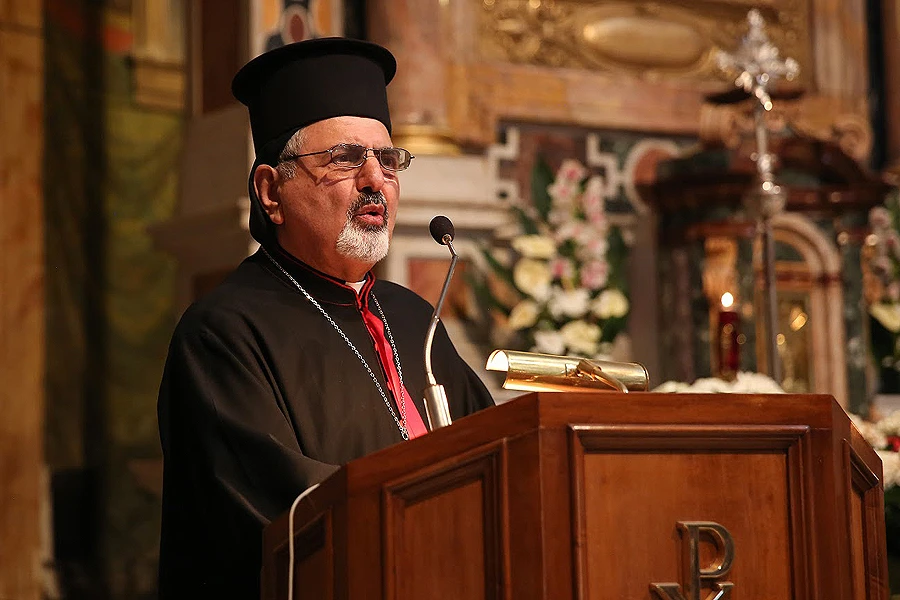
Rome, Italy, Oct 12, 2017 / 10:20 am (CNA/EWTN News).- As interreligious tensions and a migration crisis continue in the Middle East, key Church leaders in the region have said Christians largely feel abandoned by the international community, which has done little to help resolve the situation.
According to Syriac Catholic Patriarch of Antioch Ignatius Joseph III Younan, Christians in the Middle East “feel that we have been abandoned, even betrayed, because we were hoping that the international community would defend our rights and provide us with the equal chance to live in our homeland, but that wasn't the case.”
“It's not easy to endure that violent upheaval in those two countries, in Iraq and Syria,” he said, explaining that both faithful and Church leaders in the region share this sense of abandonment and betrayal by Western countries in particular, which he said are more “opportunistic” than helpful.
“We, the heads of Churches, along with some other prominent lay people who have been caring for their communities, we try to send our voice, our rights, like St. John the Baptist, but it seems that we are shouting in the desert,” he said.
Younan cited “opportunistic geopolitics” as one of the main reasons Christians have either been left homeless with no funding to rebuild their cities, or left lingering in refugee camps for years due to a backlog in visa requests while being denied official refugee status.
“We don't have the interest regarding our faith among the politicians that govern the Western countries. We don't have the numbers, we don't have the oil, we don't pose any terrorist threat to the civilized world, and therefore we have been put aside and neglected,” he said.
The patriarch is in Rome for the Oct. 9-12 plenary assembly marking the centenary of the Congregation for the Oriental Churches and the Pontifical Oriental Institute, founded by Benedict XV.
Christians from Iraq and Syria who have fled to neighboring countries such as Lebanon, Turkey, and Jordan are still living “in a kind of limbo. They don't know what to do for their children,” he said.
In terms of numbers, Younan said that so far more than 50 percent of Christians in Iraq have already left the country, while a third of the remaining Christian population is internally displaced.
As far as the Christian presence in Syria, “we can easily talk about a third” of the Christian population having left, with many still waiting to be admitted to new countries.
The main needs of refugees and displaced persons is first of all humanitarian assistance, Younan said, explaining that the Church tries to provide for their basic needs, “but surely its not enough,” since most have already been displaced for several years.
“We still suffer with them in our souls because we don't know what to do for them. We can't seek refugee visas for them, because otherwise the Christian community would be empty in their homelands and for us this is a great loss,” he said. “But we try to respond to their basic needs.”
In terms of dialogue between Christianity and Islam, the patriarch said at times it's difficult to speak of such a dialogue in the current cultural context, but it must happen at the level of “the believers of each religion.”
At the present moment, dialogue is focused on how the two can mutually and peacefully coexist, he said, with an emphasis on the fact that “we live in the 21 st century, that we have to respect each other, to accept each other and not discriminate because of religion.”
“This is also the mission, the task of the countries who have a word to say on the international scene,” he said. “We sit together at the United Nations…and we talk about human rights and therefore we have to uphold those rights for all, not only for the ones who believe in our religion, but for all people.”
While the Holy See, and Pope Francis in particular, understand and are doing their best to help in the plight of Christians in the Middle East, Younan said that in the broader community “the geopolitical strategy of the mighty countries is still in, let's say, the 'winning' part in the world.”
“To follow the ethics of the Gospel, the real defense of human rights is for those who are the weakest and for the forgotten ones among the minorities in the Middle East,” he said, but “that's not the case, we are not the point of their interest.”
The first right that needs to be promoted for Christians in the Middle East is to be able “to live in freedom as equal citizens,” rather than second-class citizens who face harsh discrimination which frequently goes unpunished by the law, the patriarch said.
Another key right is the ability “to choose our creed, our religion, and the right also to announce our creed, our religion to others,” he said.
However, currently “it's forbidden” to evangelize in Muslim countries apart from Lebanon. Because of this, “we've been always, along the centuries, reduced to minorities because we've been forbidden to be missionaries in our own country.”
Issuing an appeal to the international community, Younan asked that Western nations not look at Christian and other minorities in the Middle East “as numbers, but as people, as persons, being persecuted along the centuries.”
“We've been reduced to minorities not because we had to leave our countries, but because we are not considered equal citizens with the Muslim majority,” he said, and called on “this so-called civilized world not just to look for their own political, economic interest,” but to protect “the rights of those who are persecuted because of their religion and their creed.”
“This is the way to deal with our problems, our very critical situation,” he said. And if the world fails to do defend the “human and religious” rights of everyone, “the Middle East will be emptied of their Christian communities and it would be a very great loss.”
Material from EWTN News Nightly was used in this report.
Previous Post

October 12, 2017
Pope's death penalty views may mean new approach to criminal justice
Next Post
October 12, 2017 Our Lady of Aparecida's smile gives us hope, Pope Francis says
Browse Our Archives
Select a Category Americas Asia - Pacific Europe Middle East - Africa Uncategorized US Vatican
Select a Month November 2017 October 2017 September 2017 August 2017 July 2017 June 2017 May 2017 April 2017 March 2017 February 2017 January 2017 December 2016 November 2016 October 2016 September 2016 August 2016 July 2016 June 2016 May 2016 April 2016 March 2016 February 2016 January 2016 December 2015 November 2015 October 2015 September 2015 August 2015 July 2015 June 2015 May 2015 April 2015 March 2015 February 2015 January 2015 December 2014 November 2014 October 2014 September 2014 August 2014 July 2014 June 2014 May 2014 April 2014 March 2014 February 2014 January 2014 December 2013 November 2013 October 2013 September 2013 August 2013 July 2013 June 2013 May 2013 April 2013 March 2013 February 2013 January 2013 December 2012 November 2012 October 2012 September 2012 August 2012 July 2012 June 2012 May 2012
TAKE THE
Religious Wisdom Quiz
In 1 Peter, what does Peter say Christ was chosen before but revealed in when?
Select your answer to see how you score.
Before the creation of the world, revealed in these last times Before time began, revealed at the resurrection Before the prophets spoke, revealed at Pentecost Before Abraham was born, revealed at his baptism
Related posts from Catholic News

Sixty Vincentians martyred during Spanish Civil War to...

Filipinos gather in Rome to promote bishop's beatification...

UK bishop calls for prayers as MPs urge...

On All Souls' Day, Pope Francis prays for...
TRENDING AT PATHEOS Catholic

Rejecting Doom: Christian Hope And Human Action
Christianity is a religion of hope. We are to have hope and...

It’s What Comes From Within Which Matters
One of the most difficult things for us to understand is why...

Why I Choose the Eucharist Over the Sermon
Choose the Eucharist, Not the Sermon What are we supposed to get...

5 Design Elements Found in Spiritually Rooted Homes
Putting Spirituality Into Home Decor Our homes are more than our living...

Credo: A Story of God Told with the...
About 10 years ago, I began to imagine a personal "Credo" that...

The Anatomy of Divine Revelation in Catholic Thought
The claim that God has made Himself known to human beings is...
view all Catholic blogs
Ad-Free & Subscriber Log-In Subscription Support
- About Us
- 2026 Calendar
- Videos
- Podcasts
- Library of World Religions
- Faith In Media Tracker
- Advertise With Us
- Write for Us
- Privacy Policy
- Terms of Service
- Do Not Sell My Data
- Contact Us
- Radiant Digital
- Manage Newsletter Subscriptions
- Unsubscribe From Notifications
- Sitemap
Copyright 2008-2026, Patheos. All rights reserved.
Subscription Support Ad-Free & Subscriber Log-In
Follow Patheos