
BuddhistCatholicContemplativeEvangelicalGeneral ChristianHinduJewishLatter-day SaintMuslimNew VisionsProgressive Christian
Beliefs
- Buddhist
- Catholic
- Contemplative
- Evangelical
- General Christian
- Hindu
- Jewish
- Latter-day Saint
- More Voices
- Muslim
- New Visions
- Pagan
- Progressive Christian
Topics
- Religion News
- Food and Religion
- Sports and Religion
- Religious Art
- Religious Music and Entertainment
- Religious Events
- History and Religion
- Style and Religion
- Politics and Religion
- Women in Religion
- Recreation Outdoors and Religion
- Business Finance and Religion
- Careers Workplace and Religion
- Education and Religion
- Family Parenting and Religion
- Health Fitness and Religion
- Home and Religion
- Relationships and Religion
- Technology and Religion
- Travel and Religion
Columnists
- Buddhist Columnists
- Business Finance and Religion Columnists
- Careers Workplace and Religion Columnists
- Catholic Columnists
- Contemplative Columnists
- Education and Religion Columnists
- Evangelists Columnists
- Family Parenting and Religion Columnists
- General Christian Columnists
- Health Fitness and Religion Columnists
- Hindu Columnists
- History and Religion Columnists
- Home and Religion Columnists
- Jewish Columnists
- More Voices Columnists
- Latter Day Columnists
- Muslim Columnists
- New Visions Columnists
- Nonreligious Columnists
- Pagan Columnists
- Politics and Religion Columnists
- Progressive Columnists
- Recreation Outdoors and Religion Columnists
- Relationships and Religion Columnists
- Religion News Columnists
- Religious Art Columnists
- Religious Events Columnists
- Religious Music and Entertainment Columnists
- Sports and Religion Columnists
- Style and Religion Columnists
- Technology and Religion Columnists
- Travel and Religion Columnists
- Women in Religion Columnists
Resource Library
- 2026 Calendar
- Library of World Religions
- The 100 Most Holy Places on Earth
- Patheos Answers
- Podcasts
- Videos
- Faith Leaders Database
- Anglican Episcopalian
- Bahai
- Baptist
- Buddhism
- Christianity
- Confucianism
- Eastern Orthodoxy
- Hinduism
- Holiness and Pentecostal
- ISKCON
- Islam
- Judaism
- Lutheran
- Methodist
- The Church of Jesus Christ of Latter-day Saints
- New Age
- Paganism
- Presbytarian and Reformed
- Protestantism
- Religion Behind the Scenes
- Roman Catholic
- Scientology
- Shia Islam
- Sikhism
- Sufism
- Sunni Islam
- Taoism
- Zen
- See all religions
Research Tools
 Ad-Free & Subscriber Log-In Subscription Support
Ad-Free & Subscriber Log-In Subscription Support
Follow Patheos 

- Trending:
- Forgiveness
- |
- Marriage
- |
- Consciousness
- |
- Death Penalty
- |
- Election
- |
- Halloween
 Catholic News
- Home
- Catholic
- Religion News
- As Europe faces uncertain future, ambassadors eager to exchange ideas
As Europe faces uncertain future, ambassadors eager to exchange ideas
Last updated on: October 27, 2017 at 9:04 am by CNA Daily News
As Europe faces uncertain future, ambassadors eager to exchange ideas 2017-10-27T09:04:00+00:00 CNA Daily News
Patheos Explore the world's faith through different perspectives on religion and spirituality! Patheos has the views of the prevalent religions and spiritualities of the world.
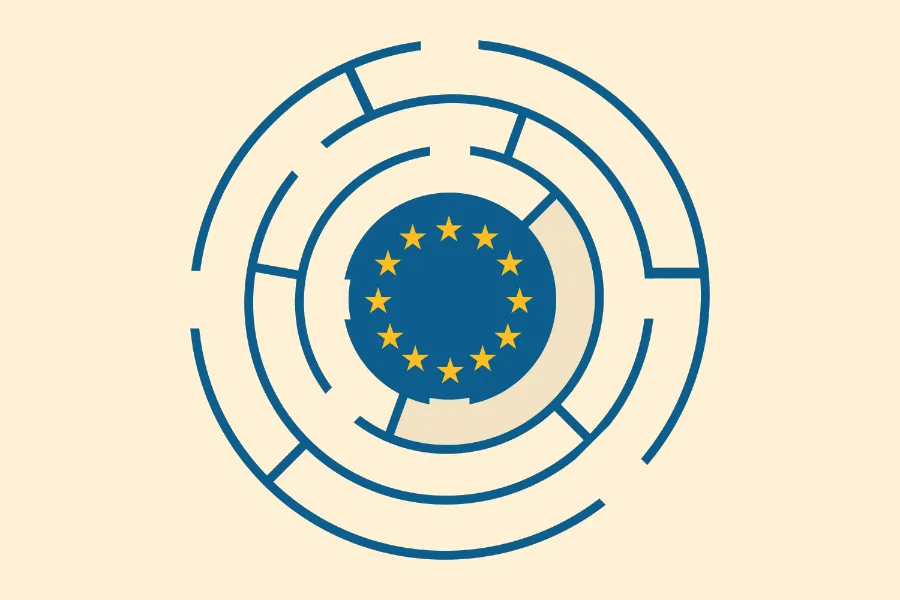
Vatican City, Oct 27, 2017 / 03:04 am (CNA/EWTN News).- Ahead of a Vatican conference exploring the future of the European Union, several ambassadors to the Holy See have said the event is a prime opportunity to share ideas with those who are beyond their usual circles.
And the Church, they said, is in a unique position to speak on major issues, offering key insights from which many global leaders could benefit.
Hungary's Ambassador to the Holy See, Eduard Habsburg, told CNA that when exploring the current challenges that Europe is facing, it's important to recognize that there are different visions, “but that they are reconcilable, and that if you speak to each other you can march in a good direction.”
“I think the greatest enemy of Europe is the idea that everybody agrees on everything which is just one vision. It doesn't work like that,” he said. “We're a big family with many different members who sort-of agree on a general direction, but who may sometimes have different opinions on things.”
Habsburg, who will be leading an Italian-language group during the conference, said he is looking forward to the discussion because “it's not going to be the usual people together; they are really going to mix (it up) so that you sit with people you don't usually meet.”
Because of this “there's no danger that everybody pats each other on the back in mutual agreement on everything, but you are really going to be exposed to different ideas and different geographic regions, and that's a very, very exciting prospect,” he said.
Added to this is the desire to more intentionally involve the voice of the Church, which is organizing the event. So another key goal, then, is “to bring Church people into contact with E.U. people to engage the Church more into E.U. business and topics.”
In comments to CNA, Irish Ambassador to the Holy See Emma Madigan said that given this year's celebration of the 60th anniversary of the Treaties of Rome that established the E.U., “we want as many voices as possible involved in the future of Europe.”
“Europe is only strengthened by the engagement of thoughtful people, hearing their concerns and their criticism and their hopes,” she said.
The conference is an opportunity “for a broader and a deeper exchange of views among people of great experience and insight,” Madigan said, voicing her belief that the event “will benefit both from the different perspectives the participants will bring, but also the common ground they share in terms of the global challenges they identify and the fundamental values of dialogue, cooperation and inclusion.”
Titled “(Re)Thinking Europe: A Christian Contribution to the Future of the European Project,” the conference takes place in Rome Oct. 27-29, and will gather together hundreds of high-level Church and E.U. political leaders.
It is being organized by the Commission of the Bishops' Conferences of the European Community in partnership with the Holy See, and will draw hundreds of civil and ecclesial leaders from across Europe and the E.U. to offer a constructive reflection on the challenges facing Europe.
Rather than an official congress with a formal concluding declaration, the event will be more of a frank discussion between the various stakeholders, as well as an opportunity to for the different parties to exchange ideas and opinions.
Some 350 participants from 28 delegations representing all E.U. countries are slated to attend, including high-level E.U. politicians and Catholic hierarchy, academics, ambassadors, representatives of different Catholic organizations and movements, as well as from other Christian delegations.
Vatican Secretary of State Cardinal Pietro Parolin will open the conference with a keynote speech Friday, and his address will be followed by a speech from former President of the European Parliament Pat Cox on the “crossroads” at which Europe currently stands.
From there, discussion will dive into topics such as the state of democracy in Europe and how to build bridges among the various E.U. member-states, as well as what kind of economy is best for Europe amid a changing world.
On Saturday, various ambassadors to the Holy See will chair discussion groups divided by language, so the various interlocutors can meet and exchange ideas with representatives from different countries and organizations, both civil and ecclesial.
The conference will close with an audience with Pope Francis, who throughout his pontificate has been outspoken about his vision for Europe, including the need to “rediscover” the Christian roots of the continent and to find new, innovative and creative solutions to modern problems.
Habsburg said he is happy to see the bishops organizing the event, and that from the words the Pope has spoken, it's obvious that Francis “really cares about Europe, and the E.U.”
“I was present at the E.U. 60th anniversary meeting in Rome, and you could feel that he really cares about Europe and tries to engage in a dialogue,” he said.
As far as the conference and the role of Church leaders in shaping the future of the E.U., Habsburg said he believes the event was organized in part because the Holy See wants to “sensitize the local bishops conferences to E.U. topics in order to help governments.”
“My interpretation is that the Pope wants to expose Church members from different European states to major E.U. issues and make them a partner in the discussion,” he said. And coupled with this is also the fact that “one doesn't want religion to be pushed out of political talk and everyday reality in the E.U.”
“I'm very happy that this comes from the bishops,” he said, adding that “perhaps sometimes, through all the hectic everyday politics, you need those moments where you can sit back and look at the greater picture.”
In comments to CNA, British Ambassador to the Holy See Sally Axworthy noted that Pope Francis continually encourages “both the Church and governments to respond to the challenges that they see around them with compassion for the vulnerable and a strong sense of our values.”
“We support him in that,” she said, adding that the British government also welcomes the fact that European bishops and Church leaders want to contribute to the discussion on the future of Europe.
“It is important that the religious perspective on Europe’s future direction is heard,” she said.
Similarly, Madigan noted that Pope Francis' words about Europe have been strong, and that he has always sought “to challenge European leaders to create the best version of Europe they possibly can.”
Madigan, who has been Ireland's ambassador to the Holy See since 2014, pointed to what she has perceived as a “subtle development” in the Pope's approach to Europe the past few years, continuing to challenge, but with greater focus on “the extent to which Europe exemplifies values that should be more prevalent in the world than they are – peace, democracy, dialogue, cooperation and respect for human dignity and freedom.”
French Ambassador to the Holy See Philippe Zeller also commented on the poignancy of the Pope's message on Europe, particularly in his recent speeches.
Also pointing to the subtle change in the tone used by Pope Francis – who during his visit to Strasbourg in 2014 told E.U. leaders that a “grandmother Europe” needed to move beyond “outdated” systems, but in March was much more keen in highlighting the potential that Europe has for the future – Zeller said the March speech especially “was very well received,” particularly the reference to Europe's roots.
Noting how in his March speech Francis pointed out that the six “founding fathers” of the E.U. “were all engaged in, in a personal view of course, the Catholic religion, in Christianity,” Zeller said that to present this view is “very important right now,” as Europe is re-thinking its identity.
Both Zeller and Habsburg stressed the importance of remembering Europe's Christian roots.
It's crucial to introduce ideas based on “common heritage, on cultural roots,” Zeller said, and voiced his excitement at having the opportunity for leaders and politicians to have an open discussion about Europe, “which actually is not doing very well.”
“The E.U. faces real and difficult challenges now,” he said, so the idea of having a meeting among the episcopal conferences in Europe as well as political leaders is “very interesting and we are happy as European ambassadors to the Holy See to be associated and to share the views of these different conferences.”
Likewise, Habsburg said he believes that for Europe truly to advance, it must “go back to core values, and some of those core values, in my opinion, are the Christian roots of Europe.”
Both family and solidarity are two key values that need to be re-emphasized today, he said, adding that there has to be a careful balance “between doing things together and having a healthy respect of the differences.”
In terms of the message each country wants to bring to the discussion table, Madigan, Habsburg, and Zeller all voiced their desire to both share their own local experience on key issues, and to listen.
For France, Zeller said their new president, Emmanuel Macron, has a lot of ideas on the challenges Europe faces, including security and defense policies, economic and business policies, as well as the desire to reduce unemployment and increase trade opportunities.
“It's interesting for us to see that those ideas presented by our new president and government could be shared or could trigger some ideas” within the E.U., he said, and pointed to what he believes is a need to “re-introduce this aspect of common values.”
As for Ireland, which in many ways is facing a heightened sense of national uncertainty following the 2016 Brexit vote, Madigan noted that almost immediately after the result of the UK referendum was known, members of the E.U.27 met in Bratislava, where they recognized that “the E.U. is not perfect but it is the best instrument we have for addressing the new challenges we are facing.”
Looking forward, Madigan said the future of the E.U. “is inseparable from the future of the world,” and that as such, members must adapt to the new challenges faced not only on the continent, but throughout the world.
Europe is and must be “much more than a debate on institutions,” she said. Rather, “it is about achieving outcomes for all our citizens and the expression of our values in the world.”
Voicing his hopes for the outcome of the conference, Habsburg said his biggest desire is that “we should not talk so much about each other, but talk with each other, and most of all listen to each other.”
“I have the impression that some countries which are at times being perceived as being very critical of Europe or even rebellious, often only have wishes that could somehow also further the common European cause, but are often not listened to or are often drowned in lots of political narratives,” he said.
However, during the conference everyone will be able to speak up about their own ideas and visions of Europe, he said, explaining that discussion groups will focus largely on questions such as “what is your idea about the path of Europe in your part of the world? What are you dreams? Where could we go? What do we have in common?”
“It's a real serious stopping, sitting down together and talking, and I think Europe really needs that now,” he said. And while heads of state meet with regularity, the conference is unique in that so many people from different levels of both Church and state will attend and share ideas.
“So it's really going to be a very interesting experience,” he said. “I think this conference is an incredible sign of hope.”
Hannah Brockhaus contributed to this report.
Next Post

October 27, 2017 Civil, ecclesial leaders of Europe find common ground in their concerns
Browse Our Archives
Select a Category Americas Asia - Pacific Europe Middle East - Africa Uncategorized US Vatican
Select a Month November 2017 October 2017 September 2017 August 2017 July 2017 June 2017 May 2017 April 2017 March 2017 February 2017 January 2017 December 2016 November 2016 October 2016 September 2016 August 2016 July 2016 June 2016 May 2016 April 2016 March 2016 February 2016 January 2016 December 2015 November 2015 October 2015 September 2015 August 2015 July 2015 June 2015 May 2015 April 2015 March 2015 February 2015 January 2015 December 2014 November 2014 October 2014 September 2014 August 2014 July 2014 June 2014 May 2014 April 2014 March 2014 February 2014 January 2014 December 2013 November 2013 October 2013 September 2013 August 2013 July 2013 June 2013 May 2013 April 2013 March 2013 February 2013 January 2013 December 2012 November 2012 October 2012 September 2012 August 2012 July 2012 June 2012 May 2012
TAKE THE
Religious Wisdom Quiz
Who said: "You are a chosen people, a royal priesthood, a holy nation, God's special possession"?
Select your answer to see how you score.
James Paul Moses Peter
Related posts from Catholic News

How do we help trafficking victims re-enter society?...

More than just giving – World Day of...

New book reveals details of John Paul I’s...

Despite reports, Pope Francis isn’t opening the door...
TRENDING AT PATHEOS Catholic

Rejecting Doom: Christian Hope And Human Action
Christianity is a religion of hope. We are to have hope and...

It’s What Comes From Within Which Matters
One of the most difficult things for us to understand is why...

Why I Choose the Eucharist Over the Sermon
Choose the Eucharist, Not the Sermon What are we supposed to get...

5 Design Elements Found in Spiritually Rooted Homes
Putting Spirituality Into Home Decor Our homes are more than our living...

Credo: A Story of God Told with the...
About 10 years ago, I began to imagine a personal "Credo" that...

The Anatomy of Divine Revelation in Catholic Thought
The claim that God has made Himself known to human beings is...
view all Catholic blogs
Ad-Free & Subscriber Log-In Subscription Support
- About Us
- 2026 Calendar
- Videos
- Podcasts
- Library of World Religions
- Faith In Media Tracker
- Advertise With Us
- Write for Us
- Privacy Policy
- Terms of Service
- Do Not Sell My Data
- Contact Us
- Radiant Digital
- Manage Newsletter Subscriptions
- Unsubscribe From Notifications
- Sitemap
Copyright 2008-2026, Patheos. All rights reserved.
Subscription Support Ad-Free & Subscriber Log-In
Follow Patheos