
BuddhistCatholicContemplativeEvangelicalGeneral ChristianHinduJewishLatter-day SaintMuslimNew VisionsProgressive Christian
Beliefs
- Buddhist
- Catholic
- Contemplative
- Evangelical
- General Christian
- Hindu
- Jewish
- Latter-day Saint
- More Voices
- Muslim
- New Visions
- Pagan
- Progressive Christian
Topics
- Religion News
- Food and Religion
- Sports and Religion
- Religious Art
- Religious Music and Entertainment
- Religious Events
- History and Religion
- Style and Religion
- Politics and Religion
- Women in Religion
- Recreation Outdoors and Religion
- Business Finance and Religion
- Careers Workplace and Religion
- Education and Religion
- Family Parenting and Religion
- Health Fitness and Religion
- Home and Religion
- Relationships and Religion
- Technology and Religion
- Travel and Religion
Columnists
- Buddhist Columnists
- Business Finance and Religion Columnists
- Careers Workplace and Religion Columnists
- Catholic Columnists
- Contemplative Columnists
- Education and Religion Columnists
- Evangelists Columnists
- Family Parenting and Religion Columnists
- General Christian Columnists
- Health Fitness and Religion Columnists
- Hindu Columnists
- History and Religion Columnists
- Home and Religion Columnists
- Jewish Columnists
- More Voices Columnists
- Latter Day Columnists
- Muslim Columnists
- New Visions Columnists
- Nonreligious Columnists
- Pagan Columnists
- Politics and Religion Columnists
- Progressive Columnists
- Recreation Outdoors and Religion Columnists
- Relationships and Religion Columnists
- Religion News Columnists
- Religious Art Columnists
- Religious Events Columnists
- Religious Music and Entertainment Columnists
- Sports and Religion Columnists
- Style and Religion Columnists
- Technology and Religion Columnists
- Travel and Religion Columnists
- Women in Religion Columnists
Resource Library
- 2026 Calendar
- Library of World Religions
- The 100 Most Holy Places on Earth
- Patheos Answers
- Podcasts
- Videos
- Faith Leaders Database
- Anglican Episcopalian
- Bahai
- Baptist
- Buddhism
- Christianity
- Confucianism
- Eastern Orthodoxy
- Hinduism
- Holiness and Pentecostal
- ISKCON
- Islam
- Judaism
- Lutheran
- Methodist
- The Church of Jesus Christ of Latter-day Saints
- New Age
- Paganism
- Presbytarian and Reformed
- Protestantism
- Religion Behind the Scenes
- Roman Catholic
- Scientology
- Shia Islam
- Sikhism
- Sufism
- Sunni Islam
- Taoism
- Zen
- See all religions
Research Tools
 Ad-Free & Subscriber Log-In Subscription Support
Ad-Free & Subscriber Log-In Subscription Support
Follow Patheos 

- Trending:
- Forgiveness
- |
- Marriage
- |
- Consciousness
- |
- Death Penalty
- |
- Election
- |
- Halloween
 Catholic News
- Home
- Catholic
- Religion News
- ‘Zero tolerance’ on child abuse must apply to laity too
‘Zero tolerance’ on child abuse must apply to laity too
Last updated on: September 22, 2017 at 3:38 pm by CNA Daily News
‘Zero tolerance’ on child abuse must apply to laity too 2017-09-22T15:38:00+00:00 CNA Daily News
Patheos Explore the world's faith through different perspectives on religion and spirituality! Patheos has the views of the prevalent religions and spiritualities of the world.
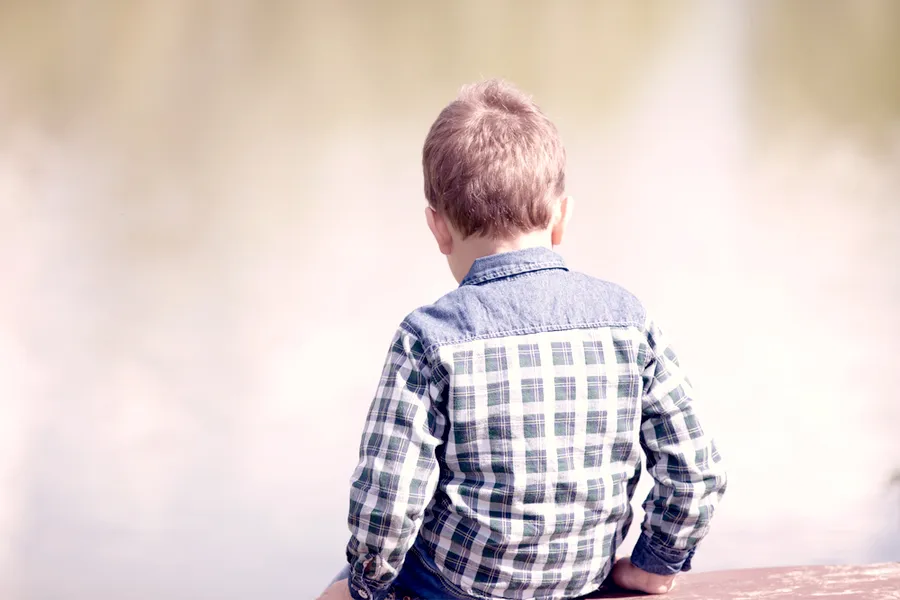
New York City, N.Y., Sep 22, 2017 / 09:38 am (CNA).- In his September 20 remarks to the Pontifical Commission for the Protection of Minors, Pope Francis stated the important point that “the Church, at all levels, will respond with the application of the firmest measures to all those who have betrayed their call and abused the children of God.” That reaffirmation of the Church's commitment to child protection cannot be said too often or too strongly.
The Holy Father then went on to say something new and very significant: “The disciplinary measures that the particular Churches have adopted must apply to all those who work in the institutions of the Church… Therefore, the Church irrevocably and at all levels seeks to apply the principle of 'zero tolerance' against the sexual abuse of minors.”
This is an unambiguous call to action. The Church in the United States has been a world leader in child protection, and we have an opportunity now to lead again.
Since its adoption in 2002, the Bishops' Charter for the Protection of Children and Young People has been the foundation for the Church's immensely successful efforts to provide a safe environment for children in our institutions and to ensure accountability for the implementation of those efforts. As successful as the Charter has been, however, it has always been missing a very significant piece — on its face, it only applies to cases of misconduct by clergy and not by laypeople.
For example, the term “sexual abuse” is defined in the Charter by reference to a canon law provision that applies only to the clergy. The definition is ambiguous, and fails to provide sufficient guidance about what behaviors are proscribed. This leaves diocesan officials to rely on an ad hoc standard of their own creation or on potentially differing opinions of theologians, civil or canon lawyers, or review board members.
This is not a good practice — “sexual abuse” cannot mean one thing in one diocese and a different thing in another, one thing when it applies to clergy and another when it's a lay person.
The Charter's definition of “child pornography” suffers from the same problem. The only guidance in the Charter is a reference to a Vatican document that has an empty and unhelpful definition that is limited to conduct by clerics. An ambiguous standard for this heinous crime isn't acceptable, and it must apply to laity as well.
In addition, although the Charter discusses procedures for handling cases involving the clergy, it says nothing about how to handle cases about lay persons. And most importantly, while the Charter clearly applies the “zero tolerance” policy of permanently removing an offending priest or deacon, there is no defined penalty for lay persons who have committed an offense.
This is a very significant gap. We must assure everyone that no person, lay or cleric, will be permitted to be with children if they have committed an offense. Failing to do so leaves an erroneous impression that sex abuse is uniquely a problem with the clergy, which ignores all the evidence of the incidence of sex abuse and unfairly stigmatizes our priests and deacons.
This omission could have an impact on the credibility of our child protection programs. The annual audit requires information about background check and training of lay people and detailed information about clergy abuse cases, but no information is gathered about cases involving lay people. Including the laity explicitly under the Charter will ensure a greater level of accountability and trust.
One would expect that every diocese has already adopted policies that cover lay people as well as clergy. We certainly have in the Archdiocese of New York. But local policies don't send a strong enough message. The Charter is the public expression of the United States Church's full commitment to child protection. It is imperative that we make absolutely clear that the same rigorous standards apply to all who work with children, across our entire nation.
This is not hard to do. Clear and usable definitions of “sexual abuse” and “child pornography” can be developed that unambiguously cover laypeople. We can draw on the vast experience reflected in state and federal law, which define numerous sexual offenses with great detail and specificity. Uniform disciplinary procedures for handling lay cases do not have to be developed at the national level, since those will be shaped by local personnel policies and laws. Nor do we have to worry about inconsistency with canon law, since that only applies to clergy cases.
It can also be stated plainly that all allegations will be immediately reported to law enforcement and full cooperation will be given to the authorities. All dioceses probably already do this — in the Archdiocese of New York we have strong protocols for cooperation with law enforcement. But again, a strong statement in the Charter will demonstrate our commitment across the nation.
Most important, after the Holy Father's mandate, it is vital that the “zero tolerance” policy clearly applies to the laity. There can be no room for doubt about that.
The U.S. Conference of Catholic Bishops has been working on a revision of the Charter, and it has not yet been finalized. The Holy Father's timely call to action now gives the Church a great opportunity to be proactive and ensure that our rigorous policies apply equally to all who work with our children.
Edward Mechmann, Esq., is the Director of Safe Environment for the Archdiocese of New York. His opinions are his own, and do not necessarily reflect the position of the Archdiocese of New York.

Browse Our Archives
Select a Category Americas Asia - Pacific Europe Middle East - Africa Uncategorized US Vatican
Select a Month November 2017 October 2017 September 2017 August 2017 July 2017 June 2017 May 2017 April 2017 March 2017 February 2017 January 2017 December 2016 November 2016 October 2016 September 2016 August 2016 July 2016 June 2016 May 2016 April 2016 March 2016 February 2016 January 2016 December 2015 November 2015 October 2015 September 2015 August 2015 July 2015 June 2015 May 2015 April 2015 March 2015 February 2015 January 2015 December 2014 November 2014 October 2014 September 2014 August 2014 July 2014 June 2014 May 2014 April 2014 March 2014 February 2014 January 2014 December 2013 November 2013 October 2013 September 2013 August 2013 July 2013 June 2013 May 2013 April 2013 March 2013 February 2013 January 2013 December 2012 November 2012 October 2012 September 2012 August 2012 July 2012 June 2012 May 2012
TAKE THE
Religious Wisdom Quiz
What is the main lesson of the Parable of the Net?
Select your answer to see how you score.
Angels are everywhere Only some are chosen God's kingdom includes many; judgment will sort them Earthly riches corrupt
Related posts from Catholic News

US bishops' new child protection program aims to...

Wealthy foundation aims to redefine religious freedom—and Christianity,...

Victims of Islamic State in focus at UN...

Catholic University of America offers free tuition to...
TRENDING AT PATHEOS Catholic

Rejecting Doom: Christian Hope And Human Action
Christianity is a religion of hope. We are to have hope and...

It’s What Comes From Within Which Matters
One of the most difficult things for us to understand is why...

Why I Choose the Eucharist Over the Sermon
Choose the Eucharist, Not the Sermon What are we supposed to get...

5 Design Elements Found in Spiritually Rooted Homes
Putting Spirituality Into Home Decor Our homes are more than our living...

Credo: A Story of God Told with the...
About 10 years ago, I began to imagine a personal "Credo" that...

The Anatomy of Divine Revelation in Catholic Thought
The claim that God has made Himself known to human beings is...
view all Catholic blogs
Ad-Free & Subscriber Log-In Subscription Support
- About Us
- 2026 Calendar
- Videos
- Podcasts
- Library of World Religions
- Faith In Media Tracker
- Advertise With Us
- Write for Us
- Privacy Policy
- Terms of Service
- Do Not Sell My Data
- Contact Us
- Radiant Digital
- Manage Newsletter Subscriptions
- Unsubscribe From Notifications
- Sitemap
Copyright 2008-2026, Patheos. All rights reserved.
Subscription Support Ad-Free & Subscriber Log-In
Follow Patheos