
BuddhistCatholicContemplativeEvangelicalGeneral ChristianHinduJewishLatter-day SaintMuslimNew VisionsProgressive Christian
Beliefs
- Buddhist
- Catholic
- Contemplative
- Evangelical
- General Christian
- Hindu
- Jewish
- Latter-day Saint
- More Voices
- Muslim
- New Visions
- Pagan
- Progressive Christian
Topics
- Religion News
- Food and Religion
- Sports and Religion
- Religious Art
- Religious Music and Entertainment
- Religious Events
- History and Religion
- Style and Religion
- Politics and Religion
- Women in Religion
- Recreation Outdoors and Religion
- Business Finance and Religion
- Careers Workplace and Religion
- Education and Religion
- Family Parenting and Religion
- Health Fitness and Religion
- Home and Religion
- Relationships and Religion
- Technology and Religion
- Travel and Religion
Columnists
- Buddhist Columnists
- Business Finance and Religion Columnists
- Careers Workplace and Religion Columnists
- Catholic Columnists
- Contemplative Columnists
- Education and Religion Columnists
- Evangelists Columnists
- Family Parenting and Religion Columnists
- General Christian Columnists
- Health Fitness and Religion Columnists
- Hindu Columnists
- History and Religion Columnists
- Home and Religion Columnists
- Jewish Columnists
- More Voices Columnists
- Latter Day Columnists
- Muslim Columnists
- New Visions Columnists
- Nonreligious Columnists
- Pagan Columnists
- Politics and Religion Columnists
- Progressive Columnists
- Recreation Outdoors and Religion Columnists
- Relationships and Religion Columnists
- Religion News Columnists
- Religious Art Columnists
- Religious Events Columnists
- Religious Music and Entertainment Columnists
- Sports and Religion Columnists
- Style and Religion Columnists
- Technology and Religion Columnists
- Travel and Religion Columnists
- Women in Religion Columnists
Resource Library
- 2026 Calendar
- Library of World Religions
- The 100 Most Holy Places on Earth
- Patheos Answers
- Podcasts
- Videos
- Faith Leaders Database
- Anglican Episcopalian
- Bahai
- Baptist
- Buddhism
- Christianity
- Confucianism
- Eastern Orthodoxy
- Hinduism
- Holiness and Pentecostal
- ISKCON
- Islam
- Judaism
- Lutheran
- Methodist
- The Church of Jesus Christ of Latter-day Saints
- New Age
- Paganism
- Presbytarian and Reformed
- Protestantism
- Religion Behind the Scenes
- Roman Catholic
- Scientology
- Shia Islam
- Sikhism
- Sufism
- Sunni Islam
- Taoism
- Zen
- See all religions
Research Tools
 Ad-Free & Subscriber Log-In Subscription Support
Ad-Free & Subscriber Log-In Subscription Support
Follow Patheos 

- Trending:
- Forgiveness
- |
- Marriage
- |
- Consciousness
- |
- Death Penalty
- |
- Election
- |
- Halloween
 Catholic News
- Home
- Catholic
- Religion News
- Why Witchcraft Can Never Be Used to Accomplish Good
Why Witchcraft Can Never Be Used to Accomplish Good
Last updated on: October 2, 2017 at 2:16 pm by Megan Schmidt
Why Witchcraft Can Never Be Used to Accomplish Good 2017-10-02T14:16:22+00:00 Megan Schmidt
Patheos Explore the world's faith through different perspectives on religion and spirituality! Patheos has the views of the prevalent religions and spiritualities of the world.
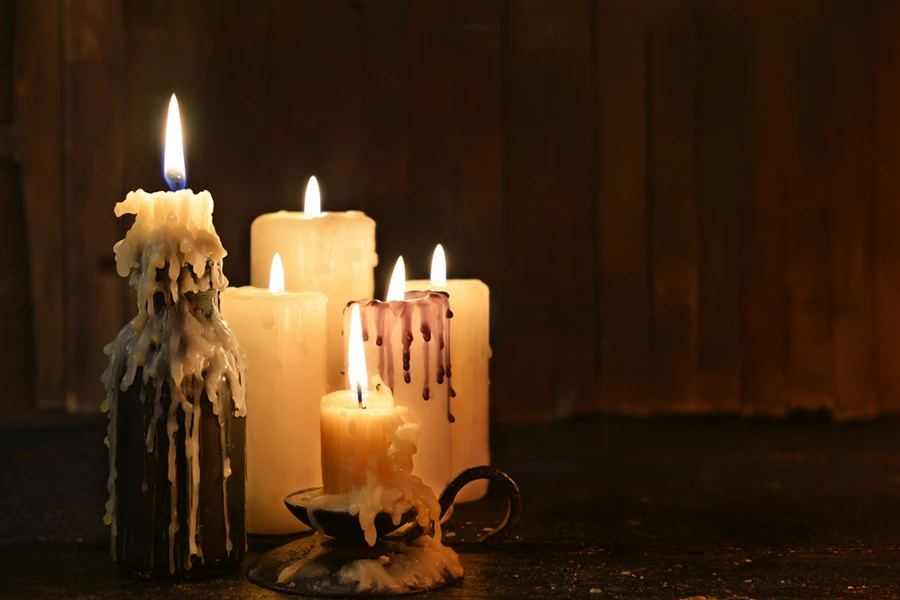
Washington D.C., Sep 27, 2017 / 03:12 am (CNA/EWTN News).- Shortly after Donald Trump assumed the office of President of the United States, witches across the country began large-scale efforts to cast binding spells on him.
Amanda Yates Garcia, a self-identified witch known as the “Oracle of Los Angeles,” told Tucker Carlson of FOX News last week that the binding spells are not intended to harm Trump, but rather are intended to prevent him from causing any harm to others.
“Binding spells are a symbolic action used to harness the powers of the imagination and achieve a tangible result, eventually,” she said.
“I desire that Trump stop harming people that I care about and instituting policies that also harming me or people that I care about. My ultimate aim is that we protect the people that we love from having harm done to them,” she added.
But can witchcraft ever be used to accomplish something good?
Catholic theologian Dr. Anthony Lilles told CNA that even though the end result of witchcraft, magic or a spell may be some perceived good, these means are always an evil and are always below the dignity of the human person.
“Whether or not they’ve made a right judgment in the evil they want to prevent is one thing, but in Catholic moral tradition, we believe that you should never do evil that good might come from it,” he said.
“The way the logic of magic works, you attempt to control elements either above human nature or below human nature, and in your effort to manipulate or control these things, you always end up controlled by them. Whatever you give your heart to, that’s what has control over you,” Lilles said.
“As Christians we give our heart to God, and because he is completely above us, he is able to lift us up. When you give your heart to anything else, you always lower yourself, and so it’s very bad for the person who practices magic, because it always diminishes their own dignity,” he added.
Another problem with magic and spells is that they operate on the level of imagination, rather than in the world of reality and truth, Lilles said.
“Reason orients us to discern things according to the truth, to respond to situations such as they really truly are,” Lilles said.
With magic, “it’s trying to stand with your human dignity on something a little bit more whimsical, something that can’t support it. A fantasy can’t support the dignity and greatness of what it means to be a human being, only God can be that foundation. Only the truth is firm enough ground for the greatness of who each one of us is as a human being.”
For these reasons, witchcraft, magic and superstition have always been condemned practices in the Judeo-Christian tradition, which teaches that human beings must rely humbly and completely on the will of God, Lilles said.
The Catechism of the Catholic Church categorizes witchcraft and magic particularly as offenses against the First Commandment, which is: “I am the Lord your God, who brought you out of the land of Egypt, out of the house of bondage. You shall have no other gods before me. You shall not make for yourself a graven image, or any likeness of anything that is in heaven above, or that is in the earth beneath, or that is in the water under the earth; you shall not bow down to them or serve them.”
Witchcraft, magic and divination always stem from a desire to control and manipulate reality and situations in our lives, rather than humbly making our requests known to an all-powerful and all-loving God, Lilles said.
The Catechism of the Catholic Church notes, in paragraph 2115, that while God may choose to reveal future events to human being through the prophets or the saints, a right Christian attitude is “putting oneself confidently into the hands of Providence for whatever concerns the future, and giving up all unhealthy curiosity about it.”
The Catechism also notes that all forms of divination, magic and sorcery are to be rejected.
Anything “by which one attempts to tame occult powers, so as to place them at one’s service and have a supernatural power over others – even if this were for the sake of restoring their health – are gravely contrary to the virtue of religion. These practices are even more to be condemned when accompanied by the intention of harming someone, or when they have recourse to the intervention of demons.” (CCC 2117)
Witchcraft can be attractive because of its grasp at power and control, especially in a culture that has forgotten God, Lilles noted.
“In a culture that no longer knows God, that has forgotten to pray, that doesn’t have confidence in humility before the creator and redeemer of the world, there will be a spiritual vacuum, and nature abhors vacuums,” he said.
“So turning to the occult, turning to magic, turning to all kinds of practices that are beneath our dignity is something that we will see people more and more inclined to do as they attempt to fill that vacuum, a vacuum that only God can fulfill in a satisfactory way.”
But that shouldn’t overly worry Christians with a proper understanding of magic and divination. Lilles said that Christians should not dismiss the practices of magic or divination as fantasy or as having no power, but at the same time, they can rest in knowing that their God is more powerful than any of these practices.
“The access to the very heart of God, which is ours by faith, far exceeds any magical power that someone might have,” he said.
“The creator of heaven and earth has implicated himself in our lives and in our own personal plights, and he is able to accomplish so much more than any power or force or element in this world below. All we have to do is make a humble cry and he is there, and that’s the truth we stand by.”
Father Vincent Lampert, an exorcist for the archdiocese of Indianapolis, told the National Catholic Register in February that the best antidote to magic and spells for Catholics is frequenting the sacraments.
“You can’t stop someone from placing a curse, but as a Christian, if you are you praying to God and going to him, the curse will have no power,” Father Lampert said.
Dr. Lilles echoed his sentiments.
“We don’t need to grasp at control or try to manipulate things, whether by magic or other means. What we need today is trust in God, and if we trust in him, everything is going to be ok. That’s why prayer is so important. Prayer is the school of trusting God.”
Previous Post

September 27, 2017
US House to vote on banning abortion after 20 weeks
Next Post
September 27, 2017 When tempted to give up hope, turn to Jesus, Pope Francis says
Browse Our Archives
Select a Category Americas Asia - Pacific Europe Middle East - Africa Uncategorized US Vatican
Select a Month November 2017 October 2017 September 2017 August 2017 July 2017 June 2017 May 2017 April 2017 March 2017 February 2017 January 2017 December 2016 November 2016 October 2016 September 2016 August 2016 July 2016 June 2016 May 2016 April 2016 March 2016 February 2016 January 2016 December 2015 November 2015 October 2015 September 2015 August 2015 July 2015 June 2015 May 2015 April 2015 March 2015 February 2015 January 2015 December 2014 November 2014 October 2014 September 2014 August 2014 July 2014 June 2014 May 2014 April 2014 March 2014 February 2014 January 2014 December 2013 November 2013 October 2013 September 2013 August 2013 July 2013 June 2013 May 2013 April 2013 March 2013 February 2013 January 2013 December 2012 November 2012 October 2012 September 2012 August 2012 July 2012 June 2012 May 2012
TAKE THE
Religious Wisdom Quiz
What mountain did Jesus ascend from into heaven?
Select your answer to see how you score.
Mount of Olives Mount Zion Mount Carmel Mount Sinai
Related posts from Catholic News

US bishops' new child protection program aims to...

Wealthy foundation aims to redefine religious freedom—and Christianity,...

Victims of Islamic State in focus at UN...

Catholic University of America offers free tuition to...
TRENDING AT PATHEOS Catholic

Rejecting Doom: Christian Hope And Human Action
Christianity is a religion of hope. We are to have hope and...

It’s What Comes From Within Which Matters
One of the most difficult things for us to understand is why...

Why I Choose the Eucharist Over the Sermon
Choose the Eucharist, Not the Sermon What are we supposed to get...

5 Design Elements Found in Spiritually Rooted Homes
Putting Spirituality Into Home Decor Our homes are more than our living...

Credo: A Story of God Told with the...
About 10 years ago, I began to imagine a personal "Credo" that...

The Anatomy of Divine Revelation in Catholic Thought
The claim that God has made Himself known to human beings is...
view all Catholic blogs
Ad-Free & Subscriber Log-In Subscription Support
- About Us
- 2026 Calendar
- Videos
- Podcasts
- Library of World Religions
- Faith In Media Tracker
- Advertise With Us
- Write for Us
- Privacy Policy
- Terms of Service
- Do Not Sell My Data
- Contact Us
- Radiant Digital
- Manage Newsletter Subscriptions
- Unsubscribe From Notifications
- Sitemap
Copyright 2008-2026, Patheos. All rights reserved.
Subscription Support Ad-Free & Subscriber Log-In
Follow Patheos