
BuddhistCatholicContemplativeEvangelicalGeneral ChristianHinduJewishLatter-day SaintMuslimNew VisionsProgressive Christian
Beliefs
- Buddhist
- Catholic
- Contemplative
- Evangelical
- General Christian
- Hindu
- Jewish
- Latter-day Saint
- More Voices
- Muslim
- New Visions
- Pagan
- Progressive Christian
Topics
- Religion News
- Food and Religion
- Sports and Religion
- Religious Art
- Religious Music and Entertainment
- Religious Events
- History and Religion
- Style and Religion
- Politics and Religion
- Women in Religion
- Recreation Outdoors and Religion
- Business Finance and Religion
- Careers Workplace and Religion
- Education and Religion
- Family Parenting and Religion
- Health Fitness and Religion
- Home and Religion
- Relationships and Religion
- Technology and Religion
- Travel and Religion
Columnists
- Buddhist Columnists
- Business Finance and Religion Columnists
- Careers Workplace and Religion Columnists
- Catholic Columnists
- Contemplative Columnists
- Education and Religion Columnists
- Evangelists Columnists
- Family Parenting and Religion Columnists
- General Christian Columnists
- Health Fitness and Religion Columnists
- Hindu Columnists
- History and Religion Columnists
- Home and Religion Columnists
- Jewish Columnists
- More Voices Columnists
- Latter Day Columnists
- Muslim Columnists
- New Visions Columnists
- Nonreligious Columnists
- Pagan Columnists
- Politics and Religion Columnists
- Progressive Columnists
- Recreation Outdoors and Religion Columnists
- Relationships and Religion Columnists
- Religion News Columnists
- Religious Art Columnists
- Religious Events Columnists
- Religious Music and Entertainment Columnists
- Sports and Religion Columnists
- Style and Religion Columnists
- Technology and Religion Columnists
- Travel and Religion Columnists
- Women in Religion Columnists
Resource Library
- 2026 Calendar
- Library of World Religions
- The 100 Most Holy Places on Earth
- Patheos Answers
- Podcasts
- Videos
- Faith Leaders Database
- Anglican Episcopalian
- Bahai
- Baptist
- Buddhism
- Christianity
- Confucianism
- Eastern Orthodoxy
- Hinduism
- Holiness and Pentecostal
- ISKCON
- Islam
- Judaism
- Lutheran
- Methodist
- The Church of Jesus Christ of Latter-day Saints
- New Age
- Paganism
- Presbytarian and Reformed
- Protestantism
- Religion Behind the Scenes
- Roman Catholic
- Scientology
- Shia Islam
- Sikhism
- Sufism
- Sunni Islam
- Taoism
- Zen
- See all religions
Research Tools
 Ad-Free & Subscriber Log-In Subscription Support
Ad-Free & Subscriber Log-In Subscription Support
Follow Patheos 

- Trending:
- Forgiveness
- |
- Marriage
- |
- Consciousness
- |
- Death Penalty
- |
- Election
- |
- Halloween
 Catholic News
- Home
- Catholic
- Religion News
- Why this bishop thinks memes may just be the tool for evangelization today
Why this bishop thinks memes may just be the tool for evangelization today
Last updated on: September 15, 2017 at 9:01 am by CNA Daily News
Why this bishop thinks memes may just be the tool for evangelization today 2017-09-15T09:01:00+00:00 CNA Daily News
Patheos Explore the world's faith through different perspectives on religion and spirituality! Patheos has the views of the prevalent religions and spiritualities of the world.
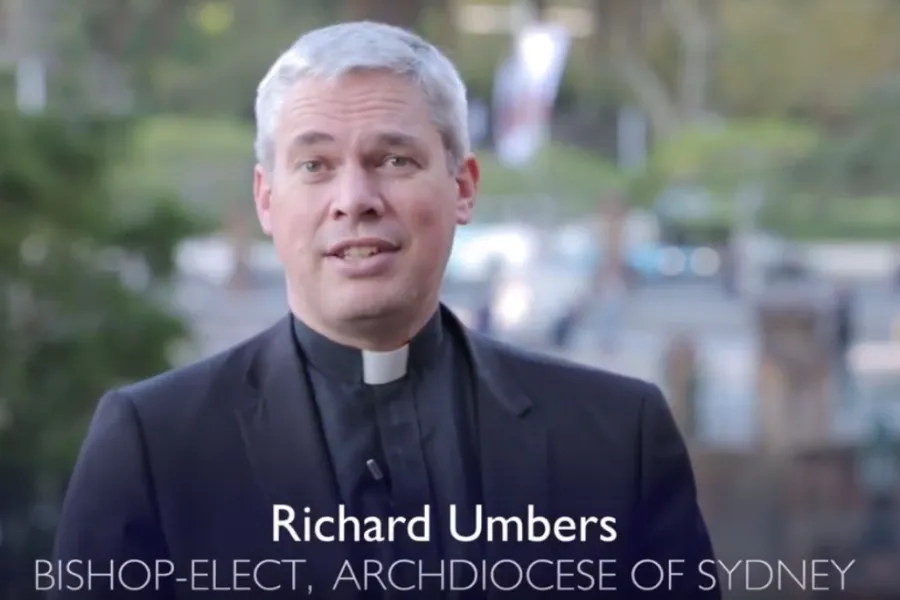
Sydney, Australia, Sep 15, 2017 / 03:01 am (CNA).- Between the Harambe memes and quick explanations of Catholic doctrine on his Twitter page, Richard Umbers, Auxiliary Bishop of the Archdiocese of Sydney, says that online humor is about more than just the laughs.
In fact, he says, Christian humor online can help to reach out to parts of our modern world that are in the process of secularization. This kind of online engagement – with a wink- plays into a larger need for Christians to engage in society and to promote a vision of Christian life.
Bishop Umbers is quick to note in his Twitter bio that he is indeed an “actual person and a realbishop”, adopting the description given him by Tommy Tighe, the “Catholic Hipster”.
<blockquote class="twitter-tweet" data-lang="en"><p lang="und" dir="ltr"><a href="https://t.co/Dh88ZEjeuy">pic.twitter.com/Dh88ZEjeuy</a></p>— Bishop Down Umber (@BishopUmbers) <a href="https://twitter.com/BishopUmbers/status/906526961983356928">September 9, 2017</a></blockquote>
<script async src="//platform.twitter.com/widgets.js" charset="utf-8"></script>
Whether in art, online culture, or political discussion, Christians should be giving an example of how to evangelize and to speak to the challenges society faces today. “You need the contemporary expression of Christian faith,” Bishop Umbers said of what the Church needs from its faithful today.
The writings of Benedict XVI, and Pope Francis’ Laudato si', can provide such a template for living an “alternative” lifestyle as a Christian, while also speaking to contemporary culture, he indicated.
“You can promote a coherent alternative lifestyle, which is what Catholicism really is in our society.”
Bishop Umbers was born and raised in New Zealand, joining the personal prelature of Opus Dei before moving to Sydney to finish his degrees in economics. After guidance from a mentor, he discerned a call to the priesthood, upon which he travelled to Rome and then to Spain to continue his studies. He was ordained a priest of the prelature in Spain in 2002. Fourteen years later, Umbers was consecrated a bishop, becoming in 2016 the youngest bishop in Australia, at the age of 45.
Five or six years ago, he told CNA, he got his first Twitter account and started to use it regularly. In the past several years, he has used his twitter account to reach out on issues affecting Australian society – as well as to joke about a variety of topics: “You can have fun with memes.”
Part of the reason he’s drawn to memes, Bishop Umbers said, is not only because they match his sense of humor, but because of his own limitations. “I have an artistic vision with zero talent,” he joked.
More seriously, memes do indeed convey a message. Like political cartoons, which have spread powerful ideas and opinions for centuries, memes can also convey earnest information.
The creation of a meme culture in online Catholic spaces, or use of other kinds of social media outreach can help reach out and participate in conversations. In fact, he said, people tend to take notice when a conversation is constructive, rather than a “flame war.” Also, he warned, any conversation can sometimes face the threat of miscommunication, or being “overly ironic.”
Honesty and consideration can add balance to online evangelization. “I tell people all the time: be yourself,” Bishop Umbers said. He also advocated that Catholics online display their convictions, and even make “strong comments” – but also advised them consider what they say before they type.
The bishop also urged that Catholics online have faith and conviction in their beliefs – especially if they dabble in memes or in online discussions. “[It] takes a certain confidence in your own faith,” he said of online participation and discussion. This confidence can even help bring out the humor of the whole situation.
While throughout history “believers have always had a go” during important disagreements, poking fun at topics and laughing about the misunderstandings is “a lasting human tradition.”
It’s this sense of conviction that Bishop Umbers hopes believers can bring to conversations happening not only online, but in the Archdiocese of Sydney.
Australian society is currently experiencing “rapid secularization” and increasing “sectarianism”, he said, as issues like abortion, same-sex marriage, and euthanasia come to the center of Australian political debates.
While more Catholics continue to identify as Catholic, as opposed to the shift to “non-religious” among other Christian groups, some Catholic institutions have remained quiet or even supported positions that fly in the face of Church teaching.
“To stand up for Catholic teaching puts you, once again, on the margins”: Bishop Umbers explained that taking a counter-cultural position is likely to impact funding of Church programs as time goes on.
The marginalization of traditional Christian beliefs, however, does not mean that people do not listen or that people do not take interest in the Church’s arguments. “You’re definitely not irrelevant,” he said of the Christian voice in the public square.
Rather, he said, effective communication and coordination seem to be the major stumbling-block facing the Church in the Sydney area.
“That’s where social media can play a big role,” Bishop Umbers offered.
For example, he pointed to a successful social media campaign started by three young women which protested the expansion of abortion in the Australian state of New South Wales, of which Sydney is the capital. The young pro-life advocates started a twitter hashtag that started to change the conversation surrounding abortion, and inspired local communities to get involved.
“Because of them, there was a huge campaign across all the parishes to have people sign a petition.” More than 80,000 signed the petition, which eventually contributed to the bill’s defeat in parliament, the bishop said.
The center of a successful online campaign like the one in New South Wales, or of a meme, or of any mode of evangelization, lies, at its core, in the truth, Bishop Umbers said.
“Really it’s an expression of who you are, and I think that’s where evangelization comes from,” he said of online engagement. “It’s not a campaign. It is truly a sharing of your own convictions and your own thoughtfulness.”
Previous Post

September 14, 2017
Pro-life groups to Senate Dems: Don't eliminate Hyde Amendment
Next Post
September 15, 2017 Vatican recalls priest as child porn investigation opens
Browse Our Archives
Select a Category Americas Asia - Pacific Europe Middle East - Africa Uncategorized US Vatican
Select a Month November 2017 October 2017 September 2017 August 2017 July 2017 June 2017 May 2017 April 2017 March 2017 February 2017 January 2017 December 2016 November 2016 October 2016 September 2016 August 2016 July 2016 June 2016 May 2016 April 2016 March 2016 February 2016 January 2016 December 2015 November 2015 October 2015 September 2015 August 2015 July 2015 June 2015 May 2015 April 2015 March 2015 February 2015 January 2015 December 2014 November 2014 October 2014 September 2014 August 2014 July 2014 June 2014 May 2014 April 2014 March 2014 February 2014 January 2014 December 2013 November 2013 October 2013 September 2013 August 2013 July 2013 June 2013 May 2013 April 2013 March 2013 February 2013 January 2013 December 2012 November 2012 October 2012 September 2012 August 2012 July 2012 June 2012 May 2012
TAKE THE
Religious Wisdom Quiz
How many disciples did Jesus have?
Select your answer to see how you score.
One hundred Twelve Seven Thirty
Related posts from Catholic News

Filipino Bishops begin rosary campaign against violent drug...

Filipino seminarians to drug war victims: we remember...

China's president seeks more control over religion
Cardinal Vidal Remembered as a Peacemaker, Pastor
TRENDING AT PATHEOS Catholic

Rejecting Doom: Christian Hope And Human Action
Christianity is a religion of hope. We are to have hope and...

It’s What Comes From Within Which Matters
One of the most difficult things for us to understand is why...

Why I Choose the Eucharist Over the Sermon
Choose the Eucharist, Not the Sermon What are we supposed to get...

5 Design Elements Found in Spiritually Rooted Homes
Putting Spirituality Into Home Decor Our homes are more than our living...

Credo: A Story of God Told with the...
About 10 years ago, I began to imagine a personal "Credo" that...

The Anatomy of Divine Revelation in Catholic Thought
The claim that God has made Himself known to human beings is...
view all Catholic blogs
Ad-Free & Subscriber Log-In Subscription Support
- About Us
- 2026 Calendar
- Videos
- Podcasts
- Library of World Religions
- Faith In Media Tracker
- Advertise With Us
- Write for Us
- Privacy Policy
- Terms of Service
- Do Not Sell My Data
- Contact Us
- Radiant Digital
- Manage Newsletter Subscriptions
- Unsubscribe From Notifications
- Sitemap
Copyright 2008-2026, Patheos. All rights reserved.
Subscription Support Ad-Free & Subscriber Log-In
Follow Patheos