
BuddhistCatholicContemplativeEvangelicalGeneral ChristianHinduJewishLatter-day SaintMuslimNew VisionsProgressive Christian
Beliefs
- Buddhist
- Catholic
- Contemplative
- Evangelical
- General Christian
- Hindu
- Jewish
- Latter-day Saint
- More Voices
- Muslim
- New Visions
- Pagan
- Progressive Christian
Topics
- Religion News
- Food and Religion
- Sports and Religion
- Religious Art
- Religious Music and Entertainment
- Religious Events
- History and Religion
- Style and Religion
- Politics and Religion
- Women in Religion
- Recreation Outdoors and Religion
- Business Finance and Religion
- Careers Workplace and Religion
- Education and Religion
- Family Parenting and Religion
- Health Fitness and Religion
- Home and Religion
- Relationships and Religion
- Technology and Religion
- Travel and Religion
Columnists
- Buddhist Columnists
- Business Finance and Religion Columnists
- Careers Workplace and Religion Columnists
- Catholic Columnists
- Contemplative Columnists
- Education and Religion Columnists
- Evangelists Columnists
- Family Parenting and Religion Columnists
- General Christian Columnists
- Health Fitness and Religion Columnists
- Hindu Columnists
- History and Religion Columnists
- Home and Religion Columnists
- Jewish Columnists
- More Voices Columnists
- Latter Day Columnists
- Muslim Columnists
- New Visions Columnists
- Nonreligious Columnists
- Pagan Columnists
- Politics and Religion Columnists
- Progressive Columnists
- Recreation Outdoors and Religion Columnists
- Relationships and Religion Columnists
- Religion News Columnists
- Religious Art Columnists
- Religious Events Columnists
- Religious Music and Entertainment Columnists
- Sports and Religion Columnists
- Style and Religion Columnists
- Technology and Religion Columnists
- Travel and Religion Columnists
- Women in Religion Columnists
Resource Library
- 2026 Calendar
- Library of World Religions
- The 100 Most Holy Places on Earth
- Patheos Answers
- Podcasts
- Videos
- Faith Leaders Database
- Anglican Episcopalian
- Bahai
- Baptist
- Buddhism
- Christianity
- Confucianism
- Eastern Orthodoxy
- Hinduism
- Holiness and Pentecostal
- ISKCON
- Islam
- Judaism
- Lutheran
- Methodist
- The Church of Jesus Christ of Latter-day Saints
- New Age
- Paganism
- Presbytarian and Reformed
- Protestantism
- Religion Behind the Scenes
- Roman Catholic
- Scientology
- Shia Islam
- Sikhism
- Sufism
- Sunni Islam
- Taoism
- Zen
- See all religions
Research Tools
 Ad-Free & Subscriber Log-In Subscription Support
Ad-Free & Subscriber Log-In Subscription Support
Follow Patheos 

- Trending:
- Forgiveness
- |
- Marriage
- |
- Consciousness
- |
- Death Penalty
- |
- Election
- |
- Halloween
 Catholic News
- Home
- Catholic
- Religion News
- Most children in orphanages aren’t actually orphans. This group wants to help them.
Most children in orphanages aren’t actually orphans. This group wants to help them.
Last updated on: September 26, 2017 at 9:20 am by CNA Daily News
Most children in orphanages aren’t actually orphans. This group wants to help them. 2017-09-26T09:20:00+00:00 CNA Daily News
Patheos Explore the world's faith through different perspectives on religion and spirituality! Patheos has the views of the prevalent religions and spiritualities of the world.
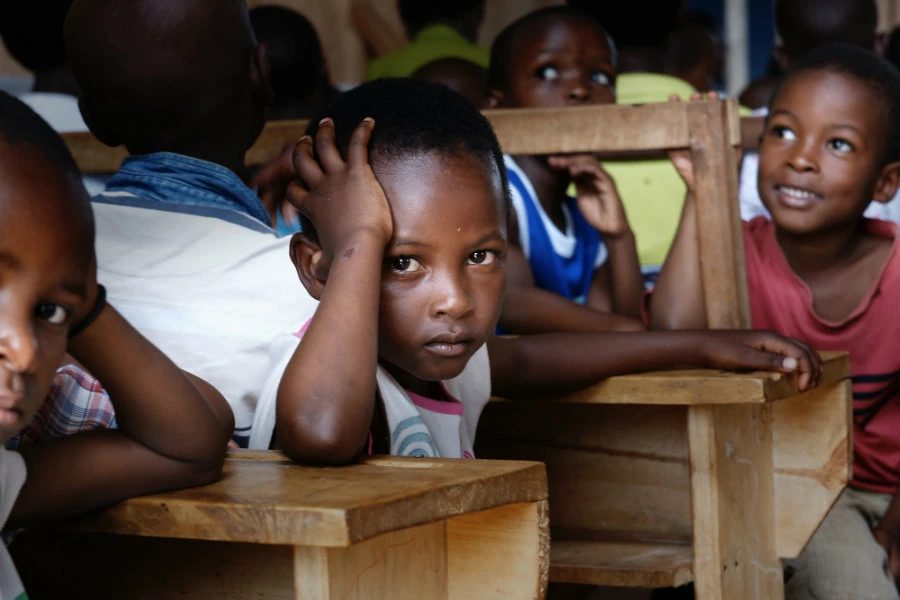
Baltimore, Md., Sep 26, 2017 / 03:20 am (CNA).- Shannon Senefeld always assumed that children in orphanages are mostly orphans. Most people make that assumption.
When Senefeld found out this was not the case, she was shocked.
In fact, the vast majority of children in orphanages around the world – between 80 and 90 percent – have at least one living parent or other family member, usually someone who loves them and wants them, Senefeld told CNA.
In some cases, families may not have the knowledge or equipment to care for a child with a disability, and orphanages offer specialized services.
Far more often, however, families simply lack resources, such as funds for education or health care, and believe that their child will have better access to these resources in an orphanage.
It’s a problem that is largely unrecognized – by donors, government officials, and members of the general public. But Senefeld and her colleagues want to change that.
Senefeld is the Senior Vice President for Overseas Operations at Catholic Relief Services. Together with Lumos and Maestral International – two organizations that work to protect vulnerable children, especially in institutions and welfare systems – they have released a plan to reunite children in orphanages with their families.
The proposal, entitled “Changing the Way We Care,” would turn orphanages into family support centers, using existing resources to provide services that parents need to care for their own children, at home.
Earlier this month, their proposal was selected from nearly 2,000 entries as one of four finalists in the 100&Change competition, sponsored by the MacArthur Foundation. The winning project, which will be announced in December, will win a $100 million grant, with the goal of making “measurable progress toward solving a significant problem” in the world today.
Senefeld explained that “a lot of children living in orphanages maintain contact with their family,” maybe visiting them once a year if they can afford it.
Many times, parents will send their child to an orphanage out of poverty-driven desperation, hoping to return when their financial situation stabilizes.
“They might be thinking it’s a temporary situation,” Senefeld said, but frequently, parents are never able to pull together the resources to get their child back.
Meanwhile, children in orphanages slowly lose ties with their communities. Studies show that children raised in institutions have substantially higher rates of social and emotional problems than other children, Catholic Relief Services said. Children in orphanages are six times more likely to be exposed to violence, and four times more likely to be sexually abused than children raised in families.
Further complicating the situation, many orphanages operate outside of government regulations, and lack sufficient record-keeping practices, which can make it difficult to track children and reconnect them with their parents.
International adoptions initiated by couples in the United States and most other western countries are subject to strict protocols, designed to ensure that children are legally and ethically available for adoption, and that the rights of natural parents have been respected. However, not all countries observe these protocols.
The ultimate solution to the orphanage crisis is family care, Senefeld said.
Family care is not only the best option for the child’s well-being, but also the most cost-effective option, she explained. “It costs about 10 times as much to raise a child in an orphanage as it does in a community setting in their home country.”
“We want to get those kids back into their family,” Senefeld stressed. For those who truly are orphans, this means finding other relatives, or placing them in foster or adoption care.
“What’s most important for us is that the child is in a family,” she said.
“Many of the orphanages are run by really well-meaning people,” Senefeld emphasized, adding that they often have developed expertise in specialized services for children with disabilities.
Catholic Relief Services hopes to connect caregivers directly with families, so they can use their expertise to train parents and to provide services in a community setting.
Also critical to the success of the project, Senefeld and her colleagues hope to work with governments to ensure that policies are put in place to prevent abusive practices, such as the trafficking of children.
“We want the government to actually support family-based care,” she said. In some countries, the government offers orphanages a stipend for each child. Catholic Relief Services would like to see those stipends redirected to foster care or similar models.
Donors are a critical part of the picture as well. Individuals, faith communities and governments need to be educated about how to best help vulnerable children, Senefeld said. Rather than funding the construction of new orphanages overseas, their donations can be more effective in directly meeting children’s needs in their own homes.
If Catholic Relief Services wins the 100&Change challenge, they hope to implement the family care model in seven different countries – Guatemala, Haiti, India, Indonesia, Kenya, Lebanon and Moldova – each with its own family, government, and cultural situations.
“People say, ‘That’s great, but it wouldn’t work in my country’,” Senefeld said. “This is a great way to show that this model works in a variety of different countries.”
In fact, the family care model is working in a number of different countries already. For example, with the support of the government, Catholic Church, and a number of other non-profit groups, Rwanda is on track to close all of its orphanages and place the children there in family care settings.
The $100 million grant would be a huge step in allowing for a larger, coordinated effort for a global shift toward family-based care for children currently in orphanages.
While Senefeld would love to see Catholic Relief Services’ proposal win the grant, she said that simply being chosen as one of the top entries has already been a significant victory in drawing attention to the situation.
“For us, this has been a huge opportunity to just let people know,” she explained. “I think it was a hidden issue.”
Ultimately, she said, it’s a matter of achieving justice for the 8 million children growing up in institutions worldwide.
“It’s definitely challenging, but it’s definitely doable.”
Previous Post

September 26, 2017
For homeless woman, Rome trip proves that 'good things can happen'
Next Post
September 26, 2017 Catholics in Papua New Guinea a sign of the Church's universality
Browse Our Archives
Select a Category Americas Asia - Pacific Europe Middle East - Africa Uncategorized US Vatican
Select a Month November 2017 October 2017 September 2017 August 2017 July 2017 June 2017 May 2017 April 2017 March 2017 February 2017 January 2017 December 2016 November 2016 October 2016 September 2016 August 2016 July 2016 June 2016 May 2016 April 2016 March 2016 February 2016 January 2016 December 2015 November 2015 October 2015 September 2015 August 2015 July 2015 June 2015 May 2015 April 2015 March 2015 February 2015 January 2015 December 2014 November 2014 October 2014 September 2014 August 2014 July 2014 June 2014 May 2014 April 2014 March 2014 February 2014 January 2014 December 2013 November 2013 October 2013 September 2013 August 2013 July 2013 June 2013 May 2013 April 2013 March 2013 February 2013 January 2013 December 2012 November 2012 October 2012 September 2012 August 2012 July 2012 June 2012 May 2012
TAKE THE
Religious Wisdom Quiz
"I am the ____ and the truth and the life. No one comes to the Father except through me."
Select your answer to see how you score.
Alpha Omega Word Way
Related posts from Catholic News

US bishops' new child protection program aims to...

Wealthy foundation aims to redefine religious freedom—and Christianity,...

Victims of Islamic State in focus at UN...

Catholic University of America offers free tuition to...
TRENDING AT PATHEOS Catholic

Rejecting Doom: Christian Hope And Human Action
Christianity is a religion of hope. We are to have hope and...

It’s What Comes From Within Which Matters
One of the most difficult things for us to understand is why...

Why I Choose the Eucharist Over the Sermon
Choose the Eucharist, Not the Sermon What are we supposed to get...

5 Design Elements Found in Spiritually Rooted Homes
Putting Spirituality Into Home Decor Our homes are more than our living...

Credo: A Story of God Told with the...
About 10 years ago, I began to imagine a personal "Credo" that...

The Anatomy of Divine Revelation in Catholic Thought
The claim that God has made Himself known to human beings is...
view all Catholic blogs
Ad-Free & Subscriber Log-In Subscription Support
- About Us
- 2026 Calendar
- Videos
- Podcasts
- Library of World Religions
- Faith In Media Tracker
- Advertise With Us
- Write for Us
- Privacy Policy
- Terms of Service
- Do Not Sell My Data
- Contact Us
- Radiant Digital
- Manage Newsletter Subscriptions
- Unsubscribe From Notifications
- Sitemap
Copyright 2008-2026, Patheos. All rights reserved.
Subscription Support Ad-Free & Subscriber Log-In
Follow Patheos