
BuddhistCatholicContemplativeEvangelicalGeneral ChristianHinduJewishLatter-day SaintMuslimNew VisionsProgressive Christian
Beliefs
- Buddhist
- Catholic
- Contemplative
- Evangelical
- General Christian
- Hindu
- Jewish
- Latter-day Saint
- More Voices
- Muslim
- New Visions
- Pagan
- Progressive Christian
Topics
- Religion News
- Food and Religion
- Sports and Religion
- Religious Art
- Religious Music and Entertainment
- Religious Events
- History and Religion
- Style and Religion
- Politics and Religion
- Women in Religion
- Recreation Outdoors and Religion
- Business Finance and Religion
- Careers Workplace and Religion
- Education and Religion
- Family Parenting and Religion
- Health Fitness and Religion
- Home and Religion
- Relationships and Religion
- Technology and Religion
- Travel and Religion
Columnists
- Buddhist Columnists
- Business Finance and Religion Columnists
- Careers Workplace and Religion Columnists
- Catholic Columnists
- Contemplative Columnists
- Education and Religion Columnists
- Evangelists Columnists
- Family Parenting and Religion Columnists
- General Christian Columnists
- Health Fitness and Religion Columnists
- Hindu Columnists
- History and Religion Columnists
- Home and Religion Columnists
- Jewish Columnists
- More Voices Columnists
- Latter Day Columnists
- Muslim Columnists
- New Visions Columnists
- Nonreligious Columnists
- Pagan Columnists
- Politics and Religion Columnists
- Progressive Columnists
- Recreation Outdoors and Religion Columnists
- Relationships and Religion Columnists
- Religion News Columnists
- Religious Art Columnists
- Religious Events Columnists
- Religious Music and Entertainment Columnists
- Sports and Religion Columnists
- Style and Religion Columnists
- Technology and Religion Columnists
- Travel and Religion Columnists
- Women in Religion Columnists
Resource Library
- 2026 Calendar
- Library of World Religions
- The 100 Most Holy Places on Earth
- Patheos Answers
- Podcasts
- Videos
- Faith Leaders Database
- Anglican Episcopalian
- Bahai
- Baptist
- Buddhism
- Christianity
- Confucianism
- Eastern Orthodoxy
- Hinduism
- Holiness and Pentecostal
- ISKCON
- Islam
- Judaism
- Lutheran
- Methodist
- The Church of Jesus Christ of Latter-day Saints
- New Age
- Paganism
- Presbytarian and Reformed
- Protestantism
- Religion Behind the Scenes
- Roman Catholic
- Scientology
- Shia Islam
- Sikhism
- Sufism
- Sunni Islam
- Taoism
- Zen
- See all religions
Research Tools
 Ad-Free & Subscriber Log-In Subscription Support
Ad-Free & Subscriber Log-In Subscription Support
Follow Patheos 

- Trending:
- Forgiveness
- |
- Marriage
- |
- Consciousness
- |
- Death Penalty
- |
- Election
- |
- Halloween
 Catholic News
- Home
- Catholic
- Religion News
- How the US needs to stick up for the Middle East’s Christians
How the US needs to stick up for the Middle East’s Christians
Last updated on: September 13, 2017 at 12:01 pm by CNA Daily News
How the US needs to stick up for the Middle East’s Christians 2017-09-13T12:01:00+00:00 CNA Daily News
Patheos Explore the world's faith through different perspectives on religion and spirituality! Patheos has the views of the prevalent religions and spiritualities of the world.
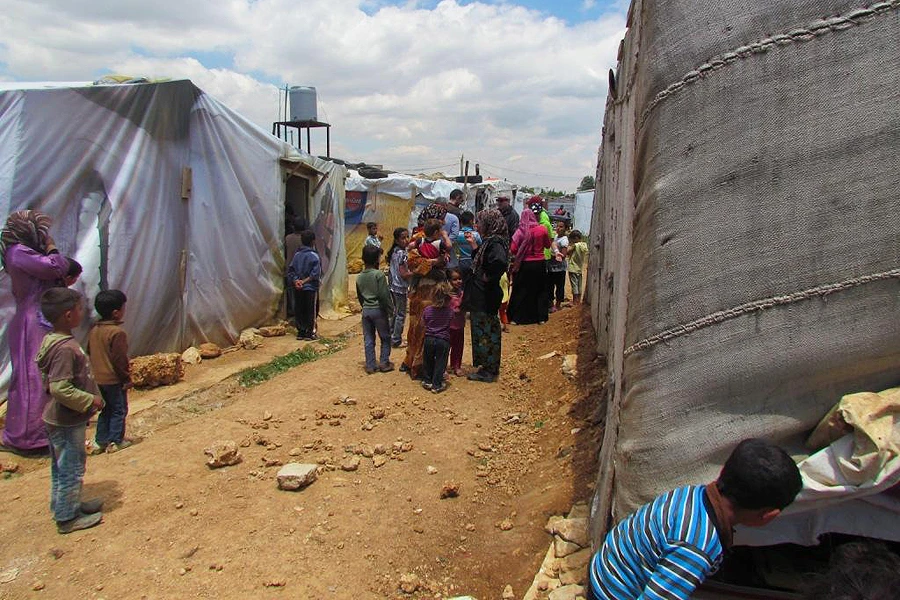
Washington D.C., Sep 13, 2017 / 06:01 am (CNA/EWTN News).- Christians in the Middle East are heroic witnesses to the faith, and the U.S. must help ensure they can stay in their homelands in peace, a Maronite bishop who is a leading advocate for the region’s Christians says.
“I think the Christians there are the salt of the earth. And they really are Christ in the midst of the Middle East, with no place to lay His head,” Bishop Gregory Mansour of the Eparchy of Saint Maron of Brooklyn told CNA in an interview.
“In my mind, they’re the heroes of today. They’ve faced down ISIS, they’ve faced down evil, they’ve faced down apathy,” he said. “And it’s still these Christians who are educated, they’re gracious, they’re forgiving.”
Bishop Mansour spoke with CNA ahead of multiple planned advocacy campaigns for Christians of the Middle East.
The annual summit of the advocacy group In Defense of Christians will be held in Washington, D.C. Oct. 24-26. It will focus on “American Leadership and Securing the Future of Christians in the Middle East,” and will feature advocacy especially at the offices of members of Congress.
Special guests will include Catholicos Aram I, of the Holy See of Cilicia of the Armenian Apostolic Church, Patriarch Youssef Absi of the Melkite Greek Catholic Church, and Patriarch Moran Mor Bechara Boutros al-Rai, Maronite Patriarch of Antioch.
In Defense of Christians has also planned an action campaign in the days leading up to the summit, where U.S. Christians can pray for persecuted Christians in the Middle East, advocate for them, and support aid organizations that serve religious minorities in the region.
Christians in the region have suffered for generations, but in recent years their plight has become especially dire. Even before the rise of Islamic State in 2014, Christians had been steadily leaving Iraq, and the Syrian civil war had already been boiling for several years.
In 2014 the Islamic State captured large swathes of territory in Syria and Iraq, waging a genocidal campaign against Christians and other religious and ethnic minorities in the areas. Hundreds of thousands of Christians fled their homes in Iraq, and many have left Iraq for good or have still been unable to return home.
Over half of Iraq’s Christians have been displaced since 2014, and up to 50,000 have left the country, the Catholic Near East Welfare Association reported in August.
Meanwhile, in Syria, while Christians made up about 10 percent of the country’s population before the civil war began in 2011, that number might be down to around four or five percent, Bishop Mansour estimated. The overall number of Christians there has fallen almost by half since 2010, CNEWA estimated.
In Egypt, Christians have been the victims of ongoing violence and harassment by Muslim neighbors in the more remote parts of the country, and in recent months they have been the target of terror attacks by Islamic State affiliates. Although Egypt contains the largest number of Christians of any country in the region, there is now concern that Christians may begin leaving their homes if the situation continues to worsen.
In Pakistan, Christians are attacked for “blasphemy” with impunity, suffering violence or imprisonment for alleged offenses that may require no evidence for conviction. The government of Turkey has seized church properties without much pushback on the international stage, Bishop Mansour said.
What can concretely be done to help the beleaguered Christians of the Middle East and South Asia?
Prayer is the most important step, Bishop Mansour said, especially prayer for unity and for solidarity. Also, Christians in the U.S. must seek to give what they can to humanitarian aid groups like Catholic Relief Services, CNEWA, and the Knights of Columbus.
However, advocacy is also key, Bishop Mansour said, and Christians must push the U.S. to be a leader on the global stage in defending persecuted Christians around the world.
For the problems facing Christian genocide survivors in Iraq and Syria, this would mean the U.S. working for peace in both countries, and advocating for the treatment of Christians as equal citizens entitled to the same rights as their neighbors.
This might mean a change from the same old policies which may have benefitted certain parties in the region but have failed to help religious minorities like the Christians.
“They don’t think carefully of the Christians on the ground,” Bishop Mansour said of U.S. presidential administrations of both political parties.
U.S. “humanitarian outreach” should focus on those who need it most and should not be just “a one size fit-all” policy, he said. Christians in Iraq have been almost entirely dependent upon the local Chaldean Catholic Diocese of Erbil and aid groups for basic food, clothing, and shelter – U.S. humanitarian aid has reportedly bypassed them.
Although the U.S. State Department has not allowed aid to flow through church groups, a bill that recently passed the U.S. House would amend that. The Iraq and Syria Genocide Emergency Relief and Accountability Act would allow U.S. aid to go through organizations serving the populations who need the aid the most, including Iraq’s Christians.
Although Islamic State forces have been cleared from most of the Nineveh Plain where Iraq’s Christians once lived, many of the residents have been unable to return home. The obstacles to their security and livelihood, not to mention their financial needs at the moment, are too great.
And for Christians to live there long-term would require stability and security, something the government of Iraq would need to guarantee.
It is “very important for the United States government to work with the Iraqi government and the Kurdistan regional authorities to secure safety,” Bishop Mansour said. “There needs to be more security.”
In Syria, the U.S. should move for a “negotiated settlement” to the conflict, “which means we have to talk to Russia, and to mediate between Iran and Saudi Arabia,” Bishop Mansour said. If nothing is done to mediate the six year-long conflict there, the remaining Christians might leave for good.
“I’m afraid what would happen if there’s no superpower negotiations that bring about peace,” he said.
America must be a leader on the world stage, he said, and Pope Francis has already recognized this.
“He sees America as a place where we can make good things happen in the world. Also, if we’re not careful, we can make bad things happen in the world,” Bishop Mansour said. The Pope, during his 2015 visit to the U.S., urged the U.S. bishops to “be men of communion…for the sake of the world outside.”
Is there a future for Christians in the Middle East? The U.S. must help ensure that there is one, Bishop Mansour said, because Christians are examples of peace and forgiveness amid sectarian strife. If they leave the region for good, the hopes for peace could leave with them.
“Anywhere where there are Christians in the world, we should do everything we can to back them up when they are minorities so that they can play their proper role,” he said.
Previous Post

September 13, 2017
Stories of Fr. Stanley Rother, from those who knew him
Next Post
September 13, 2017 St. Peter's Bones? Maintenance Worker Makes Surprising Discovery
Browse Our Archives
Select a Category Americas Asia - Pacific Europe Middle East - Africa Uncategorized US Vatican
Select a Month November 2017 October 2017 September 2017 August 2017 July 2017 June 2017 May 2017 April 2017 March 2017 February 2017 January 2017 December 2016 November 2016 October 2016 September 2016 August 2016 July 2016 June 2016 May 2016 April 2016 March 2016 February 2016 January 2016 December 2015 November 2015 October 2015 September 2015 August 2015 July 2015 June 2015 May 2015 April 2015 March 2015 February 2015 January 2015 December 2014 November 2014 October 2014 September 2014 August 2014 July 2014 June 2014 May 2014 April 2014 March 2014 February 2014 January 2014 December 2013 November 2013 October 2013 September 2013 August 2013 July 2013 June 2013 May 2013 April 2013 March 2013 February 2013 January 2013 December 2012 November 2012 October 2012 September 2012 August 2012 July 2012 June 2012 May 2012
TAKE THE
Religious Wisdom Quiz
My child died, but a prophet stretched himself upon him three times and life returned. Who am I?
Select your answer to see how you score.
Ruth The widow of Zarephath Hannah The Shunammite woman
Related posts from Catholic News

US bishops' new child protection program aims to...

Wealthy foundation aims to redefine religious freedom—and Christianity,...

Victims of Islamic State in focus at UN...

Catholic University of America offers free tuition to...
TRENDING AT PATHEOS Catholic

Creation, Preservation, and Teleology in Catholic Theology
As I write this, it is very early Monday morning. Like millions...

The Parable Of The Sower And The Word...
One of Christ’s most famous parables is that of the sower who...

Rejecting Doom: Christian Hope And Human Action
Christianity is a religion of hope. We are to have hope and...

Why I Choose the Eucharist Over the Sermon
Choose the Eucharist, Not the Sermon What are we supposed to get...

5 Design Elements Found in Spiritually Rooted Homes
Putting Spirituality Into Home Decor Our homes are more than our living...

Credo: A Story of God Told with the...
About 10 years ago, I began to imagine a personal "Credo" that...
view all Catholic blogs
Ad-Free & Subscriber Log-In Subscription Support
- About Us
- 2026 Calendar
- Videos
- Podcasts
- Library of World Religions
- Faith In Media Tracker
- Advertise With Us
- Write for Us
- Privacy Policy
- Terms of Service
- Do Not Sell My Data
- Contact Us
- Radiant Digital
- Manage Newsletter Subscriptions
- Unsubscribe From Notifications
- Sitemap
Copyright 2008-2026, Patheos. All rights reserved.
Subscription Support Ad-Free & Subscriber Log-In
Follow Patheos