
BuddhistCatholicContemplativeEvangelicalGeneral ChristianHinduJewishLatter-day SaintMuslimNew VisionsProgressive Christian
Beliefs
- Buddhist
- Catholic
- Contemplative
- Evangelical
- General Christian
- Hindu
- Jewish
- Latter-day Saint
- More Voices
- Muslim
- New Visions
- Pagan
- Progressive Christian
Topics
- Religion News
- Food and Religion
- Sports and Religion
- Religious Art
- Religious Music and Entertainment
- Religious Events
- History and Religion
- Style and Religion
- Politics and Religion
- Women in Religion
- Recreation Outdoors and Religion
- Business Finance and Religion
- Careers Workplace and Religion
- Education and Religion
- Family Parenting and Religion
- Health Fitness and Religion
- Home and Religion
- Relationships and Religion
- Technology and Religion
- Travel and Religion
Columnists
- Buddhist Columnists
- Business Finance and Religion Columnists
- Careers Workplace and Religion Columnists
- Catholic Columnists
- Contemplative Columnists
- Education and Religion Columnists
- Evangelists Columnists
- Family Parenting and Religion Columnists
- General Christian Columnists
- Health Fitness and Religion Columnists
- Hindu Columnists
- History and Religion Columnists
- Home and Religion Columnists
- Jewish Columnists
- More Voices Columnists
- Latter Day Columnists
- Muslim Columnists
- New Visions Columnists
- Nonreligious Columnists
- Pagan Columnists
- Politics and Religion Columnists
- Progressive Columnists
- Recreation Outdoors and Religion Columnists
- Relationships and Religion Columnists
- Religion News Columnists
- Religious Art Columnists
- Religious Events Columnists
- Religious Music and Entertainment Columnists
- Sports and Religion Columnists
- Style and Religion Columnists
- Technology and Religion Columnists
- Travel and Religion Columnists
- Women in Religion Columnists
Resource Library
- 2026 Calendar
- Library of World Religions
- The 100 Most Holy Places on Earth
- Patheos Answers
- Podcasts
- Videos
- Faith Leaders Database
- Anglican Episcopalian
- Bahai
- Baptist
- Buddhism
- Christianity
- Confucianism
- Eastern Orthodoxy
- Hinduism
- Holiness and Pentecostal
- ISKCON
- Islam
- Judaism
- Lutheran
- Methodist
- The Church of Jesus Christ of Latter-day Saints
- New Age
- Paganism
- Presbytarian and Reformed
- Protestantism
- Religion Behind the Scenes
- Roman Catholic
- Scientology
- Shia Islam
- Sikhism
- Sufism
- Sunni Islam
- Taoism
- Zen
- See all religions
Research Tools
 Ad-Free & Subscriber Log-In Subscription Support
Ad-Free & Subscriber Log-In Subscription Support
Follow Patheos 

- Trending:
- Forgiveness
- |
- Marriage
- |
- Consciousness
- |
- Death Penalty
- |
- Election
- |
- Halloween
 Catholic News
- Home
- Catholic
- Religion News
- How do we heal racial tensions? Start by admitting errors, US bishop says
How do we heal racial tensions? Start by admitting errors, US bishop says
Last updated on: September 25, 2017 at 10:12 pm by CNA Daily News
How do we heal racial tensions? Start by admitting errors, US bishop says 2017-09-25T22:12:00+00:00 CNA Daily News
Patheos Explore the world's faith through different perspectives on religion and spirituality! Patheos has the views of the prevalent religions and spiritualities of the world.
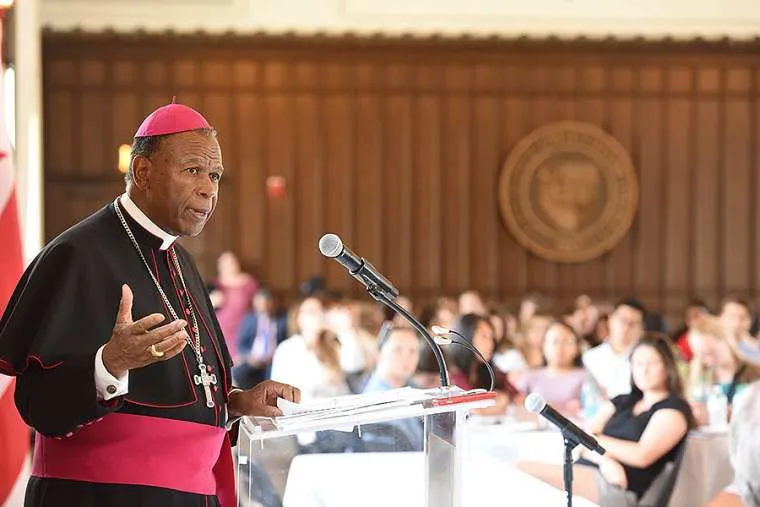
Washington D.C., Sep 25, 2017 / 04:12 pm (CNA).- To address the longstanding racial divide within the United States – and within the Catholic Church in the country – Catholics should learn more about the history of that divide, and honestly engage with that history, and with others attempting to tackle similar issues themselves.
“Don’t whitewash the misdeeds and silence of our history,” said Bishop Edward Braxton, of Belleville, Ill. in a Sept. 21 lecture at The Catholic University of America in Washington, D.C.
Bishop Braxton urged participants to teach children the history of the Catholic Church – including parts of the history which are painful or shameful – “not to belittle those people, not to harshly judge them as bad people, but to understand but they are all people of our own era and history and if they have blind spots so do we.”
The bishop's talk was one of two held at the university on the theme of the racial divide in the United States and the Church. The first talk, which focused more on how to address the racial divide, was part of a “teach in” sponsored by the university’s National Catholic School of Social Service, and a second talk, part of the campus Theology on Tap program, discussed the Black Lives Matter movement and how Catholics can respond to racism.
Bishop Braxton, originally from Chicago, is the bishop of Belleville, Ill., outside of his hometown, and one of nine African-American bishops in the United States.
The bishop’s talks discussed what he described as the “flaw at the foundation” of racial relations in America – particularly within the American Church – and how it lead to many of the tensions seen today in American politics.
Bishop Braxton pointed to the Dred Scott Supreme Court decision, which in 1857 ruled that African-Americans could not be citizens. That opinion was penned by Chief Justice Robert Taney – a Catholic.
The bishop also noted that some American bishops in the years leading up to the Civil War actively opposed abolition efforts. Furthermore, early American bishops and religious organizations, such as Bishop John Carroll and the Jesuits, owned slaves themselves
These actions, the bishop said, beg the question “Is there a flaw at the foundation?” of racial relations. He added that many Catholic churches and religious orders remained segregated after slavery’s end.
This history has impacted both the African-American Catholic community and the Church’s efforts to evangelize within the broader African-American community, he said. On top of that, the Church’s previous efforts to address the racial divide, such as the 1979 pastoral letter “Brothers and Sisters to Us,” have yet to be fully implemented.
Knowing this “painful, shameful history,” Bishop Braxton said, is necessary for the Church to help the country heal its racial divides in the future. “We can’t rewrite history. We must acknowledge it and never repeat it,” he told the crowds.
Pointing to the shortfalls and blind spots of those who came before is not judgment, he said, nor does admitting flaws pose a threat to the universal teachings of the Church. “We don’t know what we would have done in the 1840s or ’50s or ’60s,” Bishop Braxton reminded listeners, and even saints “have blind spots.” Instead, acknowledging the full truth and history can help us to appreciate the fullness of the task ahead of us and make us more attentive to the moral blind spots and shortfalls of our own age.
With the need for a comprehensive education on race in mind, Bishop Braxton urged Catholic schools – seminaries in particular – to educate children and future priests on American and Catholic history regarding race, and urged all Catholics to learn more about African-Americans who have open causes for canonization.
While education is a key component in mending the racial divide, so too is engaging and listening to others involved in similar efforts, Bishop Braxton said. He urged Catholics at both talks to “Listen. Learn. Think. Pray. Act.” and shared his own experiences dialoguing with members of the Black Lives Matter movement.
Before discussing the movement itself, Bishop Braxton noted that he does not believe that “Black Lives Matter and All Lives Matter are necessarily incompatible.”
However, he continued the “point of Black Lives Matter is that some in the African American community face existential threats that cannot be ignored.”
Pointing to those concerns in particular – such as the increased likelihood for African Americans to face violence during routine police interactions, while other offenders like Dylan Roof can be apprehended without being shot – does not negate that other issues of human dignity exist, he said. “In this instance, while all lives matter, their lives are in peril.”
He also explained that while there are Catholics within the Black Lives Matter movement, and that not all members hold the same views, many within the movement are cautious when dealing with the Church because of some of its history.
Some members perceive the Church as being opposed to addressing the racial issues the movement sees as a problem, he said. In addition, Bishop Braxton explained that many – though not all – members of the movement have fundamental differences with the Church on matters of sexuality, marriage and abortion.
Bishop Braxton challenged the movement to address the issue of abortion in particular, affirming the life of the unborn child, and noting that the “alarmingly” high number of abortions within the African-American community brings “an abrupt end to the nascent black lives in their mothers’ wombs. Those lives also matter.”
By listening and learning from the members of Black Lives Matter within his community, Bishop Braxton said that he was also able to explain the richness of the Church’s social teaching and its applicability to issues of race, poverty and discrimination. “I also pointed out that Catholic beliefs on marriage, the meaning of human sexuality and the dignity of human life from conception to natural death are not mere cultural norms or social issues,” he added. “These beliefs represent what the Church holds to be fundamental moral principles, natural law, biblical revelation and the teachings of Jesus Christ.”
Overall, conversations like this have been fruitful and can provide a way for engagement in addressing the racial divide, Bishop Braxton offered. “They did not lead to agreement on every point, but they lead to a focus on the need to be open to hear those with whom we disagree with an open mind and an open heart.”
Previous Post

September 25, 2017
Catholic group continues Blessed Stanley Rother's work in Guatemala
Next Post
September 25, 2017 Trump administration announces changes to travel ban
Browse Our Archives
Select a Category Americas Asia - Pacific Europe Middle East - Africa Uncategorized US Vatican
Select a Month November 2017 October 2017 September 2017 August 2017 July 2017 June 2017 May 2017 April 2017 March 2017 February 2017 January 2017 December 2016 November 2016 October 2016 September 2016 August 2016 July 2016 June 2016 May 2016 April 2016 March 2016 February 2016 January 2016 December 2015 November 2015 October 2015 September 2015 August 2015 July 2015 June 2015 May 2015 April 2015 March 2015 February 2015 January 2015 December 2014 November 2014 October 2014 September 2014 August 2014 July 2014 June 2014 May 2014 April 2014 March 2014 February 2014 January 2014 December 2013 November 2013 October 2013 September 2013 August 2013 July 2013 June 2013 May 2013 April 2013 March 2013 February 2013 January 2013 December 2012 November 2012 October 2012 September 2012 August 2012 July 2012 June 2012 May 2012
TAKE THE
Religious Wisdom Quiz
Which book comes before Amos in the Old Testament?
Select your answer to see how you score.
Obadiah Hosea Joel Micah
Related posts from Catholic News

US bishops' new child protection program aims to...

Wealthy foundation aims to redefine religious freedom—and Christianity,...

Victims of Islamic State in focus at UN...

Catholic University of America offers free tuition to...
TRENDING AT PATHEOS Catholic

Rejecting Doom: Christian Hope And Human Action
Christianity is a religion of hope. We are to have hope and...

It’s What Comes From Within Which Matters
One of the most difficult things for us to understand is why...

Why I Choose the Eucharist Over the Sermon
Choose the Eucharist, Not the Sermon What are we supposed to get...

5 Design Elements Found in Spiritually Rooted Homes
Putting Spirituality Into Home Decor Our homes are more than our living...

Credo: A Story of God Told with the...
About 10 years ago, I began to imagine a personal "Credo" that...

The Anatomy of Divine Revelation in Catholic Thought
The claim that God has made Himself known to human beings is...
view all Catholic blogs
Ad-Free & Subscriber Log-In Subscription Support
- About Us
- 2026 Calendar
- Videos
- Podcasts
- Library of World Religions
- Faith In Media Tracker
- Advertise With Us
- Write for Us
- Privacy Policy
- Terms of Service
- Do Not Sell My Data
- Contact Us
- Radiant Digital
- Manage Newsletter Subscriptions
- Unsubscribe From Notifications
- Sitemap
Copyright 2008-2026, Patheos. All rights reserved.
Subscription Support Ad-Free & Subscriber Log-In
Follow Patheos