
BuddhistCatholicContemplativeEvangelicalGeneral ChristianHinduJewishLatter-day SaintMuslimNew VisionsProgressive Christian
Beliefs
- Buddhist
- Catholic
- Contemplative
- Evangelical
- General Christian
- Hindu
- Jewish
- Latter-day Saint
- More Voices
- Muslim
- New Visions
- Pagan
- Progressive Christian
Topics
- Religion News
- Food and Religion
- Sports and Religion
- Religious Art
- Religious Music and Entertainment
- Religious Events
- History and Religion
- Style and Religion
- Politics and Religion
- Women in Religion
- Recreation Outdoors and Religion
- Business Finance and Religion
- Careers Workplace and Religion
- Education and Religion
- Family Parenting and Religion
- Health Fitness and Religion
- Home and Religion
- Relationships and Religion
- Technology and Religion
- Travel and Religion
Columnists
- Buddhist Columnists
- Business Finance and Religion Columnists
- Careers Workplace and Religion Columnists
- Catholic Columnists
- Contemplative Columnists
- Education and Religion Columnists
- Evangelists Columnists
- Family Parenting and Religion Columnists
- General Christian Columnists
- Health Fitness and Religion Columnists
- Hindu Columnists
- History and Religion Columnists
- Home and Religion Columnists
- Jewish Columnists
- More Voices Columnists
- Latter Day Columnists
- Muslim Columnists
- New Visions Columnists
- Nonreligious Columnists
- Pagan Columnists
- Politics and Religion Columnists
- Progressive Columnists
- Recreation Outdoors and Religion Columnists
- Relationships and Religion Columnists
- Religion News Columnists
- Religious Art Columnists
- Religious Events Columnists
- Religious Music and Entertainment Columnists
- Sports and Religion Columnists
- Style and Religion Columnists
- Technology and Religion Columnists
- Travel and Religion Columnists
- Women in Religion Columnists
Resource Library
- 2026 Calendar
- Library of World Religions
- The 100 Most Holy Places on Earth
- Patheos Answers
- Podcasts
- Videos
- Faith Leaders Database
- Anglican Episcopalian
- Bahai
- Baptist
- Buddhism
- Christianity
- Confucianism
- Eastern Orthodoxy
- Hinduism
- Holiness and Pentecostal
- ISKCON
- Islam
- Judaism
- Lutheran
- Methodist
- The Church of Jesus Christ of Latter-day Saints
- New Age
- Paganism
- Presbytarian and Reformed
- Protestantism
- Religion Behind the Scenes
- Roman Catholic
- Scientology
- Shia Islam
- Sikhism
- Sufism
- Sunni Islam
- Taoism
- Zen
- See all religions
Research Tools
 Ad-Free & Subscriber Log-In Subscription Support
Ad-Free & Subscriber Log-In Subscription Support
Follow Patheos 

- Trending:
- Forgiveness
- |
- Marriage
- |
- Consciousness
- |
- Death Penalty
- |
- Election
- |
- Halloween
 Catholic News
- Home
- Catholic
- Religion News
- Why this Catholic priest objects to the ‘private exorcist’ trend
Why this Catholic priest objects to the ‘private exorcist’ trend
Last updated on: August 5, 2017 at 9:02 am by CNA Daily News
Why this Catholic priest objects to the ‘private exorcist’ trend 2017-08-05T09:02:00+00:00 CNA Daily News
Patheos Explore the world's faith through different perspectives on religion and spirituality! Patheos has the views of the prevalent religions and spiritualities of the world.
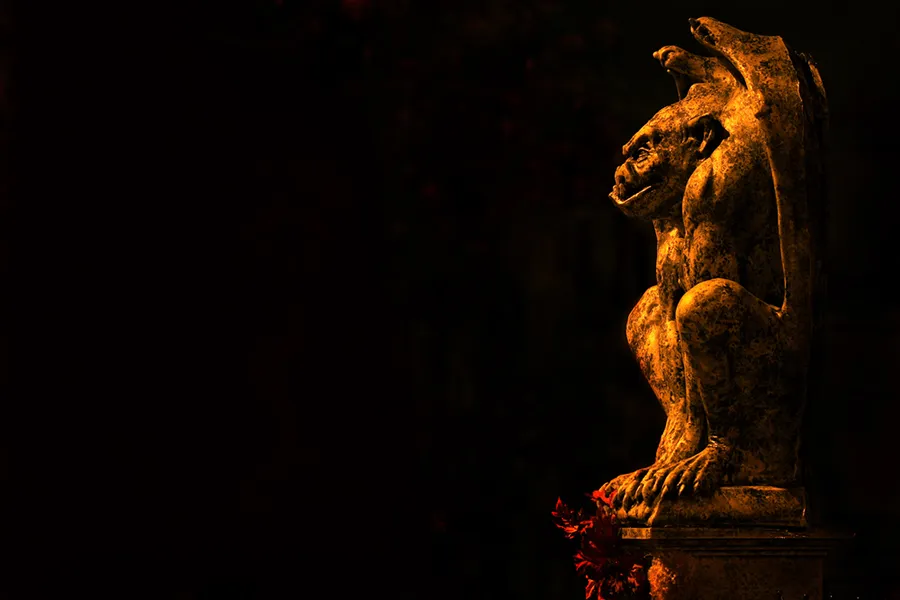
Denver, Colo., Aug 5, 2017 / 03:02 am (CNA/EWTN News).- A recent article in the Economist has some disturbing news about the rise of so-called “professional exorcists” in France and elsewhere, according to one Catholic exorcist.
“It almost seemed like the main focus was on entertainment,” Fr. Vince Lampert of the International Association of Exorcists told CNA, speaking on one of the problems with the phenomenon.
“For the purpose of any exorcism, one of the steps would be for the person to re-connect with their faith or to discover their faith for the first time. It almost seemed like people there were just thinking of evil as something that you can kind of play around with.”
Fr. Lampert is the exorcist for the Archdiocese of Indianapolis, having functioned as such since 2005. While the identities of most exorcists are kept secret, Fr. Lampert often gives talks on the subject.
The Economist piece details the practice of “private exorcists” independent of the Church, claiming that the reason for a rise in popularity is two-fold: a perceived lack of interest from the Church and the benefits customers believe they receive from the “rituals.”
As far as lack of interest from the Church goes, Fr. Lampert responded that in his view, this is not the case. Rather, the Church simply wants to be cautious with cases potentially involving demonic activity, rather than rush to a quick judgment as some may want.
“The Church always wants to move very cautiously,” he said.
He described times when he has seen people who seem to desire a quick-fix to their problems or a superstitious solution, such as those offered by sangomas, a sort of shaman in South Africa that Fr. Lampert believes may be connected to the French phenomenon due to immigration.
“I will say that oftentimes I encounter people that really don’t want any connection with faith,” said Fr. Lampert.
“They just want to treat the priest-exorcist as a shaman as well. ‘There’s evil in my life, make it go away; I don’t really want there to be any responsibility on my part to pray or to grow in faith for the Church.’ They don’t want to change any aspect of their life, they just expect the priest exorcist to make all this go away.”
The business of “private exorcists” can be booming. The Economist article references one of these “professionals” as claiming to make €12,000 (over $14,000) a month from the business. True exorcisms conducted by the Church, however, never have monetary costs associated.
“The Church does view exorcism as a ministry of charity, so she helps anyone who’s in need,” said Fr. Lampert.
Additionally, the perceived positive effect of these “rituals” may actually be dangerous.
“If it’s evil at work, then somehow evil is giving the illusion that somehow what they’re doing is being efficacious, if you will, as a way to continue to play and toy with the people that somehow believe that they can combat the forces of evil independent of the presence of God,” Fr. Lampert said.
These “professionals” mistakenly seem to claim that it is through their power that they exercise their supposed spiritual authority, Fr. Lampert noted.
“Certainly, I didn’t hear any reference to Christ. It almost seemed like it was the individual who was the one casting out evil. But certainly from a Catholic perspective the exorcist would be operating within the name and the power and the glory of Christ. It’s not any power or authority that I possess on my own.”
He describes how this functions in a true exorcism.
“Ultimately, Christ would be the exorcist, because you’re calling on his name, his power, the authority that comes from Christ, and then the priest, the exorcist then, is an instrument that Christ is using.”
Furthermore, these fake rituals can do more harm than good for the person desiring them if they have issues arising from sources other than the demonic, he added.
“The Church could end up causing more harm than good if it labels a person as being possessed, and that label doesn’t allow the person to get the true help that they need, perhaps from their medical doctor or from a mental health professional. You could have these professionals who are just preying on people’s misery, and they could actually be making things a lot worse.”
Fr. Lampert described the process which someone who suspects that demonic activity has entered their life should go through.
“The number one place where people should always begin is with their local pastor, so if they’re Catholic they should talk to the local parish priest who can listen to their story. If you just call somebody blindly and say, ‘I think I’m possessed,’ you might get a non-favorable response from them. But if you go in and you say, ‘OK, there are certain things go on that I can’t figure out, can you help me?’ then that priest is going to be better equipped to make the connection between the exorcist of that diocese and that person.”
He compared this to going to a doctor for physical ailments.
“It’d be like if you need to see a medical professional, a cardiologist, you don’t just walk in and see one; you go through your family doctor who then makes the connection for you. A person should always rely on their local pastor.”
Fr. Lampert also listed a desire for “immediate gratification” as well as resistance to following Church procedures on exorcisms as reasons people turn to unqualified professionals.
If someone seeking help isn’t a practicing Catholic, “then people have to be willing to follow the procedures and the protocols that the Church has in place. Sometimes, people don’t like that, and that’s when they can turn to these so-called professionals because they will give them immediate gratification, if you will.” The Church often assists non-Catholics with these problems.
Many dioceses have an exorcist assigned within them by the local bishop. For safety purposes, their information is usually not made public, hence the need to consult first with a local pastor.
In a piece first published in the National Catholic Register in March, Fr. Lampert noted that demonic activity and the need for exorcist services in the U.S. is on the rise as well.
“The problem isn’t that the devil has upped his game, but more people are willing to play it,” Father Lampert said in reference to pornography, illegal drugs use, and the occult. “Where there is demonic activity, there is always an entry point.”
“As the acceptance of sin has increased, so, too, has demonic activity,” said Msgr. John Esseff of the Pope Leo XII Institute, which trains priests “to bring the light of Christ to dispel evil.” Msgr. Esseff was quoted in the Register article.
Fr. Lampert in the March piece noted that while true possessions are rare, exorcists also assist in the case of demonic infestation, vexation, and obsession.
According to the register piece, “(h)e explained that demonic infestation happens in places where things might move and there are loud noises. With vexation, a person is physically attacked and might have marks such as bruises, bites or scratches. Demonic obsession involves mental attacks, such as persistent thoughts of evil racing through one’s mind.”
However, he cautions against the faithful focusing too much on the devil. “The focus should be on God and Jesus Christ,” he said in the Register piece. “When I remind myself that God is in charge, it puts everything in perspective, and the worry and fear dissipates.”
“If people would build up their faith lives, the devil will be defeated.”
Previous Post

August 4, 2017
Vote wisely, seek peace, bishops say ahead of Kenya's elections
Next Post
August 5, 2017 Artists take center stage in Pope's latest prayer video
Browse Our Archives
Select a Category Americas Asia - Pacific Europe Middle East - Africa Uncategorized US Vatican
Select a Month November 2017 October 2017 September 2017 August 2017 July 2017 June 2017 May 2017 April 2017 March 2017 February 2017 January 2017 December 2016 November 2016 October 2016 September 2016 August 2016 July 2016 June 2016 May 2016 April 2016 March 2016 February 2016 January 2016 December 2015 November 2015 October 2015 September 2015 August 2015 July 2015 June 2015 May 2015 April 2015 March 2015 February 2015 January 2015 December 2014 November 2014 October 2014 September 2014 August 2014 July 2014 June 2014 May 2014 April 2014 March 2014 February 2014 January 2014 December 2013 November 2013 October 2013 September 2013 August 2013 July 2013 June 2013 May 2013 April 2013 March 2013 February 2013 January 2013 December 2012 November 2012 October 2012 September 2012 August 2012 July 2012 June 2012 May 2012
TAKE THE
Religious Wisdom Quiz
Who was Abraham's wife?
Select your answer to see how you score.
Sarah Rebekah Leah Rachel
Related posts from Catholic News

US bishops' new child protection program aims to...

Wealthy foundation aims to redefine religious freedom—and Christianity,...

Victims of Islamic State in focus at UN...

Catholic University of America offers free tuition to...
TRENDING AT PATHEOS Catholic

Rejecting Doom: Christian Hope And Human Action
Christianity is a religion of hope. We are to have hope and...

It’s What Comes From Within Which Matters
One of the most difficult things for us to understand is why...

Why I Choose the Eucharist Over the Sermon
Choose the Eucharist, Not the Sermon What are we supposed to get...

5 Design Elements Found in Spiritually Rooted Homes
Putting Spirituality Into Home Decor Our homes are more than our living...

Credo: A Story of God Told with the...
About 10 years ago, I began to imagine a personal "Credo" that...

The Anatomy of Divine Revelation in Catholic Thought
The claim that God has made Himself known to human beings is...
view all Catholic blogs
Ad-Free & Subscriber Log-In Subscription Support
- About Us
- 2026 Calendar
- Videos
- Podcasts
- Library of World Religions
- Faith In Media Tracker
- Advertise With Us
- Write for Us
- Privacy Policy
- Terms of Service
- Do Not Sell My Data
- Contact Us
- Radiant Digital
- Manage Newsletter Subscriptions
- Unsubscribe From Notifications
- Sitemap
Copyright 2008-2026, Patheos. All rights reserved.
Subscription Support Ad-Free & Subscriber Log-In
Follow Patheos