
BuddhistCatholicContemplativeEvangelicalGeneral ChristianHinduJewishLatter-day SaintMuslimNew VisionsProgressive Christian
Beliefs
- Buddhist
- Catholic
- Contemplative
- Evangelical
- General Christian
- Hindu
- Jewish
- Latter-day Saint
- More Voices
- Muslim
- New Visions
- Pagan
- Progressive Christian
Topics
- Religion News
- Food and Religion
- Sports and Religion
- Religious Art
- Religious Music and Entertainment
- Religious Events
- History and Religion
- Style and Religion
- Politics and Religion
- Women in Religion
- Recreation Outdoors and Religion
- Business Finance and Religion
- Careers Workplace and Religion
- Education and Religion
- Family Parenting and Religion
- Health Fitness and Religion
- Home and Religion
- Relationships and Religion
- Technology and Religion
- Travel and Religion
Columnists
- Buddhist Columnists
- Business Finance and Religion Columnists
- Careers Workplace and Religion Columnists
- Catholic Columnists
- Contemplative Columnists
- Education and Religion Columnists
- Evangelists Columnists
- Family Parenting and Religion Columnists
- General Christian Columnists
- Health Fitness and Religion Columnists
- Hindu Columnists
- History and Religion Columnists
- Home and Religion Columnists
- Jewish Columnists
- More Voices Columnists
- Latter Day Columnists
- Muslim Columnists
- New Visions Columnists
- Nonreligious Columnists
- Pagan Columnists
- Politics and Religion Columnists
- Progressive Columnists
- Recreation Outdoors and Religion Columnists
- Relationships and Religion Columnists
- Religion News Columnists
- Religious Art Columnists
- Religious Events Columnists
- Religious Music and Entertainment Columnists
- Sports and Religion Columnists
- Style and Religion Columnists
- Technology and Religion Columnists
- Travel and Religion Columnists
- Women in Religion Columnists
Resource Library
- 2026 Calendar
- Library of World Religions
- The 100 Most Holy Places on Earth
- Patheos Answers
- Podcasts
- Videos
- Faith Leaders Database
- Anglican Episcopalian
- Bahai
- Baptist
- Buddhism
- Christianity
- Confucianism
- Eastern Orthodoxy
- Hinduism
- Holiness and Pentecostal
- ISKCON
- Islam
- Judaism
- Lutheran
- Methodist
- The Church of Jesus Christ of Latter-day Saints
- New Age
- Paganism
- Presbytarian and Reformed
- Protestantism
- Religion Behind the Scenes
- Roman Catholic
- Scientology
- Shia Islam
- Sikhism
- Sufism
- Sunni Islam
- Taoism
- Zen
- See all religions
Research Tools
 Ad-Free & Subscriber Log-In Subscription Support
Ad-Free & Subscriber Log-In Subscription Support
Follow Patheos 

- Trending:
- Forgiveness
- |
- Marriage
- |
- Consciousness
- |
- Death Penalty
- |
- Election
- |
- Halloween
 Catholic News
- Home
- Catholic
- Religion News
- Pioneering missionary bishop to China considered for beatification
Pioneering missionary bishop to China considered for beatification
Last updated on: August 10, 2017 at 11:08 pm by CNA Daily News
Pioneering missionary bishop to China considered for beatification 2017-08-10T23:08:00+00:00 CNA Daily News
Patheos Explore the world's faith through different perspectives on religion and spirituality! Patheos has the views of the prevalent religions and spiritualities of the world.
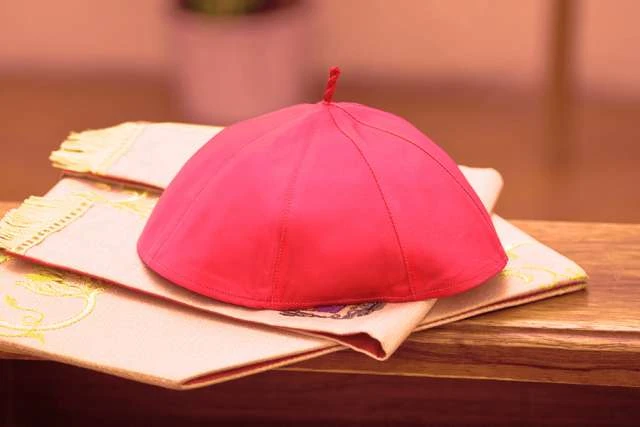
Shanghai, China, Aug 10, 2017 / 05:08 pm (CNA/EWTN News).- A cardinal who helped change Catholic missionary work in China is now a possible candidate for beatification.
Cardinal Celso Costantini became the first apostolic delegate to China in 1922.
The situation in China was particularly complex in the wake of European colonialism and the end of the opium trade. Christian missionaries were suspected of being foreign agents. Tens of thousands of Christian civilians, predominantly Chinese Catholics, were killed in the Boxer Rebellion of 1899-1901.
For its part, France considered the Catholic missions in the land to be under its direct protection, despite its recently approved constitution rigidly separating Church and State.
Then-Bishop Costantini was called not only to navigate the complex political situation, but also to work for a change in the mentality with which the missionary work was being carried out.
His appointment to China came not long after Pope Benedict XV’s 1919 apostolic letter “Maximum Illud,” which many believe changed forever the idea of Catholic missions.
The novelty of the apostolic letter was that “Benedict XV underscored that mission territory was not about a place or a religion to be conquered, but rather a place to proclaim the Gospel in order to give all the people a chance to hear the Word of God,” Cardinal Fernando Filoni, prefect of the Congregation for the Evangelization of People, told CNA.
Cardinal Costantini implemented this vision in China
In his apostolic letter, Benedict XV asked bishops and superiors in charge of Catholic missions to train, educate and ordain local clergy, and reminded missionaries that they have no other goal than the spiritual one.
Then-Bishop Costantini called the first Chinese National Council, which took place in the Xuijaui Cathedral in Shanghai from May 14 to June 12, 1924.
The council gathered 44 ordinary bishops coming from all over China. No political matters were discussed during that meeting.
The gathering approved a final document with 861 canons (paragraphs) that addressed the need to train a local Church with a local clergy. It voiced hope that Chinese-born bishops would be appointed soon, and recognized that missionaries were just transients. The document noted the importance for missionaries to learn the Chinese language and the need to respect the Chinese tradition.
Although it received little attention elsewhere, the Chinese National Council paved the way to a renewed organization of the Church in China.
According to Cardinal Costantini’s postulators, if the Church in China was able to go underground after the Communist revolution and remain strong until now, is mostly due to the work of the missionary bishop.
The opening of the diocesan phase for his beatification has consequences today: it is reviving the discussion around the difficult current situation between China and the Holy See.
The cardinal was born in 1876 and ordained a priest in 1899. He led an ordinary priestly ministry in his native region of Veneto for 14 years. Then in 1920 he was sent as apostolic delegate to Fiume, a former Italian city that came under Yugoslavia administration after the First World War.
Ordained a bishop in 1921, he was appointed the first apostolic delegate to China the next year.
His time in China witnessed continued changes.
In June 15, 1926, Pope Pius XI sent to the Church of China the letter “Ab Ipsia,” in which he emphasized that missionaries did not serve the interest of foreign nations. He announced that soon native-born bishops would be ordained. The new bishop, the Pope said, had the task to cooperate with apostolic vicars in China for the prosperity of their country.
Pius XI ordained the first six Chinese bishops Oct. 28, 1926, at St. Peter’s Basilica.
The ordination of Chinese-born bishops drew varied reactions among missionaries in China. Some of them, like Bishop Costantini, welcomed the move, while others showed some hostility to the Pope’s decision. Parts of the Diocese of China were directly entrusted to missionary orders, some of which felt they were losing “territory.”
As for the Church’s missionary vision, in February 1926, Pius XI issued the encyclical “Rerum Ecclesiae,” which confirmed the guidelines established by “Maximum Illud.”
Bishop Costantini returned to Italy in 1933, but he kept on working for the cause of the Church in China.
Appointed secretary of the Congregation for the Propagation of the Faith, he backed the translation of the missal into Chinese in order to help faithful to understand the Mass, which at the time was said only in Latin.
After a few years, he saw the fruits of his work.
In 1941 and 1942 came two decrees of the Holy Office, now known as the Congregation for the Doctrine of the Faith. These approved the use of the local language to celebrate the sacraments in New Guinea, China, Japan, Indochina, India and Africa. Then in 1949 the Holy Office approved the use of Chinese language in the celebration of the Mass.
The Holy See established the ordinary ecclesiastical hierarchy in China in 1946. The Chinese territory was divided in 20 archdioceses, 85 dioceses and 34 apostolic prefectures.
In 1953, Celso Costantini was made a cardinal by Pius XII. He passed away in 1958.
Previous Post

August 10, 2017
UK politics put pressure on Northern Ireland pro-life laws
Next Post
August 11, 2017 Aleppo's Melkite archbishop looks to rebuild city from the ashes
Browse Our Archives
Select a Category Americas Asia - Pacific Europe Middle East - Africa Uncategorized US Vatican
Select a Month November 2017 October 2017 September 2017 August 2017 July 2017 June 2017 May 2017 April 2017 March 2017 February 2017 January 2017 December 2016 November 2016 October 2016 September 2016 August 2016 July 2016 June 2016 May 2016 April 2016 March 2016 February 2016 January 2016 December 2015 November 2015 October 2015 September 2015 August 2015 July 2015 June 2015 May 2015 April 2015 March 2015 February 2015 January 2015 December 2014 November 2014 October 2014 September 2014 August 2014 July 2014 June 2014 May 2014 April 2014 March 2014 February 2014 January 2014 December 2013 November 2013 October 2013 September 2013 August 2013 July 2013 June 2013 May 2013 April 2013 March 2013 February 2013 January 2013 December 2012 November 2012 October 2012 September 2012 August 2012 July 2012 June 2012 May 2012
TAKE THE
Religious Wisdom Quiz
Who was thrown in a lion's den and survived?
Select your answer to see how you score.
Paul Joshua Daniel Peter
Related posts from Catholic News

Filipino Bishops begin rosary campaign against violent drug...

Filipino seminarians to drug war victims: we remember...

China's president seeks more control over religion
Cardinal Vidal Remembered as a Peacemaker, Pastor
TRENDING AT PATHEOS Catholic

Creation, Preservation, and Teleology in Catholic Theology
As I write this, it is very early Monday morning. Like millions...

The Parable Of The Sower And The Word...
One of Christ’s most famous parables is that of the sower who...

Rejecting Doom: Christian Hope And Human Action
Christianity is a religion of hope. We are to have hope and...

Why I Choose the Eucharist Over the Sermon
Choose the Eucharist, Not the Sermon What are we supposed to get...

5 Design Elements Found in Spiritually Rooted Homes
Putting Spirituality Into Home Decor Our homes are more than our living...

Credo: A Story of God Told with the...
About 10 years ago, I began to imagine a personal "Credo" that...
view all Catholic blogs
Ad-Free & Subscriber Log-In Subscription Support
- About Us
- 2026 Calendar
- Videos
- Podcasts
- Library of World Religions
- Faith In Media Tracker
- Advertise With Us
- Write for Us
- Privacy Policy
- Terms of Service
- Do Not Sell My Data
- Contact Us
- Radiant Digital
- Manage Newsletter Subscriptions
- Unsubscribe From Notifications
- Sitemap
Copyright 2008-2026, Patheos. All rights reserved.
Subscription Support Ad-Free & Subscriber Log-In
Follow Patheos