
BuddhistCatholicContemplativeEvangelicalGeneral ChristianHinduJewishLatter-day SaintMuslimNew VisionsProgressive Christian
Beliefs
- Buddhist
- Catholic
- Contemplative
- Evangelical
- General Christian
- Hindu
- Jewish
- Latter-day Saint
- More Voices
- Muslim
- New Visions
- Pagan
- Progressive Christian
Topics
- Religion News
- Food and Religion
- Sports and Religion
- Religious Art
- Religious Music and Entertainment
- Religious Events
- History and Religion
- Style and Religion
- Politics and Religion
- Women in Religion
- Recreation Outdoors and Religion
- Business Finance and Religion
- Careers Workplace and Religion
- Education and Religion
- Family Parenting and Religion
- Health Fitness and Religion
- Home and Religion
- Relationships and Religion
- Technology and Religion
- Travel and Religion
Columnists
- Buddhist Columnists
- Business Finance and Religion Columnists
- Careers Workplace and Religion Columnists
- Catholic Columnists
- Contemplative Columnists
- Education and Religion Columnists
- Evangelists Columnists
- Family Parenting and Religion Columnists
- General Christian Columnists
- Health Fitness and Religion Columnists
- Hindu Columnists
- History and Religion Columnists
- Home and Religion Columnists
- Jewish Columnists
- More Voices Columnists
- Latter Day Columnists
- Muslim Columnists
- New Visions Columnists
- Nonreligious Columnists
- Pagan Columnists
- Politics and Religion Columnists
- Progressive Columnists
- Recreation Outdoors and Religion Columnists
- Relationships and Religion Columnists
- Religion News Columnists
- Religious Art Columnists
- Religious Events Columnists
- Religious Music and Entertainment Columnists
- Sports and Religion Columnists
- Style and Religion Columnists
- Technology and Religion Columnists
- Travel and Religion Columnists
- Women in Religion Columnists
Resource Library
- 2026 Calendar
- Library of World Religions
- The 100 Most Holy Places on Earth
- Patheos Answers
- Podcasts
- Videos
- Faith Leaders Database
- Anglican Episcopalian
- Bahai
- Baptist
- Buddhism
- Christianity
- Confucianism
- Eastern Orthodoxy
- Hinduism
- Holiness and Pentecostal
- ISKCON
- Islam
- Judaism
- Lutheran
- Methodist
- The Church of Jesus Christ of Latter-day Saints
- New Age
- Paganism
- Presbytarian and Reformed
- Protestantism
- Religion Behind the Scenes
- Roman Catholic
- Scientology
- Shia Islam
- Sikhism
- Sufism
- Sunni Islam
- Taoism
- Zen
- See all religions
Research Tools
 Ad-Free & Subscriber Log-In Subscription Support
Ad-Free & Subscriber Log-In Subscription Support
Follow Patheos 

- Trending:
- Forgiveness
- |
- Marriage
- |
- Consciousness
- |
- Death Penalty
- |
- Election
- |
- Halloween
 Catholic News
- Home
- Catholic
- Religion News
- Hate speech is vocal pornography, says Archbishop Gregory
Hate speech is vocal pornography, says Archbishop Gregory
Last updated on: August 24, 2017 at 10:38 pm by CNA Daily News
Hate speech is vocal pornography, says Archbishop Gregory 2017-08-24T22:38:00+00:00 CNA Daily News
Patheos Explore the world's faith through different perspectives on religion and spirituality! Patheos has the views of the prevalent religions and spiritualities of the world.
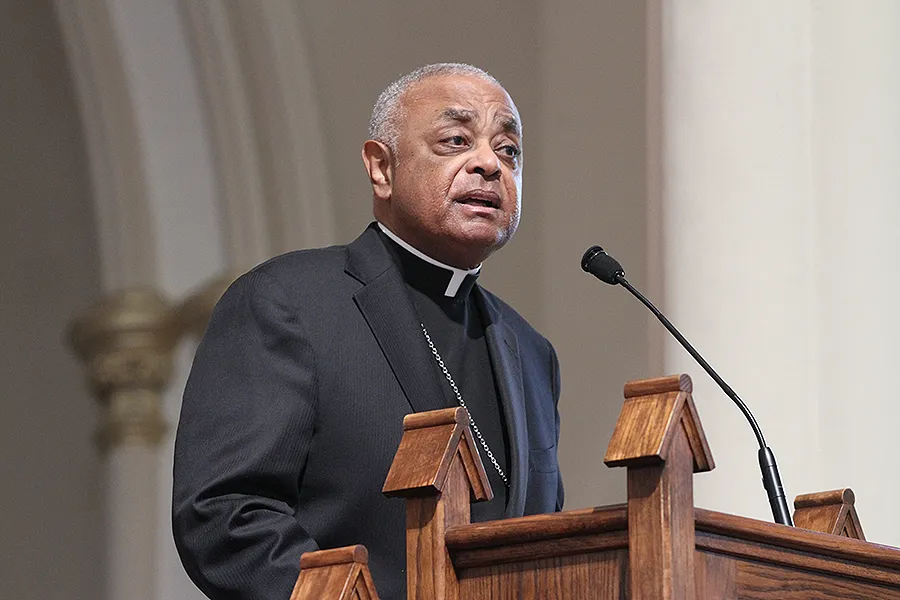
Atlanta, Ga., Aug 24, 2017 / 04:38 pm (CNA/EWTN News).- The Archbishop of Atlanta said this week that racism must be solved through encounter, and stressed that ignorance is the fuel to bigotry and hate speech, which he likened to a type of pornography.
“Such harsh and insulting language has too often given rise to acts of violence that destroy any sense of civility and public decorum. We should call such speech what it is: pornographic violence,” said the Archbishop Wilton D. Gregory in an interview with the Georgia Bulletin.
“We need more opportunities to encounter one another, and thus our metropolitan community provides a unique environment to counter the ignorance that fuels and too often ignites racism and violence.”
He expressed gratitude for the many religious leaders who have fought for civil rights and desegregation, like Dr. Martin Luther King Jr., Archbishop Paul Hallinan, and Rabbi Jacob Rothschild.
“These remarkable personalities offered opportunities for people to meet one another as persons of dignity and this has helped immensely,” said Archbishop Gregory, noting, however, that he is not blind to areas in need of improvement, even within his own diocese.
The archbishop’s interview comes following the white nationalist “Unite the Right” rallies in Charlottesville, Va. on August 11-12, which drew members of neo-Nazi and Ku Klux Klan groups, as well as other white supremacists.
Organizers said the event was to protest the removal of a statue of Confederate general Robert E. Lee, but attendees also chanted racist messages.
On Saturday, a 20-year-old man from Ohio drove a car into the counter-protest which featured a diverse array of groups including religious leaders, Black Lives Matter, and the anarchist group Antifa. One woman was killed and 19 people were injured in the incident. The driver was charged with second-degree murder.
The U.S. bishops have condemned the violence and announced the creation of a new Ad Hoc Committee Against Racism to focus on galvanizing the Church and society to fight the evil of racism and minister to its victims.
Archbishop Gregory identified the racial violence in recent events as part of a “'post-polite' world where rude and offensive language – that too frequently has led to brutal behavior – has been given free rein.”
Likening certain types of illegal pornographic material to hate speech, he said individuals and organizations must take a stand against such violent speech, and he drew special attention to “civil discourse.”
Archbishop Gregory pointed to some of the multicultural festivals which parishes throughout his archdiocese have hosted. When good food, family, music, and dance come together, he said, there is a universal love which not only exposes the uniqueness of individuals and cultures, but also our “similar dreams, needs and fears.”
“We really are the same,” he said, stressing that ignorance of each other is the oxygen which allows racism to thrive.
“Wherever people are disconnected from one another, there is the possibility that they will begin to develop misconceptions about one another – flawed fantasies that have no bearing in reality.”
He added that the archdiocese is proud of its steps toward better interracial and interreligious relations, mentioning events with their Jewish brothers and sisters, as well as how the Chancery staff deals with diversity issues.
Still, the archbishop continued, there is room for improvement.
Specifically, he mentioned the 1979 “Brothers and Sisters to Us,” a document written by United States Conference of Catholic Bishops highlighting the evils of racism. Currently under revision, the archbishop said the document will be broadened to focus on additional communities “who find themselves demeaningly labeled as 'other'” in order to denounce this exclusion as well.
Archbishop Gregory lamented the stories he has heard of people ostracized in his parishes for the color of their skin, their religion, or their struggle with same-sex attraction, and he expressed a particular concern about the xenophobia that sometimes accompanies discussion on immigration.
Poor treatment of U.S. immigrants is no different than other forms of racism, he said. Self-entitlement or fear of losing one’s privilege may be reasons for this behavior, he said, but America was founded as a “nation comprised of people who mostly have come here from other places” and cultures, who have struggled to establish themselves.
He called it “especially concerning when this despicable behavior comes from fellow Catholics who should well remember how we Catholics were victimized in the recent past, simply because we were Catholic.”
Previous Post

August 24, 2017
Why hasn't the Trump administration dropped the HHS mandate?
Browse Our Archives
Select a Category Americas Asia - Pacific Europe Middle East - Africa Uncategorized US Vatican
Select a Month November 2017 October 2017 September 2017 August 2017 July 2017 June 2017 May 2017 April 2017 March 2017 February 2017 January 2017 December 2016 November 2016 October 2016 September 2016 August 2016 July 2016 June 2016 May 2016 April 2016 March 2016 February 2016 January 2016 December 2015 November 2015 October 2015 September 2015 August 2015 July 2015 June 2015 May 2015 April 2015 March 2015 February 2015 January 2015 December 2014 November 2014 October 2014 September 2014 August 2014 July 2014 June 2014 May 2014 April 2014 March 2014 February 2014 January 2014 December 2013 November 2013 October 2013 September 2013 August 2013 July 2013 June 2013 May 2013 April 2013 March 2013 February 2013 January 2013 December 2012 November 2012 October 2012 September 2012 August 2012 July 2012 June 2012 May 2012
TAKE THE
Religious Wisdom Quiz
Who betrayed Jesus for 30 pieces of silver?
Select your answer to see how you score.
John James Judas Iscariot Simon Peter
Related posts from Catholic News

US bishops' new child protection program aims to...

Wealthy foundation aims to redefine religious freedom—and Christianity,...

Victims of Islamic State in focus at UN...

Catholic University of America offers free tuition to...
TRENDING AT PATHEOS Catholic

Rejecting Doom: Christian Hope And Human Action
Christianity is a religion of hope. We are to have hope and...

It’s What Comes From Within Which Matters
One of the most difficult things for us to understand is why...

Why I Choose the Eucharist Over the Sermon
Choose the Eucharist, Not the Sermon What are we supposed to get...

5 Design Elements Found in Spiritually Rooted Homes
Putting Spirituality Into Home Decor Our homes are more than our living...

Credo: A Story of God Told with the...
About 10 years ago, I began to imagine a personal "Credo" that...

The Anatomy of Divine Revelation in Catholic Thought
The claim that God has made Himself known to human beings is...
view all Catholic blogs
Ad-Free & Subscriber Log-In Subscription Support
- About Us
- 2026 Calendar
- Videos
- Podcasts
- Library of World Religions
- Faith In Media Tracker
- Advertise With Us
- Write for Us
- Privacy Policy
- Terms of Service
- Do Not Sell My Data
- Contact Us
- Radiant Digital
- Manage Newsletter Subscriptions
- Unsubscribe From Notifications
- Sitemap
Copyright 2008-2026, Patheos. All rights reserved.
Subscription Support Ad-Free & Subscriber Log-In
Follow Patheos