
BuddhistCatholicContemplativeEvangelicalGeneral ChristianHinduJewishLatter-day SaintMuslimNew VisionsProgressive Christian
Beliefs
- Buddhist
- Catholic
- Contemplative
- Evangelical
- General Christian
- Hindu
- Jewish
- Latter-day Saint
- More Voices
- Muslim
- New Visions
- Pagan
- Progressive Christian
Topics
- Religion News
- Food and Religion
- Sports and Religion
- Religious Art
- Religious Music and Entertainment
- Religious Events
- History and Religion
- Style and Religion
- Politics and Religion
- Women in Religion
- Recreation Outdoors and Religion
- Business Finance and Religion
- Careers Workplace and Religion
- Education and Religion
- Family Parenting and Religion
- Health Fitness and Religion
- Home and Religion
- Relationships and Religion
- Technology and Religion
- Travel and Religion
Columnists
- Buddhist Columnists
- Business Finance and Religion Columnists
- Careers Workplace and Religion Columnists
- Catholic Columnists
- Contemplative Columnists
- Education and Religion Columnists
- Evangelists Columnists
- Family Parenting and Religion Columnists
- General Christian Columnists
- Health Fitness and Religion Columnists
- Hindu Columnists
- History and Religion Columnists
- Home and Religion Columnists
- Jewish Columnists
- More Voices Columnists
- Latter Day Columnists
- Muslim Columnists
- New Visions Columnists
- Nonreligious Columnists
- Pagan Columnists
- Politics and Religion Columnists
- Progressive Columnists
- Recreation Outdoors and Religion Columnists
- Relationships and Religion Columnists
- Religion News Columnists
- Religious Art Columnists
- Religious Events Columnists
- Religious Music and Entertainment Columnists
- Sports and Religion Columnists
- Style and Religion Columnists
- Technology and Religion Columnists
- Travel and Religion Columnists
- Women in Religion Columnists
Resource Library
- 2026 Calendar
- Library of World Religions
- The 100 Most Holy Places on Earth
- Patheos Answers
- Podcasts
- Videos
- Faith Leaders Database
- Anglican Episcopalian
- Bahai
- Baptist
- Buddhism
- Christianity
- Confucianism
- Eastern Orthodoxy
- Hinduism
- Holiness and Pentecostal
- ISKCON
- Islam
- Judaism
- Lutheran
- Methodist
- The Church of Jesus Christ of Latter-day Saints
- New Age
- Paganism
- Presbytarian and Reformed
- Protestantism
- Religion Behind the Scenes
- Roman Catholic
- Scientology
- Shia Islam
- Sikhism
- Sufism
- Sunni Islam
- Taoism
- Zen
- See all religions
Research Tools
 Ad-Free & Subscriber Log-In Subscription Support
Ad-Free & Subscriber Log-In Subscription Support
Follow Patheos 

- Trending:
- Forgiveness
- |
- Marriage
- |
- Consciousness
- |
- Death Penalty
- |
- Election
- |
- Halloween
 Catholic News
- Home
- Catholic
- Religion News
- First human embryos edited in the USA. Here’s why it’s problematic.
First human embryos edited in the USA. Here’s why it’s problematic.
Last updated on: August 2, 2017 at 9:04 am by CNA Daily News
First human embryos edited in the USA. Here’s why it’s problematic. 2017-08-02T09:04:00+00:00 CNA Daily News
Patheos Explore the world's faith through different perspectives on religion and spirituality! Patheos has the views of the prevalent religions and spiritualities of the world.
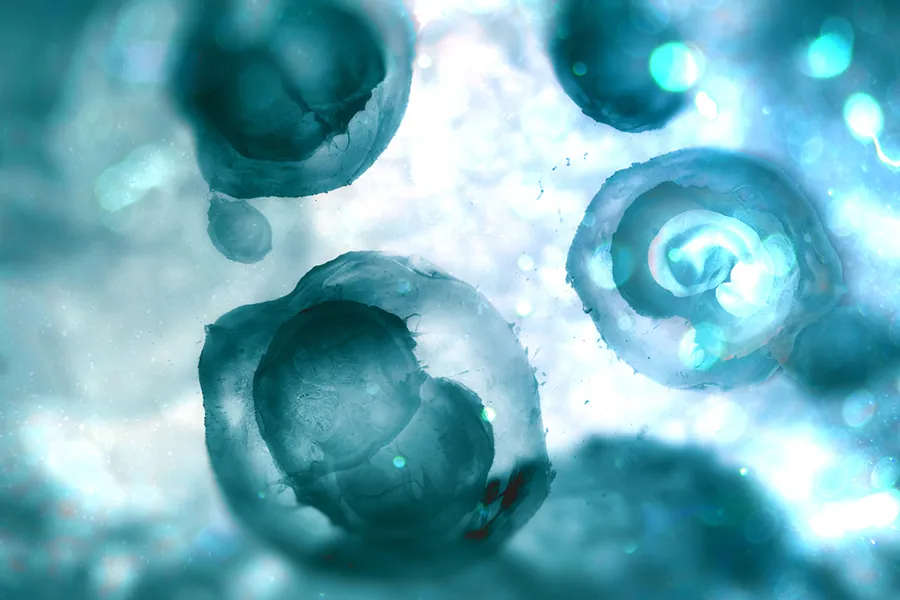
Washington D.C., Aug 2, 2017 / 03:04 am (CNA/EWTN News).- Researchers in Oregon have announced that they have successfully altered genes in a human embryo for the first time in the United States, but Catholic ethicists warn that the procedure was morally objectionable for many reasons.
“Very young humans have been created in vitro and treated not as ends, but as mere means or research fodder to achieve particular investigative goals,” said Fr. Tadeusz Pacholczyk, Director of Education for the The National Catholic Bioethics Center, in a statement to CNA.
“Their value as human beings is profoundly denigrated every time they are created, experimented upon, and then killed. Moreover, if such embryos were to grow up, as will doubtless occur in the future, there are likely to be unintended effects from modifying their genes,” Fr. Pacholczyk continued.
A team of scientists led by Shoukhrat Mitalipov at Oregon Health and Science University announced this week that they used a technology known as CRISPR to edit sections of the human genome, performing the procedure on embryonic humans. The technology, which selectively “snips” and trims areas of the genome and replaces it with strands of desired DNA, has previously been used on adult humans and other species.
Researchers in China have also announced that they have used the technology on embryos, but the edited genes were only present in some of the embryonic subject’s cells.
While researchers laud the breakthrough as a step towards the birth of genetically modified humans and the potential ability to treat inherited genetic diseases, the embryonic humans created and tested in both the US and Chinese experiments were all destroyed within a few days of the procedure. If allowed to survive, the subject embryos would have carried the edits they received in their own egg and sperm cells, and thus have the ability to pass those edited genes down to future generations.
CNA also spoke to John DiCamillo, an ethicist at the National Catholic Bioethics Center, in February about CRISPR technology more broadly, and the ethics surrounding the technique. He stressed that while Catholics “need to be attentive to where the dangers are” surrounding CRISPR technology generally, he cautioned Catholics not to “automatically consider any kind of gene editing to be automatically a problem.”
He pointed to gene therapy trials for disorders such as sickle cell disease and cancer that show promise for treating difficult disorders. He also noted that there “could be limited situations that could exist where the germ line could be legitimately edited. In other words, making changes to sperm, to eggs, or to early embryos as a way of potentially addressing diseases – inheritable diseases and so forth.”
However, permitting edits to germ line cells – such as embryos, eggs, and sperm – could also be “very dangerous on multiple levels,” DiCamillo warned. Since the technology is so new, patients or their descendants could experience a range of “unintended, perhaps harmful, side effects that can now be transmitted, inherited by other individuals down the line.” An embryo who experiences gene modification could also carry and pass on edited genes.
Echoing similar concerns, Fr. Pacholczyk pointing as well to the guidance from the National Academies of Sciences' 2017 report on human gene editing. In the report, he said, the scientists point out that this kind of gene editing is controversial “precisely because the resulting genetic changes would be inherited by the next generation, and the technology therefore would cross a line many have viewed as ethically inviolable.”
Fr. Pacholczyk also stressed the importance of limiting gene editing to therapeutic purposes, with the subject's best interests in mind. He stated that human beings should never be subjected to the research without themselves or their guardians being offered informed consent and without the treatment being ordered to the patient’s health and healing.
In the cases in Oregon, however, the parents of the children created were not able to give valid consent because ethical consent “by definition excludes any approval of directly causing their death or otherwise using [subjects] as mere means to an end.”
“These experiments were nontherapeutic, as the goal was ultimately to destroy the embryos,” Fr. Pacholczyk continued. “Consent is particularly important when dealing with very vulnerable research subjects, and human embryos are among the most vulnerable of God’s creatures.”
Currently, Food and Drug Administration regulations require that all embryos who experience gene editing are later destroyed.
Furthermore, to be ethical, any applications or experiments utilizing CRISPR or other gene editing technology cannot use any other methods in its process which are themselves intrinsically immoral, Fr.Pacholczyk said. The Catholic Church forbids immoral methods of removing spermatozoa and ova from the body outside of intercourse and conception of new human beings through in vitro methods because both techniques dissociate procreation from the integrally personal context of the conjugal act.
Previous Post

August 2, 2017
In August, watch this meteor shower named for a saint
Next Post
August 2, 2017 To be a Christian means to have hope even in darkness, Pope Francis says
Browse Our Archives
Select a Category Americas Asia - Pacific Europe Middle East - Africa Uncategorized US Vatican
Select a Month November 2017 October 2017 September 2017 August 2017 July 2017 June 2017 May 2017 April 2017 March 2017 February 2017 January 2017 December 2016 November 2016 October 2016 September 2016 August 2016 July 2016 June 2016 May 2016 April 2016 March 2016 February 2016 January 2016 December 2015 November 2015 October 2015 September 2015 August 2015 July 2015 June 2015 May 2015 April 2015 March 2015 February 2015 January 2015 December 2014 November 2014 October 2014 September 2014 August 2014 July 2014 June 2014 May 2014 April 2014 March 2014 February 2014 January 2014 December 2013 November 2013 October 2013 September 2013 August 2013 July 2013 June 2013 May 2013 April 2013 March 2013 February 2013 January 2013 December 2012 November 2012 October 2012 September 2012 August 2012 July 2012 June 2012 May 2012
TAKE THE
Religious Wisdom Quiz
What sign did God give Hezekiah to show he would be healed?
Select your answer to see how you score.
A river turned to blood The sun's shadow went backward Fire from heaven Rain in drought
Related posts from Catholic News

US bishops' new child protection program aims to...

Wealthy foundation aims to redefine religious freedom—and Christianity,...

Victims of Islamic State in focus at UN...

Catholic University of America offers free tuition to...
TRENDING AT PATHEOS Catholic

The Parable Of The Sower And The Word...
One of Christ’s most famous parables is that of the sower who...

Rejecting Doom: Christian Hope And Human Action
Christianity is a religion of hope. We are to have hope and...

Why I Choose the Eucharist Over the Sermon
Choose the Eucharist, Not the Sermon What are we supposed to get...

5 Design Elements Found in Spiritually Rooted Homes
Putting Spirituality Into Home Decor Our homes are more than our living...

Credo: A Story of God Told with the...
About 10 years ago, I began to imagine a personal "Credo" that...

The Anatomy of Divine Revelation in Catholic Thought
The claim that God has made Himself known to human beings is...
view all Catholic blogs
Ad-Free & Subscriber Log-In Subscription Support
- About Us
- 2026 Calendar
- Videos
- Podcasts
- Library of World Religions
- Faith In Media Tracker
- Advertise With Us
- Write for Us
- Privacy Policy
- Terms of Service
- Do Not Sell My Data
- Contact Us
- Radiant Digital
- Manage Newsletter Subscriptions
- Unsubscribe From Notifications
- Sitemap
Copyright 2008-2026, Patheos. All rights reserved.
Subscription Support Ad-Free & Subscriber Log-In
Follow Patheos