
BuddhistCatholicContemplativeEvangelicalGeneral ChristianHinduJewishLatter-day SaintMuslimNew VisionsProgressive Christian
Beliefs
- Buddhist
- Catholic
- Contemplative
- Evangelical
- General Christian
- Hindu
- Jewish
- Latter-day Saint
- More Voices
- Muslim
- New Visions
- Pagan
- Progressive Christian
Topics
- Religion News
- Food and Religion
- Sports and Religion
- Religious Art
- Religious Music and Entertainment
- Religious Events
- History and Religion
- Style and Religion
- Politics and Religion
- Women in Religion
- Recreation Outdoors and Religion
- Business Finance and Religion
- Careers Workplace and Religion
- Education and Religion
- Family Parenting and Religion
- Health Fitness and Religion
- Home and Religion
- Relationships and Religion
- Technology and Religion
- Travel and Religion
Columnists
- Buddhist Columnists
- Business Finance and Religion Columnists
- Careers Workplace and Religion Columnists
- Catholic Columnists
- Contemplative Columnists
- Education and Religion Columnists
- Evangelists Columnists
- Family Parenting and Religion Columnists
- General Christian Columnists
- Health Fitness and Religion Columnists
- Hindu Columnists
- History and Religion Columnists
- Home and Religion Columnists
- Jewish Columnists
- More Voices Columnists
- Latter Day Columnists
- Muslim Columnists
- New Visions Columnists
- Nonreligious Columnists
- Pagan Columnists
- Politics and Religion Columnists
- Progressive Columnists
- Recreation Outdoors and Religion Columnists
- Relationships and Religion Columnists
- Religion News Columnists
- Religious Art Columnists
- Religious Events Columnists
- Religious Music and Entertainment Columnists
- Sports and Religion Columnists
- Style and Religion Columnists
- Technology and Religion Columnists
- Travel and Religion Columnists
- Women in Religion Columnists
Resource Library
- 2026 Calendar
- Library of World Religions
- The 100 Most Holy Places on Earth
- Patheos Answers
- Podcasts
- Videos
- Faith Leaders Database
- Anglican Episcopalian
- Bahai
- Baptist
- Buddhism
- Christianity
- Confucianism
- Eastern Orthodoxy
- Hinduism
- Holiness and Pentecostal
- ISKCON
- Islam
- Judaism
- Lutheran
- Methodist
- The Church of Jesus Christ of Latter-day Saints
- New Age
- Paganism
- Presbytarian and Reformed
- Protestantism
- Religion Behind the Scenes
- Roman Catholic
- Scientology
- Shia Islam
- Sikhism
- Sufism
- Sunni Islam
- Taoism
- Zen
- See all religions
Research Tools
 Ad-Free & Subscriber Log-In Subscription Support
Ad-Free & Subscriber Log-In Subscription Support
Follow Patheos 

- Trending:
- Forgiveness
- |
- Marriage
- |
- Consciousness
- |
- Death Penalty
- |
- Election
- |
- Halloween
 Catholic News
- Home
- Catholic
- Religion News
- Critic: German Catholicism is rich – but in the wrong ways
Critic: German Catholicism is rich – but in the wrong ways
Last updated on: August 11, 2017 at 9:26 pm by CNA Daily News
Critic: German Catholicism is rich – but in the wrong ways 2017-08-11T21:26:00+00:00 CNA Daily News
Patheos Explore the world's faith through different perspectives on religion and spirituality! Patheos has the views of the prevalent religions and spiritualities of the world.
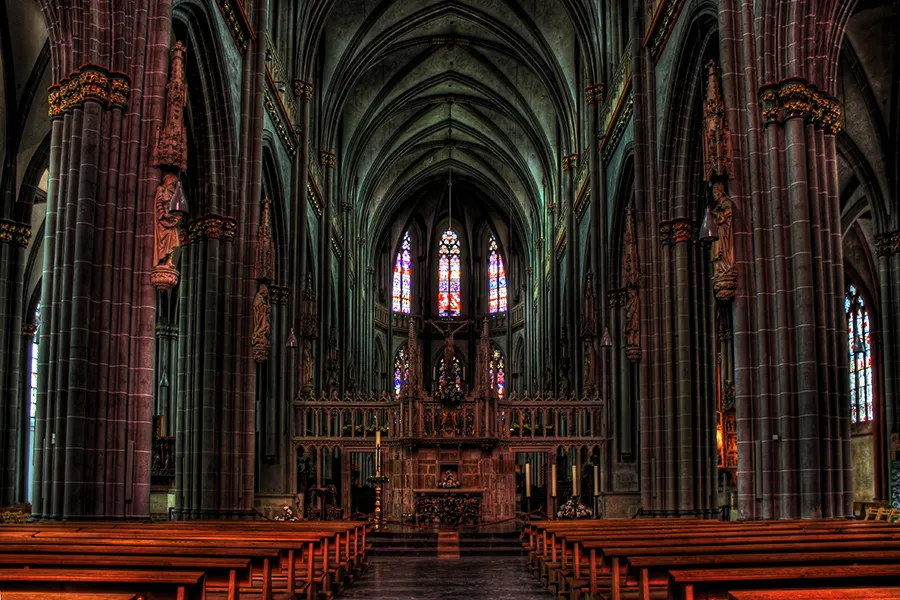
Munich, Germany, Aug 11, 2017 / 03:26 pm (CNA/EWTN News).- The Catholic Church in Germany is “spiritually impoverished and in decline, yet rich in material means.”
That is the diagnosis of Anian Christoph Wimmer, editor of Catholic News Agency's German edition.
Writing in the U.K. Catholic Herald Aug 10, Wimmer said the Church in Germany at present suffers from an unhealthy combination of “dwindling spiritual influence and major financial clout.”
“On the one hand, the official figures paint a stark picture of continuing decline in terms of Church membership, Mass attendance and participation in the sacraments,” he said. “On the other hand, the German Church is enormously wealthy and continues to wield significant influence both at home and abroad, not least in the Vatican.”
According to the German Bishops' Conference, 160,000 Catholics left the Church in 2016, while only 2,574 converted. The number of priests fell by 200 to 13,856. The numbers of people receiving the sacraments of confirmation and marriage is also in decline. Although the bishops' conference does not count the number of confessions, Wimmer said the sacrament has “to all intents and purposes disappeared from many, if not most, parishes.”
While one might expect the Church to use its wealth to evangelize secular society, Wimmer commented, “this is the one thing that appears to elude the Church in Germany, so flush with money: its core business of spreading the Gospel and watching over the sheep, helping a growing flock better to know, love and serve God.”
The numbers of Germans at Sunday Mass in the 1950s and 1960s were stable at 11.5-11.7 million per year, attendance dropped to 2.5 million in 2015. The overall population of Catholics in Germany is 23.8 million.
The Church is one of the largest employers in Germany and the churches can still be maintained is because of its financial wealth. Germany’s tax system means that registered Catholics pay eight or nine percent of their income tax to the Church. This totaled almost $7.1 billion in 2016, a record.
The tax helps fund the salaries of bishops, which often exceed $11,700 per month, as well as educational institutions and other activities, like hospitals, schools and meals on wheels activities. The tax also funds the Church’s large network of charities, which give hundreds of millions of dollars in aid and assistance each year, at home and abroad.
“Thanks to the booming German economy, the departure of many thousands of Catholics every year has not (yet) put a dent in the ecclesial coffers,” said Wimmer.
Church attendance is lowest in historically Catholic regions along the Rhine, with the dioceses of Aachen and Speyer reporting only 7.8 percent of Catholics attending Sunday Mass. Mass attendance is high in diaspora communities in former East Germany, Saxony or Thuringia, where attendance is closer to 20 percent. Some parts of Bavaria, Pope Benedict XVI's home, also show “signs of life.”
“The faith has evaporated,” Cardinal Friedrich Wetter, Archbishop emeritus of Munich and Freising, told Wimmer.
Would-be reformers have many proposals.
“Some propose that the Church tax should be abolished. They seem to assume that if money will not solve the problem, then the absence of it will,” said Wimmer, who suggested that this idea has some merit but is rarely thought through.
Another proposed solution is “an appeal for more heterodoxy” and advocacy to abolish priestly celibacy, admit women to the priesthood, and other changes.
Instead, Wimmer endorsed the recommendation of Bishop Rudolf Voderholzer of Regensburg, who spoke about true renewal on the 500th anniversary of the Protestant Reformation:
“The first and foremost step on this path is the daily struggle for sanctity, listening to God’s Word and being prepared to start the reform of the Church with oneself. For that is what reformation means: renewal from within the faith, restoration of the Image of Christ, which is imprinted in us in baptism and confirmation,” the bishop said.
“Where that is granted to us, by the grace of God, where this succeeds, we will also make the people of our time once again curious about the faith that carries us. And then we will also be able to bear witness to the hope that fulfills us.”
Previous Post

August 11, 2017
Priest counters claim that God ordained Trump to nuke North Korea
Next Post
August 11, 2017 A bishop's plea: Don't forget victims of war and cholera in Yemen
Browse Our Archives
Select a Category Americas Asia - Pacific Europe Middle East - Africa Uncategorized US Vatican
Select a Month November 2017 October 2017 September 2017 August 2017 July 2017 June 2017 May 2017 April 2017 March 2017 February 2017 January 2017 December 2016 November 2016 October 2016 September 2016 August 2016 July 2016 June 2016 May 2016 April 2016 March 2016 February 2016 January 2016 December 2015 November 2015 October 2015 September 2015 August 2015 July 2015 June 2015 May 2015 April 2015 March 2015 February 2015 January 2015 December 2014 November 2014 October 2014 September 2014 August 2014 July 2014 June 2014 May 2014 April 2014 March 2014 February 2014 January 2014 December 2013 November 2013 October 2013 September 2013 August 2013 July 2013 June 2013 May 2013 April 2013 March 2013 February 2013 January 2013 December 2012 November 2012 October 2012 September 2012 August 2012 July 2012 June 2012 May 2012
TAKE THE
Religious Wisdom Quiz
In 2 Corinthians, Paul describes a man being caught up to the third heaven. How many years before writing did this happen?
Select your answer to see how you score.
Ten years Seven years Twelve years Fourteen years
Related posts from Catholic News

Sixty Vincentians martyred during Spanish Civil War to...

Filipinos gather in Rome to promote bishop's beatification...

UK bishop calls for prayers as MPs urge...

On All Souls' Day, Pope Francis prays for...
TRENDING AT PATHEOS Catholic

The Parable Of The Sower And The Word...
One of Christ’s most famous parables is that of the sower who...

Rejecting Doom: Christian Hope And Human Action
Christianity is a religion of hope. We are to have hope and...

Why I Choose the Eucharist Over the Sermon
Choose the Eucharist, Not the Sermon What are we supposed to get...

5 Design Elements Found in Spiritually Rooted Homes
Putting Spirituality Into Home Decor Our homes are more than our living...

Credo: A Story of God Told with the...
About 10 years ago, I began to imagine a personal "Credo" that...

The Anatomy of Divine Revelation in Catholic Thought
The claim that God has made Himself known to human beings is...
view all Catholic blogs
Ad-Free & Subscriber Log-In Subscription Support
- About Us
- 2026 Calendar
- Videos
- Podcasts
- Library of World Religions
- Faith In Media Tracker
- Advertise With Us
- Write for Us
- Privacy Policy
- Terms of Service
- Do Not Sell My Data
- Contact Us
- Radiant Digital
- Manage Newsletter Subscriptions
- Unsubscribe From Notifications
- Sitemap
Copyright 2008-2026, Patheos. All rights reserved.
Subscription Support Ad-Free & Subscriber Log-In
Follow Patheos