
BuddhistCatholicContemplativeEvangelicalGeneral ChristianHinduJewishLatter-day SaintMuslimNew VisionsProgressive Christian
Beliefs
- Buddhist
- Catholic
- Contemplative
- Evangelical
- General Christian
- Hindu
- Jewish
- Latter-day Saint
- More Voices
- Muslim
- New Visions
- Pagan
- Progressive Christian
Topics
- Religion News
- Food and Religion
- Sports and Religion
- Religious Art
- Religious Music and Entertainment
- Religious Events
- History and Religion
- Style and Religion
- Politics and Religion
- Women in Religion
- Recreation Outdoors and Religion
- Business Finance and Religion
- Careers Workplace and Religion
- Education and Religion
- Family Parenting and Religion
- Health Fitness and Religion
- Home and Religion
- Relationships and Religion
- Technology and Religion
- Travel and Religion
Columnists
- Buddhist Columnists
- Business Finance and Religion Columnists
- Careers Workplace and Religion Columnists
- Catholic Columnists
- Contemplative Columnists
- Education and Religion Columnists
- Evangelists Columnists
- Family Parenting and Religion Columnists
- General Christian Columnists
- Health Fitness and Religion Columnists
- Hindu Columnists
- History and Religion Columnists
- Home and Religion Columnists
- Jewish Columnists
- More Voices Columnists
- Latter Day Columnists
- Muslim Columnists
- New Visions Columnists
- Nonreligious Columnists
- Pagan Columnists
- Politics and Religion Columnists
- Progressive Columnists
- Recreation Outdoors and Religion Columnists
- Relationships and Religion Columnists
- Religion News Columnists
- Religious Art Columnists
- Religious Events Columnists
- Religious Music and Entertainment Columnists
- Sports and Religion Columnists
- Style and Religion Columnists
- Technology and Religion Columnists
- Travel and Religion Columnists
- Women in Religion Columnists
Resource Library
- 2026 Calendar
- Library of World Religions
- The 100 Most Holy Places on Earth
- Patheos Answers
- Podcasts
- Videos
- Faith Leaders Database
- Anglican Episcopalian
- Bahai
- Baptist
- Buddhism
- Christianity
- Confucianism
- Eastern Orthodoxy
- Hinduism
- Holiness and Pentecostal
- ISKCON
- Islam
- Judaism
- Lutheran
- Methodist
- The Church of Jesus Christ of Latter-day Saints
- New Age
- Paganism
- Presbytarian and Reformed
- Protestantism
- Religion Behind the Scenes
- Roman Catholic
- Scientology
- Shia Islam
- Sikhism
- Sufism
- Sunni Islam
- Taoism
- Zen
- See all religions
Research Tools
 Ad-Free & Subscriber Log-In Subscription Support
Ad-Free & Subscriber Log-In Subscription Support
Follow Patheos 

- Trending:
- Forgiveness
- |
- Marriage
- |
- Consciousness
- |
- Death Penalty
- |
- Election
- |
- Halloween
 Catholic News
- Home
- Catholic
- Religion News
- Civilta Cattolica inspired counterproductive debate, American critics say
Civilta Cattolica inspired counterproductive debate, American critics say
Last updated on: August 4, 2017 at 4:08 am by CNA Daily News
Civilta Cattolica inspired counterproductive debate, American critics say 2017-08-04T04:08:00+00:00 CNA Daily News
Patheos Explore the world's faith through different perspectives on religion and spirituality! Patheos has the views of the prevalent religions and spiritualities of the world.
Washington D.C., Aug 3, 2017 / 10:08 pm (CNA/EWTN News).- A prominent Jesuit publication’s essay on American religion and politics continues to provoke responses from critics concerned its two authors fundamentally misunderstand the situation of Catholics in the United States.
“Their essay is bad but important,” said New York Times columnist Ross Douthat Aug. 2, saying its apparent intention is to warn about Catholic support for “the darker tendencies in Trumpism” like xenophobia, stigmatization of enemies, the “prosperity-gospel inflected worship of success,” and a “crude view of Islam.”
For Douthat, however, the authors’ understanding of American religion “seems to start and end with Google searches and anti-evangelical tracts.” In his view, secularization and political polarization have made the place of Catholics in the U.S. “more difficult and perplexing.” Both Catholic support for Trump and more radical Catholic critiques “are not the culmination of the Catholic-evangelical alliance but rather a reaction to its political and cultural failures — and the failures of liberal religious politics as well.”
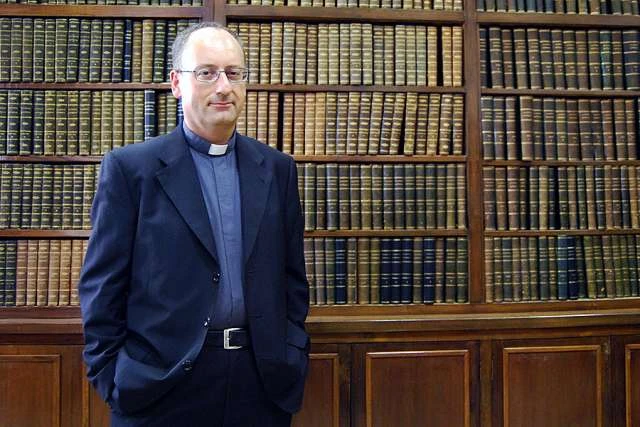
On July 13 the Jesuit-run journal La Civilta Cattolica published an analysis piece co-authored by its editor, Father Antonio Spadaro, S.J., and Marcelo Figueroa, a Presbyterian pastor who is editor-in-chief of the Argentine edition of L’Osservatore Romano, the daily newspaper of Vatican City.
The piece, titled “Evangelical Fundamentalism and Catholic Integralism in the USA: A Surprising Ecumenism” made a number of claims, alleging that many conservative Christians have united to promote an “ecumenism of hate” in policies that contradict Pope Francis’ message of mercy. They claimed that that “Evangelical fundamentalists” and “Catholic Integralists” are being brought together in a “surprising ecumenism” by a shared desire for religious influence in politics.
Douthat said the essay’s authors seemed to be motivated by “fear and ignorance.”
Their attack on Trump-friendly positions expands and conflates “very different political and religious tendencies, indulging in paranoia about obscure theocratic Protestants and fringe Catholic websites, and ultimately critiquing every kind of American religious conservatism.” Their critique includes “the largely anti-political Benedict Option and the pro-life activism fulsomely supported by Francis’ papal predecessors.”
“None of this makes any sense,” Douthat said. “The post-1970s evangelical-Catholic alliance has been flawed in various ways, but it is neither theocratic nor illiberal.”
He said both American Catholics and Protestants feel “their leaders and thinkers have spent decades rallying to the republic, trying to bring about its moral and political renewal … only to see republican virtues decaying, liberalism turning hostile to religious faith, and democratic capitalism delivering disappointment and dislocation.”
Douthat saw an increase in “disillusionment and homelessness” among Catholic thinkers. Older Catholic approaches to politics seem to be out of energy and influence. Western liberalism seems “at once hostile to traditional religion and beset by internal contradictions,” which seems to make the moment “ripe for serious Catholic rethinking.”
In both the rhetoric of Pope Francis and among unsettled American Catholics are hints that American politics is in a transition point. Douthat argued that Fr. Spadaro and Rev. Figueroa missed this.
“In their evident paranoia about what the Americans are up to, you see a different spirit: a fear of novelty and disruption, and a desire for a church that’s primarily a steward of social peace, a mild and ecumenical presence, a moderate pillar of the establishment in a stable and permanently liberal age,” Douthat claimed, saying that those who desire such a Church need to do better to understand “why so many of their flock, in Europe and the United States, find this vision insufficient to the times.”
Catholic commentator George Weigel, a senior fellow at the Ethics and Public Policy Center, questioned the decision to publish the essay.
Writing at First Things Aug. 2, Weigel noted that La Civilta Cattolica is often read because it is vetted by the Secretariat of State. Its articles are assumed to have “quasi-official” status and are commonly believed “to reflect the cast of mind of the current pontificate.”
“What kind of vetting did this misbegotten article get? Were any knowledgeable experts on U.S. Catholicism or American evangelical Protestantism consulted on what the overseers must have known would be an incendiary piece?”
If the article really represents the views of the Secretariat of State, Weigel asked, he questioned how to interpret the speech of apostolic nuncio to the U.S., Archbishop Cristoph Pierre, whose address to the U.S. bishops “bears no resemblance to the wasteland of madcap pseudo-theology and hatred.”
Weigel approvingly summarized other critics of the article for an “ill-informed misrepresentation of American religious history”; for “surreal descriptions” of 21st century Catholicism and evangelical Protestantism; its “obsessions with marginal figures in contemporary American religious life”; and its “misreading” of how religion informs public debate in the U.S.
He suggested that the journal and the credibility of the Secretariat of State could be better served by severing the connection, warning that the interpretations of the article “raise deeply disturbing questions about the competence of both parties.”
The New York Times depicted the Civilta Cattolica essay as “A Vatican Shot Across the Bow for Hard-Line U.S. Catholics.” The essay has drawn defenders in publications such as Commonweal Magazine and the National Catholic Reporter.
However, the editors of Commonweal Magazine, themselves unsympathetic to U.S. Catholic conservatism, are also among the critics.
In a July 25 editorial, they described the essay as “a mishmash of wild and erroneous claims, made in a disjointed, almost impenetrable style,” whose authors “seem woefully ignorant of American religious history.” They said the essay was a “lost opportunity” to criticize the partisan use of religion in a way that might engage “those who do not yet have ears to hear.”
Previous Post

August 3, 2017
Proposed legal immigration limits draw strong criticism from US bishops
Next Post
August 4, 2017 Over half of UK women who sought abortion last year used contraceptives
Browse Our Archives
Select a Category Americas Asia - Pacific Europe Middle East - Africa Uncategorized US Vatican
Select a Month November 2017 October 2017 September 2017 August 2017 July 2017 June 2017 May 2017 April 2017 March 2017 February 2017 January 2017 December 2016 November 2016 October 2016 September 2016 August 2016 July 2016 June 2016 May 2016 April 2016 March 2016 February 2016 January 2016 December 2015 November 2015 October 2015 September 2015 August 2015 July 2015 June 2015 May 2015 April 2015 March 2015 February 2015 January 2015 December 2014 November 2014 October 2014 September 2014 August 2014 July 2014 June 2014 May 2014 April 2014 March 2014 February 2014 January 2014 December 2013 November 2013 October 2013 September 2013 August 2013 July 2013 June 2013 May 2013 April 2013 March 2013 February 2013 January 2013 December 2012 November 2012 October 2012 September 2012 August 2012 July 2012 June 2012 May 2012
TAKE THE
Religious Wisdom Quiz
Who was raised from the dead in Nain by Jesus?
Select your answer to see how you score.
Jairus' daughter Peter's mother-in-law Lazarus The widow's son
Related posts from Catholic News

US bishops' new child protection program aims to...

Wealthy foundation aims to redefine religious freedom—and Christianity,...

Victims of Islamic State in focus at UN...

Catholic University of America offers free tuition to...
TRENDING AT PATHEOS Catholic

Creation, Preservation, and Teleology in Catholic Theology
As I write this, it is very early Monday morning. Like millions...

The Parable Of The Sower And The Word...
One of Christ’s most famous parables is that of the sower who...

Rejecting Doom: Christian Hope And Human Action
Christianity is a religion of hope. We are to have hope and...

Why I Choose the Eucharist Over the Sermon
Choose the Eucharist, Not the Sermon What are we supposed to get...

5 Design Elements Found in Spiritually Rooted Homes
Putting Spirituality Into Home Decor Our homes are more than our living...

Credo: A Story of God Told with the...
About 10 years ago, I began to imagine a personal "Credo" that...
view all Catholic blogs
Ad-Free & Subscriber Log-In Subscription Support
- About Us
- 2026 Calendar
- Videos
- Podcasts
- Library of World Religions
- Faith In Media Tracker
- Advertise With Us
- Write for Us
- Privacy Policy
- Terms of Service
- Do Not Sell My Data
- Contact Us
- Radiant Digital
- Manage Newsletter Subscriptions
- Unsubscribe From Notifications
- Sitemap
Copyright 2008-2026, Patheos. All rights reserved.
Subscription Support Ad-Free & Subscriber Log-In
Follow Patheos