
BuddhistCatholicContemplativeEvangelicalGeneral ChristianHinduJewishLatter-day SaintMuslimNew VisionsProgressive Christian
Beliefs
- Buddhist
- Catholic
- Contemplative
- Evangelical
- General Christian
- Hindu
- Jewish
- Latter-day Saint
- More Voices
- Muslim
- New Visions
- Pagan
- Progressive Christian
Topics
- Religion News
- Food and Religion
- Sports and Religion
- Religious Art
- Religious Music and Entertainment
- Religious Events
- History and Religion
- Style and Religion
- Politics and Religion
- Women in Religion
- Recreation Outdoors and Religion
- Business Finance and Religion
- Careers Workplace and Religion
- Education and Religion
- Family Parenting and Religion
- Health Fitness and Religion
- Home and Religion
- Relationships and Religion
- Technology and Religion
- Travel and Religion
Columnists
- Buddhist Columnists
- Business Finance and Religion Columnists
- Careers Workplace and Religion Columnists
- Catholic Columnists
- Contemplative Columnists
- Education and Religion Columnists
- Evangelists Columnists
- Family Parenting and Religion Columnists
- General Christian Columnists
- Health Fitness and Religion Columnists
- Hindu Columnists
- History and Religion Columnists
- Home and Religion Columnists
- Jewish Columnists
- More Voices Columnists
- Latter Day Columnists
- Muslim Columnists
- New Visions Columnists
- Nonreligious Columnists
- Pagan Columnists
- Politics and Religion Columnists
- Progressive Columnists
- Recreation Outdoors and Religion Columnists
- Relationships and Religion Columnists
- Religion News Columnists
- Religious Art Columnists
- Religious Events Columnists
- Religious Music and Entertainment Columnists
- Sports and Religion Columnists
- Style and Religion Columnists
- Technology and Religion Columnists
- Travel and Religion Columnists
- Women in Religion Columnists
Resource Library
- 2026 Calendar
- Library of World Religions
- The 100 Most Holy Places on Earth
- Patheos Answers
- Podcasts
- Videos
- Faith Leaders Database
- Anglican Episcopalian
- Bahai
- Baptist
- Buddhism
- Christianity
- Confucianism
- Eastern Orthodoxy
- Hinduism
- Holiness and Pentecostal
- ISKCON
- Islam
- Judaism
- Lutheran
- Methodist
- The Church of Jesus Christ of Latter-day Saints
- New Age
- Paganism
- Presbytarian and Reformed
- Protestantism
- Religion Behind the Scenes
- Roman Catholic
- Scientology
- Shia Islam
- Sikhism
- Sufism
- Sunni Islam
- Taoism
- Zen
- See all religions
Research Tools
 Ad-Free & Subscriber Log-In Subscription Support
Ad-Free & Subscriber Log-In Subscription Support
Follow Patheos 

- Trending:
- Forgiveness
- |
- Marriage
- |
- Consciousness
- |
- Death Penalty
- |
- Election
- |
- Halloween
 Catholic News
- Home
- Catholic
- Religion News
- Why religious leaders might be best at fighting extremism
Why religious leaders might be best at fighting extremism
Last updated on: July 19, 2017 at 12:01 pm by CNA Daily News
Why religious leaders might be best at fighting extremism 2017-07-19T12:01:00+00:00 CNA Daily News
Patheos Explore the world's faith through different perspectives on religion and spirituality! Patheos has the views of the prevalent religions and spiritualities of the world.
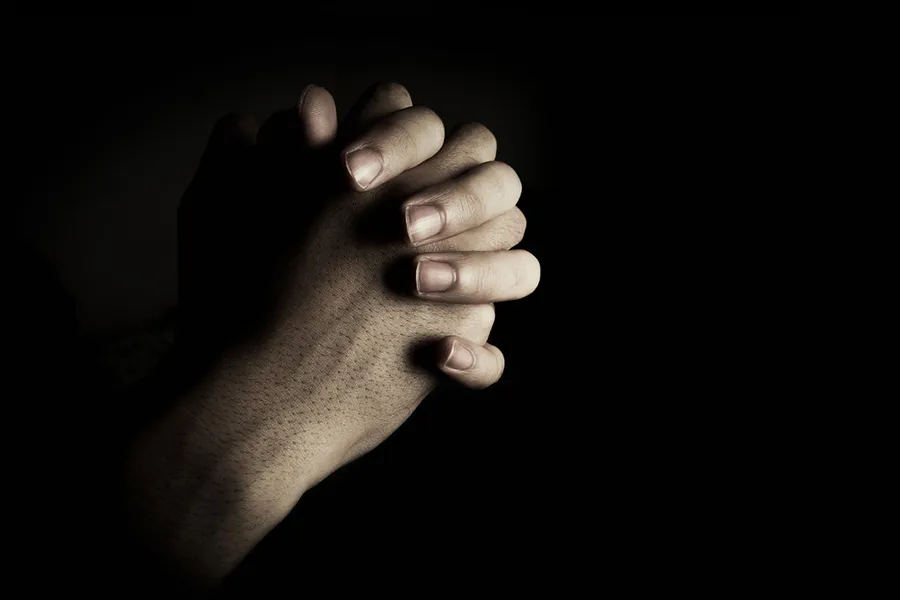
New York City, N.Y., Jul 19, 2017 / 06:01 am (CNA/EWTN News).- Religious leaders, not secularists, are often in the best position to persuade violent religious extremists towards peace, the papal nuncio to the United Nations has said in response to an effort to prevent atrocities.
“The very existence of a plan directed toward religious leaders is also a humble recognition by the international community that those who are being incited by pseudo-religious motivations for violence aren’t going to be effectively persuaded out of it by secular argumentation from so-called infidels or by economic materialism,” Archbishop Bernardito Auza said July 14.
“They need, rather, valid religious arguments that show that extremists’ violence-inducing exegesis is unfaithful to the text and to the God they’re claiming to serve; they need persuasive counterarguments that plant the seeds of peace and eradicate the weeds of violence.”
Archbishop Auza is the apostolic nuncio leading the Holy See’s Permanent Observer Mission to the United Nations. He spoke at the launch of a Plan of Action for religious leaders and other actors to prevent incitement to violence that could lead to atrocities.
The plan follows two years of consultations by Adama Dieng, the U.N. Special Adviser on the Prevention of Genocide. Dieng told UN Radio that the plan had been designed to counter the kind of ideology that led to the Islamic State group’s genocide against the Yazidi people.
For the papal nuncio, the prevention of genocide, war crimes, ethnic cleansing and crimes against humanity “requires the contributions and collaboration of each of us and all our communities and institutions.”
He noted that some religious leaders abuse their influence and authority “to spur or justify atrocities.” At the same time, many more religious leaders condemn these abuses and stress that “violence against others in the name of God is a great blasphemy against the name of God and the greatest disservice to religion itself.”
According to the nuncio, the United Nations’ plan and recommended practices can help religious leaders inoculate their congregations against “the half-truths that ideologues can use to incite them to hating rather than loving, and attacking rather than serving, their neighbor.”
Archbishop Auza noted that religion and violence can be delicate subjects.
“Acknowledging explicitly the religious dimension of some expressions of violent extremism is fraught with danger, and we can understand the reluctance of governments and international bodies to do so,” the archbishop reflected. “Thus, the most important contribution of religious leaders to this debate is to help people understand that acknowledging the religious dimension of some violent extremism, or more precisely the manipulation of religion for violent ends, does not mean equating religion, or a particular religion, or an entire religious community, with violence.”
“Understanding the motivations that lie at the root of terrorism and violence is complex and requires careful reflection and analysis, all the more so when there is a religious dimension to it,” he added. “Religious leaders are uniquely placed to offer such reflection. Pope Francis has helped to open up spaces for this reflection to occur so that religious leaders are able to contribute to the sensitive debate about religiously motivated terrorism.”
At the same time, the archbishop stressed that other bodies, like national governments, are more capable of stopping atrocities than religious leaders.
“There has been some focus recently on the role of religious leaders in preventing atrocity crimes — and this is good, because religious leaders have much to contribute — but, at the end of the day, religious leaders and organizations obviously do not have the resources by themselves to stop atrocities,” he said.
Religious leaders can influence behavior and mentalities, but do not control law enforcement agencies and armed forces. Rather, national governments and the international community have the primary responsibility “to act to protect the innocent from savage acts.”
Although the Holy See could not support all the elements of the United Nations’ action plan, Archbishop Auza said the plan is “a major, practical step forward” in fostering a culture and society consistent with the 2005 world summit on the Responsibility to Protect, a U.N. commitment to prevent genocide, war crimes and other crimes against humanity.
The latest action plan also notes the need for meaningful interreligious dialogue among religious leaders.
On this point, Archbishop Auza cited Pope Francis, who has called this dialogue “a necessary condition for peace in the world.”
In January the Pope told diplomats accredited to the Holy See that interreligious dialogue provides a paradigm to discuss differences, to grow in mutual appreciation of others’ perspectives, and to journey towards peace and other goals. The pontiff said that religiously motivated men and women can show adherents how to fight injustice, root out discord that can lead to war, renounce violence and vengeance, and transcend selfishness, hatred and lack of forgiveness.
Archbishop Auza emphasized this effort.
“That’s why the work of religious leaders and believers in general, and interreligious dialogue in particular, are crucial not just in preventing incitement to violence among susceptible coreligionists, but in fostering incitement to virtue and thereby creating the type of peaceful and inclusive societies in which atrocity crimes are ethically unimaginable,” he said.
Previous Post

July 19, 2017
Step outside the politics and encounter immigrants, bishop implores
Next Post
July 19, 2017 Facebook restores blocked Catholic pages without explanation
Browse Our Archives
Select a Category Americas Asia - Pacific Europe Middle East - Africa Uncategorized US Vatican
Select a Month November 2017 October 2017 September 2017 August 2017 July 2017 June 2017 May 2017 April 2017 March 2017 February 2017 January 2017 December 2016 November 2016 October 2016 September 2016 August 2016 July 2016 June 2016 May 2016 April 2016 March 2016 February 2016 January 2016 December 2015 November 2015 October 2015 September 2015 August 2015 July 2015 June 2015 May 2015 April 2015 March 2015 February 2015 January 2015 December 2014 November 2014 October 2014 September 2014 August 2014 July 2014 June 2014 May 2014 April 2014 March 2014 February 2014 January 2014 December 2013 November 2013 October 2013 September 2013 August 2013 July 2013 June 2013 May 2013 April 2013 March 2013 February 2013 January 2013 December 2012 November 2012 October 2012 September 2012 August 2012 July 2012 June 2012 May 2012
TAKE THE
Religious Wisdom Quiz
What principle about debt is found in Proverbs?
Select your answer to see how you score.
Never lend Ignore money The borrower is slave to the lender Debt is always good
Related posts from Catholic News

US bishops' new child protection program aims to...

Wealthy foundation aims to redefine religious freedom—and Christianity,...

Victims of Islamic State in focus at UN...

Catholic University of America offers free tuition to...
TRENDING AT PATHEOS Catholic

The Parable Of The Sower And The Word...
One of Christ’s most famous parables is that of the sower who...

Rejecting Doom: Christian Hope And Human Action
Christianity is a religion of hope. We are to have hope and...

Why I Choose the Eucharist Over the Sermon
Choose the Eucharist, Not the Sermon What are we supposed to get...

5 Design Elements Found in Spiritually Rooted Homes
Putting Spirituality Into Home Decor Our homes are more than our living...

Credo: A Story of God Told with the...
About 10 years ago, I began to imagine a personal "Credo" that...

The Anatomy of Divine Revelation in Catholic Thought
The claim that God has made Himself known to human beings is...
view all Catholic blogs
Ad-Free & Subscriber Log-In Subscription Support
- About Us
- 2026 Calendar
- Videos
- Podcasts
- Library of World Religions
- Faith In Media Tracker
- Advertise With Us
- Write for Us
- Privacy Policy
- Terms of Service
- Do Not Sell My Data
- Contact Us
- Radiant Digital
- Manage Newsletter Subscriptions
- Unsubscribe From Notifications
- Sitemap
Copyright 2008-2026, Patheos. All rights reserved.
Subscription Support Ad-Free & Subscriber Log-In
Follow Patheos