
BuddhistCatholicContemplativeEvangelicalGeneral ChristianHinduJewishLatter-day SaintMuslimNew VisionsProgressive Christian
Beliefs
- Buddhist
- Catholic
- Contemplative
- Evangelical
- General Christian
- Hindu
- Jewish
- Latter-day Saint
- More Voices
- Muslim
- New Visions
- Pagan
- Progressive Christian
Topics
- Religion News
- Food and Religion
- Sports and Religion
- Religious Art
- Religious Music and Entertainment
- Religious Events
- History and Religion
- Style and Religion
- Politics and Religion
- Women in Religion
- Recreation Outdoors and Religion
- Business Finance and Religion
- Careers Workplace and Religion
- Education and Religion
- Family Parenting and Religion
- Health Fitness and Religion
- Home and Religion
- Relationships and Religion
- Technology and Religion
- Travel and Religion
Columnists
- Buddhist Columnists
- Business Finance and Religion Columnists
- Careers Workplace and Religion Columnists
- Catholic Columnists
- Contemplative Columnists
- Education and Religion Columnists
- Evangelists Columnists
- Family Parenting and Religion Columnists
- General Christian Columnists
- Health Fitness and Religion Columnists
- Hindu Columnists
- History and Religion Columnists
- Home and Religion Columnists
- Jewish Columnists
- More Voices Columnists
- Latter Day Columnists
- Muslim Columnists
- New Visions Columnists
- Nonreligious Columnists
- Pagan Columnists
- Politics and Religion Columnists
- Progressive Columnists
- Recreation Outdoors and Religion Columnists
- Relationships and Religion Columnists
- Religion News Columnists
- Religious Art Columnists
- Religious Events Columnists
- Religious Music and Entertainment Columnists
- Sports and Religion Columnists
- Style and Religion Columnists
- Technology and Religion Columnists
- Travel and Religion Columnists
- Women in Religion Columnists
Resource Library
- 2026 Calendar
- Library of World Religions
- The 100 Most Holy Places on Earth
- Patheos Answers
- Podcasts
- Videos
- Faith Leaders Database
- Anglican Episcopalian
- Bahai
- Baptist
- Buddhism
- Christianity
- Confucianism
- Eastern Orthodoxy
- Hinduism
- Holiness and Pentecostal
- ISKCON
- Islam
- Judaism
- Lutheran
- Methodist
- The Church of Jesus Christ of Latter-day Saints
- New Age
- Paganism
- Presbytarian and Reformed
- Protestantism
- Religion Behind the Scenes
- Roman Catholic
- Scientology
- Shia Islam
- Sikhism
- Sufism
- Sunni Islam
- Taoism
- Zen
- See all religions
Research Tools
 Ad-Free & Subscriber Log-In Subscription Support
Ad-Free & Subscriber Log-In Subscription Support
Follow Patheos 

- Trending:
- Forgiveness
- |
- Marriage
- |
- Consciousness
- |
- Death Penalty
- |
- Election
- |
- Halloween
 Catholic News
- Home
- Catholic
- Religion News
- What the Holy See told the UN about Middle East Christians
What the Holy See told the UN about Middle East Christians
Last updated on: July 28, 2017 at 12:04 pm by CNA Daily News
What the Holy See told the UN about Middle East Christians 2017-07-28T12:04:00+00:00 CNA Daily News
Patheos Explore the world's faith through different perspectives on religion and spirituality! Patheos has the views of the prevalent religions and spiritualities of the world.
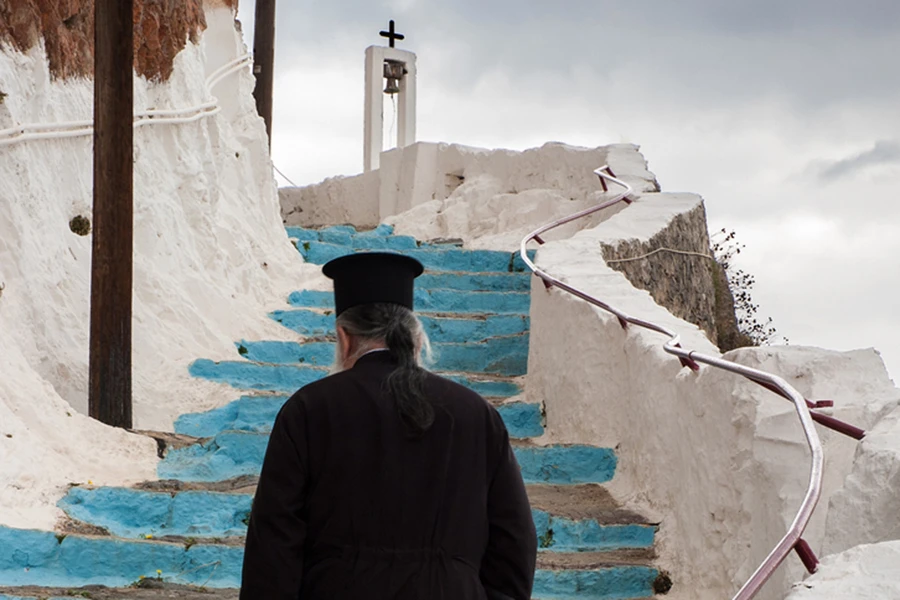
New York City, N.Y., Jul 28, 2017 / 06:04 am (CNA/EWTN News).- The Middle East needs peace, human rights, and the continued presence of Christians, a Holy See diplomat told the U.N. Security Council Tuesday.
“Christian communities have existed for over two thousand years in that region and have peacefully coexisted with the other communities. The Holy See urges the international community, through the Security Council, not to forget them,” Monsignor Simon Kassas, interim chargé d’affaires of the Holy See’s permanent observer mission to the United Nations, said July 25.
“The Holy See believes that the rule of law, including respect for religious freedom and equality before the law based on the principle of citizenship and regardless of one’s race, ethnic origin or religion, is fundamental toward the achievement and maintenance of the peaceful and fruitful coexistence among individuals, communities and nations in the whole region and beyond,” he continued.
Msgr. Kassas spoke in an intervention during the U.N. Security Council's open debate on “The Situation in the Middle East, including the Palestinian Question.”
He voiced the Holy See’s regret at the loss of lives and property in wars and conflict in the Middle East, particularly in Syria, Yemen, and Iraq. In these places “the dramatic humanitarian situation calls for renewed commitment by all to arrive at a political solution to these conflicts.”
The diplomat said Pope Francis “deeply appreciates the tireless efforts of those toiling to find a political solution to the conflict in Syria.”
“He encourages all actors to work toward a Syrian-led political process leading to a peaceful and inclusive transition,” the monsignor said, stressing the benefits of a peaceful settlement that will restore stability, allow for the safe return of refugees and others who are displaced.
Peace in Syria will also create an environment for effective counter-terrorism efforts and maintain “the sovereignty, independence, unity and territorial integrity of the Syrian state.”
Turning to the Israeli-Palestine conflict, Msgr. Kassas said the Palestinian question is debated four times a year and this debate sometimes sounds like “broken records,” but this will continue until a solution is found. He added: “notwithstanding the multiple challenges facing the Middle East today, the Israeli-Palestinian peace process cannot be allowed to slip out of the top priorities of the international community and this council.”
The Holy See voiced support for a two-state solution in which both the Israel and a Palestinian state exist side-by-side “in peace within internationally recognized borders.”
“For this process to happen and succeed, Israelis and Palestinians must agree on substantial steps to lower tensions and de-escalate the violence on the ground,” Msgr. Kassas said. This includes refraining from actions, including actions regarding settlements, that contradict their stated commitment to a negotiated solution.
He cited Pope Francis’ exhortation to pray for peace and to promote a culture of non-violence so that everyone can bequeath “a culture capable of devising strategies of life, not death, and of inclusion, not exclusion.”
All Palestinian factions must show “a united political will” and work together to address their people’s needs, Msgr. Kassas told the U.N.
“A united Palestinian front would prove the commitment of the Palestinians to a peacefully negotiated settlement and would be key to the economic prosperity, social cohesion and political stability of a Palestinian State,” he said.
“We must also not forget Jerusalem, a city sacred to Jews, Christians and Muslims,” the diplomat continued, adding, “The historical status quo of the holy sites is a matter of profound sensitivities.”
Msgr. Kassas reaffirmed the Holy See’s support for “for a comprehensive, just and lasting solution” regarding Jerusalem and reiterated the importance of internationally guaranteed special status that ensures religious freedom of all its inhabitants and “the secure, free and unhindered access to the Holy Places by the faithful of all religions and nationalities.”
Previous Post

July 28, 2017
Who are the martyrs Pope Francis will beatify in Colombia?
Browse Our Archives
Select a Category Americas Asia - Pacific Europe Middle East - Africa Uncategorized US Vatican
Select a Month November 2017 October 2017 September 2017 August 2017 July 2017 June 2017 May 2017 April 2017 March 2017 February 2017 January 2017 December 2016 November 2016 October 2016 September 2016 August 2016 July 2016 June 2016 May 2016 April 2016 March 2016 February 2016 January 2016 December 2015 November 2015 October 2015 September 2015 August 2015 July 2015 June 2015 May 2015 April 2015 March 2015 February 2015 January 2015 December 2014 November 2014 October 2014 September 2014 August 2014 July 2014 June 2014 May 2014 April 2014 March 2014 February 2014 January 2014 December 2013 November 2013 October 2013 September 2013 August 2013 July 2013 June 2013 May 2013 April 2013 March 2013 February 2013 January 2013 December 2012 November 2012 October 2012 September 2012 August 2012 July 2012 June 2012 May 2012
TAKE THE
Religious Wisdom Quiz
What does "Tabernacle" mean?
Select your answer to see how you score.
Dwelling place Holy altar Sacrifice Cupboard
Related posts from Catholic News

US bishops' new child protection program aims to...

Wealthy foundation aims to redefine religious freedom—and Christianity,...

Victims of Islamic State in focus at UN...

Catholic University of America offers free tuition to...
TRENDING AT PATHEOS Catholic

Creation, Preservation, and Teleology in Catholic Theology
As I write this, it is very early Monday morning. Like millions...

The Parable Of The Sower And The Word...
One of Christ’s most famous parables is that of the sower who...

Rejecting Doom: Christian Hope And Human Action
Christianity is a religion of hope. We are to have hope and...

Why I Choose the Eucharist Over the Sermon
Choose the Eucharist, Not the Sermon What are we supposed to get...

5 Design Elements Found in Spiritually Rooted Homes
Putting Spirituality Into Home Decor Our homes are more than our living...

Credo: A Story of God Told with the...
About 10 years ago, I began to imagine a personal "Credo" that...
view all Catholic blogs
Ad-Free & Subscriber Log-In Subscription Support
- About Us
- 2026 Calendar
- Videos
- Podcasts
- Library of World Religions
- Faith In Media Tracker
- Advertise With Us
- Write for Us
- Privacy Policy
- Terms of Service
- Do Not Sell My Data
- Contact Us
- Radiant Digital
- Manage Newsletter Subscriptions
- Unsubscribe From Notifications
- Sitemap
Copyright 2008-2026, Patheos. All rights reserved.
Subscription Support Ad-Free & Subscriber Log-In
Follow Patheos