
BuddhistCatholicContemplativeEvangelicalGeneral ChristianHinduJewishLatter-day SaintMuslimNew VisionsProgressive Christian
Beliefs
- Buddhist
- Catholic
- Contemplative
- Evangelical
- General Christian
- Hindu
- Jewish
- Latter-day Saint
- More Voices
- Muslim
- New Visions
- Pagan
- Progressive Christian
Topics
- Religion News
- Food and Religion
- Sports and Religion
- Religious Art
- Religious Music and Entertainment
- Religious Events
- History and Religion
- Style and Religion
- Politics and Religion
- Women in Religion
- Recreation Outdoors and Religion
- Business Finance and Religion
- Careers Workplace and Religion
- Education and Religion
- Family Parenting and Religion
- Health Fitness and Religion
- Home and Religion
- Relationships and Religion
- Technology and Religion
- Travel and Religion
Columnists
- Buddhist Columnists
- Business Finance and Religion Columnists
- Careers Workplace and Religion Columnists
- Catholic Columnists
- Contemplative Columnists
- Education and Religion Columnists
- Evangelists Columnists
- Family Parenting and Religion Columnists
- General Christian Columnists
- Health Fitness and Religion Columnists
- Hindu Columnists
- History and Religion Columnists
- Home and Religion Columnists
- Jewish Columnists
- More Voices Columnists
- Latter Day Columnists
- Muslim Columnists
- New Visions Columnists
- Nonreligious Columnists
- Pagan Columnists
- Politics and Religion Columnists
- Progressive Columnists
- Recreation Outdoors and Religion Columnists
- Relationships and Religion Columnists
- Religion News Columnists
- Religious Art Columnists
- Religious Events Columnists
- Religious Music and Entertainment Columnists
- Sports and Religion Columnists
- Style and Religion Columnists
- Technology and Religion Columnists
- Travel and Religion Columnists
- Women in Religion Columnists
Resource Library
- 2026 Calendar
- Library of World Religions
- The 100 Most Holy Places on Earth
- Patheos Answers
- Podcasts
- Videos
- Faith Leaders Database
- Anglican Episcopalian
- Bahai
- Baptist
- Buddhism
- Christianity
- Confucianism
- Eastern Orthodoxy
- Hinduism
- Holiness and Pentecostal
- ISKCON
- Islam
- Judaism
- Lutheran
- Methodist
- The Church of Jesus Christ of Latter-day Saints
- New Age
- Paganism
- Presbytarian and Reformed
- Protestantism
- Religion Behind the Scenes
- Roman Catholic
- Scientology
- Shia Islam
- Sikhism
- Sufism
- Sunni Islam
- Taoism
- Zen
- See all religions
Research Tools
 Ad-Free & Subscriber Log-In Subscription Support
Ad-Free & Subscriber Log-In Subscription Support
Follow Patheos 

- Trending:
- Forgiveness
- |
- Marriage
- |
- Consciousness
- |
- Death Penalty
- |
- Election
- |
- Halloween
 Catholic News
- Home
- Catholic
- Religion News
- What Civilta Cattolica’s analysis of US Christianity missed
What Civilta Cattolica’s analysis of US Christianity missed
Last updated on: July 17, 2017 at 10:44 pm by CNA Daily News
What Civilta Cattolica’s analysis of US Christianity missed 2017-07-17T22:44:00+00:00 CNA Daily News
Patheos Explore the world's faith through different perspectives on religion and spirituality! Patheos has the views of the prevalent religions and spiritualities of the world.
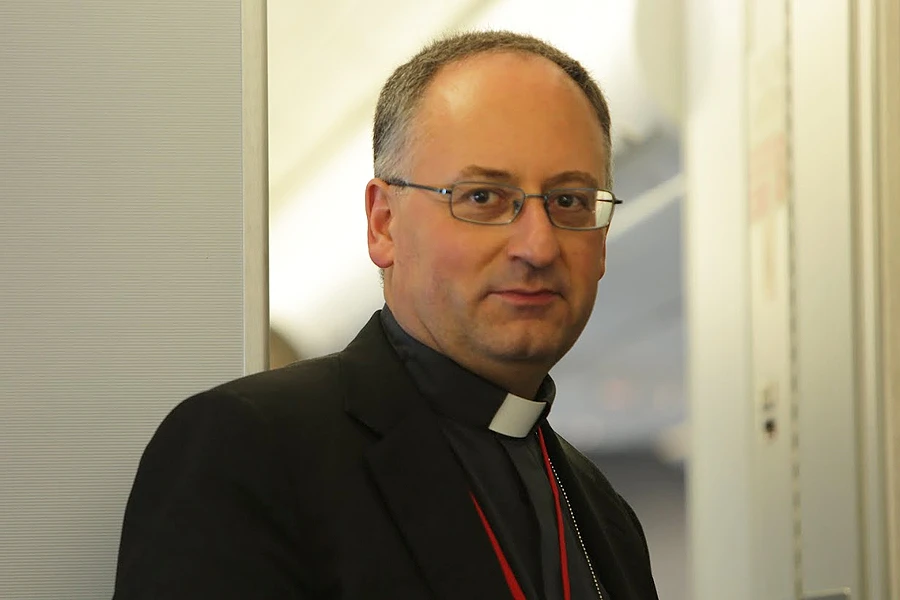
Washington D.C., Jul 17, 2017 / 04:44 pm (CNA/EWTN News).- An analysis piece in La Civilta Cattolica alleging an “ecumenism of hate” between Catholics and Evangelical Fundamentalists is seriously flawed in its presentation of religion in public life, experts said.
Speaking about the article, which claims religious and political elements of society should not be “confused,” Elizabeth Bruenig, a writer on Christianity and politics, said: “this is a departure from most of the historical writings the Church has produced on how Catholics should think about politics and religion.”
On Thursday, the journal La Civilta Cattolica published an analysis piece co-authored by its editor, Fr. Antonio Spadaro, S.J., and Marcelo Figueroa, a Presbyterian pastor who is editor-in-chief of the Argentine edition of L’Osservatore Romano.
The piece made a number of claims, alleging that many conservative Christians have united on political issues like immigration and have ultimately promoted an “ecumenism of hate” in policies that would allegedly contradict Pope Francis’ message of mercy.
With the U.S. motto “In God we trust,” adopted in 1956, the authors stated that “for many it is a simple declaration of faith,” but “for others, it is the synthesis of a problematic fusion between religion and state, faith and politics, religious values and economy.”
This “problematic fusion” has manifested itself in recent years with the “Manichean” rhetoric of politics “that divides reality between absolute Good and absolute Evil,” the authors said, drawing examples of this from the presidential administrations of George W. Bush and Donald Trump.
This rhetoric is rooted in the evangelical-fundamentalist movement beginning in the early-20th century, which continued through other problematic interpretations of Christianity like belief in the “prosperity gospel” and in the dominion of man over creation, beliefs “that have been gradually radicalized,” the authors said.
Furthermore, this Christianity feeds off of conflict where “enemies” are “demonized,” which would today include Muslims and migrants who are not welcomed into the U.S., the authors wrote.
Pope Francis, by contrast, has advocated for “inclusion” and “encounter,” and has been opposed to “any kind of 'war of religion,’” they wrote.
Thus, for Catholics, religion and politics should not “confused” lest Christians promote a fundamentalist theocracy which is being pushed in this case, the authors said.
However, religious experts have pointed out inaccuracies, exaggerations, and false summaries of Church teaching within the article.
Dr. Chad Pecknold, a professor of theology at the Catholic University of America, told CNA that although the authors alleged that many American Christians have a “Manichean” outlook on politics, of good versus evil, “the authors themselves sound quite Manichaean in their absolute opposition to their caricature of Christian conservatives in America.”
“The authors make a great number of errors, both historically, descriptively, and in their diagnosis of what ails America, and Christian conservatives more specifically,” he continued.
A chief flaw of the piece is its suggestion that religion and politics should be separated, Bruenig added. While distinctions should be made between the eternal, spiritual realm and the temporal one, the piece is “ahistorical and very un-Catholic” in how it approaches the relationship between religion and politics, she said.
Fr. Spadaro and Figueroa wrote that “the religious element should never be confused with the political one. Confusing spiritual power with temporal power means subjecting one to the other.”
The article also says that “[Pope] Francis wants to break the organic link between culture, politics, institution and Church. Spirituality cannot tie itself to governments or military pacts for it is at the service of all men and women.”
This compartmentalization of faith and politics is part of flawed Enlightenment thinking, Bruenig said.
“The notion that politics and religion should basically function in separate domains is one of the original liberal Enlightenment positions on politics, and there’s a reason that most of the leading thinkers of the liberal Enlightenment were severely anti-Catholic,” she stated.
“There’s nothing special about the realm of governance that would cut it off from moral considerations, or give it its own special brand of irreligious moral consideration,” she continued, saying that politicians “are still beholden to the same moral precepts that they are in every other decision they make in their lives.”
Such a claim flies in the face of centuries of Church teaching, Bruenig continued.
P.J. Smith, who writes at the website Semiduplex.com, agreed that the article contradicted Church teaching on the relationship between faith and politics which was put forth by Bl. Pius IX, Leo XIII, St. Pius X, Pius XI, and Ven. Pius XII, who wrote that the Church has the authority to speak on matters of economics and politics.
“More to the point, Spadaro and Figueroa set themselves against Pope Francis himself when they articulate a bizarre liberal atomization of man,” he wrote. “According to Spadaro and Figueroa, in church, man is a believer; in the council hall, he is a politician, at the movie theater, he is a critic; and he is apparently supposed to keep all of these roles separate.”
Smith cited Pope Francis who, at an April conference on Bl. Paul VI's 1967 encyclical Populorum Progressio, said that no system, whether it be the family, economy, or work, “can be an absolute, and none can be excluded from the concept of integral human development which, in other words, takes into account that human life is like an orchestra that performs well if the various instruments are in harmony and follow a score shared by all.”
Furthermore, valid critiques can be made of the current administration and the political order “from a Christian position,” Bruenig said, exploring the policies of the administration that do not conform to Church teaching. This would have been “a much stronger argument,” she said.
However, “instead of saying that those are not Christian activities to be undertaking and they’re governing badly,” the authors “said they have confused a religious element with the political one.”
Furthermore, some of the claims made in the piece about U.S. Christianity are inaccurate, Pecknold and Bruenig said.
For instance, as an example of what’s wrong with the Catholic-Evangelical ecumenism, the piece cites the website ChurchMilitant.com cheering the election of President Donald Trump as an answer to the prayers of Americans, comparing him to the Roman Emperor Constantine whose military victory enabled the legal acceptance of Christianity throughout the empire.
This is an example of the flawed understanding of religion and politics, the authors said.
However, this is “a fringe publication” that the authors cited, Pecknold said, and not one that is representative of Catholics in the U.S.
The article warned about a “mingling of politics and religion” that is expressed, at times, in a Manichean rhetoric of good versus evil to justify political policies. Trump, for instance, acts in such a way by decrying the “very bad.”
However, Bruenig said, “Trump himself is almost comically indifferent to religion, and can’t even really explain what Presbyterians – what he’s supposed to be – believe.”
A CNN report had noted that, according to two Presbyterian pastors who met with Trump just before his inauguration, he apparently was uncertain that they were Christians until they affirmed to him that they were.
Also, although the article mentions the “prosperity gospel” and “dominionism” as problematic strains of U.S. Christianity today, it ignores a major tradition, Smith wrote.
It fails to “engage with the liberal tradition within American Catholicism, exemplified by the Jesuit John Courtney Murray, which might have provided an interesting strand in their argument—not least because it remains the dominant strand in American Catholicism,” Smith wrote.
Stephen White, a fellow in the Catholic Studies Program at the Ethics and Public Policy Center in Washington, D.C., wrote in the Catholic Herald that the authors’ critique of the Christian Integralists purports to be an accurate summary of mainstream religious problems, but is rather a critique of only a small population of Christians.
“Fundamentalism is not the mainstream of American Protestantism, nor does it have the influence in American politics that the authors imagine it does,” he said.
He wrote that “the suggestion that there’s some close affinity between the Biblical literalism of fundamentalism, on the one hand, and the God-wants-you-to-be-rich hucksterism of the Prosperity Gospel,” is false.
“America’s maddeningly complex religious landscape needs thoughtful analysis and critique,” he wrote, adding that such nuance is lacking in the piece.
Previous Post

July 17, 2017
In strongly Catholic Philippines, bishops' conference picks new leader
Next Post
July 18, 2017 Satanic monument in city park a really bad idea, Minn. Catholics say
Browse Our Archives
Select a Category Americas Asia - Pacific Europe Middle East - Africa Uncategorized US Vatican
Select a Month November 2017 October 2017 September 2017 August 2017 July 2017 June 2017 May 2017 April 2017 March 2017 February 2017 January 2017 December 2016 November 2016 October 2016 September 2016 August 2016 July 2016 June 2016 May 2016 April 2016 March 2016 February 2016 January 2016 December 2015 November 2015 October 2015 September 2015 August 2015 July 2015 June 2015 May 2015 April 2015 March 2015 February 2015 January 2015 December 2014 November 2014 October 2014 September 2014 August 2014 July 2014 June 2014 May 2014 April 2014 March 2014 February 2014 January 2014 December 2013 November 2013 October 2013 September 2013 August 2013 July 2013 June 2013 May 2013 April 2013 March 2013 February 2013 January 2013 December 2012 November 2012 October 2012 September 2012 August 2012 July 2012 June 2012 May 2012
TAKE THE
Religious Wisdom Quiz
I'm a number that marks the beast, feared by many throughout history. Triple digits, all the same. What number am I?
Select your answer to see how you score.
999 777 333 666
Related posts from Catholic News

US bishops' new child protection program aims to...

Wealthy foundation aims to redefine religious freedom—and Christianity,...

Victims of Islamic State in focus at UN...
Catholic University of America offers free tuition to...
TRENDING AT PATHEOS Catholic

Creation, Preservation, and Teleology in Catholic Theology
As I write this, it is very early Monday morning. Like millions...

The Parable Of The Sower And The Word...
One of Christ’s most famous parables is that of the sower who...

Rejecting Doom: Christian Hope And Human Action
Christianity is a religion of hope. We are to have hope and...

Why I Choose the Eucharist Over the Sermon
Choose the Eucharist, Not the Sermon What are we supposed to get...

5 Design Elements Found in Spiritually Rooted Homes
Putting Spirituality Into Home Decor Our homes are more than our living...

Credo: A Story of God Told with the...
About 10 years ago, I began to imagine a personal "Credo" that...
view all Catholic blogs
Ad-Free & Subscriber Log-In Subscription Support
- About Us
- 2026 Calendar
- Videos
- Podcasts
- Library of World Religions
- Faith In Media Tracker
- Advertise With Us
- Write for Us
- Privacy Policy
- Terms of Service
- Do Not Sell My Data
- Contact Us
- Radiant Digital
- Manage Newsletter Subscriptions
- Unsubscribe From Notifications
- Sitemap
Copyright 2008-2026, Patheos. All rights reserved.
Subscription Support Ad-Free & Subscriber Log-In
Follow Patheos