
BuddhistCatholicContemplativeEvangelicalGeneral ChristianHinduJewishLatter-day SaintMuslimNew VisionsProgressive Christian
Beliefs
- Buddhist
- Catholic
- Contemplative
- Evangelical
- General Christian
- Hindu
- Jewish
- Latter-day Saint
- More Voices
- Muslim
- New Visions
- Pagan
- Progressive Christian
Topics
- Religion News
- Food and Religion
- Sports and Religion
- Religious Art
- Religious Music and Entertainment
- Religious Events
- History and Religion
- Style and Religion
- Politics and Religion
- Women in Religion
- Recreation Outdoors and Religion
- Business Finance and Religion
- Careers Workplace and Religion
- Education and Religion
- Family Parenting and Religion
- Health Fitness and Religion
- Home and Religion
- Relationships and Religion
- Technology and Religion
- Travel and Religion
Columnists
- Buddhist Columnists
- Business Finance and Religion Columnists
- Careers Workplace and Religion Columnists
- Catholic Columnists
- Contemplative Columnists
- Education and Religion Columnists
- Evangelists Columnists
- Family Parenting and Religion Columnists
- General Christian Columnists
- Health Fitness and Religion Columnists
- Hindu Columnists
- History and Religion Columnists
- Home and Religion Columnists
- Jewish Columnists
- More Voices Columnists
- Latter Day Columnists
- Muslim Columnists
- New Visions Columnists
- Nonreligious Columnists
- Pagan Columnists
- Politics and Religion Columnists
- Progressive Columnists
- Recreation Outdoors and Religion Columnists
- Relationships and Religion Columnists
- Religion News Columnists
- Religious Art Columnists
- Religious Events Columnists
- Religious Music and Entertainment Columnists
- Sports and Religion Columnists
- Style and Religion Columnists
- Technology and Religion Columnists
- Travel and Religion Columnists
- Women in Religion Columnists
Resource Library
- 2026 Calendar
- Library of World Religions
- The 100 Most Holy Places on Earth
- Patheos Answers
- Podcasts
- Videos
- Faith Leaders Database
- Anglican Episcopalian
- Bahai
- Baptist
- Buddhism
- Christianity
- Confucianism
- Eastern Orthodoxy
- Hinduism
- Holiness and Pentecostal
- ISKCON
- Islam
- Judaism
- Lutheran
- Methodist
- The Church of Jesus Christ of Latter-day Saints
- New Age
- Paganism
- Presbytarian and Reformed
- Protestantism
- Religion Behind the Scenes
- Roman Catholic
- Scientology
- Shia Islam
- Sikhism
- Sufism
- Sunni Islam
- Taoism
- Zen
- See all religions
Research Tools
 Ad-Free & Subscriber Log-In Subscription Support
Ad-Free & Subscriber Log-In Subscription Support
Follow Patheos 

- Trending:
- Forgiveness
- |
- Marriage
- |
- Consciousness
- |
- Death Penalty
- |
- Election
- |
- Halloween
 Catholic News
- Home
- Catholic
- Religion News
- Step outside the politics and encounter immigrants, bishop implores
Step outside the politics and encounter immigrants, bishop implores
Last updated on: July 19, 2017 at 9:05 am by CNA Daily News
Step outside the politics and encounter immigrants, bishop implores 2017-07-19T09:05:00+00:00 CNA Daily News
Patheos Explore the world's faith through different perspectives on religion and spirituality! Patheos has the views of the prevalent religions and spiritualities of the world.
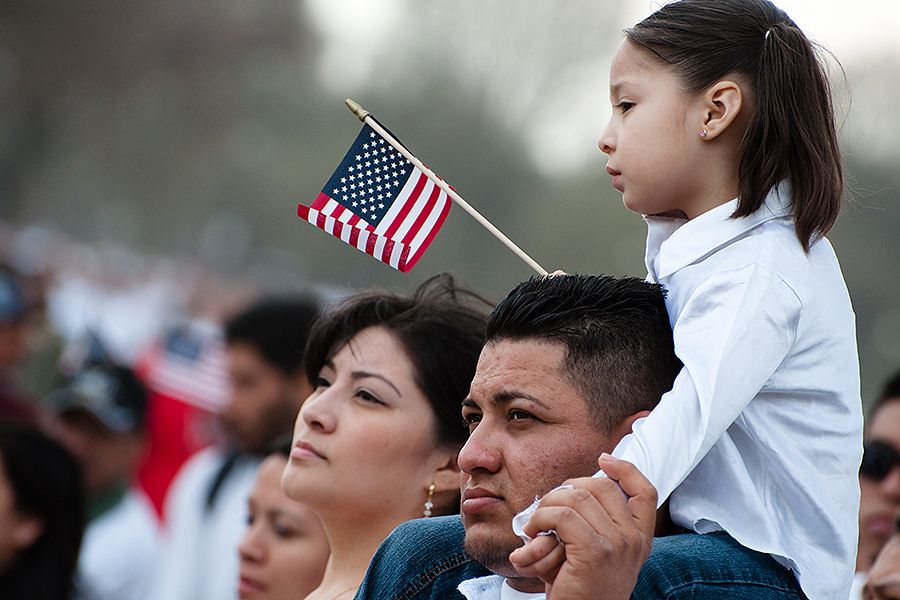
El Paso, Texas, Jul 19, 2017 / 03:05 am (CNA/EWTN News).- A U.S. bishop on the border of Mexico hopes his new pastoral letter on migration will turn the hearts of Catholics to encounter their migrant brothers and sisters in a concrete way.
“It is first and foremost a reflection on the signs of the times by the light of faith,” Bishop Mark Seitz of El Paso told CNA of his new pastoral letter on migration.
The letter is not meant to be “simply abstract,” he said, but “has to come down to the daily life and daily realities.”
Bishop Seitz’s letter on migration, “Sorrow and Mourning Flee Away,” was released on Tuesday.
He explained to CNA that the letter was prompted by reflection on the current situation for migrants in the U.S. At present in the country, there is a “great deal of fear in the midst of our migrant community,” he said.
“We had all hoped that maybe there would be a different tone when a new president came into office, and we really didn’t see much of a different tone” on immigration, he said.
It was by reflecting on this problem that his idea of a pastoral letter was born. The bishop hopes to teach Catholics and prod them to think about what Jesus said of the poor and the migrant.
“By sharing these reflections with people of faith, just by inviting them to step out of their preconceptions and the tendency that we have in this country to deal only with the level of politics,” the bishop hopes to encourage readers to “reflect from a standpoint of faith on what this might mean.”
“What does Jesus have to say about the poor, about the marginalized, about what they can actually teach us and how they are the really important ones in the Kingdom of God?” he reflected.
Bishop Seitz began his letter by stating some of the great challenges facing migrant communities in the U.S., and how the Church should respond to them.
“Since Jesus announced Good News to the poor, our Church has been called to stand with the suffering,” he wrote, saying that “migrants are living through a dark night of fear and uncertainty.”
“Recently we have witnessed indefensible, hateful words towards our neighbors in Mexico, the demonization of migrants, even of those children known as Dreamers, and destructive language about our border,” he said.
He also pointed to other problems – the breaking up of families by deportations, an increase in deportations of those without criminal records, and the detention of asylum seekers.
The journey north to the U.S. through Mexico is a dangerous one, Bishop Seitz said, with harsh desert conditions, drug trafficking, and smugglers all posing a danger to migrants. Yet once they reach the border, “increased militarization and more walls will only make this journey even more dangerous.”
“As God’s people here on the border, we are called to transform this desert, making refreshing pools of the burning sands of injustice and quenching the thirst of the oppressed,” he wrote.
The Diocese of El Paso has a long and storied Catholic history, he said, outdating the British colonies. Spanish migrants in the area held a Mass of Thanksgiving there in 1598, along with a feast with the local Manso indigenous tribe.
“Life in the midst of an immigrant community is really much more pronounced,” Bishop Seitz told CNA, and has a “richness” to it “that I really couldn’t say I anticipated.”
The Catholic culture continues today, he wrote in the letter. “With our brothers and sisters across the bridge, we speak the same language. We wake up each morning to the same beautiful mountains, we dance to the rhythm of mariachis, and we share burritos and champurrado. With San Juan Diego, we stand together under the mantle of Our Lady of Guadalupe.”
And Catholic ideals of hospitality and “encuentro,” or encounter, are practiced today in the services provided by the Diocese of El Paso to migrants coming to the U.S.-Mexico border.
“The Pope talks about accompanying the migrant,” the bishop told CNA, and he “talks about recognizing their face” and asks that people “see them as a fellow human being, and even more than that, as a brother and sister.”
“It’s just amazing, when that is allowed to happen, how the perspectives and the attitudes of people change,” he said. This theme of encounter is the focus of a significant part of the bishop’s letter.
Yet Catholics also must work to meet the needs of migrants in a concrete manner at the parish level, he said. This includes denouncing the injustices of today like “family separation,” “for-profit immigrant detention,” and “the disparagement of our Muslim brothers and sisters.”
And Catholics must also “address the plague of substance abuse afflicting our people” which is connected to “the drug trafficking destabilizing Mexico and Central America, driving migration to our border.”
Bishop Seitz emphasized the role of Catholic education in improving the lives of immigrants in the U.S., and promised to create a fund for tuition assistance at diocesan schools for children from migrant families.
He also recognized members of law enforcement for their “dedication and bravery in serving our community and protecting our country.” He exhorted them to uphold human dignity in their line of work and to uphold “the noble ideals in the Constitution of equal treatment under the law and due process.”
However, the bishop instructed parishes and schools to respectfully decline immigration officers access to churches in cases where there is no “imminent danger,” unless they have a warrant signed by a judge.
Previous Post

July 19, 2017
Bishops plea for two priests abducted in DRC
Next Post
July 19, 2017 Why religious leaders might be best at fighting extremism
Browse Our Archives
Select a Category Americas Asia - Pacific Europe Middle East - Africa Uncategorized US Vatican
Select a Month November 2017 October 2017 September 2017 August 2017 July 2017 June 2017 May 2017 April 2017 March 2017 February 2017 January 2017 December 2016 November 2016 October 2016 September 2016 August 2016 July 2016 June 2016 May 2016 April 2016 March 2016 February 2016 January 2016 December 2015 November 2015 October 2015 September 2015 August 2015 July 2015 June 2015 May 2015 April 2015 March 2015 February 2015 January 2015 December 2014 November 2014 October 2014 September 2014 August 2014 July 2014 June 2014 May 2014 April 2014 March 2014 February 2014 January 2014 December 2013 November 2013 October 2013 September 2013 August 2013 July 2013 June 2013 May 2013 April 2013 March 2013 February 2013 January 2013 December 2012 November 2012 October 2012 September 2012 August 2012 July 2012 June 2012 May 2012
TAKE THE
Religious Wisdom Quiz
What principle about debt is found in Proverbs?
Select your answer to see how you score.
Never lend Ignore money The borrower is slave to the lender Debt is always good
Related posts from Catholic News

US bishops' new child protection program aims to...

Wealthy foundation aims to redefine religious freedom—and Christianity,...

Victims of Islamic State in focus at UN...

Catholic University of America offers free tuition to...
TRENDING AT PATHEOS Catholic

The Parable Of The Sower And The Word...
One of Christ’s most famous parables is that of the sower who...

Rejecting Doom: Christian Hope And Human Action
Christianity is a religion of hope. We are to have hope and...

Why I Choose the Eucharist Over the Sermon
Choose the Eucharist, Not the Sermon What are we supposed to get...

5 Design Elements Found in Spiritually Rooted Homes
Putting Spirituality Into Home Decor Our homes are more than our living...

Credo: A Story of God Told with the...
About 10 years ago, I began to imagine a personal "Credo" that...

The Anatomy of Divine Revelation in Catholic Thought
The claim that God has made Himself known to human beings is...
view all Catholic blogs
Ad-Free & Subscriber Log-In Subscription Support
- About Us
- 2026 Calendar
- Videos
- Podcasts
- Library of World Religions
- Faith In Media Tracker
- Advertise With Us
- Write for Us
- Privacy Policy
- Terms of Service
- Do Not Sell My Data
- Contact Us
- Radiant Digital
- Manage Newsletter Subscriptions
- Unsubscribe From Notifications
- Sitemap
Copyright 2008-2026, Patheos. All rights reserved.
Subscription Support Ad-Free & Subscriber Log-In
Follow Patheos