
BuddhistCatholicContemplativeEvangelicalGeneral ChristianHinduJewishLatter-day SaintMuslimNew VisionsProgressive Christian
Beliefs
- Buddhist
- Catholic
- Contemplative
- Evangelical
- General Christian
- Hindu
- Jewish
- Latter-day Saint
- More Voices
- Muslim
- New Visions
- Pagan
- Progressive Christian
Topics
- Religion News
- Food and Religion
- Sports and Religion
- Religious Art
- Religious Music and Entertainment
- Religious Events
- History and Religion
- Style and Religion
- Politics and Religion
- Women in Religion
- Recreation Outdoors and Religion
- Business Finance and Religion
- Careers Workplace and Religion
- Education and Religion
- Family Parenting and Religion
- Health Fitness and Religion
- Home and Religion
- Relationships and Religion
- Technology and Religion
- Travel and Religion
Columnists
- Buddhist Columnists
- Business Finance and Religion Columnists
- Careers Workplace and Religion Columnists
- Catholic Columnists
- Contemplative Columnists
- Education and Religion Columnists
- Evangelists Columnists
- Family Parenting and Religion Columnists
- General Christian Columnists
- Health Fitness and Religion Columnists
- Hindu Columnists
- History and Religion Columnists
- Home and Religion Columnists
- Jewish Columnists
- More Voices Columnists
- Latter Day Columnists
- Muslim Columnists
- New Visions Columnists
- Nonreligious Columnists
- Pagan Columnists
- Politics and Religion Columnists
- Progressive Columnists
- Recreation Outdoors and Religion Columnists
- Relationships and Religion Columnists
- Religion News Columnists
- Religious Art Columnists
- Religious Events Columnists
- Religious Music and Entertainment Columnists
- Sports and Religion Columnists
- Style and Religion Columnists
- Technology and Religion Columnists
- Travel and Religion Columnists
- Women in Religion Columnists
Resource Library
- 2026 Calendar
- Library of World Religions
- The 100 Most Holy Places on Earth
- Patheos Answers
- Podcasts
- Videos
- Faith Leaders Database
- Anglican Episcopalian
- Bahai
- Baptist
- Buddhism
- Christianity
- Confucianism
- Eastern Orthodoxy
- Hinduism
- Holiness and Pentecostal
- ISKCON
- Islam
- Judaism
- Lutheran
- Methodist
- The Church of Jesus Christ of Latter-day Saints
- New Age
- Paganism
- Presbytarian and Reformed
- Protestantism
- Religion Behind the Scenes
- Roman Catholic
- Scientology
- Shia Islam
- Sikhism
- Sufism
- Sunni Islam
- Taoism
- Zen
- See all religions
Research Tools
 Ad-Free & Subscriber Log-In Subscription Support
Ad-Free & Subscriber Log-In Subscription Support
Follow Patheos 

- Trending:
- Forgiveness
- |
- Marriage
- |
- Consciousness
- |
- Death Penalty
- |
- Election
- |
- Halloween
 Catholic News
- Home
- Catholic
- Religion News
- Four reasons why this consistory was an unusual one
Four reasons why this consistory was an unusual one
Last updated on: July 1, 2017 at 10:35 am by CNA Daily News
Four reasons why this consistory was an unusual one 2017-07-01T10:35:00+00:00 CNA Daily News
Patheos Explore the world's faith through different perspectives on religion and spirituality! Patheos has the views of the prevalent religions and spiritualities of the world.
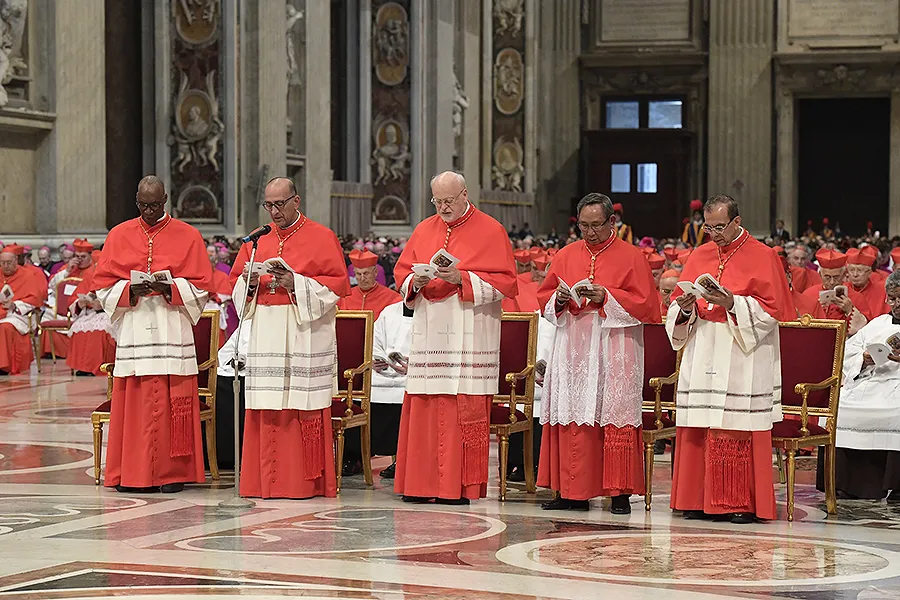
Vatican City, Jul 1, 2017 / 04:35 am (CNA/EWTN News).- A consistory is a gathering of cardinals, which the Pope can convoke to give solemnity to a particular decision, or simply to ask his “Senate” to counsel him on an important issue. However, the most recent consistory, held June 28, was rather exceptional. Here are four reasons why.
A surprise consistory
The June 28 consistory was a real surprise: when Pope Francis announced it May 21, there had been none of the normal hints that he was going to call for one.
For one thing, there were only a few open “slots” in the College of Cardinals. According to the norm set by Bl. Paul VI and confirmed by St. John Paul II, there can be only 120 cardinals who have voting rights in the event of a conclave to choose the next Pope (the primary responsibility of cardinals).
However, Pope Francis made the decision to create five new cardinals, so following this week’s consistory, there are now 121 cardinals with the right to vote in a future conclave, surpassing the normal limit of 120.
He is not the first Pope to do so. St. John Paul II created 44 cardinals in the Feb. 21, 2001 consistory. This made 135 cardinals with voting rights, a full 15 over the limit set by Paul VI.
A small number of cardinals
Also unusual for a single consistory: Pope Francis created just five cardinals.
Only one of them comes from Europe, while the other four come from countries that have never had a cardinal before: Mali, El Salvador, Sweden, and Laos.
This consistory, to some extent, is similar to the final one convoked by Pope Benedict XVI, which took place Nov. 24, 2012. During that consistory, Benedict XVI created only six new cardinals, and none of them hailed from Europe: it was the first consistory since 1924 with no Europeans in the list of new cardinals.
In 1977, Pope Paul VI convoked his final consistory, creating only four new cardinals. Among them was Joseph Ratzinger, who later became Pope Benedict XVI.
The visit to the Pope emeritus
Another interesting aspect to this consistory: the newly created cardinals, joined by Pope Francis, paid a visit to the former pontiff, Benedict XVI.
Ever since Pope Francis has convoked consistories, the Pope emeritus has been taken into consideration and had some role in them.
Benedict XVI took part in Pope Francis’ first two consistories for the creation of new cardinals, held Feb. 22, 2013 and Feb. 14, 2014.
Though the Pope emeritus did not take part in the third of Pope Francis’ consistories, held Nov. 19, 2016, the newly created cardinals paid a visit to him in the Mater Ecclesiae monastery where he lives.
This time the new cardinals were accompanied by Pope Francis as they paid a visit to Benedict XVI.
The lack of a pre-consistory meeting for a general discussion
According to the Code of Canon Law, there are two types of consistories: ordinary and extraordinary.
All cardinals are called to take part in extraordinary consistories, which are celebrated only in particular cases. In contrast, ordinary consistories are summoned when the Pope needs the cardinals’ counsel on some issue, or to add solemnity to a decision by the Pope, for example the canonization of saints or the creation of new cardinals.
Sometimes both types of consistories take place consecutively. The first two ordinary consistories convoked by Pope Francis were preceded by extraordinary consistories, as the Pope took advantage of the cardinals’ presence in Rome to discuss important issues.
The Feb. 22, 2014 consistory was preceded by an extraordinary consistory on the issues of the family, while the Feb. 14, 2015 consistory was preceded by an extraordinary consistory to discuss the reform of the Curia.
In contrast, neither this week’s consistory nor the one that took place on Nov. 19, 2016 were preceded by pre-consistory meetings.
Previous Post

July 1, 2017
Pope names Archbishop Luis Ladaria as Müller's successor to head CDF
Next Post
July 2, 2017 No matter who you are, make Christ your number one, Pope Francis says
Browse Our Archives
Select a Category Americas Asia - Pacific Europe Middle East - Africa Uncategorized US Vatican
Select a Month November 2017 October 2017 September 2017 August 2017 July 2017 June 2017 May 2017 April 2017 March 2017 February 2017 January 2017 December 2016 November 2016 October 2016 September 2016 August 2016 July 2016 June 2016 May 2016 April 2016 March 2016 February 2016 January 2016 December 2015 November 2015 October 2015 September 2015 August 2015 July 2015 June 2015 May 2015 April 2015 March 2015 February 2015 January 2015 December 2014 November 2014 October 2014 September 2014 August 2014 July 2014 June 2014 May 2014 April 2014 March 2014 February 2014 January 2014 December 2013 November 2013 October 2013 September 2013 August 2013 July 2013 June 2013 May 2013 April 2013 March 2013 February 2013 January 2013 December 2012 November 2012 October 2012 September 2012 August 2012 July 2012 June 2012 May 2012
TAKE THE
Religious Wisdom Quiz
Who was Rahab's husband?
Select your answer to see how you score.
Salmon Jesse Boaz Obed
Related posts from Catholic News

How do we help trafficking victims re-enter society?...

More than just giving – World Day of...

New book reveals details of John Paul I’s...

Despite reports, Pope Francis isn’t opening the door...
TRENDING AT PATHEOS Catholic

The Parable Of The Sower And The Word...
One of Christ’s most famous parables is that of the sower who...

Rejecting Doom: Christian Hope And Human Action
Christianity is a religion of hope. We are to have hope and...

Why I Choose the Eucharist Over the Sermon
Choose the Eucharist, Not the Sermon What are we supposed to get...

5 Design Elements Found in Spiritually Rooted Homes
Putting Spirituality Into Home Decor Our homes are more than our living...

Credo: A Story of God Told with the...
About 10 years ago, I began to imagine a personal "Credo" that...

The Anatomy of Divine Revelation in Catholic Thought
The claim that God has made Himself known to human beings is...
view all Catholic blogs
Ad-Free & Subscriber Log-In Subscription Support
- About Us
- 2026 Calendar
- Videos
- Podcasts
- Library of World Religions
- Faith In Media Tracker
- Advertise With Us
- Write for Us
- Privacy Policy
- Terms of Service
- Do Not Sell My Data
- Contact Us
- Radiant Digital
- Manage Newsletter Subscriptions
- Unsubscribe From Notifications
- Sitemap
Copyright 2008-2026, Patheos. All rights reserved.
Subscription Support Ad-Free & Subscriber Log-In
Follow Patheos