
BuddhistCatholicContemplativeEvangelicalGeneral ChristianHinduJewishLatter-day SaintMuslimNew VisionsProgressive Christian
Beliefs
- Buddhist
- Catholic
- Contemplative
- Evangelical
- General Christian
- Hindu
- Jewish
- Latter-day Saint
- More Voices
- Muslim
- New Visions
- Pagan
- Progressive Christian
Topics
- Religion News
- Food and Religion
- Sports and Religion
- Religious Art
- Religious Music and Entertainment
- Religious Events
- History and Religion
- Style and Religion
- Politics and Religion
- Women in Religion
- Recreation Outdoors and Religion
- Business Finance and Religion
- Careers Workplace and Religion
- Education and Religion
- Family Parenting and Religion
- Health Fitness and Religion
- Home and Religion
- Relationships and Religion
- Technology and Religion
- Travel and Religion
Columnists
- Buddhist Columnists
- Business Finance and Religion Columnists
- Careers Workplace and Religion Columnists
- Catholic Columnists
- Contemplative Columnists
- Education and Religion Columnists
- Evangelists Columnists
- Family Parenting and Religion Columnists
- General Christian Columnists
- Health Fitness and Religion Columnists
- Hindu Columnists
- History and Religion Columnists
- Home and Religion Columnists
- Jewish Columnists
- More Voices Columnists
- Latter Day Columnists
- Muslim Columnists
- New Visions Columnists
- Nonreligious Columnists
- Pagan Columnists
- Politics and Religion Columnists
- Progressive Columnists
- Recreation Outdoors and Religion Columnists
- Relationships and Religion Columnists
- Religion News Columnists
- Religious Art Columnists
- Religious Events Columnists
- Religious Music and Entertainment Columnists
- Sports and Religion Columnists
- Style and Religion Columnists
- Technology and Religion Columnists
- Travel and Religion Columnists
- Women in Religion Columnists
Resource Library
- 2026 Calendar
- Library of World Religions
- The 100 Most Holy Places on Earth
- Patheos Answers
- Podcasts
- Videos
- Faith Leaders Database
- Anglican Episcopalian
- Bahai
- Baptist
- Buddhism
- Christianity
- Confucianism
- Eastern Orthodoxy
- Hinduism
- Holiness and Pentecostal
- ISKCON
- Islam
- Judaism
- Lutheran
- Methodist
- The Church of Jesus Christ of Latter-day Saints
- New Age
- Paganism
- Presbytarian and Reformed
- Protestantism
- Religion Behind the Scenes
- Roman Catholic
- Scientology
- Shia Islam
- Sikhism
- Sufism
- Sunni Islam
- Taoism
- Zen
- See all religions
Research Tools
 Ad-Free & Subscriber Log-In Subscription Support
Ad-Free & Subscriber Log-In Subscription Support
Follow Patheos 

- Trending:
- Forgiveness
- |
- Marriage
- |
- Consciousness
- |
- Death Penalty
- |
- Election
- |
- Halloween
 Catholic News
- Home
- Catholic
- Religion News
- Bishops stress hospitality for Camino de Santiago hosts
Bishops stress hospitality for Camino de Santiago hosts
Last updated on: July 14, 2017 at 10:38 pm by CNA Daily News
Bishops stress hospitality for Camino de Santiago hosts 2017-07-14T22:38:00+00:00 CNA Daily News
Patheos Explore the world's faith through different perspectives on religion and spirituality! Patheos has the views of the prevalent religions and spiritualities of the world.
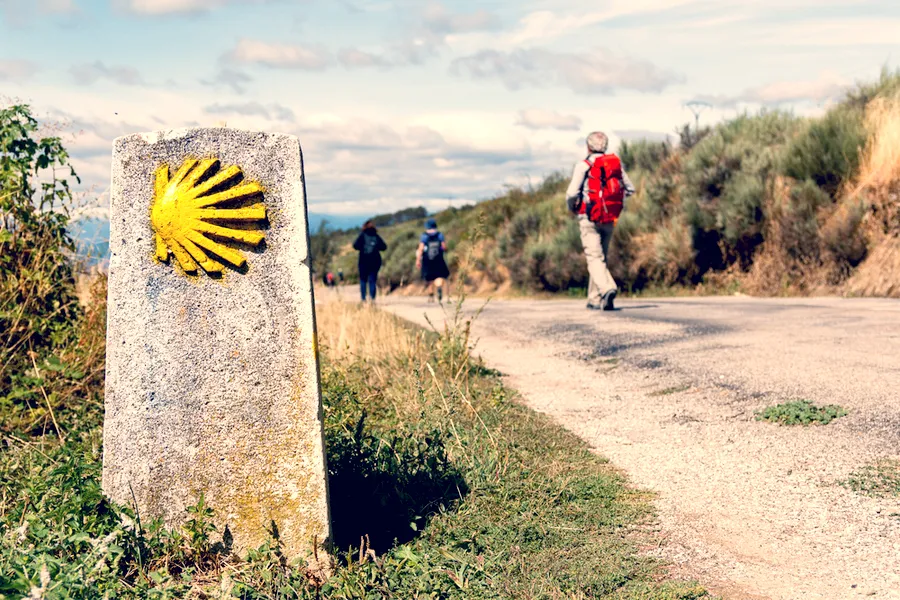
Santiago de Compostela, Spain, Jul 14, 2017 / 04:38 pm (CNA/EWTN News).- The bishops of Spain and France have published a new letter emphasizing the importance of hospitality for people who host pilgrims on the Camino de Santiago, offering guidelines for how they can welcome and care for the spiritual needs of those making the long trek.
In the letter the bishops noted that hospitality is a tradition that has been practiced in all ages and civilizations, and “is not to question or to prosecute, but only to welcome, to give food and drink, a bed and money for the trip, words of esteem and direction.”
It is the same kindness that Abraham showed to the strangers who came to his door in Mambre, and is “the mercy that the Samaritan showed to the wounded man, carrying him to an inn and leaving money so that he could be healed and recovered during the necessary time,” they said.
Published July 12, the letter is titled “Welcome and Hospitality on the Camino,” and is directed at those who host pilgrims that walk the historic “Camino de Santiago,” or “the Way of St. James.”
Often referred to simply as “the Camino,” it is an ancient pilgrimage consisting of a network of trails across Europe all leading to the tomb of the saint in Santiago, Spain.
Pilgrims have been making the journey for well over a thousand years to commemorate the life and sacrifice of the apostle. Although it is traditionally a religious pilgrimage, many non-believers also make the trek for a variety of motivating reasons.
The requirement to be a certified pilgrim of the Camino states that walkers must complete at least 100 kilometers, or about 62 miles.
Hundreds of thousands of pilgrims, individual or in groups, make the Camino each year, staying at hostels, low-cost hotels, with families or in religious communities along the way.
In the 20-page long letter, published in Spanish, the bishops of Spain and France pointed to the fact that hospitality “has a long tradition along the Camino de Santiago.”
This history, they noted, “was not always the most desirable,” and at times was marked by greed, deceit and a lack of compassion for the poor and sick. However, in recent decades the Camino has again taken up and multiplied hospitable initiatives and gestures.
“The presence of Christians on the Camino is essential to maintain the religious tradition of the great pilgrimage to Santiago de Compostela and to be active witnesses of faith in Christ,” they said, insisting that there be “visible signs” of the faith in places where pilgrims stay, but “without being exaggerated.”
As part of showing specifically “Christian” hospitality, the bishops asked that there be a crucifix at the entrance of the house or institution as well as one in each room. They also asked that there be an image of St. James, and accompanying brochures that explain his life.
They requested that an image of Mary also be hung somewhere in the building, and if possible, that it be a representation of a local Madonna. They also encouraged hosts to provide bibles in different languages and recent writings of the Popes.
Pamphlets and fliers with guides to nearby monuments and announcements of feasts and activities in Santiago, the final destination of the pilgrimage also ought to be provided, as well as information on prayers and different novenas, and papers with information on liturgies, hostels, museums and office hours for the Pilgrim Office in Santiago.
If there is a church near to the location of where the pilgrim is staying, the host, with the help of local parishioners, is encouraged to speak with the priest to arrange the opening hours so their guests can have the opportunity to “contemplate and meditate” about their experience.
The bishops also urged these parishes to offer Vespers, Mass and a special blessing for pilgrims before they start their journey again. If there is a priest among the group of pilgrims, they are asked to officiate the celebrations and announce them so that others may also participate.
Christian hosts are also asked by the bishops to advise other, non-Christian hosts of the church and office opening hours in case pilgrims staying with them are interested.
For religious houses and monasteries that host pilgrims, the bishops noted that many pilgrims “look for them and appreciate” staying with them. As such, the institutions “must be expanded” and offered “targeted support” to help them provide for pilgrims' needs.
They are asked by the bishops to invite guests to respect the rules of the order and to keep silence, and to pray with members of the order when possible.
Members of the order, depending on their specific rule, may also eat with pilgrims at meal times. When opportunities arise, they are encouraged to speak with pilgrims, to listen to them and to explain their vocation.
In order to ensure that there is always someone available for this specific task, the bishops asked that all monasteries designate a specific monk or sister fill the role, “so that at whatever time of the day they reach the monastery they can be welcomed as Christ himself.”
As in regular hostels and hotels, the bishops requested that monasteries and convents also provide information on the Santiago pilgrimage and what they will find at the end, as well as on the history of their order, their specific monastery and those who inhabit it. In the case of parishes, they are requested to have information available on the priesthood.
For individuals who decide to host pilgrims, the bishops stressed the importance of being well-formed in the faith, saying “the mere act of being baptized and a practicing Catholic is not enough to be a Christian host.”
“A formation is needed which allows one to deepen in their own faith,” they said, noting that hosts will inevitably have to respond to a variety of different questions on the faith, including deeply reflective questions on the Nicene Creed, the Our Father prayer, religion, morals and the Church itself – her history, administration, role and how it differs from other denominations.
The bishops emphasized the importance of listening to pilgrims without asking jarring or probing questions, saying “the Christian host is not a journalist nor a psychologist.”
“Journalists need immediate answers, opinions on progress; that the interviewee provides, without reflection, their feelings about the event that has just occurred,” they said.
“Neither is the Christian host a psychologist or social assistant who, eager to put maieutics into practice, will try to get the other to speak about themselves and so formulate notions that the interlocutor doesn't know or had never expressed.”
“Maieutics” refers to the method used by Socrates when he attempted to elicit knowledge from a person through interrogation and an insistence on close and logical reasoning.
“Not everyone is Socrates,” the bishops said, stressing that to impose dialogue on someone that begins with questions such as “what is your impression?” or “is the Camino giving you what you hoped for at the beginning?” will only prompt immediate and superficial answers, such as “there are too many people,” or “I met a nice couple.”
Rather, a Christian host, they said, “must give testimony of their faith in at least two ways. In first place, by example.”
This example doesn't lie in the mere fact of being a “Christian” hotel or hostel, but the welcome pilgrims receive “must be open, fraternal and joyful for all and whoever arrives, without distinction, even if the pilgrim is in a bad mood, has a bad temper, smells bad or is even aggressive.”
“In every pilgrim that appears, the host will see Christ, will see the work of the Creator, and will welcome him into their home,” the bishops said, urging hosts to receive pilgrims “with joy, because the faith should not be sad, sulky or depressed.”
The bishops also stressed the importance of conveying the pilgrimage as a journey toward hope in which each step brings the pilgrim closer to their goal.
“Each host is a testimony of this hope, of the love of God, of the forgiveness of sin, of redeemed humanity,” the bishops said, adding that “their way of being, their method of welcome, the deep joy that they must radiate, are testimonies of the faith.”
“The host will also give testimony to their faith by listening to the pilgrim if they want to talk,” however, “they will not at any time force that desire to express oneself.”
In order to help pilgrims on along their journey, the bishops requested that specifically Christian hostels operate on donations, or at “a very affordable price.” They also encouraged those who have completed the Camino to volunteer, so they can “give back what they have received during their pilgrimage.”
The bishops closed the letter noting that, according to Pope Francis, to be a pilgrim means primarily “to be in movement, to be uninstalled, to go out from stillness, which becomes a comfort that paralyzes and waits – inactive, routine, formalistic – and to advance free of conditions, to read with realism the events of existence.”
“The experience of the pilgrimage is seen by the Pope as a great symbol of human and Christian life,” they said, and entrusted all who give hospitality to the protection of Mary.
Because it is through Mary, they said, that the Son of God “entered and began his pilgrimage in the world and, as a consequence, the truth of the incarnation and of redemption is linked to the truth of Mary.”
Previous Post

July 14, 2017
Florist takes religious liberty case to US Supreme Court
Next Post
July 14, 2017 Court sides with NY archdiocese in major religious liberty decision
Browse Our Archives
Select a Category Americas Asia - Pacific Europe Middle East - Africa Uncategorized US Vatican
Select a Month November 2017 October 2017 September 2017 August 2017 July 2017 June 2017 May 2017 April 2017 March 2017 February 2017 January 2017 December 2016 November 2016 October 2016 September 2016 August 2016 July 2016 June 2016 May 2016 April 2016 March 2016 February 2016 January 2016 December 2015 November 2015 October 2015 September 2015 August 2015 July 2015 June 2015 May 2015 April 2015 March 2015 February 2015 January 2015 December 2014 November 2014 October 2014 September 2014 August 2014 July 2014 June 2014 May 2014 April 2014 March 2014 February 2014 January 2014 December 2013 November 2013 October 2013 September 2013 August 2013 July 2013 June 2013 May 2013 April 2013 March 2013 February 2013 January 2013 December 2012 November 2012 October 2012 September 2012 August 2012 July 2012 June 2012 May 2012
TAKE THE
Religious Wisdom Quiz
Which Christian group is known for their rejection of military service and voting?
Select your answer to see how you score.
Catholic Anglican Pentecostal Amish
Related posts from Catholic News

Sixty Vincentians martyred during Spanish Civil War to...

Filipinos gather in Rome to promote bishop's beatification...

UK bishop calls for prayers as MPs urge...

On All Souls' Day, Pope Francis prays for...
TRENDING AT PATHEOS Catholic

The Parable Of The Sower And The Word...
One of Christ’s most famous parables is that of the sower who...

Rejecting Doom: Christian Hope And Human Action
Christianity is a religion of hope. We are to have hope and...

Why I Choose the Eucharist Over the Sermon
Choose the Eucharist, Not the Sermon What are we supposed to get...

5 Design Elements Found in Spiritually Rooted Homes
Putting Spirituality Into Home Decor Our homes are more than our living...

Credo: A Story of God Told with the...
About 10 years ago, I began to imagine a personal "Credo" that...

The Anatomy of Divine Revelation in Catholic Thought
The claim that God has made Himself known to human beings is...
view all Catholic blogs
Ad-Free & Subscriber Log-In Subscription Support
- About Us
- 2026 Calendar
- Videos
- Podcasts
- Library of World Religions
- Faith In Media Tracker
- Advertise With Us
- Write for Us
- Privacy Policy
- Terms of Service
- Do Not Sell My Data
- Contact Us
- Radiant Digital
- Manage Newsletter Subscriptions
- Unsubscribe From Notifications
- Sitemap
Copyright 2008-2026, Patheos. All rights reserved.
Subscription Support Ad-Free & Subscriber Log-In
Follow Patheos