
BuddhistCatholicContemplativeEvangelicalGeneral ChristianHinduJewishLatter-day SaintMuslimNew VisionsProgressive Christian
Beliefs
- Buddhist
- Catholic
- Contemplative
- Evangelical
- General Christian
- Hindu
- Jewish
- Latter-day Saint
- More Voices
- Muslim
- New Visions
- Pagan
- Progressive Christian
Topics
- Religion News
- Food and Religion
- Sports and Religion
- Religious Art
- Religious Music and Entertainment
- Religious Events
- History and Religion
- Style and Religion
- Politics and Religion
- Women in Religion
- Recreation Outdoors and Religion
- Business Finance and Religion
- Careers Workplace and Religion
- Education and Religion
- Family Parenting and Religion
- Health Fitness and Religion
- Home and Religion
- Relationships and Religion
- Technology and Religion
- Travel and Religion
Columnists
- Buddhist Columnists
- Business Finance and Religion Columnists
- Careers Workplace and Religion Columnists
- Catholic Columnists
- Contemplative Columnists
- Education and Religion Columnists
- Evangelists Columnists
- Family Parenting and Religion Columnists
- General Christian Columnists
- Health Fitness and Religion Columnists
- Hindu Columnists
- History and Religion Columnists
- Home and Religion Columnists
- Jewish Columnists
- More Voices Columnists
- Latter Day Columnists
- Muslim Columnists
- New Visions Columnists
- Nonreligious Columnists
- Pagan Columnists
- Politics and Religion Columnists
- Progressive Columnists
- Recreation Outdoors and Religion Columnists
- Relationships and Religion Columnists
- Religion News Columnists
- Religious Art Columnists
- Religious Events Columnists
- Religious Music and Entertainment Columnists
- Sports and Religion Columnists
- Style and Religion Columnists
- Technology and Religion Columnists
- Travel and Religion Columnists
- Women in Religion Columnists
Resource Library
- 2026 Calendar
- Library of World Religions
- The 100 Most Holy Places on Earth
- Patheos Answers
- Podcasts
- Videos
- Faith Leaders Database
- Anglican Episcopalian
- Bahai
- Baptist
- Buddhism
- Christianity
- Confucianism
- Eastern Orthodoxy
- Hinduism
- Holiness and Pentecostal
- ISKCON
- Islam
- Judaism
- Lutheran
- Methodist
- The Church of Jesus Christ of Latter-day Saints
- New Age
- Paganism
- Presbytarian and Reformed
- Protestantism
- Religion Behind the Scenes
- Roman Catholic
- Scientology
- Shia Islam
- Sikhism
- Sufism
- Sunni Islam
- Taoism
- Zen
- See all religions
Research Tools
 Ad-Free & Subscriber Log-In Subscription Support
Ad-Free & Subscriber Log-In Subscription Support
Follow Patheos 

- Trending:
- Forgiveness
- |
- Marriage
- |
- Consciousness
- |
- Death Penalty
- |
- Election
- |
- Halloween
 Catholic News
- Home
- Catholic
- Religion News
- Why this priest isn’t afraid of Christianity’s waning influence
Why this priest isn’t afraid of Christianity’s waning influence
Last updated on: June 30, 2017 at 9:02 am by CNA Daily News
Why this priest isn’t afraid of Christianity’s waning influence 2017-06-30T09:02:00+00:00 CNA Daily News
Patheos Explore the world's faith through different perspectives on religion and spirituality! Patheos has the views of the prevalent religions and spiritualities of the world.
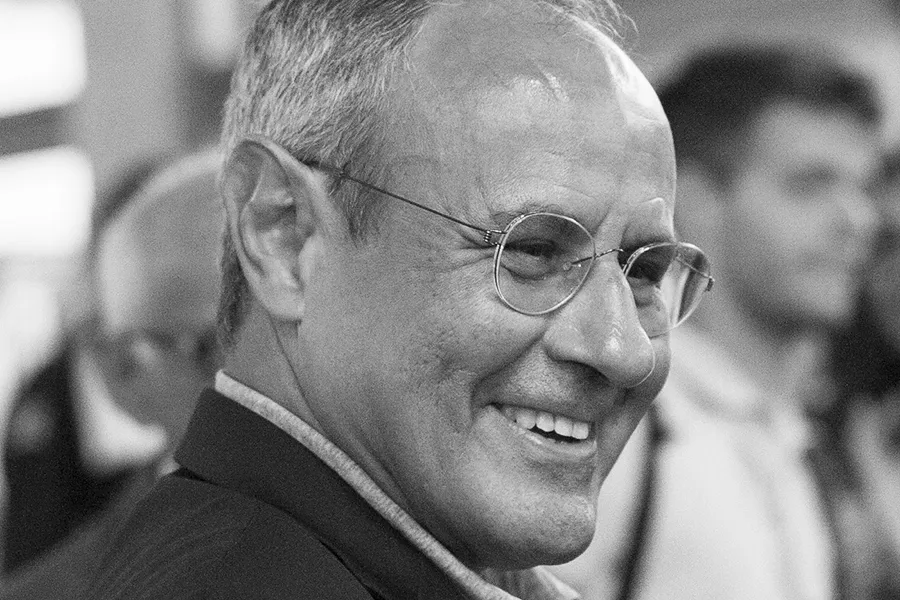
New York City, N.Y., Jun 30, 2017 / 03:02 am (CNA).- With Catholic proposals to literally head for the hills in response to Christianity's ever-lessening influence in secular culture, the leader of a global ecclesial movement has a provocative statement:
This is actually a great time for the Church.
“As a matter of fact,” says Father Julian Carron, “it is a precious occasion to verify the validity of the Christian proposal.”
Already garnering some notable attention since its release, a new book by Fr. Carron called “Disarming Beauty” takes on the question of the Church's relevance amid modern society's most pressing challenges. From terrorism to consumerism, “rights” culture to marriage and family, the book examines the plight of our current world and invites Christians to respond – not from a place of fear, but from the joy of their original encounter with the living person of Christ.
“The fact that the Church is no longer a moral majority is liberating; it allows us to rediscover the heart of the Christian event,” he told CNA. “The Church will survive and thrive only through Her witness.”
Fr. Carron heads Communion and Liberation, which originated in the 1950s with Italian priest Msgr. Luigi Giussani. The international movement focuses on the actualization of man's faith by living the Christian presence within community.
Please read below for our full interview with Fr. Carron:
Why 'Disarming Beauty'? What does the title mean to you?
The book speaks of the beauty of Christian faith, of its power and its attraction. When God takes on flesh, He strips Himself of His own power, entering into the history and poverty of the human condition, revealing to everyone the truth of His power. This is how Christianity, the greatest revolution of all time, began. Christ is the exemplar of a way of communicating truth that needs no other means beyond the beauty of truth itself. The book speaks primarily of this beauty, which is not just an aesthetic or sentimental one. Like all beautiful things, Christianity needs no other defense, other then its own beauty, to be communicated. With the expression “disarming beauty” I wanted to say: “We Christians, do we believe in the fascination that the disarming beauty of the faith can exercise?” With the phrase “disarming beauty,” I propose a Christian presence that would be sufficiently attractive so as to make life more interesting for everyone.
What exactly does beauty “disarm” us of? How does it do that?
Beauty disarms us from our narrow way of looking at ourselves and at reality; it opens our minds and our eyes to the totality of reality, of the real. The attractiveness of beauty moves us affectively, so much so that it allows reason to become truly opened to all the factors of reality. We discover this openness in Christ’s gaze on reality; we are surprised by the way Jesus looks at the publicans, at Zacchaeus or Matthew, or at the crowd. How is his gaze different from the one of the Pharisees, which reduces the person to his ability or his ethical performance? Jesus' gaze at Zacchaeus helps him discover himself, awakening his self-awareness, something none of the Pharisees’ reproaches could do. We can say the same about the Samaritan woman, or the tenth leper. We understand the shock that His presence provoked: “We never saw anything like this.”
What do you perceive as the single greatest threat in modern society?
I think it is feeling adrift, destabilized, alone, and uncertain. Most propose to fight these emotions with walls, or changes in the system at the institutional level (as depicted by T.S. Eliot). Men and women today wait for, perhaps unconsciously, the experience of an encounter with people for whom life is “solid” in the midst of change. What will wake people up today is a human impact, an event that echoes the initial event that occurred when Jesus raised His eyes and said, “Zacchaeus, hurry down. I want to stay at your house today.” I believe that the present era is a great opportunity to witness to the disarming beauty of Christianity, and to verify the fascination of the Christian event, which does not require a context to protect it.
Why is education so important? Why do you say it's the greatest challenge the Church faces?
We see so many students and teachers passive, skeptical, and even bored. Since we don't know what to do, we manage the symptoms. Yet, we must face the challenge. The challenge for the educator is to reawaken desire, to experience the restlessness which St. Augustine speaks about. To do so, we must introduce students to a relationship with reality in its totality, with all of its beauty and meaning.
For this reason, it is necessary to put the person at the center, to teach students to look at the world with their own eyes, to think with their own heads, thus developing a critical spirit that makes their “I” more of a protagonist and less a spectator, more a leader and less a follower, more a citizen and less a subject.
This dynamic is only possible when a teacher is a witness to this relationship with reality, not as one who imposes herself or her way of seeing things upon others, in an authoritarian way, but someone who challenges the other by her own way of living.
What changes must the Church make not only to survive, but thrive in today's modern culture?
Christians are faced with an unprecedented challenge. Yet, we are not afraid of wide-ranging dialogue, without any privileges. As a matter of fact, it is a precious occasion to verify the validity of the Christian proposal. The fact that the Church is no longer a moral majority is liberating; it allows us to rediscover the heart of the Christian event. The Church will survive and thrive only through Her witness.
Arguably, though, there are a lot of Catholics who do not find it “liberating” that the Church is no longer the moral majority. Many are actually afraid of this phenomenon, and feel as though Catholics either have to isolate from culture or hold even more tightly to the tenets of Christianity as an increasingly extreme counter-witness. What do you say to this?
That the Church is no longer the moral majority is a fact. It's useless to complain. The fact that many Catholics are afraid of this situation shows the lack of certainty in the unarmed beauty of faith, causing them to either isolate themselves from the culture to 'preserve' the faith, or to see their presence in society as a counter-reaction. To describe what kind of presence is needed today, this observation may be useful:
When we have to defend something in the context of a debate, in order to make our response stronger, we almost unconsciously accept the way the other frames the issue. In doing so, we allow our position to be determined by its opposition. It is reactive instead of being an original position, that is, a position that comes from our experience of faith. This leads to further reducing Christianity, or its testimony, to the mere repetition of a doctrine, of some values or ethics. (Disarming Beauty, pp. 70-71).
Christian faith was born in a pluralistic society in Palestine and spread throughout a multicultural Roman empire. The first Christians based the communication of their faith only in their own witness. Their free and joyful position sprang from the core of their faith, not from fear of the world. “Man today expects, perhaps unconsciously, the experience of an encounter with people for whom the fact of Christ is such a present reality that their life is changed. What will shake up men and women today is a human impact; an event that echoes the initial event, when Jesus raised His eyes and said, 'Zacchaeus, hurry down. I mean to stay at your house today.'” (Luigi Giussani to the Synod on the Laity, 1987).
You reference the malaise of “lethargy and existential boredom.” How do modern men and women regain a sense of wonder and desire in front of their lives? In your view, what is the first step, and what is Church's role in this?
The first step is to encounter somebody who reawakens us from our lethargy and boredom. Regardless of the human situation, something unforeseen is always possible, something unexpected, which makes us regain the sense of ourselves. The Church has a unique possibility to offer a big contribution to the modern situation if she rediscovers the real nature of Christianity as an event, an event that reawakens the person, just as we see in the Gospels.
How do you encounter someone who awakens you? Is there a danger of moral subjectivity, here? Does one just follow anything that attracts?
You can see this when you meet someone who awakens you in your own experience like when you fall in love with someone. You don’t need anybody else assuring you that it is that particular person who has awakened you from your apathy, or your meaningless life. It's something objective, something that comes out of you. We can use the same method looking at the origin of Christian faith. As then-Cardinal Ratzinger said in 1993: “we can recognize only something that raises a correspondence in us.” Anybody can recognize Christ “because he corresponds to the nature of man…the longing for the infinite which is alive and unquenchable within man.” In the opening lines of Deus Caritas Est, he brought this to everyone's attention: “Being Christian is not an ethical choice or a lofty idea, but the encounter with an event, a person who gives life a new horizon and a decisive direction.” The person of Jesus is such a great and precious good, as He alone fully corresponds to the human thirst for happiness. And, the exceptional correspondence He brings about in those who meet him makes them capable of being in relationship with reality in an absolutely gratuitous way.
You speak of dialogue in the book a lot. How is this possible and why is it essential?
Dialogue is crucial because it is the possibility for a person to enter into a relationship with the other's experience. Sharing our own experiences with others, welcoming the experiences of others, is the only way to enrich our life.
Freedom in dialogue comes from the esteem one has for the experience of the other. This esteem permits one to enter into relationship with the richness of the experience of another person – in order to enrich one's own perspective. We can say with Terence: “Nothing human is foreign to us.” And when one has this certainty, he or she has no problem entering into a dialogue.
Why is it important for Christians to defend religious freedom?
Because of the relationship between truth and freedom. The Second Vatican Council enables us see that there is no other way to communicate truth than through freedom. Reason is the nature of truth, and truth needs only its own beauty to communicate itself. “The truth cannot impose itself except by virtue of its own truth.”
Christian faith requires the use of reason and freedom. Without these two, Christianity isn't the least bit interesting. Today, therefore, only in a free environment will Christian faith be able to interest people, because for modern men and women (and in this the Enlightenment has played a foundational role), there is no greater good than freedom. No one today would think of proposing or imposing something that goes against freedom.
With the collapse of what was at one time evident (family, marriage, work, relative peace in our cities), where do we begin again?
The same way they did 2000 years ago, with a witness. Jesus introduced such a newness in history that people who met Him remained speechless, even to the point to saying: “We have never have seen anything like it.” There is no way to challenge human reason and freedom other then a life – the more fascinating life of a witness. People need to see and touch again, in a tangible way, the values that today are in crisis.
Previous Post

June 30, 2017
How graduates can thrive, according to one Catholic entrepreneur
Next Post
June 30, 2017 'Extreme' abortion push in UK prompts outcry from doctors
Browse Our Archives
Select a Category Americas Asia - Pacific Europe Middle East - Africa Uncategorized US Vatican
Select a Month November 2017 October 2017 September 2017 August 2017 July 2017 June 2017 May 2017 April 2017 March 2017 February 2017 January 2017 December 2016 November 2016 October 2016 September 2016 August 2016 July 2016 June 2016 May 2016 April 2016 March 2016 February 2016 January 2016 December 2015 November 2015 October 2015 September 2015 August 2015 July 2015 June 2015 May 2015 April 2015 March 2015 February 2015 January 2015 December 2014 November 2014 October 2014 September 2014 August 2014 July 2014 June 2014 May 2014 April 2014 March 2014 February 2014 January 2014 December 2013 November 2013 October 2013 September 2013 August 2013 July 2013 June 2013 May 2013 April 2013 March 2013 February 2013 January 2013 December 2012 November 2012 October 2012 September 2012 August 2012 July 2012 June 2012 May 2012
TAKE THE
Religious Wisdom Quiz
What qualification does Paul give for elders, saying they must be the husband of how many wives?
Select your answer to see how you score.
One wife As many as he can support Two wives No more than three wives
Related posts from Catholic News

US bishops' new child protection program aims to...

Wealthy foundation aims to redefine religious freedom—and Christianity,...

Victims of Islamic State in focus at UN...

Catholic University of America offers free tuition to...
TRENDING AT PATHEOS Catholic

Creation, Preservation, and Teleology in Catholic Theology
As I write this, it is very early Monday morning. Like millions...

The Parable Of The Sower And The Word...
One of Christ’s most famous parables is that of the sower who...

Rejecting Doom: Christian Hope And Human Action
Christianity is a religion of hope. We are to have hope and...

Why I Choose the Eucharist Over the Sermon
Choose the Eucharist, Not the Sermon What are we supposed to get...

5 Design Elements Found in Spiritually Rooted Homes
Putting Spirituality Into Home Decor Our homes are more than our living...

Credo: A Story of God Told with the...
About 10 years ago, I began to imagine a personal "Credo" that...
view all Catholic blogs
Ad-Free & Subscriber Log-In Subscription Support
- About Us
- 2026 Calendar
- Videos
- Podcasts
- Library of World Religions
- Faith In Media Tracker
- Advertise With Us
- Write for Us
- Privacy Policy
- Terms of Service
- Do Not Sell My Data
- Contact Us
- Radiant Digital
- Manage Newsletter Subscriptions
- Unsubscribe From Notifications
- Sitemap
Copyright 2008-2026, Patheos. All rights reserved.
Subscription Support Ad-Free & Subscriber Log-In
Follow Patheos