
BuddhistCatholicContemplativeEvangelicalGeneral ChristianHinduJewishLatter-day SaintMuslimNew VisionsProgressive Christian
Beliefs
- Buddhist
- Catholic
- Contemplative
- Evangelical
- General Christian
- Hindu
- Jewish
- Latter-day Saint
- More Voices
- Muslim
- New Visions
- Pagan
- Progressive Christian
Topics
- Religion News
- Food and Religion
- Sports and Religion
- Religious Art
- Religious Music and Entertainment
- Religious Events
- History and Religion
- Style and Religion
- Politics and Religion
- Women in Religion
- Recreation Outdoors and Religion
- Business Finance and Religion
- Careers Workplace and Religion
- Education and Religion
- Family Parenting and Religion
- Health Fitness and Religion
- Home and Religion
- Relationships and Religion
- Technology and Religion
- Travel and Religion
Columnists
- Buddhist Columnists
- Business Finance and Religion Columnists
- Careers Workplace and Religion Columnists
- Catholic Columnists
- Contemplative Columnists
- Education and Religion Columnists
- Evangelists Columnists
- Family Parenting and Religion Columnists
- General Christian Columnists
- Health Fitness and Religion Columnists
- Hindu Columnists
- History and Religion Columnists
- Home and Religion Columnists
- Jewish Columnists
- More Voices Columnists
- Latter Day Columnists
- Muslim Columnists
- New Visions Columnists
- Nonreligious Columnists
- Pagan Columnists
- Politics and Religion Columnists
- Progressive Columnists
- Recreation Outdoors and Religion Columnists
- Relationships and Religion Columnists
- Religion News Columnists
- Religious Art Columnists
- Religious Events Columnists
- Religious Music and Entertainment Columnists
- Sports and Religion Columnists
- Style and Religion Columnists
- Technology and Religion Columnists
- Travel and Religion Columnists
- Women in Religion Columnists
Resource Library
- 2026 Calendar
- Library of World Religions
- The 100 Most Holy Places on Earth
- Patheos Answers
- Podcasts
- Videos
- Faith Leaders Database
- Anglican Episcopalian
- Bahai
- Baptist
- Buddhism
- Christianity
- Confucianism
- Eastern Orthodoxy
- Hinduism
- Holiness and Pentecostal
- ISKCON
- Islam
- Judaism
- Lutheran
- Methodist
- The Church of Jesus Christ of Latter-day Saints
- New Age
- Paganism
- Presbytarian and Reformed
- Protestantism
- Religion Behind the Scenes
- Roman Catholic
- Scientology
- Shia Islam
- Sikhism
- Sufism
- Sunni Islam
- Taoism
- Zen
- See all religions
Research Tools
 Ad-Free & Subscriber Log-In Subscription Support
Ad-Free & Subscriber Log-In Subscription Support
Follow Patheos 

- Trending:
- Forgiveness
- |
- Marriage
- |
- Consciousness
- |
- Death Penalty
- |
- Election
- |
- Halloween
 Catholic News
- Home
- Catholic
- Religion News
- St Anthony of Padua considered ‘all the world as his home’
St Anthony of Padua considered ‘all the world as his home’
Last updated on: June 13, 2017 at 10:00 pm by CNA Daily News
St Anthony of Padua considered ‘all the world as his home’ 2017-06-13T22:00:00+00:00 CNA Daily News
Patheos Explore the world's faith through different perspectives on religion and spirituality! Patheos has the views of the prevalent religions and spiritualities of the world.
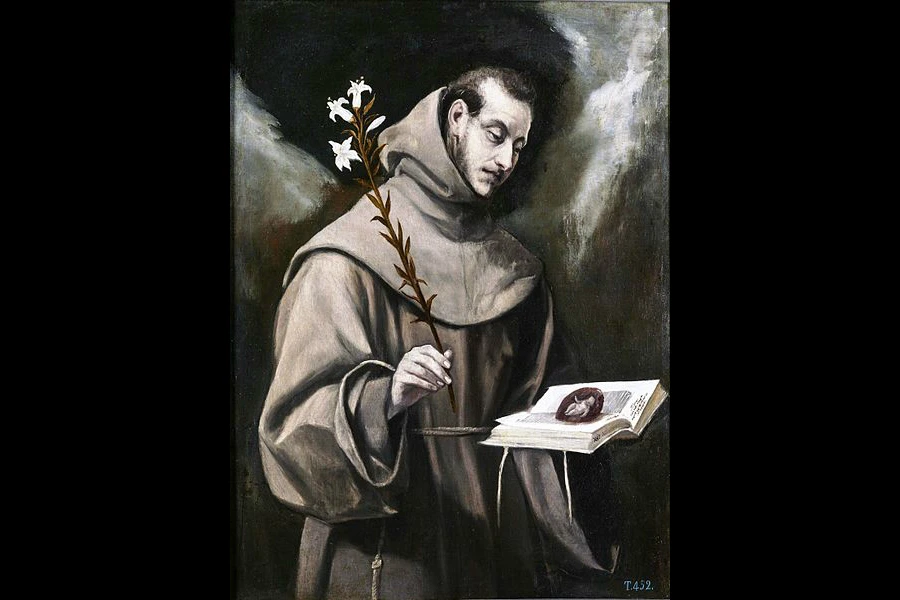
Padua, Italy, Jun 13, 2017 / 04:00 pm (CNA/EWTN News).- As the Church celebrates St. Anthony of Padua, his widespread popularity can be traced to his efforts at reaching out as a neighbor to all peoples, according to the rector of the basilica where the saint's body rests.
“The devotion to the Saint of the Peoples is truly universal perhaps because he himself desired to consider all the world his as his home,” Father Oliviero Svanera, rector of the Basilica of St. Anthony of Padua, told CNA.
“He was Portuguese by birth, he went to Morocco to spread the faith, he landed in Sicily by shipwreck, then he went back up the Italian peninsula all the way to Assisi and joined the friars of St. Francis, who sent him all the way to France.
Once St. Athony returned to Italy he was appointed provincial superior and served in Padua, where he died in 1231.
“It is told that he would speak one language made of a thousand accents but which was understandable to all,” Fr. Svanera said. “As such, he was a neighbor to all: to the poor, to people in difficulty, to the sick. In this, his being 'brother of all,' is perhaps his universality, something that renders him a friend of all the peoples of the world, beyond nationality, culture, and even religions, given that St. Anthony is respected even by those who do not profess the Catholic faith.”
St. Anthony was born as Fernando Martins in Lisbon around 1195, and when he was 15 entered the Abbey of St. Vincent with the Canons Regular of St. Augustine, and he was ordained a priest.
In 1220 he was moved by seeing the relics of five Franciscan missionaries who had been martyred in Morocco. He was allowed to leave the Augustinians to join the Order of Friars Minor, where he took the name Anthony. He worked as a preacher and laid the foundations of Franciscan theology.
He was canonized in 1232, only a year after his death, by Gregory IX, who had heard him preach and called him the “Ark of the Testament.”
It was also in 1232 that construction of the basilica which houses St. Anthony's body was begun. It was finished at the beginning of the 14th century.
Please find below more from CNA's interview with Fr. Svanera, rector of the basilica:
For the feast day, there exists the famous Tredicina in honor of the saint: What does this consist of?
By the word “Tredicina” is meant the thirteen days of meditation and spiritual preparation for the solemnity of the saint, that is, from May 31 to June 13. Every day those devoted to St. Anthony invoke the intercession of the saint through a particular prayer, the Tredicina to Saint Anthony specifically, to entrust themselves to the mercy of God the Father. These are the days in which the basilica becomes the goal of pilgrims, both individuals and those organized in groups, and our sanctuary becomes truly universal, as in these days of veneration and prayer there are tens of thousands of pilgrims who come here from every country of the world.
Another tradition is the “Bread of St. Anthony.” What is the significance of this tradition?
In a word, the “Bread of St. Anthony” is synonymous with charity. The birth of this tradition has its roots in one of the “miracles” of the saint, that of Tommasino, a baby of twenty months who drowned in a washtub. The desperate mother invoked the help of the saint and made a vow: If she would obtain this grace, she would give to the poor the child’s weight in bread. And the little one returned miraculously to life. This miracle has given origin to two Antonian works in faithfulness to the spirit of St. Anthony: Firstly, l’Opera Pane dei Poveri (the Bread Work of the Poor), the Antonian organization which in Padua works to bring bread, and other necessities to people in difficulty, and next the Caritas Antoniana Onlus (Antonian Charity not-for-profit), the body of friars of the saint who in 2016 supported 124 development projects in 40 countries of the world, for a total of €2.64 million ($2.96 million).
St. Anthony was a great preacher who practiced charity: What can this teach us about a “Church that goes forth”?
The gospel and charity are the two hinges of the lesson from St. Anthony. His preaching was always capable of provoking the heart of everyone. And this too is thanks to his exemplary life and his humility, which he learned from Most Holy Mary, to whom he was profoundly devoted. St. Anthony proclaimed the gospel which conquers the temptation of power, the temptation of pride, the temptation, Pope Francis would say today, of worldliness, of how much worldliness there is and which brings us to act out life as in a play, or to want to give an appearance. Through his love, St. Anthony knew to stoop for the other (refugee, migrant, unemployed, alone, sick, imprisoned, marginalized, poor) and to take care of him. We will thus be effective Christians of a Church which goes forth if, like St. Anthony, we manage to go forth from ourselves to preach Christ crucified, following him with a style of humility, of true humility, a humility full of love.
Previous Post

June 13, 2017
Philosopher who supports legal abortion joins Vatican pro-life academy
Next Post
June 14, 2017 Monks of Norcia announce special edition beer to help them rebuild
Browse Our Archives
Select a Category Americas Asia - Pacific Europe Middle East - Africa Uncategorized US Vatican
Select a Month November 2017 October 2017 September 2017 August 2017 July 2017 June 2017 May 2017 April 2017 March 2017 February 2017 January 2017 December 2016 November 2016 October 2016 September 2016 August 2016 July 2016 June 2016 May 2016 April 2016 March 2016 February 2016 January 2016 December 2015 November 2015 October 2015 September 2015 August 2015 July 2015 June 2015 May 2015 April 2015 March 2015 February 2015 January 2015 December 2014 November 2014 October 2014 September 2014 August 2014 July 2014 June 2014 May 2014 April 2014 March 2014 February 2014 January 2014 December 2013 November 2013 October 2013 September 2013 August 2013 July 2013 June 2013 May 2013 April 2013 March 2013 February 2013 January 2013 December 2012 November 2012 October 2012 September 2012 August 2012 July 2012 June 2012 May 2012
TAKE THE
Religious Wisdom Quiz
Where was Paul headed when he encountered the risen Christ?
Select your answer to see how you score.
Antioch Rome Damascus Jerusalem
Related posts from Catholic News

Sixty Vincentians martyred during Spanish Civil War to...

Filipinos gather in Rome to promote bishop's beatification...

UK bishop calls for prayers as MPs urge...

On All Souls' Day, Pope Francis prays for...
TRENDING AT PATHEOS Catholic

Rejecting Doom: Christian Hope And Human Action
Christianity is a religion of hope. We are to have hope and...

It’s What Comes From Within Which Matters
One of the most difficult things for us to understand is why...

Why I Choose the Eucharist Over the Sermon
Choose the Eucharist, Not the Sermon What are we supposed to get...

5 Design Elements Found in Spiritually Rooted Homes
Putting Spirituality Into Home Decor Our homes are more than our living...

Credo: A Story of God Told with the...
About 10 years ago, I began to imagine a personal "Credo" that...

The Anatomy of Divine Revelation in Catholic Thought
The claim that God has made Himself known to human beings is...
view all Catholic blogs
Ad-Free & Subscriber Log-In Subscription Support
- About Us
- 2026 Calendar
- Videos
- Podcasts
- Library of World Religions
- Faith In Media Tracker
- Advertise With Us
- Write for Us
- Privacy Policy
- Terms of Service
- Do Not Sell My Data
- Contact Us
- Radiant Digital
- Manage Newsletter Subscriptions
- Unsubscribe From Notifications
- Sitemap
Copyright 2008-2026, Patheos. All rights reserved.
Subscription Support Ad-Free & Subscriber Log-In
Follow Patheos