
BuddhistCatholicContemplativeEvangelicalGeneral ChristianHinduJewishLatter-day SaintMuslimNew VisionsProgressive Christian
Beliefs
- Buddhist
- Catholic
- Contemplative
- Evangelical
- General Christian
- Hindu
- Jewish
- Latter-day Saint
- More Voices
- Muslim
- New Visions
- Pagan
- Progressive Christian
Topics
- Religion News
- Food and Religion
- Sports and Religion
- Religious Art
- Religious Music and Entertainment
- Religious Events
- History and Religion
- Style and Religion
- Politics and Religion
- Women in Religion
- Recreation Outdoors and Religion
- Business Finance and Religion
- Careers Workplace and Religion
- Education and Religion
- Family Parenting and Religion
- Health Fitness and Religion
- Home and Religion
- Relationships and Religion
- Technology and Religion
- Travel and Religion
Columnists
- Buddhist Columnists
- Business Finance and Religion Columnists
- Careers Workplace and Religion Columnists
- Catholic Columnists
- Contemplative Columnists
- Education and Religion Columnists
- Evangelists Columnists
- Family Parenting and Religion Columnists
- General Christian Columnists
- Health Fitness and Religion Columnists
- Hindu Columnists
- History and Religion Columnists
- Home and Religion Columnists
- Jewish Columnists
- More Voices Columnists
- Latter Day Columnists
- Muslim Columnists
- New Visions Columnists
- Nonreligious Columnists
- Pagan Columnists
- Politics and Religion Columnists
- Progressive Columnists
- Recreation Outdoors and Religion Columnists
- Relationships and Religion Columnists
- Religion News Columnists
- Religious Art Columnists
- Religious Events Columnists
- Religious Music and Entertainment Columnists
- Sports and Religion Columnists
- Style and Religion Columnists
- Technology and Religion Columnists
- Travel and Religion Columnists
- Women in Religion Columnists
Resource Library
- 2026 Calendar
- Library of World Religions
- The 100 Most Holy Places on Earth
- Patheos Answers
- Podcasts
- Videos
- Faith Leaders Database
- Anglican Episcopalian
- Bahai
- Baptist
- Buddhism
- Christianity
- Confucianism
- Eastern Orthodoxy
- Hinduism
- Holiness and Pentecostal
- ISKCON
- Islam
- Judaism
- Lutheran
- Methodist
- The Church of Jesus Christ of Latter-day Saints
- New Age
- Paganism
- Presbytarian and Reformed
- Protestantism
- Religion Behind the Scenes
- Roman Catholic
- Scientology
- Shia Islam
- Sikhism
- Sufism
- Sunni Islam
- Taoism
- Zen
- See all religions
Research Tools
 Ad-Free & Subscriber Log-In Subscription Support
Ad-Free & Subscriber Log-In Subscription Support
Follow Patheos 

- Trending:
- Forgiveness
- |
- Marriage
- |
- Consciousness
- |
- Death Penalty
- |
- Election
- |
- Halloween
 Catholic News
- Home
- Catholic
- Religion News
- It’s a responsibility to seek truth, educate youth, Pope Francis says
It’s a responsibility to seek truth, educate youth, Pope Francis says
Last updated on: June 20, 2017 at 11:55 am by CNA Daily News
It’s a responsibility to seek truth, educate youth, Pope Francis says 2017-06-20T11:55:00+00:00 CNA Daily News
Patheos Explore the world's faith through different perspectives on religion and spirituality! Patheos has the views of the prevalent religions and spiritualities of the world.
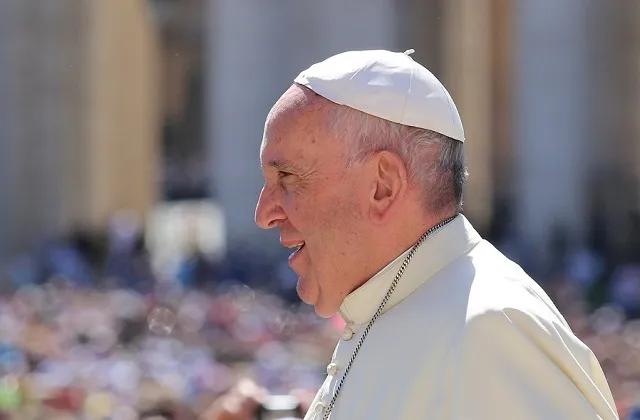
Barbiana, Italy, Jun 20, 2017 / 05:55 am (CNA/EWTN News).- On Tuesday Pope Francis made a pilgrimage to the graves of two 20th century Italian priests, reflecting on charity and education, and calling on adults to form their consciences well, so that they may teach young people to do the same.
Addressing educators, Pope Francis said June 20, “Yours is a mission full of obstacles but also of joys. But above all it is a mission. A mission of love, because you cannot teach without love and without the awareness that what you give is only a right that you recognize, that of learning.”
“This is an appeal to responsibility. An appeal to you, dear young people, but first of all, adults who are called to live the freedom of conscience in a genuine way, as a search for the true, the beautiful and the good, ready to pay the price that this entails.”
The Pope’s June 20 pilgrimage to the small Italian towns of Bozzolo and Bariana took place in commemoration of the 50th anniversary of the death of Fr. Lorenzo Milani, who lived from 1923-1967. He also visited the grave of Fr. Primo Mazzollari, who lived from 1890-1959.
Both priests have been wrongly portrayed as “anti-clerical” and their writings have often been misquoted in order to make them appear to dissent from the Church. However, during their lives they always obeyed any restriction the Church placed upon them, and they never preached or taught outside of the Catholic Church.
“There are so many things to be taught,” Pope Francis continued, “but the essential thing is the growth of a free conscience, capable of confronting itself with reality and of orienting itself in (reality) guided by love, by the desire to compromise with others, to take on the weight of their difficulties and wounds, to escape from all selfishness to serve the common good.”
The Pope’s brief visit – only half a day – began with an early morning helicopter flight to Bozzolo, landing at 9:00 a.m. He was welcomed by the Mayor of Bozzolo and the Bishop of Cremona, Antonio Napolioni.
From there the Pope proceeded to the parish of St. Peter to pray at the tomb of Fr. Primo Mazzolari, after which he gave a commemorative speech to the faithful present at the church.
At 10:30 a.m. he left for Barbiana, arriving at the Barbiana church at 11:15a.m. He was welcomed there by Cardinal Giuseppe Betori, Archbishop of Florence and the Mayor of Vicchio, a municipality of Florence.
He then made a private visit to the cemetery of the church to pray at the grave of Fr. Lorenzo Milani. Afterwards, Pope Francis met in the church with still-living disciples of Fr. Milani.
After a short visit to the rectory in the adjacent garden he gave a speech in the presence of around 200 people, including the disciples, priests of the diocese and some children living in family homes in the area. The Pope arrived back at the Vatican around 1:15 p.m.
Fr. Mazzolari believed that a parish priest was called to be a reference point for the community, and also called to work for the re-evangelization of Christianity.
Fr. Lorenzo Milani had a similar approach, which he applied by teaching poor children about the social doctrine of the Church. At a time of increasing communist influence in the region, he declared that “only the Gospel” would be his guide.
“The school, for Fr. Lorenzo, was not something different from his priestly mission, but the concrete way to do that mission, giving it a solid foundation and the capacity to rise up to heaven,” Francis said.
You are witnesses to how a priest has lived out his mission, “with full fidelity to the Gospel and precisely for this, with full fidelity to each of you, whom the Lord had entrusted to him,” the Pope said to former students of Fr. Milani’s schools.
A teaching of Fr. Milani was, he said: “Give to the poor the word, because without the word there is no dignity and therefore no freedom and justice.”
If we teach them the Word of God, this is what will open up the path to full citizenship in society, through work and through full membership in the Church, Francis explained.
This is still true, even in our time, he said. It is only the Word of God that can help us to discern between the many false and confusing messages that we are bombarded with by society. It is also only the Word that can help us to make sense of and express the deep feelings and desires of our hearts and of the lack of justice for many of our brothers and sisters.
“Of that full humanization that we claim for every person on this earth, besides bread, home, work, family, is also the possession of the word as an instrument of freedom and fraternity,” he said.
Speaking to priests, Francis said that Fr. Milani was looking, as his mother said, for the “Absolute,” which he found in “religion and the priestly vocation.”
“Without this thirst for the Absolute you can be good officials of the sacred, but you cannot be priests, true priests, able to become servants of Christ in your brothers,” the Pope said.
“Dear priests, with the grace of God, we seek to be men of faith, a sincere faith, not watered down; and men of charity, pastoral charity toward all those whom the Lord entrusts us as brothers and children.”
“We love the Church, dear brothers, and let us love it, showing it as a caring mother of all, especially of the poorest and most fragile, both in social life and in personal and religious life.”
This is the Church that Fr. Milani has shown the world, he said. A Church with a maternal and thoughtful face, extending to everyone the opportunity to meet God.
This charity was not lacking in Servant of God Fr. Primo Mazzolari either. He himself was a priest who was poor, but not a “poor priest,” the Pope said.
In his spiritual testament, the Pope recounted, Fr. Mazzolari wrote that he always had little money, which always had to go to pay for the necessary things. This was his one regret on this point, he wrote, that he did not have more to give to the poor and his parish works.
However, Fr. Primo lived out a “pastoral charity” in his priestly ministry, Francis said, opening up horizons in the many complex situations he had to face during that time: “wars, totalitarianism, fratricidal clashes, the fatigue of democracy in gestation, the misery of its people.”
The Pope encouraged his fellow priests to follow Fr. Mazzolari’s example by listening to the world and all those who live and work in it: “Take care of every question of feeling and hope, without fear of passing through deserts and shadow areas,” he said.
Fr. Mazzolari had a great love of the poor, Francis continued, saying that charity was a matter of spirituality and of looking. In his book “The Crucified Way of the Poor,” he wrote that “he who has little charity sees few poor; he who has much charity sees many poor; those who have no charity see no one.”
The priest added, however, that “he who knows the poor knows his brother: whoever sees the brother sees Christ, who sees Christ sees life and his true poetry, for charity is the poetry of heaven carried on earth.”
Previous Post

June 20, 2017
US bishops call for engagement amid Trump's policy change on Cuba
Next Post
June 20, 2017 Newark archdiocese defends welcoming of LGBT pilgrimage
Browse Our Archives
Select a Category Americas Asia - Pacific Europe Middle East - Africa Uncategorized US Vatican
Select a Month November 2017 October 2017 September 2017 August 2017 July 2017 June 2017 May 2017 April 2017 March 2017 February 2017 January 2017 December 2016 November 2016 October 2016 September 2016 August 2016 July 2016 June 2016 May 2016 April 2016 March 2016 February 2016 January 2016 December 2015 November 2015 October 2015 September 2015 August 2015 July 2015 June 2015 May 2015 April 2015 March 2015 February 2015 January 2015 December 2014 November 2014 October 2014 September 2014 August 2014 July 2014 June 2014 May 2014 April 2014 March 2014 February 2014 January 2014 December 2013 November 2013 October 2013 September 2013 August 2013 July 2013 June 2013 May 2013 April 2013 March 2013 February 2013 January 2013 December 2012 November 2012 October 2012 September 2012 August 2012 July 2012 June 2012 May 2012
TAKE THE
Religious Wisdom Quiz
What year did the Great Schism occur, splitting the Eastern and Western churches?
Select your answer to see how you score.
325 AD 500 AD 1054 AD 1517 AD
Related posts from Catholic News

How do we help trafficking victims re-enter society?...

More than just giving – World Day of...

New book reveals details of John Paul I’s...

Despite reports, Pope Francis isn’t opening the door...
TRENDING AT PATHEOS Catholic

Creation, Preservation, and Teleology in Catholic Theology
As I write this, it is very early Monday morning. Like millions...

The Parable Of The Sower And The Word...
One of Christ’s most famous parables is that of the sower who...

Rejecting Doom: Christian Hope And Human Action
Christianity is a religion of hope. We are to have hope and...

Why I Choose the Eucharist Over the Sermon
Choose the Eucharist, Not the Sermon What are we supposed to get...

5 Design Elements Found in Spiritually Rooted Homes
Putting Spirituality Into Home Decor Our homes are more than our living...

Credo: A Story of God Told with the...
About 10 years ago, I began to imagine a personal "Credo" that...
view all Catholic blogs
Ad-Free & Subscriber Log-In Subscription Support
- About Us
- 2026 Calendar
- Videos
- Podcasts
- Library of World Religions
- Faith In Media Tracker
- Advertise With Us
- Write for Us
- Privacy Policy
- Terms of Service
- Do Not Sell My Data
- Contact Us
- Radiant Digital
- Manage Newsletter Subscriptions
- Unsubscribe From Notifications
- Sitemap
Copyright 2008-2026, Patheos. All rights reserved.
Subscription Support Ad-Free & Subscriber Log-In
Follow Patheos