
BuddhistCatholicContemplativeEvangelicalGeneral ChristianHinduJewishLatter-day SaintMuslimNew VisionsProgressive Christian
Beliefs
- Buddhist
- Catholic
- Contemplative
- Evangelical
- General Christian
- Hindu
- Jewish
- Latter-day Saint
- More Voices
- Muslim
- New Visions
- Pagan
- Progressive Christian
Topics
- Religion News
- Food and Religion
- Sports and Religion
- Religious Art
- Religious Music and Entertainment
- Religious Events
- History and Religion
- Style and Religion
- Politics and Religion
- Women in Religion
- Recreation Outdoors and Religion
- Business Finance and Religion
- Careers Workplace and Religion
- Education and Religion
- Family Parenting and Religion
- Health Fitness and Religion
- Home and Religion
- Relationships and Religion
- Technology and Religion
- Travel and Religion
Columnists
- Buddhist Columnists
- Business Finance and Religion Columnists
- Careers Workplace and Religion Columnists
- Catholic Columnists
- Contemplative Columnists
- Education and Religion Columnists
- Evangelists Columnists
- Family Parenting and Religion Columnists
- General Christian Columnists
- Health Fitness and Religion Columnists
- Hindu Columnists
- History and Religion Columnists
- Home and Religion Columnists
- Jewish Columnists
- More Voices Columnists
- Latter Day Columnists
- Muslim Columnists
- New Visions Columnists
- Nonreligious Columnists
- Pagan Columnists
- Politics and Religion Columnists
- Progressive Columnists
- Recreation Outdoors and Religion Columnists
- Relationships and Religion Columnists
- Religion News Columnists
- Religious Art Columnists
- Religious Events Columnists
- Religious Music and Entertainment Columnists
- Sports and Religion Columnists
- Style and Religion Columnists
- Technology and Religion Columnists
- Travel and Religion Columnists
- Women in Religion Columnists
Resource Library
- 2026 Calendar
- Library of World Religions
- The 100 Most Holy Places on Earth
- Patheos Answers
- Podcasts
- Videos
- Faith Leaders Database
- Anglican Episcopalian
- Bahai
- Baptist
- Buddhism
- Christianity
- Confucianism
- Eastern Orthodoxy
- Hinduism
- Holiness and Pentecostal
- ISKCON
- Islam
- Judaism
- Lutheran
- Methodist
- The Church of Jesus Christ of Latter-day Saints
- New Age
- Paganism
- Presbytarian and Reformed
- Protestantism
- Religion Behind the Scenes
- Roman Catholic
- Scientology
- Shia Islam
- Sikhism
- Sufism
- Sunni Islam
- Taoism
- Zen
- See all religions
Research Tools
 Ad-Free & Subscriber Log-In Subscription Support
Ad-Free & Subscriber Log-In Subscription Support
Follow Patheos 

- Trending:
- Forgiveness
- |
- Marriage
- |
- Consciousness
- |
- Death Penalty
- |
- Election
- |
- Halloween
 Catholic News
- Home
- Catholic
- Religion News
- Could priests be incardinated into ecclesial movements?
Could priests be incardinated into ecclesial movements?
Last updated on: June 13, 2017 at 12:08 pm by CNA Daily News
Could priests be incardinated into ecclesial movements? 2017-06-13T12:08:00+00:00 CNA Daily News
Patheos Explore the world's faith through different perspectives on religion and spirituality! Patheos has the views of the prevalent religions and spiritualities of the world.
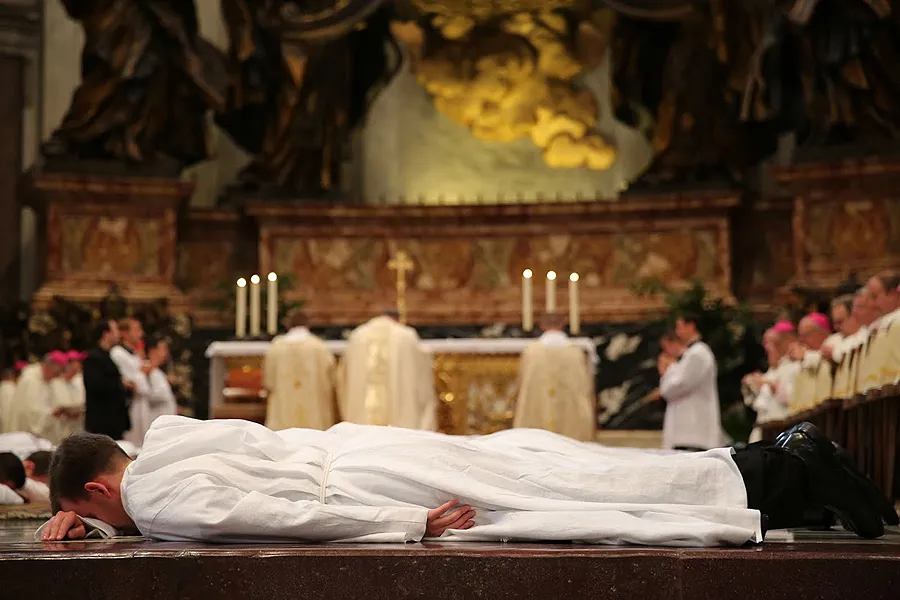
Vatican City, Jun 13, 2017 / 06:08 am (CNA/EWTN News).- The last meeting of the head of dicasteries of the Roman Curia took place last May 29. Among other issues, the meeting discussed the possibility of priests being incardinated directly into ecclesial movements rather than into a diocese.
Pope Francis made the issue a central topic of his regular meeting with the head of dicasteries, though these kind of meetings usually deal with topics related to the government and the organization of the Roman Curia.
Via “incardination,” a member of the clergy is placed under the jurisdiction of a bishop or, in the case of a religious, an ecclesiastical superior.
Aside from dioceses and religious institutes, only personal prelatures and ordinariates can incardinate priests.
Some ecclesial movements have been asking for some time to have priests directly incardinated.
The request of the movements is based on the fact that there are priests whose vocation is born and nurtured within a specific ecclesial movement.
According to their argument, these priests should not be bound to a diocese, and should be free to live their vocation within the movement, moving from place to place according to the needs or the requests of their particular movement.
Under the current situation, bishops and the priests of movements who are under their jurisdiction have had to find a balance between the movement's charism and the needs of the diocese.
During the May 29 meeting, Pope Francis largely listened, and did not express an opinion. However, his thought may be deduced from his recent words in other contexts.
At a meeting on April 27 with Catholic Action – a movement founded in Italy 150 years ago – the Pope
said the movement's charism is “profoundly incarnate in the here and now of every diocesan Church,” and that it “takes on true vigour by responding to, and making its own, the pastoral outreach of each diocesan Church.”
“Nor can you be like those groups that are so universal that they are not based anywhere, answer to no one, and are always on the lookout for what they suits them wherever they go,” he told them.
Pope Francis reiterated the importance of dioceses a month later, during his May 27 visit to Genoa.
Speaking with the clergy and religious of the city, Pope Francis underscored the importance for charisms of staying attached to the concrete realities of a diocese or project.
While a congregation might be “universal” in the sense that it has houses throughout the world, the “concreteness” of involvement in the diocese helps give the order “roots,” allowing it to remain and also to grow as they see different needs come up, he reflected.
The incardination of priests to movements would have a significant impact on such groups as the Focolare Movement, Communion and Liberation, Cançao Nova, or Shalom.
Some have speculated that the Neocatecumenal Way might also benefit from the possibility of incardinating its own priests.
The incardination problem in fact leaves open several questions: if a priest is directly incardinated in the movement, will he refer to a bishop or to the leader of the movement? And what happens if the leader is a lay person?
Cardinal Gerhard Müller, prefect of the Congregation for the Doctrine of the Faith, said at a book presentation June 1 that the incardination issue “is not about building parallel Churches. It is rather a matter of working together. We are called to a further reflection, being very careful not to lose the Church’s sacramental structure.”
Cardinal Müller hinted at the possibility of a communion of movements. The need, however, is to make it evident that priests are of the Church and not of the movements. Otherwise, the same movements risk to remain closed to the universal Church.
Referring to the possibility of a community of movements, Cardinal Müller talked about charismatic movements, which “can enrich the Church with their spirituality, with the tradition of the territories they live in, with choosing a certain spirituality. This spirituality must anyway favor the Church. It must not be stuck in the temptation to stay within a group, to build a too much enclosed and selective identity. Masses are not private. They must be open to all Catholics.”
Next Post

June 13, 2017 Kentucky native appointed Archbishop of Indianapolis
Browse Our Archives
Select a Category Americas Asia - Pacific Europe Middle East - Africa Uncategorized US Vatican
Select a Month November 2017 October 2017 September 2017 August 2017 July 2017 June 2017 May 2017 April 2017 March 2017 February 2017 January 2017 December 2016 November 2016 October 2016 September 2016 August 2016 July 2016 June 2016 May 2016 April 2016 March 2016 February 2016 January 2016 December 2015 November 2015 October 2015 September 2015 August 2015 July 2015 June 2015 May 2015 April 2015 March 2015 February 2015 January 2015 December 2014 November 2014 October 2014 September 2014 August 2014 July 2014 June 2014 May 2014 April 2014 March 2014 February 2014 January 2014 December 2013 November 2013 October 2013 September 2013 August 2013 July 2013 June 2013 May 2013 April 2013 March 2013 February 2013 January 2013 December 2012 November 2012 October 2012 September 2012 August 2012 July 2012 June 2012 May 2012
TAKE THE
Religious Wisdom Quiz
Who was the disciple who doubted Jesus' resurrection?
Select your answer to see how you score.
Peter Judas John Thomas
Related posts from Catholic News

How do we help trafficking victims re-enter society?...

More than just giving – World Day of...

New book reveals details of John Paul I’s...

Despite reports, Pope Francis isn’t opening the door...
TRENDING AT PATHEOS Catholic

The Parable Of The Sower And The Word...
One of Christ’s most famous parables is that of the sower who...

Rejecting Doom: Christian Hope And Human Action
Christianity is a religion of hope. We are to have hope and...

Why I Choose the Eucharist Over the Sermon
Choose the Eucharist, Not the Sermon What are we supposed to get...

5 Design Elements Found in Spiritually Rooted Homes
Putting Spirituality Into Home Decor Our homes are more than our living...

Credo: A Story of God Told with the...
About 10 years ago, I began to imagine a personal "Credo" that...

The Anatomy of Divine Revelation in Catholic Thought
The claim that God has made Himself known to human beings is...
view all Catholic blogs
Ad-Free & Subscriber Log-In Subscription Support
- About Us
- 2026 Calendar
- Videos
- Podcasts
- Library of World Religions
- Faith In Media Tracker
- Advertise With Us
- Write for Us
- Privacy Policy
- Terms of Service
- Do Not Sell My Data
- Contact Us
- Radiant Digital
- Manage Newsletter Subscriptions
- Unsubscribe From Notifications
- Sitemap
Copyright 2008-2026, Patheos. All rights reserved.
Subscription Support Ad-Free & Subscriber Log-In
Follow Patheos