
BuddhistCatholicContemplativeEvangelicalGeneral ChristianHinduJewishLatter-day SaintMuslimNew VisionsProgressive Christian
Beliefs
- Buddhist
- Catholic
- Contemplative
- Evangelical
- General Christian
- Hindu
- Jewish
- Latter-day Saint
- More Voices
- Muslim
- New Visions
- Pagan
- Progressive Christian
Topics
- Religion News
- Food and Religion
- Sports and Religion
- Religious Art
- Religious Music and Entertainment
- Religious Events
- History and Religion
- Style and Religion
- Politics and Religion
- Women in Religion
- Recreation Outdoors and Religion
- Business Finance and Religion
- Careers Workplace and Religion
- Education and Religion
- Family Parenting and Religion
- Health Fitness and Religion
- Home and Religion
- Relationships and Religion
- Technology and Religion
- Travel and Religion
Columnists
- Buddhist Columnists
- Business Finance and Religion Columnists
- Careers Workplace and Religion Columnists
- Catholic Columnists
- Contemplative Columnists
- Education and Religion Columnists
- Evangelists Columnists
- Family Parenting and Religion Columnists
- General Christian Columnists
- Health Fitness and Religion Columnists
- Hindu Columnists
- History and Religion Columnists
- Home and Religion Columnists
- Jewish Columnists
- More Voices Columnists
- Latter Day Columnists
- Muslim Columnists
- New Visions Columnists
- Nonreligious Columnists
- Pagan Columnists
- Politics and Religion Columnists
- Progressive Columnists
- Recreation Outdoors and Religion Columnists
- Relationships and Religion Columnists
- Religion News Columnists
- Religious Art Columnists
- Religious Events Columnists
- Religious Music and Entertainment Columnists
- Sports and Religion Columnists
- Style and Religion Columnists
- Technology and Religion Columnists
- Travel and Religion Columnists
- Women in Religion Columnists
Resource Library
- 2026 Calendar
- Library of World Religions
- The 100 Most Holy Places on Earth
- Patheos Answers
- Podcasts
- Videos
- Faith Leaders Database
- Anglican Episcopalian
- Bahai
- Baptist
- Buddhism
- Christianity
- Confucianism
- Eastern Orthodoxy
- Hinduism
- Holiness and Pentecostal
- ISKCON
- Islam
- Judaism
- Lutheran
- Methodist
- The Church of Jesus Christ of Latter-day Saints
- New Age
- Paganism
- Presbytarian and Reformed
- Protestantism
- Religion Behind the Scenes
- Roman Catholic
- Scientology
- Shia Islam
- Sikhism
- Sufism
- Sunni Islam
- Taoism
- Zen
- See all religions
Research Tools
 Ad-Free & Subscriber Log-In Subscription Support
Ad-Free & Subscriber Log-In Subscription Support
Follow Patheos 

- Trending:
- Forgiveness
- |
- Marriage
- |
- Consciousness
- |
- Death Penalty
- |
- Election
- |
- Halloween
 Catholic News
- Home
- Catholic
- Religion News
- ‘We cannot rest’ while Christians are being persecuted, advocates say
‘We cannot rest’ while Christians are being persecuted, advocates say
Last updated on: May 18, 2017 at 1:41 am by CNA Daily News
‘We cannot rest’ while Christians are being persecuted, advocates say 2017-05-18T01:41:00+00:00 CNA Daily News
Patheos Explore the world's faith through different perspectives on religion and spirituality! Patheos has the views of the prevalent religions and spiritualities of the world.
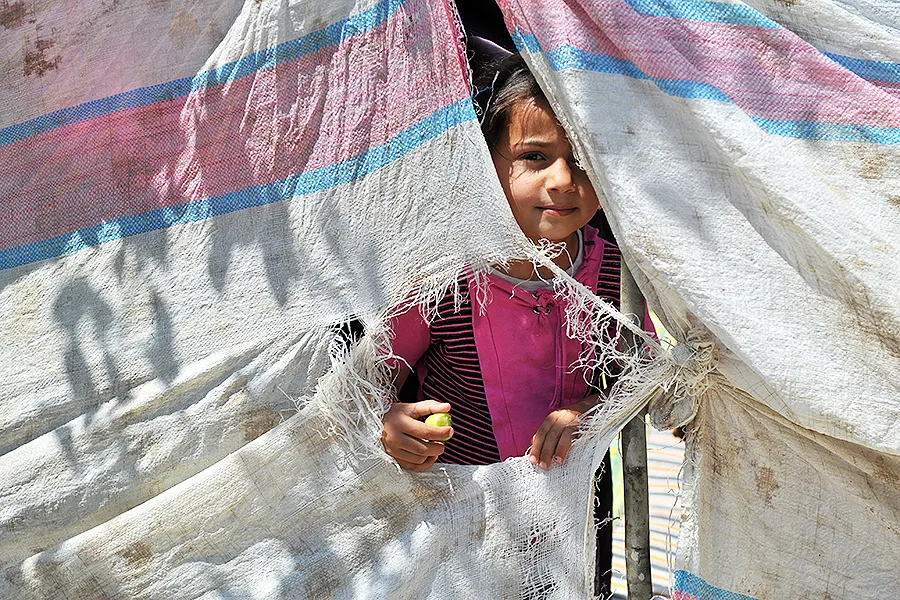
Washington D.C., May 17, 2017 / 07:41 pm (CNA/EWTN News).- Christians around the world have been models of forgiveness amidst persecution, but Western Christians must support them, religious leaders insisted at a world summit last week.
“We cannot rest, we cannot be content, we certainly can’t be complacent knowing our sisters and brothers are being oppressed, imprisoned, and killed,” Cardinal Donald Wuerl of Washington, D.C. stated in his May 12 keynote address at the World Summit in Defense of Persecuted Christians.
“When fellow Christians suffer, we suffer too. Injustice, this extraordinary injustice, should arouse in us the need to speak,” he continued.
Last week’s D.C. summit, hosted by the Billy Graham Evangelistic Association, featured more than 600 Christian leaders from 130 countries, including those who have suffered persecution in countries like Syria, North Korea, Iraq, Egypt, and Cuba.
The gathering was meant to shed light on narratives of Christian persecution amidst totalitarianism, secularism, tribalism, or religious extremism, and enable leaders to collaborate on pushing for religious freedom and tolerance.
Vice President Mike Pence addressed the summit on Thursday, as well as Metropolitan Hilarion of the Russian Orthodox Church. Cardinal Wuerl delivered the keynote address on Friday.
Catholic and Orthodox leaders at the summit emphasized that Christians play a vital role as religious minorities in African and Asian countries, acting as peacemakers and bridge-builders in societies fraught with sectarian strife.
Fr. Douglas al-Bazi, a Chaldean Catholic priest who was kidnapped and tortured for several days in 2006 by terrorists in Iraq, spoke to CNA about the continued Christian witness of forgiveness there, despite the mass displacement of communities at the hands of the Islamic State and the betrayal by their neighbors.
Christians are unique in the sense that they are the only group that is practicing widespread forgiveness, Fr. Bazi said. “Because even (with) what’s happened to us, we are still believing in the future, we are still believing in life, we are still looking forward to live together again.”
Fr. Bazi is now serving in New Zealand, thousands of miles from his former parish in Erbil, Iraq where he ministered to Christian refugees of ISIS. He runs Project 52, which helps disabled children in Iraq with the goal of having them adopted by families in New Zealand.
“My body is in New Zealand, but my heart is still in Iraq,” he said.
When ISIS overran large parts of Northern Iraq in 2014, Christians were given an ultimatum to convert to Islam, leave, or die, and many fled eastward to Erbil.
Now, after ISIS forces have been driven back from the Nineveh Plan and most of Mosul, many refugees have returned to see their homes damaged or destroyed, and their furniture stolen.
One family spent a night in their home but were kept awake by their neighbor yelling that they were infidels, Fr. Bazi said. “No ISIS anymore, but still the mentality of terrorists…the radical way,” he said.
“So my people, again and again, they are between two fires, to live in camps, or to go back again to hell, I mean Mosul.”
As Christians move back into their homes there, “the trust between people, actually, is completely lost,” he admitted. Yet Christians will forgive, and in time the relationships may be mended.
It is imperative that the Christians who can stay in Iraq do so, he maintained, as they will serve as a necessary “bridge” between minorities. “(If) we don’t have Christians, we don’t have examples of forgiveness in Iraq,” he said.
Meanwhile, in Syria, Christians are caught in the middle of a proxy war that has raged since 2011 with no immediate end in sight. They co-existed with Muslim neighbors for centuries, but that balance stands to be upset as refugees are forced to flee their homes for elsewhere within Syria or to other countries.
Patriarch Ignatius Aphrem II of the Syriac Orthodox Church told CNA of how the Church there helps those in need, the majority of whom are Muslims.
“We do that, not only because it’s our mission, it’s our faith that teaches us to help everyone,” he insisted, “but also because we want to invest in our future with these people, these our neighbors, our countrymen, women, and our future is together.”
Fr. Alexi Chehadeh, director-general of ecumenical relations and development for the Greek Orthodox Patriarchate of Antioch and All the East, rejected the idea of dividing Syria into Alawite, Sunni Muslim, and Christian sections.
“We are against this,” he said. “We want a unified Syria under one flag,” adding that he wished “that Muslims and Christians are living together in peace and harmony.”
However, not all Christians around the world are setting an example of neighborliness, tolerance, and forgiveness. “Some of the conflict involving Christian groups and some of the persecution is coming from Christians,” Dr. Timothy Shah told CNA.
Shah is the director for international research of the Religious Freedom Research Project at Georgetown University’s Berkley Center for Religion, Peace, and World Affairs.
He pointed to examples of Christians persecuting other Christians in Russia, Mexico, Latin America, Sri Lanka, and Ukraine.
In Mexico, for instance, Protestant families have been driven from their villages for their beliefs. “You’re talking about people whose lives are drastically affected,” Shah said. “This simply should not be happening in an era where the Holy Father talks about the ecumenism of blood.”
In Russia, the Supreme Court just outlawed Jehovah’s Witnesses from publicly practicing their faith. In Sri Lanka, Cardinal Malcolm Ranjith of Colombo has backed “laws restricting conversion,” he said.
Through his rhetoric, the cardinal “is not, let’s be candid, practicing, I think, the kind of spirit of brotherhood with non-Catholic Christians that I think the Holy Father has himself clearly embodied, both when he was archbishop in Argentina and also as Pope,” Shah continued.
Yet there is also a palpable “sense of hope that Christians really can respond effectively” to persecution, he said, citing the recently-released report “Under Caesar’s Sword” which documents how Christians around the world have decided to respond to persecution, many times through non-violence, dialogue, and forgiveness.
Despite the witness to charity of fellow Christians in Africa, the Middle East, and Asia, the Western Church must do much more to help them through prayer, charitable giving, and advocacy, speakers at the summit insisted.
Cardinal Wuerl compared the duties of Christians in the West to help their persecuted brethren to Simon of Cyrene who helped Jesus to carry his cross.
“Just as Simon of Cyrene stepped forward to help Jesus carry his cross, and for that reason has forever been indelibly imprinted in the iconography of the Christian world, so my brothers and sisters do we have to find ways of stepping forward,” he stated in his Friday keynote address at the summit.
“Life has not greatly improved” for Christians living in the shadow of ISIS, he maintained, as many of the displaced are still homeless and dependent on aid groups for their basic needs.
“Together, alone, individually, collectively, whenever the opportunity presents itself, and even when it is inconvenient, we must lift up our hearts in prayer, our hands in help, and raise our voices in witness,” he said.
In Iraq, for Christians to have a future they must be considered equal citizens under the law, Fr. Bazi explained, and Western Christians can help by pushing for the overturning of Article 2 of the Iraqi constitution, which declares that “Islam is the official religion of the State” and that “no law that contradicts the established provisions of Islam may be established.”
The article states that the constitution “guarantees” freedom of religion, but Fr. Bazi said that since it prohibits any laws contradicting Islam, Sharia law largely applies in practice, and there is no religious freedom.
He hoped the Trump administration could press Iraq to change that article, and that Pope Francis and President Trump will discuss the future of Christians in the Middle East in their upcoming meeting on May 24 at the Vatican.
In Syria, the international community must help provide more aid to those displaced by the conflict as they cannot yet return to their homes and “the churches are overwhelmed with the services they are offering,” Patriarch Ignatius Aphrem II told CNA.
But there also must be a lasting end to the conflict through an end to the arms trade and the international community coming together on a peace agreement, he said. Otherwise people will not be able to return to their homes.
“In Syria, particularly, the Russians and the Americans are flexing their muscles there, the Iranians and the Saudis are fighting there,” he said, and Israel and other countries have an interest in the outcome of the conflict. “Unless all these groups come together,” he said, “and agree on a plan, I don’t think peace will be restored.”
Furthermore, groups like ISIS sell oil from Syria and Iraq to Turkish companies and other third parties, including Europeans, and this must stop, he insisted.
As a world leader, the U.S. has a key role in fighting religious persecution around the world, former congressman Frank Wolf told CNA, but in the “past several years” international religious freedom has been “kind of ignored” by members of both parties in Congress.
The Trump administration must make some key hires to ensure that religious freedom has a prominent place in American diplomacy and foreign policy, he said, including the appointment of an Ambassador at-Large for International Religious Freedom.
The previous ambassador, Rabbi David Saperstein, who served during President Obama’s second term, was a “model” for this position, he said, and the next ambassador must have direct access to the Secretary of State and the President, when necessary.
A new law, the Frank R. Wolf International Religious Freedom Act, which expands upon the previous 1998 law, mandates religious freedom training for foreign service officers. This will be key for embassies to be seen as “islands of freedom” as they were traditionally viewed during the Cold War, especially in Soviet bloc countries, Wolf explained.
If the training is put into practice, and members of Congress have access to a Prisoners of Conscience List, they can have information on persons detained by foreign governments for their religious beliefs and can request to visit these prisoners when they travel abroad.
Asked about the lack of advocacy for persecuted Christians worldwide, Wolf was blunt: “I think the church in the West has failed.”
Previous Post

May 17, 2017
Archdiocese speaks ahead of Netflix series on murdered nun
Next Post
May 18, 2017 How one cardinal believes euthanasia can be shown as 'toxic'
Browse Our Archives
Select a Category Americas Asia - Pacific Europe Middle East - Africa Uncategorized US Vatican
Select a Month November 2017 October 2017 September 2017 August 2017 July 2017 June 2017 May 2017 April 2017 March 2017 February 2017 January 2017 December 2016 November 2016 October 2016 September 2016 August 2016 July 2016 June 2016 May 2016 April 2016 March 2016 February 2016 January 2016 December 2015 November 2015 October 2015 September 2015 August 2015 July 2015 June 2015 May 2015 April 2015 March 2015 February 2015 January 2015 December 2014 November 2014 October 2014 September 2014 August 2014 July 2014 June 2014 May 2014 April 2014 March 2014 February 2014 January 2014 December 2013 November 2013 October 2013 September 2013 August 2013 July 2013 June 2013 May 2013 April 2013 March 2013 February 2013 January 2013 December 2012 November 2012 October 2012 September 2012 August 2012 July 2012 June 2012 May 2012
TAKE THE
Religious Wisdom Quiz
What sea did Moses part?
Select your answer to see how you score.
Sea of Galilee Red Sea Mediterranean Sea Dead Sea
Related posts from Catholic News

US bishops' new child protection program aims to...

Wealthy foundation aims to redefine religious freedom—and Christianity,...

Victims of Islamic State in focus at UN...

Catholic University of America offers free tuition to...
TRENDING AT PATHEOS Catholic

The Parable Of The Sower And The Word...
One of Christ’s most famous parables is that of the sower who...

Rejecting Doom: Christian Hope And Human Action
Christianity is a religion of hope. We are to have hope and...

Why I Choose the Eucharist Over the Sermon
Choose the Eucharist, Not the Sermon What are we supposed to get...

5 Design Elements Found in Spiritually Rooted Homes
Putting Spirituality Into Home Decor Our homes are more than our living...

Credo: A Story of God Told with the...
About 10 years ago, I began to imagine a personal "Credo" that...

The Anatomy of Divine Revelation in Catholic Thought
The claim that God has made Himself known to human beings is...
view all Catholic blogs
Ad-Free & Subscriber Log-In Subscription Support
- About Us
- 2026 Calendar
- Videos
- Podcasts
- Library of World Religions
- Faith In Media Tracker
- Advertise With Us
- Write for Us
- Privacy Policy
- Terms of Service
- Do Not Sell My Data
- Contact Us
- Radiant Digital
- Manage Newsletter Subscriptions
- Unsubscribe From Notifications
- Sitemap
Copyright 2008-2026, Patheos. All rights reserved.
Subscription Support Ad-Free & Subscriber Log-In
Follow Patheos