
BuddhistCatholicContemplativeEvangelicalGeneral ChristianHinduJewishLatter-day SaintMuslimNew VisionsProgressive Christian
Beliefs
- Buddhist
- Catholic
- Contemplative
- Evangelical
- General Christian
- Hindu
- Jewish
- Latter-day Saint
- More Voices
- Muslim
- New Visions
- Pagan
- Progressive Christian
Topics
- Religion News
- Food and Religion
- Sports and Religion
- Religious Art
- Religious Music and Entertainment
- Religious Events
- History and Religion
- Style and Religion
- Politics and Religion
- Women in Religion
- Recreation Outdoors and Religion
- Business Finance and Religion
- Careers Workplace and Religion
- Education and Religion
- Family Parenting and Religion
- Health Fitness and Religion
- Home and Religion
- Relationships and Religion
- Technology and Religion
- Travel and Religion
Columnists
- Buddhist Columnists
- Business Finance and Religion Columnists
- Careers Workplace and Religion Columnists
- Catholic Columnists
- Contemplative Columnists
- Education and Religion Columnists
- Evangelists Columnists
- Family Parenting and Religion Columnists
- General Christian Columnists
- Health Fitness and Religion Columnists
- Hindu Columnists
- History and Religion Columnists
- Home and Religion Columnists
- Jewish Columnists
- More Voices Columnists
- Latter Day Columnists
- Muslim Columnists
- New Visions Columnists
- Nonreligious Columnists
- Pagan Columnists
- Politics and Religion Columnists
- Progressive Columnists
- Recreation Outdoors and Religion Columnists
- Relationships and Religion Columnists
- Religion News Columnists
- Religious Art Columnists
- Religious Events Columnists
- Religious Music and Entertainment Columnists
- Sports and Religion Columnists
- Style and Religion Columnists
- Technology and Religion Columnists
- Travel and Religion Columnists
- Women in Religion Columnists
Resource Library
- 2026 Calendar
- Library of World Religions
- The 100 Most Holy Places on Earth
- Patheos Answers
- Podcasts
- Videos
- Faith Leaders Database
- Anglican Episcopalian
- Bahai
- Baptist
- Buddhism
- Christianity
- Confucianism
- Eastern Orthodoxy
- Hinduism
- Holiness and Pentecostal
- ISKCON
- Islam
- Judaism
- Lutheran
- Methodist
- The Church of Jesus Christ of Latter-day Saints
- New Age
- Paganism
- Presbytarian and Reformed
- Protestantism
- Religion Behind the Scenes
- Roman Catholic
- Scientology
- Shia Islam
- Sikhism
- Sufism
- Sunni Islam
- Taoism
- Zen
- See all religions
Research Tools
 Ad-Free & Subscriber Log-In Subscription Support
Ad-Free & Subscriber Log-In Subscription Support
Follow Patheos 

- Trending:
- Forgiveness
- |
- Marriage
- |
- Consciousness
- |
- Death Penalty
- |
- Election
- |
- Halloween
 Catholic News
- Home
- Catholic
- Religion News
- Want to engage secular culture? An Irish bishop provides a guide.
Want to engage secular culture? An Irish bishop provides a guide.
Last updated on: May 9, 2017 at 9:04 pm by CNA Daily News
Want to engage secular culture? An Irish bishop provides a guide. 2017-05-09T21:04:00+00:00 CNA Daily News
Patheos Explore the world's faith through different perspectives on religion and spirituality! Patheos has the views of the prevalent religions and spiritualities of the world.
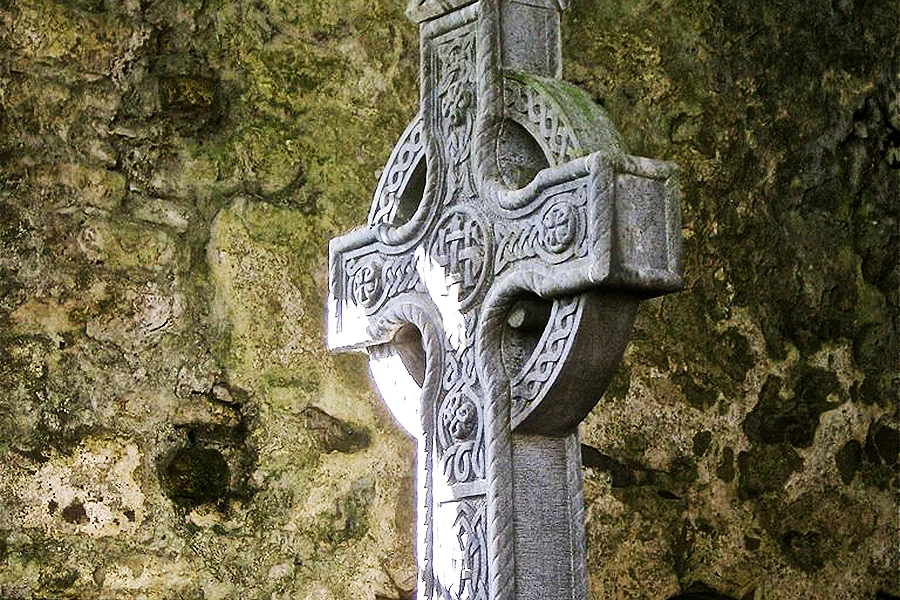
Norwich, England, May 9, 2017 / 03:04 pm (CNA/EWTN News).- Neither the narrow narrative against religion nor the real failings of the Church should define the role of Catholics in public life, Archbishop Eamon Martin of Armagh has said.
“Our challenge is to present to the world the edifying and inspiring witness of people of faith,” said the archbishop. “We are impacted by the process of secularization. We live, breathe, work and believe alongside people of other traditions, faiths and none and the pressure on believers to conform, to become just like everyone else, is often immense and overpowering.”
The Northern Ireland-based Archbishop Martin, who is Primate of All Ireland, delivered the 2017 Newman Lecture May 8 at the University of East Anglia in Norwich. He gave an Irish perspective on the Church in the public sphere, and his speaking notes were published on the website of the Irish bishops' conference.
About 78 percent of Ireland’s 4.76 million citizens self-identify as Catholic, according to the most recent census. This is a decline of five percentage points over a five-year period.
While Archbishop Martin noted that this is still a remarkable number of Catholics, he said social commentary in Ireland has focused on “the decline of the Church.” Some have again called to remove the Church’s perceived influence in schools, health care, and public policy.
“Such a narrative clearly challenges the Church to find new ways of presenting the Joy of the Gospel, and for example the Gospel of the Family, in the public sphere,” the archbishop said.
“There is no question that the practice of faith in Ireland has been hugely exposed to, and challenged by, the prevailing culture,” he said, according to the notes. At the same time, there seems to be little appetite for “any substantial critique of culture by people of faith,” especially if this means presenting serious questions about the “almost compulsory consensus on controversial issues.”
Archbishop Martin said scandals in the Church should not be used as an excuse to silence well-founded religious critiques of society, nor should they be allowed to conceal the dedication of Catholic priests and religious.
“When we attempt as Church to speak in the public sphere about the right to life of the unborn, some are quick to point to the scandals and to shameful stories of the past,” he said. “Decades of service by countless religious sisters and priests to the education and healthcare of the people of Ireland and all over the world is almost obliterated by a revised and narrow narrative that religious ethos cannot be good for democracy and stands against the progress and flourishing of society and the rights of citizens.”
At the same time, the archbishop said the Church has been too defensive in its reaction to criticisms. These responses show simple denial or claim unfairness or conspiracy “rather than being thankful that the lid has been lifted on a terrible and shameful chapter of our history and at last giving a voice to those who for years have been carrying a lonely trauma.”
“I am convinced, however, that the failures of the past must not be allowed to define us, but should instead help all of us in the public sphere learn lessons for the present about where Church and society might today be similarly marginalizing the poor, stigmatizing the unwanted or failing to protect the most vulnerable.”
As a model for striking a positive tone in the public sphere, Archbishop Martin cited the French bishops’ October 2016 statement to the nation, in which they cautioned against aspirations to be a “church of the pure” or “a counterculture removed from society, posing as a judge from above.”
“They speak as people of faith, but also as fellow French citizens, pastorally accompanying their troubled people with empathy and concern,” the archbishop said. “With faith and conviction we will sometimes bring uncomfortable questions into the public sphere e.g. about the impact of economic policies on the most vulnerable, or to point out the contradictions of populism, all the while being careful not to become too sensitive to criticism or always claiming to be offended.”
He rejected false claims that the Church desires to create a “theocracy.” At the same time, “the Church does expect that in a true pluralist democracy or republic, religion and faith will continue to have an important part to play in the national conversation.”
The archbishop was critical of tendencies to see faith-related institutions, like hospitals and schools, as unconnected to reason. Every Catholic position on morals is argued from reason, even when there is biblical justification.
He also countered claims that the bishops are overly interested in sexual morality, saying bishops in both north and south “makes it clear that the Bishops seek to bring the Joy of the Gospel to bear on a whole range of issues.”
The importance of culture was also a focus. While the Church may be “counter-cultural,” she is not “extra-cultural.”
Archbishop Martin noted three potential possibilities for Catholics: a “culture of openness,” which some fear dilutes Catholic beliefs and leads to unjustified compromise; a “culture of identity” that stresses Catholic distinctiveness instead of what Catholics have in common with all people of good will; and the “culture of engagement,” with two-way critical interaction and conversations between religious traditions and the broader culture.
“Despite the voices nowadays which might tempt the Church into pointless culture wars, or even suggest that Christians might opt out of the public square to some sort of ‘parallel polis,’ I am completely convinced that the voice of faith can and should remain engaged in the public square,” the archbishop said.
“Our faith is not simply for the privacy of our homes and churches. The Gospel is meant for mission. It is not to be cloistered away from the cut and thrust of public discourse.”
Previous Post

May 9, 2017
Catholic bishop urges Macron to fight for France's good
Next Post
May 9, 2017 In bill veto, Oklahoma takes a stand against loan sharks
Browse Our Archives
Select a Category Americas Asia - Pacific Europe Middle East - Africa Uncategorized US Vatican
Select a Month November 2017 October 2017 September 2017 August 2017 July 2017 June 2017 May 2017 April 2017 March 2017 February 2017 January 2017 December 2016 November 2016 October 2016 September 2016 August 2016 July 2016 June 2016 May 2016 April 2016 March 2016 February 2016 January 2016 December 2015 November 2015 October 2015 September 2015 August 2015 July 2015 June 2015 May 2015 April 2015 March 2015 February 2015 January 2015 December 2014 November 2014 October 2014 September 2014 August 2014 July 2014 June 2014 May 2014 April 2014 March 2014 February 2014 January 2014 December 2013 November 2013 October 2013 September 2013 August 2013 July 2013 June 2013 May 2013 April 2013 March 2013 February 2013 January 2013 December 2012 November 2012 October 2012 September 2012 August 2012 July 2012 June 2012 May 2012
TAKE THE
Religious Wisdom Quiz
According to 1 Peter, believers are to abstain from what, which wages war against the soul?
Select your answer to see how you score.
The world Gentiles Evil Sinful desires
Related posts from Catholic News

Sixty Vincentians martyred during Spanish Civil War to...

Filipinos gather in Rome to promote bishop's beatification...

UK bishop calls for prayers as MPs urge...

On All Souls' Day, Pope Francis prays for...
TRENDING AT PATHEOS Catholic

The Parable Of The Sower And The Word...
One of Christ’s most famous parables is that of the sower who...

Rejecting Doom: Christian Hope And Human Action
Christianity is a religion of hope. We are to have hope and...

Why I Choose the Eucharist Over the Sermon
Choose the Eucharist, Not the Sermon What are we supposed to get...

5 Design Elements Found in Spiritually Rooted Homes
Putting Spirituality Into Home Decor Our homes are more than our living...

Credo: A Story of God Told with the...
About 10 years ago, I began to imagine a personal "Credo" that...

The Anatomy of Divine Revelation in Catholic Thought
The claim that God has made Himself known to human beings is...
view all Catholic blogs
Ad-Free & Subscriber Log-In Subscription Support
- About Us
- 2026 Calendar
- Videos
- Podcasts
- Library of World Religions
- Faith In Media Tracker
- Advertise With Us
- Write for Us
- Privacy Policy
- Terms of Service
- Do Not Sell My Data
- Contact Us
- Radiant Digital
- Manage Newsletter Subscriptions
- Unsubscribe From Notifications
- Sitemap
Copyright 2008-2026, Patheos. All rights reserved.
Subscription Support Ad-Free & Subscriber Log-In
Follow Patheos