
BuddhistCatholicContemplativeEvangelicalGeneral ChristianHinduJewishLatter-day SaintMuslimNew VisionsProgressive Christian
Beliefs
- Buddhist
- Catholic
- Contemplative
- Evangelical
- General Christian
- Hindu
- Jewish
- Latter-day Saint
- More Voices
- Muslim
- New Visions
- Pagan
- Progressive Christian
Topics
- Religion News
- Food and Religion
- Sports and Religion
- Religious Art
- Religious Music and Entertainment
- Religious Events
- History and Religion
- Style and Religion
- Politics and Religion
- Women in Religion
- Recreation Outdoors and Religion
- Business Finance and Religion
- Careers Workplace and Religion
- Education and Religion
- Family Parenting and Religion
- Health Fitness and Religion
- Home and Religion
- Relationships and Religion
- Technology and Religion
- Travel and Religion
Columnists
- Buddhist Columnists
- Business Finance and Religion Columnists
- Careers Workplace and Religion Columnists
- Catholic Columnists
- Contemplative Columnists
- Education and Religion Columnists
- Evangelists Columnists
- Family Parenting and Religion Columnists
- General Christian Columnists
- Health Fitness and Religion Columnists
- Hindu Columnists
- History and Religion Columnists
- Home and Religion Columnists
- Jewish Columnists
- More Voices Columnists
- Latter Day Columnists
- Muslim Columnists
- New Visions Columnists
- Nonreligious Columnists
- Pagan Columnists
- Politics and Religion Columnists
- Progressive Columnists
- Recreation Outdoors and Religion Columnists
- Relationships and Religion Columnists
- Religion News Columnists
- Religious Art Columnists
- Religious Events Columnists
- Religious Music and Entertainment Columnists
- Sports and Religion Columnists
- Style and Religion Columnists
- Technology and Religion Columnists
- Travel and Religion Columnists
- Women in Religion Columnists
Resource Library
- 2026 Calendar
- Library of World Religions
- The 100 Most Holy Places on Earth
- Patheos Answers
- Podcasts
- Videos
- Faith Leaders Database
- Anglican Episcopalian
- Bahai
- Baptist
- Buddhism
- Christianity
- Confucianism
- Eastern Orthodoxy
- Hinduism
- Holiness and Pentecostal
- ISKCON
- Islam
- Judaism
- Lutheran
- Methodist
- The Church of Jesus Christ of Latter-day Saints
- New Age
- Paganism
- Presbytarian and Reformed
- Protestantism
- Religion Behind the Scenes
- Roman Catholic
- Scientology
- Shia Islam
- Sikhism
- Sufism
- Sunni Islam
- Taoism
- Zen
- See all religions
Research Tools
 Ad-Free & Subscriber Log-In Subscription Support
Ad-Free & Subscriber Log-In Subscription Support
Follow Patheos 

- Trending:
- Forgiveness
- |
- Marriage
- |
- Consciousness
- |
- Death Penalty
- |
- Election
- |
- Halloween
 Catholic News
- Home
- Catholic
- Religion News
- Pope Francis: Church teaching helps us avoid harm of ideology
Pope Francis: Church teaching helps us avoid harm of ideology
Last updated on: May 19, 2017 at 5:45 pm by CNA Daily News
Pope Francis: Church teaching helps us avoid harm of ideology 2017-05-19T17:45:00+00:00 CNA Daily News
Patheos Explore the world's faith through different perspectives on religion and spirituality! Patheos has the views of the prevalent religions and spiritualities of the world.
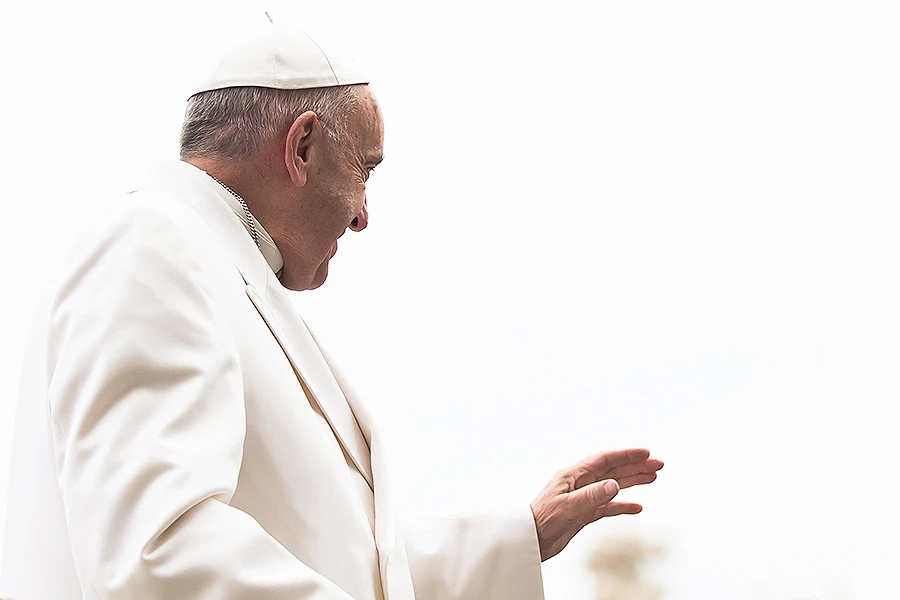
Vatican City, May 19, 2017 / 11:45 am (CNA/EWTN News).- Pope Francis warned that ideologues sow confusion and division in the Church in the name of false clarity, rather than relying on the Pope, the bishops, and Church councils inspired by the Holy Spirit.
“We are human, we are sinners,” he said, adding that there are difficulties even in the Church. Being sinners leads to humility and drawing closer to God who saves us.
Looking to the early Church, Pope Francis made a distinction between those who had “forceful discussions” but “a good spirit,” and those who “sowed confusion.”
“The group of the apostles who want to discuss the problem, and the others who go and create problems,” the Pope distinguished. “They divide, they divide the Church, they say that what the Apostles preached is not what Jesus said, that it is not the truth.”
The Pope's words came in his homily at Casa Santa Martha May 19, Vatican Radio reports. He reflected on the Council of Jerusalem of 49 A.D., recounted in the Acts of the Apostles, which rejected claims that gentile converts to Christianity would have to be circumcised.
In the early Church, he charged, “there were jealousies, power struggles, a certain deviousness that wanted to profit from and to buy power.”
In the end, the apostles' discussion came to agreement.
“They had hearts open to what the Holy Spirit said. And after the discussion 'it seemed good to the Holy Spirit and to us,'” the Pope said.
This is not “a political agreement” but “the inspiration of the Holy Spirit” that led them to reject the “necessities” some would require of Christian converts, like a refusal to eat meat sacrificed to idols and a requirement to abstain from “illegitimate unions.”
The “liberty of the spirit,” however, allowed gentiles to enter the Church without circumcision.
At that first Church Council, Pope Francis said, “the Holy Spirit and they, the Pope with the bishops, all together,” gathered together in order “to clarify the doctrine,” as would be done through the centuries at successive councils so that “what Jesus said in the Gospels, what is the Spirit of the Gospels, would be understood well.”
The Pope encouraged the congregation not to be afraid in the face of “the opinions of the ideologues of doctrine.” He stressed that the Church has “its proper Magisterium, the Magisterium of the Pope, of the bishops, of the councils.” They should follow the path “that comes from the preaching of Jesus, and from the teaching and assistance of the Holy Spirit.” This path is “always open, always free,” because “doctrine unites, the Councils unite the Christian community” but “ideology divides.”
Pope Francis further warned against divisive elements in the Church.
“But there were always people who without any commission go out to disturb the Christian community with speeches that upset souls: 'Eh, no, someone who says that is a heretic, you can’t say this, or that; this is the doctrine of the Church,'” he said.
“And they are fanatics of things that are not clear, like those fanatics who go there sowing weeds in order to divide the Christian community.”
He said their “great error” results from when Church doctrine, which comes from the gospel and is inspired by the Holy Spirit, “becomes an ideology.”
Next Post

May 19, 2017 The murder case of Blessed Oscar Romero has been reopened
Browse Our Archives
Select a Category Americas Asia - Pacific Europe Middle East - Africa Uncategorized US Vatican
Select a Month November 2017 October 2017 September 2017 August 2017 July 2017 June 2017 May 2017 April 2017 March 2017 February 2017 January 2017 December 2016 November 2016 October 2016 September 2016 August 2016 July 2016 June 2016 May 2016 April 2016 March 2016 February 2016 January 2016 December 2015 November 2015 October 2015 September 2015 August 2015 July 2015 June 2015 May 2015 April 2015 March 2015 February 2015 January 2015 December 2014 November 2014 October 2014 September 2014 August 2014 July 2014 June 2014 May 2014 April 2014 March 2014 February 2014 January 2014 December 2013 November 2013 October 2013 September 2013 August 2013 July 2013 June 2013 May 2013 April 2013 March 2013 February 2013 January 2013 December 2012 November 2012 October 2012 September 2012 August 2012 July 2012 June 2012 May 2012
TAKE THE
Religious Wisdom Quiz
Which Christian group traditionally avoids military service?
Select your answer to see how you score.
Quakers Evangelicals Methodists Pentecostals
Related posts from Catholic News

How do we help trafficking victims re-enter society?...

More than just giving – World Day of...

New book reveals details of John Paul I’s...

Despite reports, Pope Francis isn’t opening the door...
TRENDING AT PATHEOS Catholic

Creation, Preservation, and Teleology in Catholic Theology
As I write this, it is very early Monday morning. Like millions...

The Parable Of The Sower And The Word...
One of Christ’s most famous parables is that of the sower who...

Rejecting Doom: Christian Hope And Human Action
Christianity is a religion of hope. We are to have hope and...

Why I Choose the Eucharist Over the Sermon
Choose the Eucharist, Not the Sermon What are we supposed to get...

5 Design Elements Found in Spiritually Rooted Homes
Putting Spirituality Into Home Decor Our homes are more than our living...

Credo: A Story of God Told with the...
About 10 years ago, I began to imagine a personal "Credo" that...
view all Catholic blogs
Ad-Free & Subscriber Log-In Subscription Support
- About Us
- 2026 Calendar
- Videos
- Podcasts
- Library of World Religions
- Faith In Media Tracker
- Advertise With Us
- Write for Us
- Privacy Policy
- Terms of Service
- Do Not Sell My Data
- Contact Us
- Radiant Digital
- Manage Newsletter Subscriptions
- Unsubscribe From Notifications
- Sitemap
Copyright 2008-2026, Patheos. All rights reserved.
Subscription Support Ad-Free & Subscriber Log-In
Follow Patheos