
BuddhistCatholicContemplativeEvangelicalGeneral ChristianHinduJewishLatter-day SaintMuslimNew VisionsProgressive Christian
Beliefs
- Buddhist
- Catholic
- Contemplative
- Evangelical
- General Christian
- Hindu
- Jewish
- Latter-day Saint
- More Voices
- Muslim
- New Visions
- Pagan
- Progressive Christian
Topics
- Religion News
- Food and Religion
- Sports and Religion
- Religious Art
- Religious Music and Entertainment
- Religious Events
- History and Religion
- Style and Religion
- Politics and Religion
- Women in Religion
- Recreation Outdoors and Religion
- Business Finance and Religion
- Careers Workplace and Religion
- Education and Religion
- Family Parenting and Religion
- Health Fitness and Religion
- Home and Religion
- Relationships and Religion
- Technology and Religion
- Travel and Religion
Columnists
- Buddhist Columnists
- Business Finance and Religion Columnists
- Careers Workplace and Religion Columnists
- Catholic Columnists
- Contemplative Columnists
- Education and Religion Columnists
- Evangelists Columnists
- Family Parenting and Religion Columnists
- General Christian Columnists
- Health Fitness and Religion Columnists
- Hindu Columnists
- History and Religion Columnists
- Home and Religion Columnists
- Jewish Columnists
- More Voices Columnists
- Latter Day Columnists
- Muslim Columnists
- New Visions Columnists
- Nonreligious Columnists
- Pagan Columnists
- Politics and Religion Columnists
- Progressive Columnists
- Recreation Outdoors and Religion Columnists
- Relationships and Religion Columnists
- Religion News Columnists
- Religious Art Columnists
- Religious Events Columnists
- Religious Music and Entertainment Columnists
- Sports and Religion Columnists
- Style and Religion Columnists
- Technology and Religion Columnists
- Travel and Religion Columnists
- Women in Religion Columnists
Resource Library
- 2026 Calendar
- Library of World Religions
- The 100 Most Holy Places on Earth
- Patheos Answers
- Podcasts
- Videos
- Faith Leaders Database
- Anglican Episcopalian
- Bahai
- Baptist
- Buddhism
- Christianity
- Confucianism
- Eastern Orthodoxy
- Hinduism
- Holiness and Pentecostal
- ISKCON
- Islam
- Judaism
- Lutheran
- Methodist
- The Church of Jesus Christ of Latter-day Saints
- New Age
- Paganism
- Presbytarian and Reformed
- Protestantism
- Religion Behind the Scenes
- Roman Catholic
- Scientology
- Shia Islam
- Sikhism
- Sufism
- Sunni Islam
- Taoism
- Zen
- See all religions
Research Tools
 Ad-Free & Subscriber Log-In Subscription Support
Ad-Free & Subscriber Log-In Subscription Support
Follow Patheos 

- Trending:
- Forgiveness
- |
- Marriage
- |
- Consciousness
- |
- Death Penalty
- |
- Election
- |
- Halloween
 Catholic News
- Home
- Catholic
- Religion News
- The story behind the Irish priest whose prayers could heal
The story behind the Irish priest whose prayers could heal
Last updated on: April 26, 2017 at 11:04 pm by CNA Daily News
The story behind the Irish priest whose prayers could heal 2017-04-26T23:04:00+00:00 CNA Daily News
Patheos Explore the world's faith through different perspectives on religion and spirituality! Patheos has the views of the prevalent religions and spiritualities of the world.
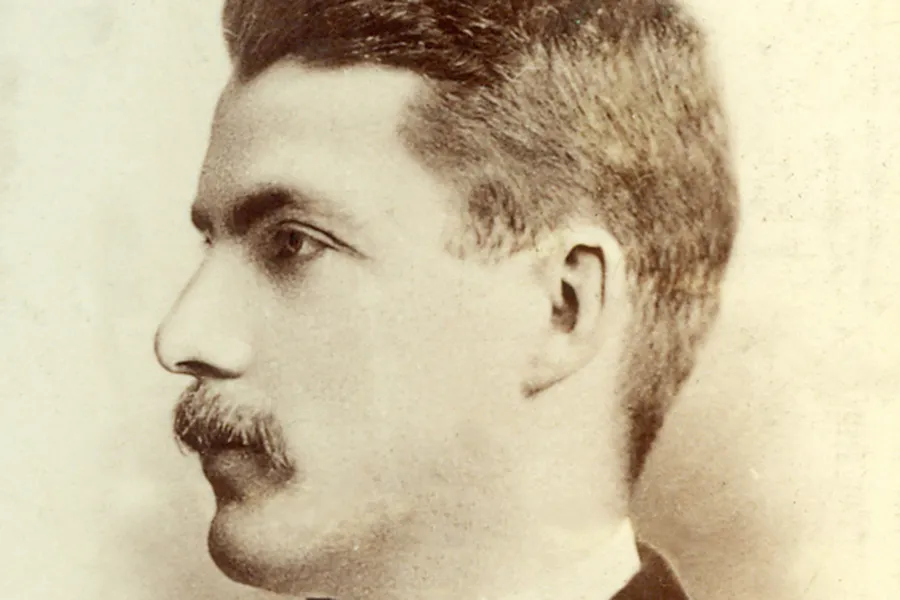
Dublin, Ireland, Apr 26, 2017 / 05:04 pm (CNA/EWTN News).- Father John Sullivan was a prominent Irish Catholic convert who was known for his healing prayers, his consolation for the troubled, and his devotion to God.
Now he is set to be the first ever person to be beatified in Ireland.
The beatification will take place May 13 at St. Francis Xavier Church in Dublin, where the Jesuit priest's body was interred. Cardinal Angelo Amato of the Congregations for the Causes of Saints will be involved in the ceremony. Church of Ireland leaders will also attend.
In a Feb. 18 homily at the church, the Archbishop of Dublin Diarmuid Martin said Fr. Sullivan was “a man of learning” who was “always aware of his responsibility to care for those around him and especially the poor.”
Archbishop Martin reflected on the Gospel story of the rich young man who asked Jesus what was needed to attain eternal life. After telling the man to follow the Law of Moses and the Commandments, Jesus told him to sell all his goods and follow him.
“John Sullivan, faced with the same call, placed his life totally at the service of Jesus, renouncing wealth and worldly ambition and living the simplicity of life as a Jesuit,” Archbishop Martin said.
“His life would not just be marked by a rejection of outward wealth, but by a special concern for the poor and especially for the sick and the dying.”
The priest spent much of his life teaching at Clongowes Wood College in Ireland's County Kildare.
“By many accounts he was not a great teacher but the boys loved him,” according to Sullivan’s biography on the website of the Irish Jesuits, written by historian Thomas Morrisey, S.J.
He would often visit the sick, the dying, and people who were troubled.
Even while he lived, many people attributed their healings to his prayers, including the nephew of Irish Free State founder General Michael Collins. The three-year-old boy, who had the same name as his famous uncle, had infantile paralysis that bent his leg in intense pain. After lengthy prayers with the priest, he was healed.
Not long after Fr. Martin’s ordination, he visited the Royal Hospital for Incurables at Donnybrook, he visited a woman who was suffering from lupus. The condition had begun to affect her mind and she was being prepared for a move to a mental hospital. Father Sullivan stayed with her for a long time and prayed over her.
The next day she had returned to full mental health, a state which lasted until her death, and she was able to re-establish disrupted friendships.
People also attributed to him a gift for knowing the future, and a gift for ministering to those with scruples, obsessions or compulsions.
“When God forgives me my sins, he buries them beneath a large stone. It is desecration to root them up again,” he would say in response to such cases.
The priest was known for ascetic practices: sleeping on the floor instead of his bed, placing stones in his walking boots, eating the plainest food, and sleeping for only a few hours a night so that he could pray late into the night and early in the day.
Father Sullivan was born in 1861 on Dublin’s Eccles Street, not far from the church where he is buried. He was raised in the Protestant Church of Ireland.
His father, Edward Sullivan, was a successful barrister who became Lord Chancellor of Ireland. His mother, Elizabeth Bailey, was a devout Catholic from a prominent County Cork family.
He attended elite Protestant schools in Ireland before studying law in London. For a time, he stopped going to church. His father passed away when he was 24, providing a great shock to him.
By the early 1890s he appeared to have no clear religious views, but was moved by the Confessions of St. Augustine. He began to sit in on religious instruction classes and read a catechism and Butler’s Lives of the Saints.
In 1895 the U.K. government appointed him to a commission to investigate widespread massacres of Armenians in Asia Minor. He taught English in Greece and spent time at Mount Athos, a center of Orthodox Christian monasticism.
He was received into Catholic Church in 1896, at the age of 35. The event was a surprise to his family, and though it drew some criticism from some Protestants, Sullivan’s reputation was such that he was supported by both Protestant and Catholic friends.
He entered the Society of Jesus four years later.
Father Sullivan died Feb. 19, 1933, aged 71. His death prompted outpourings of appreciation and affection and his funeral turned into a procession through the streets of Dublin.
His vault at St. Francis Xavier Church has served as a place of prayer for many people, especially those seeking healing. The monthly Mass said for his canonization regularly draws over 200 people.
He was declared a Servant of God in 1960 under Pope John XXIII and declared Venerable by Pope Francis in November 2014.
A Dublin woman’s healing from cancer in 1954 after praying for his intercession was recognized as Father Sullivan’s first miracle by the Congregation for the Causes of Saints in 2016.
Next Post

April 27, 2017 Pope donates rent for beach serving people with disabilities
Browse Our Archives
Select a Category Americas Asia - Pacific Europe Middle East - Africa Uncategorized US Vatican
Select a Month November 2017 October 2017 September 2017 August 2017 July 2017 June 2017 May 2017 April 2017 March 2017 February 2017 January 2017 December 2016 November 2016 October 2016 September 2016 August 2016 July 2016 June 2016 May 2016 April 2016 March 2016 February 2016 January 2016 December 2015 November 2015 October 2015 September 2015 August 2015 July 2015 June 2015 May 2015 April 2015 March 2015 February 2015 January 2015 December 2014 November 2014 October 2014 September 2014 August 2014 July 2014 June 2014 May 2014 April 2014 March 2014 February 2014 January 2014 December 2013 November 2013 October 2013 September 2013 August 2013 July 2013 June 2013 May 2013 April 2013 March 2013 February 2013 January 2013 December 2012 November 2012 October 2012 September 2012 August 2012 July 2012 June 2012 May 2012
TAKE THE
Religious Wisdom Quiz
What nation captured Jerusalem and took Daniel captive?
Select your answer to see how you score.
Persia Babylonia Egypt Assyria
Related posts from Catholic News

Sixty Vincentians martyred during Spanish Civil War to...

Filipinos gather in Rome to promote bishop's beatification...

UK bishop calls for prayers as MPs urge...

On All Souls' Day, Pope Francis prays for...
TRENDING AT PATHEOS Catholic

Rejecting Doom: Christian Hope And Human Action
Christianity is a religion of hope. We are to have hope and...

It’s What Comes From Within Which Matters
One of the most difficult things for us to understand is why...

Why I Choose the Eucharist Over the Sermon
Choose the Eucharist, Not the Sermon What are we supposed to get...

5 Design Elements Found in Spiritually Rooted Homes
Putting Spirituality Into Home Decor Our homes are more than our living...

Credo: A Story of God Told with the...
About 10 years ago, I began to imagine a personal "Credo" that...

The Anatomy of Divine Revelation in Catholic Thought
The claim that God has made Himself known to human beings is...
view all Catholic blogs
Ad-Free & Subscriber Log-In Subscription Support
- About Us
- 2026 Calendar
- Videos
- Podcasts
- Library of World Religions
- Faith In Media Tracker
- Advertise With Us
- Write for Us
- Privacy Policy
- Terms of Service
- Do Not Sell My Data
- Contact Us
- Radiant Digital
- Manage Newsletter Subscriptions
- Unsubscribe From Notifications
- Sitemap
Copyright 2008-2026, Patheos. All rights reserved.
Subscription Support Ad-Free & Subscriber Log-In
Follow Patheos