
BuddhistCatholicContemplativeEvangelicalGeneral ChristianHinduJewishLatter-day SaintMuslimNew VisionsProgressive Christian
Beliefs
- Buddhist
- Catholic
- Contemplative
- Evangelical
- General Christian
- Hindu
- Jewish
- Latter-day Saint
- More Voices
- Muslim
- New Visions
- Pagan
- Progressive Christian
Topics
- Religion News
- Food and Religion
- Sports and Religion
- Religious Art
- Religious Music and Entertainment
- Religious Events
- History and Religion
- Style and Religion
- Politics and Religion
- Women in Religion
- Recreation Outdoors and Religion
- Business Finance and Religion
- Careers Workplace and Religion
- Education and Religion
- Family Parenting and Religion
- Health Fitness and Religion
- Home and Religion
- Relationships and Religion
- Technology and Religion
- Travel and Religion
Columnists
- Buddhist Columnists
- Business Finance and Religion Columnists
- Careers Workplace and Religion Columnists
- Catholic Columnists
- Contemplative Columnists
- Education and Religion Columnists
- Evangelists Columnists
- Family Parenting and Religion Columnists
- General Christian Columnists
- Health Fitness and Religion Columnists
- Hindu Columnists
- History and Religion Columnists
- Home and Religion Columnists
- Jewish Columnists
- More Voices Columnists
- Latter Day Columnists
- Muslim Columnists
- New Visions Columnists
- Nonreligious Columnists
- Pagan Columnists
- Politics and Religion Columnists
- Progressive Columnists
- Recreation Outdoors and Religion Columnists
- Relationships and Religion Columnists
- Religion News Columnists
- Religious Art Columnists
- Religious Events Columnists
- Religious Music and Entertainment Columnists
- Sports and Religion Columnists
- Style and Religion Columnists
- Technology and Religion Columnists
- Travel and Religion Columnists
- Women in Religion Columnists
Resource Library
- 2026 Calendar
- Library of World Religions
- The 100 Most Holy Places on Earth
- Patheos Answers
- Podcasts
- Videos
- Faith Leaders Database
- Anglican Episcopalian
- Bahai
- Baptist
- Buddhism
- Christianity
- Confucianism
- Eastern Orthodoxy
- Hinduism
- Holiness and Pentecostal
- ISKCON
- Islam
- Judaism
- Lutheran
- Methodist
- The Church of Jesus Christ of Latter-day Saints
- New Age
- Paganism
- Presbytarian and Reformed
- Protestantism
- Religion Behind the Scenes
- Roman Catholic
- Scientology
- Shia Islam
- Sikhism
- Sufism
- Sunni Islam
- Taoism
- Zen
- See all religions
Research Tools
 Ad-Free & Subscriber Log-In Subscription Support
Ad-Free & Subscriber Log-In Subscription Support
Follow Patheos 

- Trending:
- Forgiveness
- |
- Marriage
- |
- Consciousness
- |
- Death Penalty
- |
- Election
- |
- Halloween
 Catholic News
- Home
- Catholic
- Religion News
- South Sudanese bishop: It takes unity to achieve peace
South Sudanese bishop: It takes unity to achieve peace
Last updated on: April 11, 2017 at 6:29 am by CNA Daily News
South Sudanese bishop: It takes unity to achieve peace 2017-04-11T06:29:00+00:00 CNA Daily News
Patheos Explore the world's faith through different perspectives on religion and spirituality! Patheos has the views of the prevalent religions and spiritualities of the world.
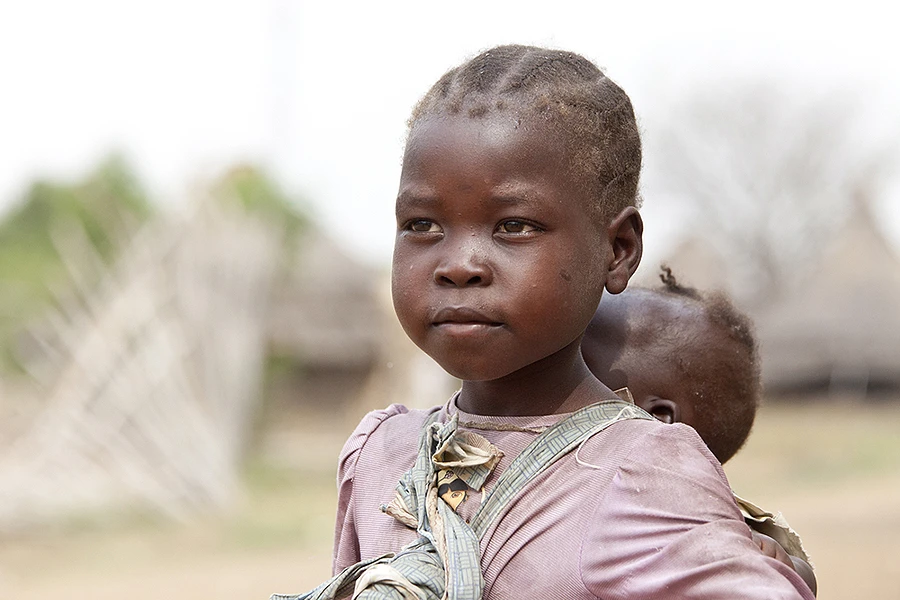
Juba, South Sudan, Apr 11, 2017 / 12:29 am (CNA/EWTN News).- The president of the Sudanese Catholic Bishops’ Conference called on leaders in South Sudan’s Bahr El Ghazal region to fight segregation and division, uniting to work for peace in the violence-ridden country.
Achieving peace, said Bishop Barani Eduardo Hiiboro Kussala of Tombura-Yambio, “demands of all of us that we act with real respect for human life. It demands that those who still sponsor anger, hate, segregation and violence against one another end such meaningless projects or ideas.”
On April 6, Bishop Kussala published “An Open Letter of Hope and Peace to the Elders of Greater Bahr El Ghazal.”
His letter marked one month since the death of Bishop Rudolf Deng Majak of the Catholic diocese of Wau, which is part of the Bahr El Ghazal region of South Sudan. The 76-year-old bishop died March 6 at a relative’s house in Siegburg, Germany, where he was awaiting an operation that had been scheduled for the following week.
“The wound inflicted by his death remains deep and raw and so, as we pray for him, we carry in prayer those for whom his death has left a painful void,” Bishop Kussala said.
He appealed to the elders of the greater Bahr El Ghazal area to work for peace and alleviate suffering in Bishop Deng’s memory.
“The best gift we can give him forever is being part of the reconstruction, reconciliation, and reintegration, regeneration of our country, ravaged by the war waged by us and against ourselves.”
Working to change the spiral of suffering, revenge killings, hatred and displacement is a difficult task, Bishop Kussala acknowledged.
“It demands new initiatives to move Greater Bahr El Ghazal and our country forward to freedom as quickly as possible. With this letter I am indeed consulting leaders of civil society, religious leaders, community organizations, business, cultural and other leaders in Greater Bahr El Ghazal to seize an opportunity on such initiatives.”
South Sudan has been embroiled in civil war since December 2013, when South Sudan's President Salva Kiir accused his former deputy, Riek Machar, of attempting a coup. The war has been fought between their supporters, largely along ethnic lines, and peace agreements have been short-lived.
The conflict has created more than 2.5 million refugees. At present some 4.5 million people face severe food insecurity, a number expected to rise one million by July.
“At the core of the crisis within South Sudan’s war-affected communities and regions is the desire to acquire power and secure resources for one group of elites or one ethno-national group at the expense of others,” Bishop Kussala said.
This has created tension and division, and “has undermined the social fabric of our society or nation,” even affecting neighboring countries as refugees seeking the escape the conflict flee to other nations.
“In all of these cases, violence has led to the breakdown of our beloved homes,” Bishop Kussala continued. “Human lives have been lost. Infrastructure has been destroyed, education and health services have suffered, and the environment has been damaged. The ties that link people together…have been broken, social solidarity has collapsed and political tension has been highly generated.”
These conflicts arise from self-interested elites who take advantage of past divisions, the bishop said. However, peace is possible, as evidence by the “relative peace, development and economic growth after our national independence shortly in 2011.”
In an efforts to restore this stability, Bishop Kussala called on the elders of Greater Bahr El Ghazal to “engage all stakeholders” in seeking peace, allowing for dialogue and supporting genuine efforts aimed at reconciliation and healing.
He urged the elders to publically and unequivocally condemn revenge killings, violence against civilians and the use of hate speech which fosters tribal division.
In addition, he said, they should “call urgently for immediate robust humanitarian intervention for the starving people in and outside Wau,” pushing for roads to be opened to aid workers delivering food for the hungry population.
Efforts are needed both to prevent further killings and to foster reconciliation and healing in society, the bishop said. He also recommended an independent investigation into atrocities against the community, in order to hold perpetrators accountable.
In solving these problems, it is important to remember the role of culture, Bishop Kussala said.
“People derive their sense of meaning from their culture…Cultural attitudes and values…provide the foundation for the social norms by which you as a people exist and live,” he noted. “Through internalizing and sharing these cultural attitudes and values with fellow community members, and by handing them down to future generations, societies can – and do – re-construct themselves on the basis of a particular cultural image.”
Achieving peace in Wau State will require an acknowledgement of wrongdoing, repentance and an offering of forgiveness, the bishop said. It will also require “a way for members of these communities to ‘re-inform’ themselves of their rich history of co-existence with a cultural logic that emphasizes sharing and equitable resource distribution.”
“The people of Greater Bahr El Ghazal should draw their strength from each other as one people,” he emphasized. “You have common humanity, heritage, history and you are socially interwoven.”
“For Wau State to live and prosper, we must come together!”
Previous Post

April 10, 2017
With united voice, thousands of Catholics visit Texas capitol
Next Post
April 11, 2017 German family continues to fight for right to homeschool
Browse Our Archives
Select a Category Americas Asia - Pacific Europe Middle East - Africa Uncategorized US Vatican
Select a Month November 2017 October 2017 September 2017 August 2017 July 2017 June 2017 May 2017 April 2017 March 2017 February 2017 January 2017 December 2016 November 2016 October 2016 September 2016 August 2016 July 2016 June 2016 May 2016 April 2016 March 2016 February 2016 January 2016 December 2015 November 2015 October 2015 September 2015 August 2015 July 2015 June 2015 May 2015 April 2015 March 2015 February 2015 January 2015 December 2014 November 2014 October 2014 September 2014 August 2014 July 2014 June 2014 May 2014 April 2014 March 2014 February 2014 January 2014 December 2013 November 2013 October 2013 September 2013 August 2013 July 2013 June 2013 May 2013 April 2013 March 2013 February 2013 January 2013 December 2012 November 2012 October 2012 September 2012 August 2012 July 2012 June 2012 May 2012
TAKE THE
Religious Wisdom Quiz
What qualification does Paul give for elders, saying they must be the husband of how many wives?
Select your answer to see how you score.
One wife As many as he can support Two wives No more than three wives
Related posts from Catholic News

Christianity can survive in Iraq but not without...

How can Saudi Arabia counter violent extremism? Religious...

What it's like to be a missionary in...

Christians play vital role in Middle East –...
TRENDING AT PATHEOS Catholic

Creation, Preservation, and Teleology in Catholic Theology
As I write this, it is very early Monday morning. Like millions...

The Parable Of The Sower And The Word...
One of Christ’s most famous parables is that of the sower who...

Rejecting Doom: Christian Hope And Human Action
Christianity is a religion of hope. We are to have hope and...

Why I Choose the Eucharist Over the Sermon
Choose the Eucharist, Not the Sermon What are we supposed to get...

5 Design Elements Found in Spiritually Rooted Homes
Putting Spirituality Into Home Decor Our homes are more than our living...

Credo: A Story of God Told with the...
About 10 years ago, I began to imagine a personal "Credo" that...
view all Catholic blogs
Ad-Free & Subscriber Log-In Subscription Support
- About Us
- 2026 Calendar
- Videos
- Podcasts
- Library of World Religions
- Faith In Media Tracker
- Advertise With Us
- Write for Us
- Privacy Policy
- Terms of Service
- Do Not Sell My Data
- Contact Us
- Radiant Digital
- Manage Newsletter Subscriptions
- Unsubscribe From Notifications
- Sitemap
Copyright 2008-2026, Patheos. All rights reserved.
Subscription Support Ad-Free & Subscriber Log-In
Follow Patheos