
BuddhistCatholicContemplativeEvangelicalGeneral ChristianHinduJewishLatter-day SaintMuslimNew VisionsProgressive Christian
Beliefs
- Buddhist
- Catholic
- Contemplative
- Evangelical
- General Christian
- Hindu
- Jewish
- Latter-day Saint
- More Voices
- Muslim
- New Visions
- Pagan
- Progressive Christian
Topics
- Religion News
- Food and Religion
- Sports and Religion
- Religious Art
- Religious Music and Entertainment
- Religious Events
- History and Religion
- Style and Religion
- Politics and Religion
- Women in Religion
- Recreation Outdoors and Religion
- Business Finance and Religion
- Careers Workplace and Religion
- Education and Religion
- Family Parenting and Religion
- Health Fitness and Religion
- Home and Religion
- Relationships and Religion
- Technology and Religion
- Travel and Religion
Columnists
- Buddhist Columnists
- Business Finance and Religion Columnists
- Careers Workplace and Religion Columnists
- Catholic Columnists
- Contemplative Columnists
- Education and Religion Columnists
- Evangelists Columnists
- Family Parenting and Religion Columnists
- General Christian Columnists
- Health Fitness and Religion Columnists
- Hindu Columnists
- History and Religion Columnists
- Home and Religion Columnists
- Jewish Columnists
- More Voices Columnists
- Latter Day Columnists
- Muslim Columnists
- New Visions Columnists
- Nonreligious Columnists
- Pagan Columnists
- Politics and Religion Columnists
- Progressive Columnists
- Recreation Outdoors and Religion Columnists
- Relationships and Religion Columnists
- Religion News Columnists
- Religious Art Columnists
- Religious Events Columnists
- Religious Music and Entertainment Columnists
- Sports and Religion Columnists
- Style and Religion Columnists
- Technology and Religion Columnists
- Travel and Religion Columnists
- Women in Religion Columnists
Resource Library
- 2026 Calendar
- Library of World Religions
- The 100 Most Holy Places on Earth
- Patheos Answers
- Podcasts
- Videos
- Faith Leaders Database
- Anglican Episcopalian
- Bahai
- Baptist
- Buddhism
- Christianity
- Confucianism
- Eastern Orthodoxy
- Hinduism
- Holiness and Pentecostal
- ISKCON
- Islam
- Judaism
- Lutheran
- Methodist
- The Church of Jesus Christ of Latter-day Saints
- New Age
- Paganism
- Presbytarian and Reformed
- Protestantism
- Religion Behind the Scenes
- Roman Catholic
- Scientology
- Shia Islam
- Sikhism
- Sufism
- Sunni Islam
- Taoism
- Zen
- See all religions
Research Tools
 Ad-Free & Subscriber Log-In Subscription Support
Ad-Free & Subscriber Log-In Subscription Support
Follow Patheos 

- Trending:
- Forgiveness
- |
- Marriage
- |
- Consciousness
- |
- Death Penalty
- |
- Election
- |
- Halloween
 Catholic News
- Home
- Catholic
- Religion News
- What will the US do next for ISIS genocide survivors?
What will the US do next for ISIS genocide survivors?
Last updated on: March 16, 2017 at 10:47 pm by CNA Daily News
What will the US do next for ISIS genocide survivors? 2017-03-16T22:47:00+00:00 CNA Daily News
Patheos Explore the world's faith through different perspectives on religion and spirituality! Patheos has the views of the prevalent religions and spiritualities of the world.
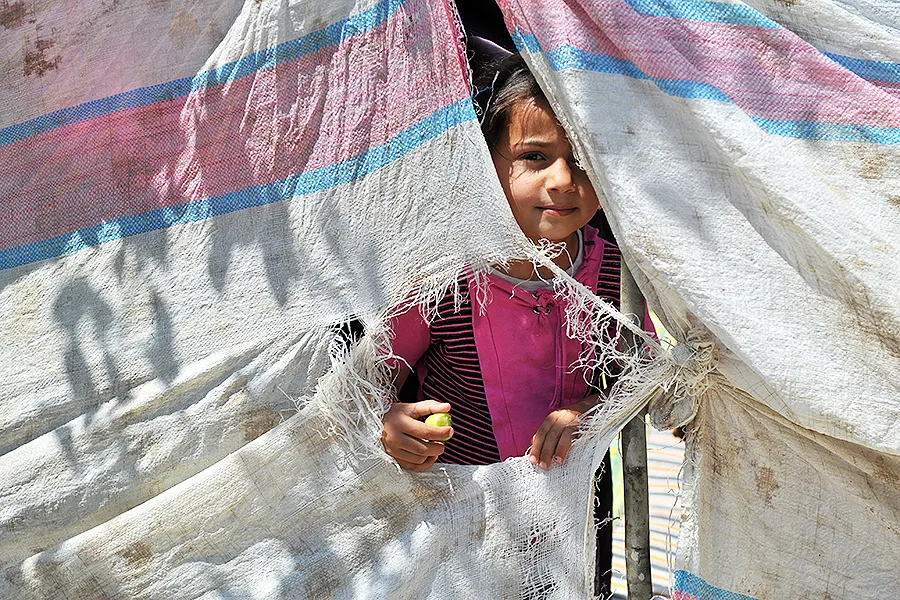
Washington D.C., Mar 16, 2017 / 04:47 pm (CNA/EWTN News).- One year after the U.S. declared that ISIS was committing genocide in Iraq and Syria, advocates for religious and ethnic minorities are asking the Trump administration what the U.S. will do next to protect the vulnerable.
“This is a call for action,” said Professor Robert Destro of the Columbus School of Law at The Catholic University of America.
On Thursday, Destro announced a joint statement of “recommended actions” for the administration to take to protect genocide survivors.
The document was a call “to stand up constantly” for minorities “who are being targeted today by ISIS and all of its affiliates around the world,” he said.
Its signers include former chair of the U.S. Commission on International Religious Freedom Robert George; former Congressman Frank Wolf; Bishop Francis Kalabat, eparch of the Chaldean Catholic Diocese of Detroit; and Bishop Barnaba Yousif Benham Habash of Our Lady of Deliverance Syriac Catholic diocese of the U.S. and Canada.
On March 17, 2016, the U.S. declared that ISIS was committing genocide against Christians, Yazidis, and Shi’a Muslims in Iraq and Syria. Professor Destro called it the “first truly formal declaration of genocide in American history.”
In the summer of 2014, ISIS had swept across Northern Iraq and driven hundreds of thousands from their homes. Militants raped, enslaved and killed thousands of Yazidis – including women and children – and surrounded 40,000 more on Mount Sinjar who were in danger of dying of starvation and thirst until the U.S. military intervened and sent them supplies in August of 2014.
Other religious and ethnic minorities on the Nineveh Plain, including Chaldeans, Assyrians, Turkmen, and Shabak, fled their homes when they realized they were defenseless against the ISIS onslaught. Christians in Mosul were given a choice to convert to Islam, flee, be killed, or stay and pay a jizya tax.
Experts noted that the jizya tax option was not a viable option, however, as the tax could be too high and could not sufficiently guarantee the safety of Christians who agreed to pay it.
Many have not yet returned to their homes – around 70,000 Christians are living in and around the city of Erbil in Iraqi Kurdistan, east of Mosul and the Nineveh Plain. Many genocide survivors are living in temporary shelters and are reliant on churches and aid groups for their basic needs.
As ISIS forces have been cleared from some areas in the region, those who have returned to their villages have found their homes vandalized and damaged, their property confiscated, churches destroyed, and even deadly IEDs set for them.
Now, one year after the U.S. declared that genocide was taking place, the Genocide Coalition – a group of congressmen, genocide experts and human rights advocates have announced the steps they would like to see the administration of President Donald Trump take to protect these genocide survivors.
Destro hailed the meeting as the “first annual commemoration of the genocide resolution.”
The coalition is advocating on behalf of all the minorities in the region who were victims of ISIS, not just Christians, insisted Robert Nicholson of the Philos Project, one of the sponsors of the document.
“We’re very much focused on the broader community of genocide victims,” he told CNA. “This isn’t only about protecting Christians.”
“Since the genocide has been recognized, we are still waiting, but no big steps have been taken and not a lot has been changed,” Yazidi genocide survivor Nadia Murad stated at the U.S. Capitol at a Thursday event marking the one-year anniversary of the declaration.
“The mass graves that they found, they are still not being protected. There has not been an effort to investigate the mass graves and recognize the victims,” she said.
ISIS still holds much of the Sinjar region where the Yazidis lived, Murad said, as well as thousands of Yazidi captives including around 1,000 children who are being “trained and brainwashed” in Syria to become suicide bombers.
What can be done about all this? The Genocide Coalition is asking the Trump administration to take three steps.
First, the U.S. should work to help secure the region and resettle many of these minorities displaced from their homes, providing them the assistance they need to make a living.
The Defense and State Departments should work “to secure, stabilize, and revitalize the ancestral homelands of indigenous religious minority communities targeted by ISIS for genocide in northern Iraq – particularly in the Sinjar, Nineveh Plain, and Tal Afar areas.”
Additionally, the U.S. must make sure that humanitarian aid from the U.S. and UN reaches those who need it most, the coalition said.
The Christians in Erbil have not received much aid from the U.S. and UN and are reliant on groups like the Knights of Columbus for food, water, shelter, blankets, and medical needs.
Andrew Walther, vice president of strategic planning at the Knights of Columbus, noted on Thursday that on his trips to Iraq in the last year, staff of the U.S. government and the UN admitted that they had not dispersed money to displaced Christians living in Erbil. One family told Walther they had received only two kilos of lamb from the UN.
This aid must also “include funding for trusted faith-based” groups that are “close to the people” like Caritas International and Catholic Relief Services, Steve Colecchi, director of the Office of International Justice and Peace at the U.S. Conference of Catholic Bishops, said on Thursday.
Private investment should also be encouraged once the communities are rebuilt and local businesses re-open, he added.
Stephen Hollingshead of The Haven Project of the group In Defense of Christians said that Western businesses should trade, provide mentorship, and do business with Iraqi entrepreneurs to help them “earn their daily bread,” which is what many of the displaced want.
The U.S. must also “bring to justice both the perpetrators of this genocide and their accessories,” the coalition insists. This would include the “collaborators, affiliates, financiers, and facilitators” of ISIS and Al Qaeda.
Robert Nicholson of the Philos Project, one of the signers of the document, explained that the U.S. could push for an international tribunal to be set up to try ISIS perpetrators for their crimes.
“When impunity prevails, violence will proliferate,” Naomi Kikoler of the U.S. Holocaust Memorial Museum said. She noted that atrocities in Iraq have continued for years because perpetrators have not been held accountable.
“Until now, there is no international committee or a team to investigate what ISIS has done. A year has passed, and not a single ISIS fighter has been brought to justice,” Murad stated on Thursday. “They [ISIS] are still free in Iraq, and they move among many countries. Without any court or tribunal to bring them to justice.”
For the International Criminal Court to try the genocide perpetrators, the United Nations Security Council would have to refer the matter to the court. A UN human rights inquiry found last summer that Yazidis were genocide victims of ISIS, but did not include Christians and Shi’a Muslims in the genocide designation.
The Trump administration can also help the situation by making important appointments to the National Security Council and State Department, the coalition claimed.
They must “get the political people in place…to get this job done,” Destro said.
In addition, the U.S. could accept its “fair share” of the “most vulnerable refugees,” Colecchi maintained, and these would include genocide survivors.
Also, the U.S. could push the Iraqi central government to strengthen the rule of law and ensure the “protection of all, including vulnerable minorities,” he added.
“To focus attention on the plight of Christians,” he insisted, is “not to ignore others” but by protecting most vulnerable, to strengthen society as a whole.
Previous Post

March 16, 2017
Federal judges in Hawaii, Maryland block Trump's new travel ban
Next Post
March 17, 2017 Priest relocated over threats from drug lords in Argentina
Browse Our Archives
Select a Category Americas Asia - Pacific Europe Middle East - Africa Uncategorized US Vatican
Select a Month November 2017 October 2017 September 2017 August 2017 July 2017 June 2017 May 2017 April 2017 March 2017 February 2017 January 2017 December 2016 November 2016 October 2016 September 2016 August 2016 July 2016 June 2016 May 2016 April 2016 March 2016 February 2016 January 2016 December 2015 November 2015 October 2015 September 2015 August 2015 July 2015 June 2015 May 2015 April 2015 March 2015 February 2015 January 2015 December 2014 November 2014 October 2014 September 2014 August 2014 July 2014 June 2014 May 2014 April 2014 March 2014 February 2014 January 2014 December 2013 November 2013 October 2013 September 2013 August 2013 July 2013 June 2013 May 2013 April 2013 March 2013 February 2013 January 2013 December 2012 November 2012 October 2012 September 2012 August 2012 July 2012 June 2012 May 2012
TAKE THE
Religious Wisdom Quiz
What is the correct order of the armor of God as listed in Ephesians?
Select your answer to see how you score.
Breastplate of righteousness, belt of truth, shield of faith, helmet of salvation, sword of the Spirit, feet fitted with readiness Shield of faith, helmet of salvation, belt of truth, breastplate of righteousness, sword of the Spirit, feet fitted with readiness Helmet of salvation, breastplate of righteousness, belt of truth, feet fitted with readiness, shield of faith, sword of the Spirit Belt of truth, breastplate of righteousness, feet fitted with readiness, shield of faith, helmet of salvation, sword of the Spirit
Related posts from Catholic News

US bishops' new child protection program aims to...

Wealthy foundation aims to redefine religious freedom—and Christianity,...

Victims of Islamic State in focus at UN...

Catholic University of America offers free tuition to...
TRENDING AT PATHEOS Catholic

Creation, Preservation, and Teleology in Catholic Theology
As I write this, it is very early Monday morning. Like millions...

The Parable Of The Sower And The Word...
One of Christ’s most famous parables is that of the sower who...

Rejecting Doom: Christian Hope And Human Action
Christianity is a religion of hope. We are to have hope and...

Why I Choose the Eucharist Over the Sermon
Choose the Eucharist, Not the Sermon What are we supposed to get...

5 Design Elements Found in Spiritually Rooted Homes
Putting Spirituality Into Home Decor Our homes are more than our living...

Credo: A Story of God Told with the...
About 10 years ago, I began to imagine a personal "Credo" that...
view all Catholic blogs
Ad-Free & Subscriber Log-In Subscription Support
- About Us
- 2026 Calendar
- Videos
- Podcasts
- Library of World Religions
- Faith In Media Tracker
- Advertise With Us
- Write for Us
- Privacy Policy
- Terms of Service
- Do Not Sell My Data
- Contact Us
- Radiant Digital
- Manage Newsletter Subscriptions
- Unsubscribe From Notifications
- Sitemap
Copyright 2008-2026, Patheos. All rights reserved.
Subscription Support Ad-Free & Subscriber Log-In
Follow Patheos