
BuddhistCatholicContemplativeEvangelicalGeneral ChristianHinduJewishLatter-day SaintMuslimNew VisionsProgressive Christian
Beliefs
- Buddhist
- Catholic
- Contemplative
- Evangelical
- General Christian
- Hindu
- Jewish
- Latter-day Saint
- More Voices
- Muslim
- New Visions
- Pagan
- Progressive Christian
Topics
- Religion News
- Food and Religion
- Sports and Religion
- Religious Art
- Religious Music and Entertainment
- Religious Events
- History and Religion
- Style and Religion
- Politics and Religion
- Women in Religion
- Recreation Outdoors and Religion
- Business Finance and Religion
- Careers Workplace and Religion
- Education and Religion
- Family Parenting and Religion
- Health Fitness and Religion
- Home and Religion
- Relationships and Religion
- Technology and Religion
- Travel and Religion
Columnists
- Buddhist Columnists
- Business Finance and Religion Columnists
- Careers Workplace and Religion Columnists
- Catholic Columnists
- Contemplative Columnists
- Education and Religion Columnists
- Evangelists Columnists
- Family Parenting and Religion Columnists
- General Christian Columnists
- Health Fitness and Religion Columnists
- Hindu Columnists
- History and Religion Columnists
- Home and Religion Columnists
- Jewish Columnists
- More Voices Columnists
- Latter Day Columnists
- Muslim Columnists
- New Visions Columnists
- Nonreligious Columnists
- Pagan Columnists
- Politics and Religion Columnists
- Progressive Columnists
- Recreation Outdoors and Religion Columnists
- Relationships and Religion Columnists
- Religion News Columnists
- Religious Art Columnists
- Religious Events Columnists
- Religious Music and Entertainment Columnists
- Sports and Religion Columnists
- Style and Religion Columnists
- Technology and Religion Columnists
- Travel and Religion Columnists
- Women in Religion Columnists
Resource Library
- 2026 Calendar
- Library of World Religions
- The 100 Most Holy Places on Earth
- Patheos Answers
- Podcasts
- Videos
- Faith Leaders Database
- Anglican Episcopalian
- Bahai
- Baptist
- Buddhism
- Christianity
- Confucianism
- Eastern Orthodoxy
- Hinduism
- Holiness and Pentecostal
- ISKCON
- Islam
- Judaism
- Lutheran
- Methodist
- The Church of Jesus Christ of Latter-day Saints
- New Age
- Paganism
- Presbytarian and Reformed
- Protestantism
- Religion Behind the Scenes
- Roman Catholic
- Scientology
- Shia Islam
- Sikhism
- Sufism
- Sunni Islam
- Taoism
- Zen
- See all religions
Research Tools
 Ad-Free & Subscriber Log-In Subscription Support
Ad-Free & Subscriber Log-In Subscription Support
Follow Patheos 

- Trending:
- Forgiveness
- |
- Marriage
- |
- Consciousness
- |
- Death Penalty
- |
- Election
- |
- Halloween
 Catholic News
- Home
- Catholic
- Religion News
- Phoenix mother: St. Charbel cured my blindness
Phoenix mother: St. Charbel cured my blindness
Last updated on: March 29, 2017 at 5:01 pm by CNA Daily News
Phoenix mother: St. Charbel cured my blindness 2017-03-29T17:01:00+00:00 CNA Daily News
Patheos Explore the world's faith through different perspectives on religion and spirituality! Patheos has the views of the prevalent religions and spiritualities of the world.
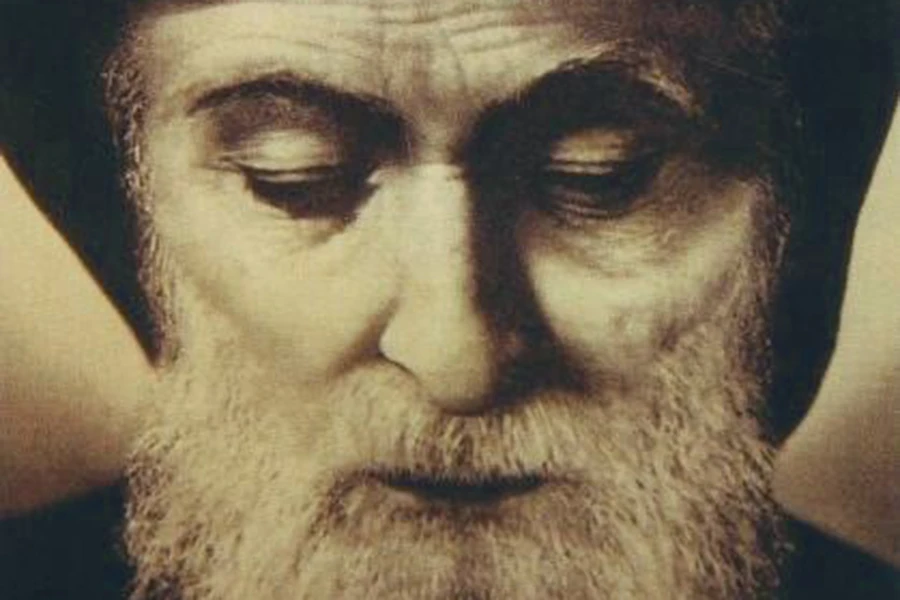
Phoenix, Ariz., Mar 29, 2017 / 11:01 am (National Catholic Register).- When a Phoenix mother lost her eyesight due to a rare medical condition, she feared she would never be able to see her four children again. But then St. Charbel came to her aid.
Dafne Gutierrez suffered from benign intracranial hypertension (BIH), a condition that causes increased pressure in the brain. In 2012, the increased pressure caused her to lose vision in her right eye. Three years later, in November 2015, the Catholic mother lost sight in her left eye, as well.
Phoenix’s local CBS affiliate, KPHO, quoted Gutierrez’s plea to God:
“For me, I was like, ‘Please God, let me see those faces again. Let me be their mother again.’ Because I feel like [my kids] were watching me, taking care of me 24/7.”
Phoenix Mother: St. Charbel Cured My Blindness https://t.co/J9FXeruQUR
— N. Catholic Register (@NCRegister) March 25, 2017
For more than a year, Gutierrez struggled to adjust to her disability, which now included occasional seizures, as well as blindness. Then, in January 2016, when Phoenix’s St. Joseph Maronite Church announced that the relics of St. Charbel Makhlouf (also spelled “Sharbel”) would be visiting the church, Gutierrez’s sister encouraged her to visit and to pray for the saint’s intercession.
Although she is not a member of the Maronite rite, Gutierrez visited the church Jan. 16, prayed before the relics, went to confession and was blessed with holy oil by the pastor, Father Wissam Akiki. Gutierrez recalled that, immediately afterward, her body felt “different.”
The following morning, she rose and returned to the church for Sunday Mass. Again, she experienced a different sensation.
And early in the morning Jan. 18, Gutierrez awoke with a searing pain in her eyes. She remembers how much they burned. And when her husband turned on the lights, she said the brightness hurt her eyes. She claimed, at 4 a.m., that she could see shadows; but her husband insisted that was impossible because she was blind. He later described what he called “an odor of burned meat” coming from her nostrils.
According to The Maronite Voice, the newsletter of the Maronite Eparchies of the U.S., “That morning she called her ophthalmologist, and she was evaluated the next day. Her exam showed that she was still legally blind, with abnormal optic nerves. Two days later, she saw a different ophthalmologist, and her vision was a perfect 20/20, with completely normal optic nerves. Subsequently, she saw her original ophthalmologist one week later, and her vision was documented to be normal, with completely normal exam.”
No Medical Explanation
Dr. Anne Borik, a board-certified internal medicine physician who later testified regarding Gutierrez’s healing, was called in by the Church to review the case. Earlier this month, Borik – a member of St. Timothy’s Roman Catholic parish nearby, but who attends St. Joseph Maronite frequently – talked by phone with the Register about her findings. She explained that the brain condition Gutierrez suffered from causes the optic nerve to constrict. Once the optic disc – the spot at which the optic nerve enters the eyeball – is damaged, it’s too late to fix. Because, when the pressure in the brain reaches high levels, as it did in Gutierrez’s case, the optic nerves become strangulated.
“Unfortunately, once the blindness occurs,” said Borik, “it’s irreversible.”
Images of Gutierrez’s optic disc revealed significant damage: “We have pictures,” said Borik, “to confirm that the optic disc was chronically atrophied. There was significant swelling, or papilledema.”
But after Gutierrez’s vision returned, Borik reported, there was no evidence of the aberrations that were evident on earlier images. “In the post-healing pictures,” Borik said, “her optic disc is back to normal. Her vision is completely restored. She has no more seizures. That is why I, as a medical doctor, have no explanation.”
A medical committee, led by Borik, undertook a thorough review of Gutierrez’s medical records, as well as repeated examinations. The committee wrote, “After a thorough physical exam, extensive literature search and review of all medical records, we have no medical explanation and therefore believe this to be a miraculous healing through the intercession of St. Charbel.”
Unexpected Healing Strengthens Faith
Borik is enthusiastic about the healing, telling the National Catholic Register, “It has changed my practice! It has changed how I relate to patients. Now,” she said, referring to her relationship with those entrusted to her care, “prayer is such an important part of what we do.”
Father Wissam Akiki, pastor of St. Joseph Maronite Church, had a devotion to St. Charbel, and he installed a large picture of the saint in the parish shortly after his arrival in 2014. Then, in 2016, he arranged to bring St. Charbel’s relics to his parish as part of a U.S. tour.
Father Akiki remembers when Gutierrez showed up to venerate the relics. Father Akiki approached her. “I heard her confession,” he told the National Catholic Register. “We prayed together, and I said to her daughter, ‘Take care of your mom, and your mom is going to see you soon.’ Then, in only three days, she called the church to report that she could see.”
Father Akiki acknowledged that Gutierrez’s healing has strengthened the faith and changed the face of St. Joseph Maronite Church. “People are coming here to pray, traveling from Germany, Bolivia, Canada, Australia, Jerusalem.”
Following the healing, Father Akiki planned to erect a shrine to St. Charbel at his parish, with a two-ton sculpture of the saint cut from a single stone and imported from Lebanon. The shrine will be open seven days a week, 24 hours a day. Father Akiki expected that the dedication of the shrine March 26 would draw crowds, including Maronite Bishop A. Elias Zaidan, Phoenix Bishop Thomas Olmsted and many local dignitaries.
Bishop Zaidan attributed Gutierrez’s recovery to the intercession of St. Charbel. “May this healing of the sight of Dafne,” he wrote in The Maronite Voice, “be an inspiration for all of us to seek the spiritual sight, in order to recognize the will of God in our lives and to act accordingly.”
Cristofer Pereyra, director of the Hispanic Office of the Phoenix Diocese, told Fox News that Bishop Olmsted spoke with the doctors and reviewed the case. “The bishop wanted to make sure there was no scientific explanation for the miraculous recovery of Dafne’s sight,” Pereyra reported.
The greatest change, of course, has been for Gutierrez and her children. Since her eyesight was restored, Dafne’s life has changed dramatically: She can once again check her children's homework, watch them at play with friends, and manage her household chores without extra assistance.
Her prayer was answered.
Who Was St. Charbel?
Born Youssef Antoun Makhlouf in the high mountains of northern Lebanon in 1828, St. Charbel (also spelled Sharbel) was the youngest of five children in a poor but religious family. His baptismal name was Joseph; only when he entered a monastery at the age of 23 was he given the name Charbel, after an early martyr. He studied in seminary and was ordained a priest in 1858. For 16 years, Father Charbel lived with his brother priests; theirs was a communal life of prayer and devotion to God.
In 1875, Father Charbel was granted permission to live a hermit’s life. In his rugged cabin, for the next 23 years, he practiced mortification and sacrifice – often wearing a hair shirt, sleeping on the ground, and eating only one meal a day. The Eucharist was the focus of his life. The holy priest celebrated daily Mass at 11 a.m., spending the morning in preparation and the rest of the day in thanksgiving.
Father Charbel was 70 years old when he suffered a seizure while celebrating Mass. A priest assisting him was forced to pry the Eucharist out of his rigid hands. He never regained consciousness; and eight days later, on Christmas Eve in 1898, Father Charbel died. His body was interred in the ground without a coffin and without embalming, according to the monks’ custom, dressed in the full habit of the order.
For the next 45 nights, a most unusual event occurred: According to many local townspeople, an extraordinarily bright light appeared above his tomb, lighting the night sky. Finally, after the mysterious light persisted, officials at the monastery petitioned the ecclesiastical authorities for permission to exhume Charbel’s body. When the grave was opened four months after Charbel’s death, his body was found to be incorrupt. Twenty-eight years after his death, in 1928, and again in 1950, the grave was reopened, and his body was also found to be without decay.
Numerous medical researchers were permitted to examine the remains, and all confirmed that the saint’s body was preserved from decay. For 67 years, the body remained intact, even when left outdoors unprotected for an entire summer – although it consistently gave off a liquid that had the odor of blood. Finally, though, Charbel’s body followed the natural course. When the tomb was again opened at the time of his beatification in 1965, it was found to be decayed, except for the skeleton, which was deep red in color.
The inexplicable restoration of Dafne Gutierrez’s eyesight is not the first healing credited to St. Charbel. Dr. Anne Borik reported that there have been hundreds – perhaps thousands – of miracles attributed to the saint.
Pope Francis is said to have a deep devotion to St. Charbel. Last Christmas, Borik reported, the Holy Father asked to have a relic of St. Charbel sewn into the hem of his vestments.
This story was originally published at the National Catholic Register.
Next Post

March 29, 2017 Indigenous priest murdered in Mexico
Browse Our Archives
Select a Category Americas Asia - Pacific Europe Middle East - Africa Uncategorized US Vatican
Select a Month November 2017 October 2017 September 2017 August 2017 July 2017 June 2017 May 2017 April 2017 March 2017 February 2017 January 2017 December 2016 November 2016 October 2016 September 2016 August 2016 July 2016 June 2016 May 2016 April 2016 March 2016 February 2016 January 2016 December 2015 November 2015 October 2015 September 2015 August 2015 July 2015 June 2015 May 2015 April 2015 March 2015 February 2015 January 2015 December 2014 November 2014 October 2014 September 2014 August 2014 July 2014 June 2014 May 2014 April 2014 March 2014 February 2014 January 2014 December 2013 November 2013 October 2013 September 2013 August 2013 July 2013 June 2013 May 2013 April 2013 March 2013 February 2013 January 2013 December 2012 November 2012 October 2012 September 2012 August 2012 July 2012 June 2012 May 2012
TAKE THE
Religious Wisdom Quiz
What does "El Shaddai" mean?
Select your answer to see how you score.
God Almighty Provider God is Judge Prince of Peace
Related posts from Catholic News

US bishops' new child protection program aims to...

Wealthy foundation aims to redefine religious freedom—and Christianity,...

Victims of Islamic State in focus at UN...

Catholic University of America offers free tuition to...
TRENDING AT PATHEOS Catholic

Rejecting Doom: Christian Hope And Human Action
Christianity is a religion of hope. We are to have hope and...

It’s What Comes From Within Which Matters
One of the most difficult things for us to understand is why...

Why I Choose the Eucharist Over the Sermon
Choose the Eucharist, Not the Sermon What are we supposed to get...

5 Design Elements Found in Spiritually Rooted Homes
Putting Spirituality Into Home Decor Our homes are more than our living...

Credo: A Story of God Told with the...
About 10 years ago, I began to imagine a personal "Credo" that...

The Anatomy of Divine Revelation in Catholic Thought
The claim that God has made Himself known to human beings is...
view all Catholic blogs
Ad-Free & Subscriber Log-In Subscription Support
- About Us
- 2026 Calendar
- Videos
- Podcasts
- Library of World Religions
- Faith In Media Tracker
- Advertise With Us
- Write for Us
- Privacy Policy
- Terms of Service
- Do Not Sell My Data
- Contact Us
- Radiant Digital
- Manage Newsletter Subscriptions
- Unsubscribe From Notifications
- Sitemap
Copyright 2008-2026, Patheos. All rights reserved.
Subscription Support Ad-Free & Subscriber Log-In
Follow Patheos