
BuddhistCatholicContemplativeEvangelicalGeneral ChristianHinduJewishLatter-day SaintMuslimNew VisionsProgressive Christian
Beliefs
- Buddhist
- Catholic
- Contemplative
- Evangelical
- General Christian
- Hindu
- Jewish
- Latter-day Saint
- More Voices
- Muslim
- New Visions
- Pagan
- Progressive Christian
Topics
- Religion News
- Food and Religion
- Sports and Religion
- Religious Art
- Religious Music and Entertainment
- Religious Events
- History and Religion
- Style and Religion
- Politics and Religion
- Women in Religion
- Recreation Outdoors and Religion
- Business Finance and Religion
- Careers Workplace and Religion
- Education and Religion
- Family Parenting and Religion
- Health Fitness and Religion
- Home and Religion
- Relationships and Religion
- Technology and Religion
- Travel and Religion
Columnists
- Buddhist Columnists
- Business Finance and Religion Columnists
- Careers Workplace and Religion Columnists
- Catholic Columnists
- Contemplative Columnists
- Education and Religion Columnists
- Evangelists Columnists
- Family Parenting and Religion Columnists
- General Christian Columnists
- Health Fitness and Religion Columnists
- Hindu Columnists
- History and Religion Columnists
- Home and Religion Columnists
- Jewish Columnists
- More Voices Columnists
- Latter Day Columnists
- Muslim Columnists
- New Visions Columnists
- Nonreligious Columnists
- Pagan Columnists
- Politics and Religion Columnists
- Progressive Columnists
- Recreation Outdoors and Religion Columnists
- Relationships and Religion Columnists
- Religion News Columnists
- Religious Art Columnists
- Religious Events Columnists
- Religious Music and Entertainment Columnists
- Sports and Religion Columnists
- Style and Religion Columnists
- Technology and Religion Columnists
- Travel and Religion Columnists
- Women in Religion Columnists
Resource Library
- 2026 Calendar
- Library of World Religions
- The 100 Most Holy Places on Earth
- Patheos Answers
- Podcasts
- Videos
- Faith Leaders Database
- Anglican Episcopalian
- Bahai
- Baptist
- Buddhism
- Christianity
- Confucianism
- Eastern Orthodoxy
- Hinduism
- Holiness and Pentecostal
- ISKCON
- Islam
- Judaism
- Lutheran
- Methodist
- The Church of Jesus Christ of Latter-day Saints
- New Age
- Paganism
- Presbytarian and Reformed
- Protestantism
- Religion Behind the Scenes
- Roman Catholic
- Scientology
- Shia Islam
- Sikhism
- Sufism
- Sunni Islam
- Taoism
- Zen
- See all religions
Research Tools
 Ad-Free & Subscriber Log-In Subscription Support
Ad-Free & Subscriber Log-In Subscription Support
Follow Patheos 

- Trending:
- Forgiveness
- |
- Marriage
- |
- Consciousness
- |
- Death Penalty
- |
- Election
- |
- Halloween
 Catholic News
- Home
- Catholic
- Religion News
- What the pro-life movement can learn from Planned Parenthood
What the pro-life movement can learn from Planned Parenthood
Last updated on: February 2, 2017 at 10:24 am by CNA Daily News
What the pro-life movement can learn from Planned Parenthood 2017-02-02T10:24:00+00:00 CNA Daily News
Patheos Explore the world's faith through different perspectives on religion and spirituality! Patheos has the views of the prevalent religions and spiritualities of the world.
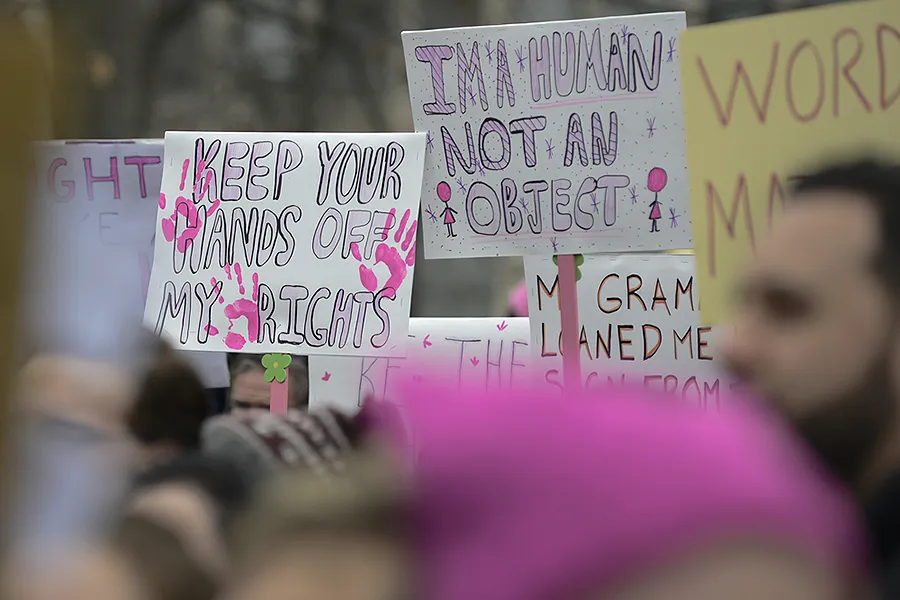
Washington D.C., Feb 2, 2017 / 03:24 am (CNA).- Planned Parenthood is the nation’s largest abortion chain – but rather than dismissing it, pregnancy help centers may be able to learn from its strengths as a brand, said one research analyst.
“The brand of Planned Parenthood is, unfortunately, pretty solid in the minds of these women,” said Dr. Jeff Pauls of the Vitae Foundation. Yet many women admitted that they “still weren’t totally comfortable with the experience of having to go there.”
Planned Parenthood may have a “solid” reputation in the minds of its customers, yet pro-life pregnancy centers could serve more of these women if they emulated its strengths, he told CNA.
The Vitae Foundation partnered with Dr. Charles Kenny, an industry leader in “right-brain research” on customers’ loyalty to brands like Coca-Cola and American Express, to investigate what Planned Parenthood’s clients thought of the organization and discover what pro-life pregnancy centers could learn from the abortion giant.
They conducted in-depth interviews of over 70 women, many of them from metropolitan areas like New York, Chicago, Miami, and Los Angeles and who “had no idea who did the interview,” Pauls noted.
Questions asked included when and how women had first heard about Planned Parenthood, why they decided to go there, what they thought about the organization’s brand and health care, and if they had ever heard of a “pregnancy help center.”
The questions were meant to “have them go into their mind’s eye and really relive their experience at Planned Parenthood,” Pauls said. There were two types of customers they found, “active” women who were currently customers of Planned Parenthood, and “legacy customers,” or women who used to go to Planned Parenthood and had stopped going, but had referred someone else there in the last year.
They found that Planned Parenthood has a “solid” reputation with these women, but along their brand’s strengths there were significant weaknesses, as the women interviewed acknowledged negative experiences at clinics.
The “strengths” of the Planned Parenthood brand are a “non-judgmental” appearance of staff workers who help women think they are in “control,” providing them feelings of “acceptance” and “freedom,” Pauls explained.
They also promote an atmosphere of “confidentiality” which is really “secrecy,” Pauls said, “the way that Planned Parenthood helps them engage in risky sexual activity without their parents knowing.”
However, women also complained of “long waits” at clinics as well as an “unpleasant gauntlet of fear, anxiety, nervousness, and anger that they had to deal with in the waiting room,” he continued.
“Try as they might to develop this kind of warm, comfortable waiting room experience, it’s nearly impossible, according to the women, because of what’s going on there,” he explained, noting that women recalled thinking, “I just don’t feel like I belong here with these people.”
And there were violations of HIPAA – of the privacy of one’s confidential medical information – at clinics.
“We did hear some women talking about Planned Parenthood staff talking about procedures out in the waiting room, in front of everybody,” Pauls noted. These public conversations included “what their health history was.”
While such instances were not frequent, “we did hear that from enough women that that’s not rare,” he said.
Another brand “weakness” was that women who frequented Planned Parenthood clinics when they were younger had moved on to other health care providers as they grew older, even though they still referred younger clients to clinics.
There might be several reasons for this, Pauls explained. Older women may have stopped the “risky sexual activity” of their former years, or they might have better health insurance and be “in a position to afford and get good health care at a doctor or an OBGYN,” he said.
“They say that they still believe that Planned Parenthood is as good or better than” other providers, Pauls said. Women appreciated what Planned Parenthood did for them – providing them with birth control and performing abortions – but they “still weren’t totally comfortable with the experience of having to go there.”
Planned Parenthood has recently insisted that it is an important provider of women’s health care. Yet it is not holistic health care, Pauls insisted.
“It’s a place to get, in their words, to ‘fix a mistake’” and “solve a problem.”
For instance, clinics did not offer “real counseling” for women considering abortion, “because if they did, it would be an admission that abortion harms women,” Pauls said.
Rather, clinics focused on “helping women feel alright about abortion, and giving them these defense and coping mechanisms for the inevitable pain and difficulty they go through,” he said.
For instance, clinic workers told women of their abortion “you won’t even think about it later on” and “it’s no big deal, women do this all the time.”
They would encourage them that “it’s actually a good thing that you’re doing for your family or your future family or your education or your career.”
“A lot of times they’ll even refer to abortion and their need to go to Planned Parenthood as a necessary evil,” Pauls said.
“She feels like she really has no real choice, so Planned Parenthood is the only way really to move forward without kind of experiencing this death of her current self or her future self.”
In contrast, pregnancy centers can step in and offer “holistic” health care that Planned Parenthood doesn’t, Pauls insisted.
One significant “surprise” from his research was that “none” of the women “knew what a pregnancy help center was” or had “much knowledge or interest in it.” This was despite the fact that 2,400 pregnancy help centers outnumber Planned Parenthood clinics almost four to one.
These pregnancy clinics don’t perform abortions but instead provide women financial, material and emotional support to have their baby and can even offer medical care and psychological counseling.
“Women are interested in this holistic approach to health,” of “being healthy in mind, body, spirit, soul, vocation,” Pauls said.
The care in pregnancy help centers is “not just physical, which is what Planned Parenthood does. Make them unpregnant and send them back out into a risky lifestyle, to have them come back and do it all over again.”
Many pregnancy centers are “connected with a medical model or a medical referral system where they can address the physical, psychological, emotional, social, intellectual, and vocational health needs of the woman,” he said.
Previous Post

February 2, 2017
The story of a father who runs marathons with his disabled son
Next Post
February 2, 2017 Why this slain priest's opposition to the death penalty matters
Browse Our Archives
Select a Category Americas Asia - Pacific Europe Middle East - Africa Uncategorized US Vatican
Select a Month November 2017 October 2017 September 2017 August 2017 July 2017 June 2017 May 2017 April 2017 March 2017 February 2017 January 2017 December 2016 November 2016 October 2016 September 2016 August 2016 July 2016 June 2016 May 2016 April 2016 March 2016 February 2016 January 2016 December 2015 November 2015 October 2015 September 2015 August 2015 July 2015 June 2015 May 2015 April 2015 March 2015 February 2015 January 2015 December 2014 November 2014 October 2014 September 2014 August 2014 July 2014 June 2014 May 2014 April 2014 March 2014 February 2014 January 2014 December 2013 November 2013 October 2013 September 2013 August 2013 July 2013 June 2013 May 2013 April 2013 March 2013 February 2013 January 2013 December 2012 November 2012 October 2012 September 2012 August 2012 July 2012 June 2012 May 2012
TAKE THE
Religious Wisdom Quiz
How old was Jesus when He started His public ministry?
Select your answer to see how you score.
About 12 About 50 About 21 About 30
Related posts from Catholic News

US bishops' new child protection program aims to...

Wealthy foundation aims to redefine religious freedom—and Christianity,...

Victims of Islamic State in focus at UN...

Catholic University of America offers free tuition to...
TRENDING AT PATHEOS Catholic

Creation, Preservation, and Teleology in Catholic Theology
As I write this, it is very early Monday morning. Like millions...

The Parable Of The Sower And The Word...
One of Christ’s most famous parables is that of the sower who...

Rejecting Doom: Christian Hope And Human Action
Christianity is a religion of hope. We are to have hope and...

Why I Choose the Eucharist Over the Sermon
Choose the Eucharist, Not the Sermon What are we supposed to get...

5 Design Elements Found in Spiritually Rooted Homes
Putting Spirituality Into Home Decor Our homes are more than our living...

Credo: A Story of God Told with the...
About 10 years ago, I began to imagine a personal "Credo" that...
view all Catholic blogs
Ad-Free & Subscriber Log-In Subscription Support
- About Us
- 2026 Calendar
- Videos
- Podcasts
- Library of World Religions
- Faith In Media Tracker
- Advertise With Us
- Write for Us
- Privacy Policy
- Terms of Service
- Do Not Sell My Data
- Contact Us
- Radiant Digital
- Manage Newsletter Subscriptions
- Unsubscribe From Notifications
- Sitemap
Copyright 2008-2026, Patheos. All rights reserved.
Subscription Support Ad-Free & Subscriber Log-In
Follow Patheos