
BuddhistCatholicContemplativeEvangelicalGeneral ChristianHinduJewishLatter-day SaintMuslimNew VisionsProgressive Christian
Beliefs
- Buddhist
- Catholic
- Contemplative
- Evangelical
- General Christian
- Hindu
- Jewish
- Latter-day Saint
- More Voices
- Muslim
- New Visions
- Pagan
- Progressive Christian
Topics
- Religion News
- Food and Religion
- Sports and Religion
- Religious Art
- Religious Music and Entertainment
- Religious Events
- History and Religion
- Style and Religion
- Politics and Religion
- Women in Religion
- Recreation Outdoors and Religion
- Business Finance and Religion
- Careers Workplace and Religion
- Education and Religion
- Family Parenting and Religion
- Health Fitness and Religion
- Home and Religion
- Relationships and Religion
- Technology and Religion
- Travel and Religion
Columnists
- Buddhist Columnists
- Business Finance and Religion Columnists
- Careers Workplace and Religion Columnists
- Catholic Columnists
- Contemplative Columnists
- Education and Religion Columnists
- Evangelists Columnists
- Family Parenting and Religion Columnists
- General Christian Columnists
- Health Fitness and Religion Columnists
- Hindu Columnists
- History and Religion Columnists
- Home and Religion Columnists
- Jewish Columnists
- More Voices Columnists
- Latter Day Columnists
- Muslim Columnists
- New Visions Columnists
- Nonreligious Columnists
- Pagan Columnists
- Politics and Religion Columnists
- Progressive Columnists
- Recreation Outdoors and Religion Columnists
- Relationships and Religion Columnists
- Religion News Columnists
- Religious Art Columnists
- Religious Events Columnists
- Religious Music and Entertainment Columnists
- Sports and Religion Columnists
- Style and Religion Columnists
- Technology and Religion Columnists
- Travel and Religion Columnists
- Women in Religion Columnists
Resource Library
- 2026 Calendar
- Library of World Religions
- The 100 Most Holy Places on Earth
- Patheos Answers
- Podcasts
- Videos
- Faith Leaders Database
- Anglican Episcopalian
- Bahai
- Baptist
- Buddhism
- Christianity
- Confucianism
- Eastern Orthodoxy
- Hinduism
- Holiness and Pentecostal
- ISKCON
- Islam
- Judaism
- Lutheran
- Methodist
- The Church of Jesus Christ of Latter-day Saints
- New Age
- Paganism
- Presbytarian and Reformed
- Protestantism
- Religion Behind the Scenes
- Roman Catholic
- Scientology
- Shia Islam
- Sikhism
- Sufism
- Sunni Islam
- Taoism
- Zen
- See all religions
Research Tools
 Ad-Free & Subscriber Log-In Subscription Support
Ad-Free & Subscriber Log-In Subscription Support
Follow Patheos 

- Trending:
- Forgiveness
- |
- Marriage
- |
- Consciousness
- |
- Death Penalty
- |
- Election
- |
- Halloween
 Catholic News
- Home
- Catholic
- Religion News
- Venezuelan Catholics face backlash for opposing government
Venezuelan Catholics face backlash for opposing government
Last updated on: February 23, 2017 at 7:02 am by CNA Daily News
Venezuelan Catholics face backlash for opposing government 2017-02-23T07:02:00+00:00 CNA Daily News
Patheos Explore the world's faith through different perspectives on religion and spirituality! Patheos has the views of the prevalent religions and spiritualities of the world.
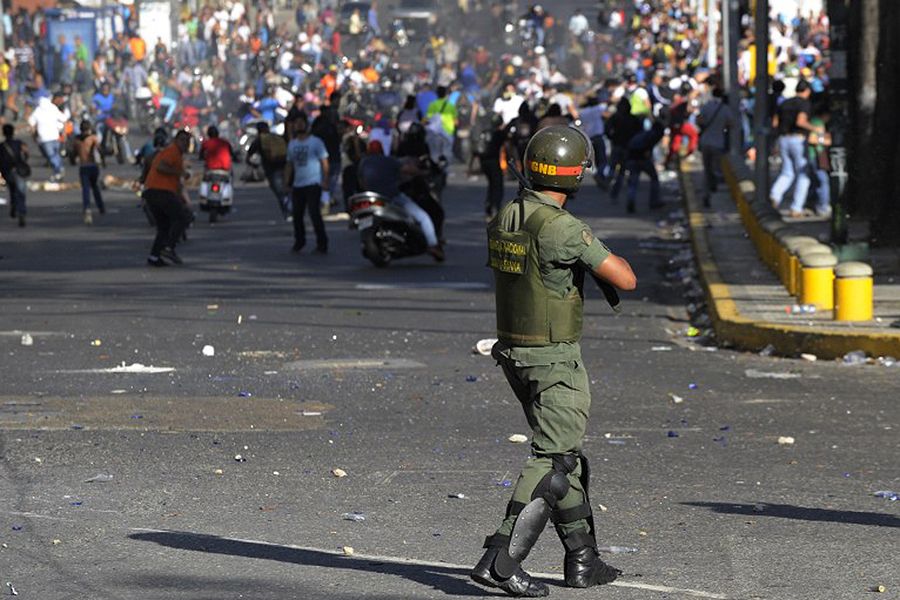
Caracas, Venezuela, Feb 23, 2017 / 12:02 am (CNA/EWTN News).- After speaking against alleged government misconduct, human rights abuses and delay of free elections, Catholic churches and clergy around Venezuela are facing a wave of protests from pro-government supporters.
A string of incidents began on the morning of Jan. 29, as supporters of the current government interrupted a Mass at San Pedro Claver Church in a poor neighborhood of Caracas, Reuters reported.
The crowd of around 20 people hurled insults at the clergy, calling them “Satan in a cassock!” and “Fascist!” The protesters also used the chant “Chavez lives!” – in honor of late president and former leader of the ruling Socialist party, Hugo Chavez.
After the death of the socialist leader from cancer in 2013 and his succession by current Venezuelan president Nicolas Maduro, the country has faced both increases in violence and a number of social and political challenges, including the delay of the country's regional elections.
The bishops' strong stance against the current Venezuelan government – and other opinions echoed by priests around the country– has prompted backlash not only in the capital of Caracas, but in around the country. The cathedral of Caracas was hit with rocks, and protestors went to the home of the Archbishop Antonio Lopez of Barquisimeto after he said in a speech that socialism has brought “misery” to the country.
The same day as the protests in the Caracas parish of San Pedro Claver, police interrupted Mass in the city of Maracaibo. In the last week of January, gun-toting robbers attacked, threatened monks and stole from a Trappist monastery in the state of Merida.
Current head of the Venezuelan Episcopal Conference, Archbishop Diego Padron, told Reuters that “this list, in my opinion, shows they are not isolated events.”
One of the most contentious issues the country faces is the economy, where the world's highest inflation rates, price controls and failed economic policies have resulted in severe shortages of basic necessities like medicines, milk, flour, toilet paper and other essentials.
The shortages have their roots in policies enacted by Chavez in 2003 that control the price of nearly 160 products such as flour, milk, oil and soap. While these products are affordable at the government listed price, they are in short supply and fly off the shelves, ending up on the black market at much higher rates.
To complicate matters further, there have been numerous reports of the Venezuelan army’s use of their position in guarding food supply and distribution as a means of participating and making money off the black markets. The supply shortages and other opportunities for corruption have also allowed other government officials and businesspeople to profit off of the troubles facing the Venezuelan people.
Since Maduro took office, Venezuela has also experienced a spike in violent crime, with one of the world’s highest murder rates. Opponents of the Maduro regime also report that the government has used its power to jail protesters and circumvent elections – essentially becoming a dictatorship.
Some of these opponents include the Venezuelan Bishops.
In a Feb. 7 interview with the archdiocese, the Archbishop of Caracas, Cardinal Jorge Urosa Savino criticized the suspension of regional elections and his displeasure with the government’s approach to political processes.
“Without a doubt, it’s not a modern democracy,” the cardinal said. “Democracy is respect for the people, observance of the constitution, division and functioning of public powers, enforcement of all the promises, absence of political prisoners, free elections.”
“It’s already a dictatorship.”
The regional elections – which were scheduled for late 2016 and then delayed by the government – will take place later this year. According to the government, the delays were put in place to allow time for the reorganization of political organizations.
Before the delay of the elections, the Church helped to facilitate talks between the Maduro government and the opposition coalition. However, the talks collapsed with tensions and accusations from both sides.
The former president of of the Venezuelan Episcopal Conference, Bishop Ovidio Pérez Morales has also criticized the government and assured that the Church cannot remain quiet in the face of the government’s human right abuses.
“Morally, I cannot accept the violation of human rights,” he said in a Feb. 1 interview with Union Radio. “I can't accept that the state considers itself the owner of persons.”
Previous Post

February 23, 2017
In DR Congo, an upsurge of violence against the Church
Browse Our Archives
Select a Category Americas Asia - Pacific Europe Middle East - Africa Uncategorized US Vatican
Select a Month November 2017 October 2017 September 2017 August 2017 July 2017 June 2017 May 2017 April 2017 March 2017 February 2017 January 2017 December 2016 November 2016 October 2016 September 2016 August 2016 July 2016 June 2016 May 2016 April 2016 March 2016 February 2016 January 2016 December 2015 November 2015 October 2015 September 2015 August 2015 July 2015 June 2015 May 2015 April 2015 March 2015 February 2015 January 2015 December 2014 November 2014 October 2014 September 2014 August 2014 July 2014 June 2014 May 2014 April 2014 March 2014 February 2014 January 2014 December 2013 November 2013 October 2013 September 2013 August 2013 July 2013 June 2013 May 2013 April 2013 March 2013 February 2013 January 2013 December 2012 November 2012 October 2012 September 2012 August 2012 July 2012 June 2012 May 2012
TAKE THE
Religious Wisdom Quiz
Which feast was reinstituted with great joy, reading the Law daily for seven days?
Select your answer to see how you score.
Purim Passover Feast of Tabernacles Day of Atonement
Related posts from Catholic News

Venezuela's hate crime law seeks to silence political...

Canadian doctors face questions over assisted suicide, euthanasia...

Caritas Venezuela warns that 280,000 children could die...

Bishop appointed for Canada's Chaldean eparchy
TRENDING AT PATHEOS Catholic

Rejecting Doom: Christian Hope And Human Action
Christianity is a religion of hope. We are to have hope and...

It’s What Comes From Within Which Matters
One of the most difficult things for us to understand is why...

Why I Choose the Eucharist Over the Sermon
Choose the Eucharist, Not the Sermon What are we supposed to get...

5 Design Elements Found in Spiritually Rooted Homes
Putting Spirituality Into Home Decor Our homes are more than our living...

Credo: A Story of God Told with the...
About 10 years ago, I began to imagine a personal "Credo" that...

The Anatomy of Divine Revelation in Catholic Thought
The claim that God has made Himself known to human beings is...
view all Catholic blogs
Ad-Free & Subscriber Log-In Subscription Support
- About Us
- 2026 Calendar
- Videos
- Podcasts
- Library of World Religions
- Faith In Media Tracker
- Advertise With Us
- Write for Us
- Privacy Policy
- Terms of Service
- Do Not Sell My Data
- Contact Us
- Radiant Digital
- Manage Newsletter Subscriptions
- Unsubscribe From Notifications
- Sitemap
Copyright 2008-2026, Patheos. All rights reserved.
Subscription Support Ad-Free & Subscriber Log-In
Follow Patheos