
BuddhistCatholicContemplativeEvangelicalGeneral ChristianHinduJewishLatter-day SaintMuslimNew VisionsProgressive Christian
Beliefs
- Buddhist
- Catholic
- Contemplative
- Evangelical
- General Christian
- Hindu
- Jewish
- Latter-day Saint
- More Voices
- Muslim
- New Visions
- Pagan
- Progressive Christian
Topics
- Religion News
- Food and Religion
- Sports and Religion
- Religious Art
- Religious Music and Entertainment
- Religious Events
- History and Religion
- Style and Religion
- Politics and Religion
- Women in Religion
- Recreation Outdoors and Religion
- Business Finance and Religion
- Careers Workplace and Religion
- Education and Religion
- Family Parenting and Religion
- Health Fitness and Religion
- Home and Religion
- Relationships and Religion
- Technology and Religion
- Travel and Religion
Columnists
- Buddhist Columnists
- Business Finance and Religion Columnists
- Careers Workplace and Religion Columnists
- Catholic Columnists
- Contemplative Columnists
- Education and Religion Columnists
- Evangelists Columnists
- Family Parenting and Religion Columnists
- General Christian Columnists
- Health Fitness and Religion Columnists
- Hindu Columnists
- History and Religion Columnists
- Home and Religion Columnists
- Jewish Columnists
- More Voices Columnists
- Latter Day Columnists
- Muslim Columnists
- New Visions Columnists
- Nonreligious Columnists
- Pagan Columnists
- Politics and Religion Columnists
- Progressive Columnists
- Recreation Outdoors and Religion Columnists
- Relationships and Religion Columnists
- Religion News Columnists
- Religious Art Columnists
- Religious Events Columnists
- Religious Music and Entertainment Columnists
- Sports and Religion Columnists
- Style and Religion Columnists
- Technology and Religion Columnists
- Travel and Religion Columnists
- Women in Religion Columnists
Resource Library
- 2026 Calendar
- Library of World Religions
- The 100 Most Holy Places on Earth
- Patheos Answers
- Podcasts
- Videos
- Faith Leaders Database
- Anglican Episcopalian
- Bahai
- Baptist
- Buddhism
- Christianity
- Confucianism
- Eastern Orthodoxy
- Hinduism
- Holiness and Pentecostal
- ISKCON
- Islam
- Judaism
- Lutheran
- Methodist
- The Church of Jesus Christ of Latter-day Saints
- New Age
- Paganism
- Presbytarian and Reformed
- Protestantism
- Religion Behind the Scenes
- Roman Catholic
- Scientology
- Shia Islam
- Sikhism
- Sufism
- Sunni Islam
- Taoism
- Zen
- See all religions
Research Tools
 Ad-Free & Subscriber Log-In Subscription Support
Ad-Free & Subscriber Log-In Subscription Support
Follow Patheos 

- Trending:
- Forgiveness
- |
- Marriage
- |
- Consciousness
- |
- Death Penalty
- |
- Election
- |
- Halloween
 Catholic News
- Home
- Catholic
- Religion News
- Papua New Guinea’s cardinal has bigger concerns than Amoris Laetitia
Papua New Guinea’s cardinal has bigger concerns than Amoris Laetitia
Last updated on: February 17, 2017 at 9:50 am by CNA Daily News
Papua New Guinea’s cardinal has bigger concerns than Amoris Laetitia 2017-02-17T09:50:00+00:00 CNA Daily News
Patheos Explore the world's faith through different perspectives on religion and spirituality! Patheos has the views of the prevalent religions and spiritualities of the world.
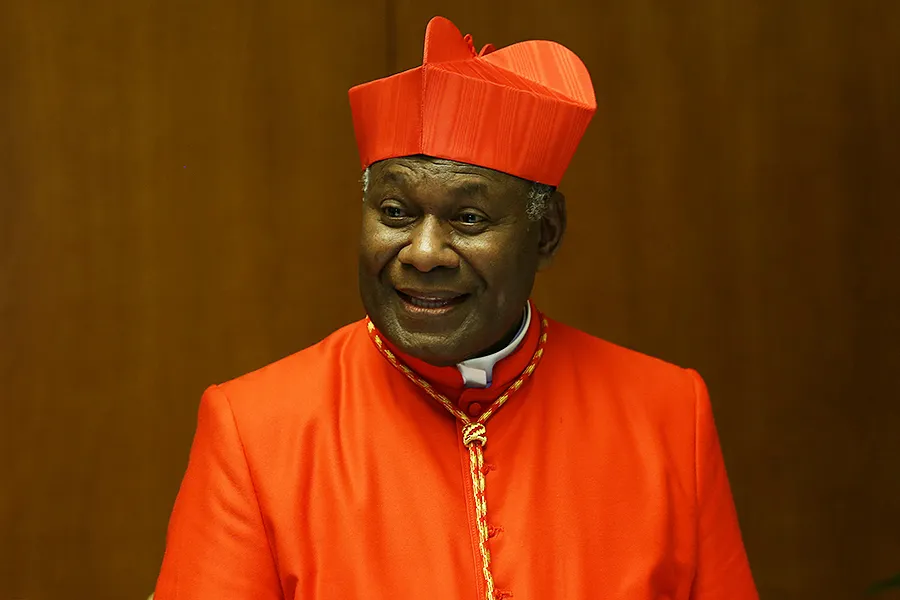
Rome, Italy, Feb 17, 2017 / 02:50 am (CNA/EWTN News).- While many in different sectors of the Church are pulling out their hair trying to resolve the Amoris Laetitia communion debate, Papua New Guinea's new cardinal said his country has a much more immediate problem.
“For us, Amoris Laetitia will always be there,” Cardinal John Ribat told CNA Feb. 11.
“You can have time to talk about this,” he said, but stressed his country is facing one major problem that can't wait for a solution: climate change.
“It is really the biggest issue for us. We cannot keep quiet about it. We have to come out with it,” he said, noting that the “king tides, king waves” and rough winds “belting” the island nation are already forcing many people from their homes.
These are the things “we cannot stop. They continue to come, and they are more powerful than us,” the cardinal said, explaining that while temporary sea walls have been set up, “they won't hold.”
“Our situation, it's timely, you either talk about it or you see these people finished…There's not timing for it. The time is either now or never.”
Cardinal Ribat, a member of the Missionaries of the Sacred Heart of Jesus, was one of the 19 prelates that got a red hat from Pope Francis in November’s consistory, and is a prime example of the Pope’s affinity toward the global peripheries.
Not only does Ribat come from a small island nation with an equally small Catholic population, he is the first prelate from the country to ever be named cardinal, giving voice to a sector of the Church whose concerns might otherwise go unheard.
The cardinal said he didn’t know that he had been named a cardinal until the country’s nuncio came and told him.
“For me it was absolutely unexpected. I never dreamt about it, never, I never wrote for this. It just came. So it was really a shocking news for us,” he said, explaining that the appointment sent “a great message” to Papua New Guinea.
Not only did he get congratulations from the country's Catholics, but he also received celebratory calls and messages from other Christian denominations as well as the nation’s small Muslim minority. Prime Minister Peter O’Neill also offered his congratulations in local papers and on TV.
For the cardinal, his appointment is “timely and it gives us a chance to come to the center and hear our voice, to listen to our voice.”
“It's really looking at the small Church, the small area, and bringing it to the center. So the periphery, bringing us to the center where we are listened to, we are recognized, where we are appreciated, where our situation is also understood.”
Ribat said his red hat was timely above all because it allows him to have more heft when voicing the country’s concerns, particularly on the issue of climate change.
The phenomena is something new that most islanders have found themselves entirely unprepared for, he said, explaining that “we were happily living and it was not a concern for us. But at this time we cannot be quiet.”
“It’s happening at this time and we don’t know where it is coming from and why it is happening…we have islands disappearing, being washed because of the high-rise sea level and people there, they have to move,” he said, noting that many of the smaller islands “are not able to sustain themselves” for much longer.
Papua New Guinea is among the nations considered most at risk for the effects of climate change. For several years the country has been affected by rising sea levels and changes in temperature, rainfall patters and the frequency of tropical storms.
According to the Australian Government’s 2011 Pacific Climate Change Science Program report, temperatures in the capital city of Port Moresby have increased since at a rate of 0.11 degrees Celsius per decade since 1950, causing sea levels to rise at a rate of 7mm per year since 1993, since water expands as it gets warmer.
Predictions for the future look grim, anticipating that the trends will carry forward as temperatures continue to increase, leading to hotter days and more volatile rainy days, with sea levels continuing to rise.
Islands such as Carteret and Tuvalu have reportedly already begun to feel the sting, with rising sea levels leaving food gardens flooded while homeowners seek to transfer to higher ground. Coconut farms – the country’s primary agricultural product – have so far been most heavily affected.
The report also states that inconsistent weather and rain patterns have already led to more frequent onsets of malaria and the common flu, and will soon start to have an impact on the economy, since the country’s agricultural production is being affected.
In his comments to CNA, Cardinal Ribat, who met with Pope Francis right before coming to the interview, said he brought the issue up with the Pope during their meeting, and that Francis was sympathetic to their plight.
“His response was that the nations are not listening, that’s what he said,” Ribat explained, recalling how the Pope told him that while “we do our best, we try to voice our concerns,” the answer ultimately depends on other nations.
Pope Francis has often spoken out about the need to make more firm commitments in trying to find solutions to climate change, focusing on the issue at length in his 2015 environmental encyclical Laudato Si.
He also issued several strong statements on the issue ahead of the 2015 COP21 climate summit in Paris, which was attended by Vatican Secretary of State Cardinal Pietro Parolin.
Speaking of Laudato Si, Cardinal Ribat said the encyclical helped the world to see “the importance” of the problems they face not just in Papua New Guinea, but “in the whole Pacific.”
Ribat called on nations to take greater action, specifically asking “powerful” countries in the West “to respond in a positive way to help us, because this high-rise sea level, we’ve never experienced it before (and) we are wondering what is happening to us, why all this is happening.”
For those who doubt the effects of climate change or think that it’s a myth, the cardinal said his response would be to “come and see” if they “really want to be sure about what is happening.”
“This is where you really see the effect of what is happening,” he said. “So when you talk about climate change, maybe here because you have a big land mass you are talking about it and waiting for it to come in the future. For us, it is right now.”
Previous Post

February 17, 2017
Why Pope Francis cheers for the Special Olympics
Next Post
February 17, 2017 How one organization hopes to revolutionize orphanages
Browse Our Archives
Select a Category Americas Asia - Pacific Europe Middle East - Africa Uncategorized US Vatican
Select a Month November 2017 October 2017 September 2017 August 2017 July 2017 June 2017 May 2017 April 2017 March 2017 February 2017 January 2017 December 2016 November 2016 October 2016 September 2016 August 2016 July 2016 June 2016 May 2016 April 2016 March 2016 February 2016 January 2016 December 2015 November 2015 October 2015 September 2015 August 2015 July 2015 June 2015 May 2015 April 2015 March 2015 February 2015 January 2015 December 2014 November 2014 October 2014 September 2014 August 2014 July 2014 June 2014 May 2014 April 2014 March 2014 February 2014 January 2014 December 2013 November 2013 October 2013 September 2013 August 2013 July 2013 June 2013 May 2013 April 2013 March 2013 February 2013 January 2013 December 2012 November 2012 October 2012 September 2012 August 2012 July 2012 June 2012 May 2012
TAKE THE
Religious Wisdom Quiz
I am a donkey that spoke to rebuke my master, a prophet. What am I?
Select your answer to see how you score.
A prophet's beast Balaam's donkey A miracle donkey A talking animal
Related posts from Catholic News

Sixty Vincentians martyred during Spanish Civil War to...

Filipinos gather in Rome to promote bishop's beatification...

UK bishop calls for prayers as MPs urge...

On All Souls' Day, Pope Francis prays for...
TRENDING AT PATHEOS Catholic

Creation, Preservation, and Teleology in Catholic Theology
As I write this, it is very early Monday morning. Like millions...

The Parable Of The Sower And The Word...
One of Christ’s most famous parables is that of the sower who...

Rejecting Doom: Christian Hope And Human Action
Christianity is a religion of hope. We are to have hope and...

Why I Choose the Eucharist Over the Sermon
Choose the Eucharist, Not the Sermon What are we supposed to get...

5 Design Elements Found in Spiritually Rooted Homes
Putting Spirituality Into Home Decor Our homes are more than our living...

Credo: A Story of God Told with the...
About 10 years ago, I began to imagine a personal "Credo" that...
view all Catholic blogs
Ad-Free & Subscriber Log-In Subscription Support
- About Us
- 2026 Calendar
- Videos
- Podcasts
- Library of World Religions
- Faith In Media Tracker
- Advertise With Us
- Write for Us
- Privacy Policy
- Terms of Service
- Do Not Sell My Data
- Contact Us
- Radiant Digital
- Manage Newsletter Subscriptions
- Unsubscribe From Notifications
- Sitemap
Copyright 2008-2026, Patheos. All rights reserved.
Subscription Support Ad-Free & Subscriber Log-In
Follow Patheos