
BuddhistCatholicContemplativeEvangelicalGeneral ChristianHinduJewishLatter-day SaintMuslimNew VisionsProgressive Christian
Beliefs
- Buddhist
- Catholic
- Contemplative
- Evangelical
- General Christian
- Hindu
- Jewish
- Latter-day Saint
- More Voices
- Muslim
- New Visions
- Pagan
- Progressive Christian
Topics
- Religion News
- Food and Religion
- Sports and Religion
- Religious Art
- Religious Music and Entertainment
- Religious Events
- History and Religion
- Style and Religion
- Politics and Religion
- Women in Religion
- Recreation Outdoors and Religion
- Business Finance and Religion
- Careers Workplace and Religion
- Education and Religion
- Family Parenting and Religion
- Health Fitness and Religion
- Home and Religion
- Relationships and Religion
- Technology and Religion
- Travel and Religion
Columnists
- Buddhist Columnists
- Business Finance and Religion Columnists
- Careers Workplace and Religion Columnists
- Catholic Columnists
- Contemplative Columnists
- Education and Religion Columnists
- Evangelists Columnists
- Family Parenting and Religion Columnists
- General Christian Columnists
- Health Fitness and Religion Columnists
- Hindu Columnists
- History and Religion Columnists
- Home and Religion Columnists
- Jewish Columnists
- More Voices Columnists
- Latter Day Columnists
- Muslim Columnists
- New Visions Columnists
- Nonreligious Columnists
- Pagan Columnists
- Politics and Religion Columnists
- Progressive Columnists
- Recreation Outdoors and Religion Columnists
- Relationships and Religion Columnists
- Religion News Columnists
- Religious Art Columnists
- Religious Events Columnists
- Religious Music and Entertainment Columnists
- Sports and Religion Columnists
- Style and Religion Columnists
- Technology and Religion Columnists
- Travel and Religion Columnists
- Women in Religion Columnists
Resource Library
- 2026 Calendar
- Library of World Religions
- The 100 Most Holy Places on Earth
- Patheos Answers
- Podcasts
- Videos
- Faith Leaders Database
- Anglican Episcopalian
- Bahai
- Baptist
- Buddhism
- Christianity
- Confucianism
- Eastern Orthodoxy
- Hinduism
- Holiness and Pentecostal
- ISKCON
- Islam
- Judaism
- Lutheran
- Methodist
- The Church of Jesus Christ of Latter-day Saints
- New Age
- Paganism
- Presbytarian and Reformed
- Protestantism
- Religion Behind the Scenes
- Roman Catholic
- Scientology
- Shia Islam
- Sikhism
- Sufism
- Sunni Islam
- Taoism
- Zen
- See all religions
Research Tools
 Ad-Free & Subscriber Log-In Subscription Support
Ad-Free & Subscriber Log-In Subscription Support
Follow Patheos 

- Trending:
- Forgiveness
- |
- Marriage
- |
- Consciousness
- |
- Death Penalty
- |
- Election
- |
- Halloween
 Catholic News
- Home
- Catholic
- Religion News
- Catholics shouldn’t totally reject human gene editing – but it still has ethical problems
Catholics shouldn’t totally reject human gene editing – but it still has ethical problems
Last updated on: April 11, 2017 at 8:50 am by CNA Daily News
Catholics shouldn’t totally reject human gene editing – but it still has ethical problems 2017-04-11T08:50:00+00:00 CNA Daily News
Patheos Explore the world's faith through different perspectives on religion and spirituality! Patheos has the views of the prevalent religions and spiritualities of the world.
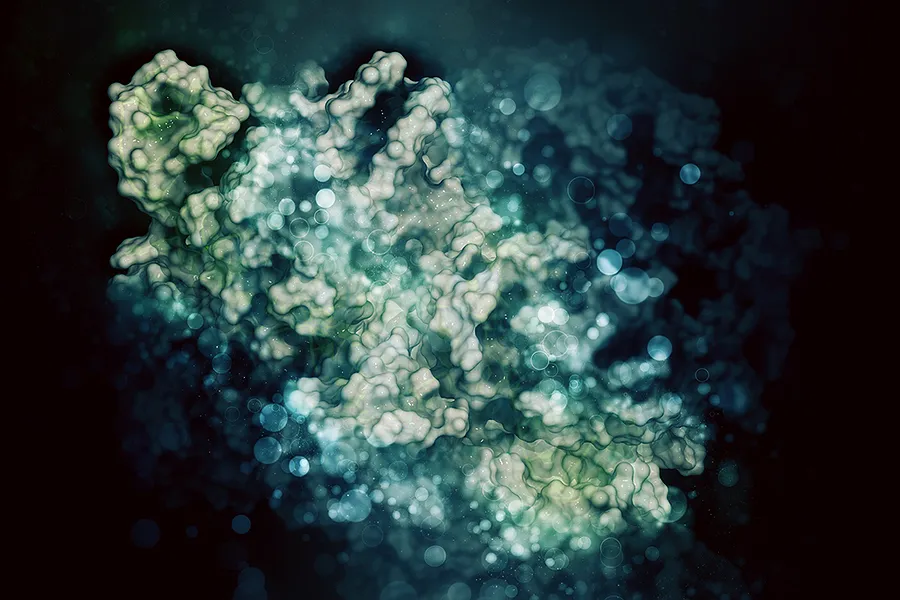
Washington D.C., Apr 11, 2017 / 02:50 am (CNA/EWTN News).- Recent American guidelines for human gene modification have raised important ethical questions, especially with regard to modifying the genes of unborn children and of reproductive cells.
The National Academy of Sciences in Feburary released a 261-page report on guidelines for editing the human genome to treat diseases and other applications. The report covers a wide array of topics, from the editing of adult cells for therapies such as cancer treatment, to the editing of embryos and germ cells (reproductive cells, i.e. ova and sperm), to the question of human enhancement.
John DiCamillo, an ethicist at the National Catholic Bioethics Center, spoke to CNA about the perils and the promises of gene editing, as well as the oversights contained in the National Academy of Sciences' report.
“Gene editing generally can be morally legitimate if it has a directly therapeutic purpose for a particular patient in question, and if we’re sure we’re going to limit whatever changes to this person,” DiCamillo explained. In this regard, the report’s guidelines for laboratory treatment of somatic – or non-reproductive – cells and human trials of somatic cell treatments were reasonable, he noted.
DiCamillo pointed to upcoming clinical gene therapy trials for cancer and proposed gene therapy treatments for disorders such as sickle cell disease. However, it’s important to limit these trials to non-embryonic persons, to ensure that the modifications – intended as well as unintended – are not carried in the patient’s reproductive cells.
While this would mean that patients treated for inheritable diseases “could still transmit it to their children,” any children who then developed the disease could themselves be treated through the same process.
The question of transmission to descendents opens up two more points discussed in the National Academy of Sciences report: the modification of ova and sperm, as well as edits to the genomes of embryos. Both of these changes would mean that people would maintain these edits in all of their cells for all of their lives – and could pass on these edited genes to new generations.
“There could be limited situations that could exist where the germ line could be legitimately edited. In other words, making changes to sperm, to eggs, or to early embryos as a way of potentially addressing diseases – inheritable diseases and so forth,” DiCamillo stated.
However, permitting edits to germ line cells could also be “very dangerous on multiple levels,” he warned.
There are considerable, and not yet fully controllable, risks to genetic manipulation. A person conceived with edited genes could experience a range of “unintended, perhaps harmful, side effects that can now be transmitted, inherited by other individuals down the line.” An embryo who experiences gene modification could also carry and pass on edited genes, particularly if edits were performed before his or her reproductive cells began to differentiate themselves.
The National Academy of Sciences' regulations surrounding germ cells and embryos are also problematic for what they overlook, DiCamillo commented.
Manipulating sperm and ova requires removing them from a person’s body; if conception is achieved with these cells, it is nearly always through in vitro methods. This practice of in vitro fertilization is held by the Church to be ethically unacceptable because it dissociates procreation from the integrally personal context of the conjugal act.
In addition, scientific researchers rarely differentiate between experimentation on sperm or ova – which are cells that come from a human subject – and embryos, which are distinct persons with their own distinct genomes, DiCamillo noted.
The National Academy of Sciences’ guidelines reflect this lack of distinction between cells and embryos. “That’s very misleading because embryos are not germ line cells; they are new human beings,” DiCamillo said.
For research on embryos to be ethical, he continued, therapies should be ordered to treating and benefitting that “that particular embryo, not just for garnering scientific knowledge or seeing what’s going to happen.” DiCamillo condemned policies that see destruction of embryonic persons as a back-up if research does not go as planned, as well as current policies that require destruction of embryos as standard procedure.
“We’d be in that area of very dangerous exploitation of human life and destruction of human life,” he warned.
While the guidelines stumble across ethical roadblocks in regards to gamete and embryo research, the new report’s rules regarding human enhancement are strong, DiCamillo said.
The ability to edit genomes could also be used for purposes other than medical treatment. A whole host of human traits could be enhanced or changed, such as vision, intelligence, or abilities. “There’s any number of things that we could do to change the qualities of human beings themselves and make them, in a sense, super-humans … this is something that would also be an ethical problem on the horizon,” he warned.
The existence of these gene altering therapies raises a question of how much modification and enhancement is permissible. DiCamillo praised the report for its recommendation “entirely against enhancement efforts and that these should not be allowed.”
Currently, gene editing of both germ cells and somatic cells is legal in the United States, including on embryos. However, various US government institutions have policies in place prohibiting federal funding of such research efforts on germ cells and on embryos.
Furthermore, Food and Drug Administration regulations prohibit gene modification on viable human embryos – meaning that human embryos who receive gene modification are always destroyed.
The new guidelines from the National Academy of Sciences are significant because they lay a groundwork for future policy on human gene modification. They cautiously welcome the use of gene therapy on human embryos who are not later targeted for destruction after experimentation concludes.
DiCamillo recalled, however, that “they are merely guidelines – they are advice from the National Academy of the Sciences to the government in regards to future policy. This is not itself a new regulation or policy that the government has established.”
The ethics of gene editing has been questioned for several years – the Congregation for the Doctrine of the Faith addressed the issue in Dignitas personae, its 2008 instruction on certain bioethical questions. It has become more pressing recently, however, because a new technique known as CRISPR is easier to use and less expensive than previous means of gene editing.
Although the ethical questions surrounding gene modification are many and there are a number of problematic applications of these technologies, DiCamillo cautioned Catholics not to renounce completely human gene modification: “We don’t want to be hyper-reactive to the dangers. We have to realize there’s a great deal of good that can be done here.”
He pointed again to the kinds of modifications that can treat deadly genetic diseases and treatments that can be done in an ethical manner, with full respect to the dignity of human persons.
“We do need to be attentive to where the dangers are,” he warned, “but we don’t want to … automatically consider any kind of gene editing to be automatically a problem.”
This article was originally published on CNA Feb. 23, 2017.
Previous Post

February 23, 2017
Venezuelan Catholics face backlash for opposing government
Next Post
February 23, 2017 This 110-year-old nun got birthday greetings from Pope Francis
Browse Our Archives
Select a Category Americas Asia - Pacific Europe Middle East - Africa Uncategorized US Vatican
Select a Month November 2017 October 2017 September 2017 August 2017 July 2017 June 2017 May 2017 April 2017 March 2017 February 2017 January 2017 December 2016 November 2016 October 2016 September 2016 August 2016 July 2016 June 2016 May 2016 April 2016 March 2016 February 2016 January 2016 December 2015 November 2015 October 2015 September 2015 August 2015 July 2015 June 2015 May 2015 April 2015 March 2015 February 2015 January 2015 December 2014 November 2014 October 2014 September 2014 August 2014 July 2014 June 2014 May 2014 April 2014 March 2014 February 2014 January 2014 December 2013 November 2013 October 2013 September 2013 August 2013 July 2013 June 2013 May 2013 April 2013 March 2013 February 2013 January 2013 December 2012 November 2012 October 2012 September 2012 August 2012 July 2012 June 2012 May 2012
TAKE THE
Religious Wisdom Quiz
Which letter addresses the "fruit of the Spirit"?
Select your answer to see how you score.
Galatians Hebrews Romans Colossians
Related posts from Catholic News

US bishops' new child protection program aims to...

Wealthy foundation aims to redefine religious freedom—and Christianity,...

Victims of Islamic State in focus at UN...

Catholic University of America offers free tuition to...
TRENDING AT PATHEOS Catholic

Rejecting Doom: Christian Hope And Human Action
Christianity is a religion of hope. We are to have hope and...

It’s What Comes From Within Which Matters
One of the most difficult things for us to understand is why...

Why I Choose the Eucharist Over the Sermon
Choose the Eucharist, Not the Sermon What are we supposed to get...

5 Design Elements Found in Spiritually Rooted Homes
Putting Spirituality Into Home Decor Our homes are more than our living...

Credo: A Story of God Told with the...
About 10 years ago, I began to imagine a personal "Credo" that...

The Anatomy of Divine Revelation in Catholic Thought
The claim that God has made Himself known to human beings is...
view all Catholic blogs
Ad-Free & Subscriber Log-In Subscription Support
- About Us
- 2026 Calendar
- Videos
- Podcasts
- Library of World Religions
- Faith In Media Tracker
- Advertise With Us
- Write for Us
- Privacy Policy
- Terms of Service
- Do Not Sell My Data
- Contact Us
- Radiant Digital
- Manage Newsletter Subscriptions
- Unsubscribe From Notifications
- Sitemap
Copyright 2008-2026, Patheos. All rights reserved.
Subscription Support Ad-Free & Subscriber Log-In
Follow Patheos