
BuddhistCatholicContemplativeEvangelicalGeneral ChristianHinduJewishLatter-day SaintMuslimNew VisionsProgressive Christian
Beliefs
- Buddhist
- Catholic
- Contemplative
- Evangelical
- General Christian
- Hindu
- Jewish
- Latter-day Saint
- More Voices
- Muslim
- New Visions
- Pagan
- Progressive Christian
Topics
- Religion News
- Food and Religion
- Sports and Religion
- Religious Art
- Religious Music and Entertainment
- Religious Events
- History and Religion
- Style and Religion
- Politics and Religion
- Women in Religion
- Recreation Outdoors and Religion
- Business Finance and Religion
- Careers Workplace and Religion
- Education and Religion
- Family Parenting and Religion
- Health Fitness and Religion
- Home and Religion
- Relationships and Religion
- Technology and Religion
- Travel and Religion
Columnists
- Buddhist Columnists
- Business Finance and Religion Columnists
- Careers Workplace and Religion Columnists
- Catholic Columnists
- Contemplative Columnists
- Education and Religion Columnists
- Evangelists Columnists
- Family Parenting and Religion Columnists
- General Christian Columnists
- Health Fitness and Religion Columnists
- Hindu Columnists
- History and Religion Columnists
- Home and Religion Columnists
- Jewish Columnists
- More Voices Columnists
- Latter Day Columnists
- Muslim Columnists
- New Visions Columnists
- Nonreligious Columnists
- Pagan Columnists
- Politics and Religion Columnists
- Progressive Columnists
- Recreation Outdoors and Religion Columnists
- Relationships and Religion Columnists
- Religion News Columnists
- Religious Art Columnists
- Religious Events Columnists
- Religious Music and Entertainment Columnists
- Sports and Religion Columnists
- Style and Religion Columnists
- Technology and Religion Columnists
- Travel and Religion Columnists
- Women in Religion Columnists
Resource Library
- 2026 Calendar
- Library of World Religions
- The 100 Most Holy Places on Earth
- Patheos Answers
- Podcasts
- Videos
- Faith Leaders Database
- Anglican Episcopalian
- Bahai
- Baptist
- Buddhism
- Christianity
- Confucianism
- Eastern Orthodoxy
- Hinduism
- Holiness and Pentecostal
- ISKCON
- Islam
- Judaism
- Lutheran
- Methodist
- The Church of Jesus Christ of Latter-day Saints
- New Age
- Paganism
- Presbytarian and Reformed
- Protestantism
- Religion Behind the Scenes
- Roman Catholic
- Scientology
- Shia Islam
- Sikhism
- Sufism
- Sunni Islam
- Taoism
- Zen
- See all religions
Research Tools
 Ad-Free & Subscriber Log-In Subscription Support
Ad-Free & Subscriber Log-In Subscription Support
Follow Patheos 

- Trending:
- Forgiveness
- |
- Marriage
- |
- Consciousness
- |
- Death Penalty
- |
- Election
- |
- Halloween
 Catholic News
- Home
- Catholic
- Religion News
- This is the process for Opus Dei’s election of a new prelate
This is the process for Opus Dei’s election of a new prelate
Last updated on: January 19, 2017 at 4:56 pm by CNA Daily News
This is the process for Opus Dei’s election of a new prelate 2017-01-19T16:56:00+00:00 CNA Daily News
Patheos Explore the world's faith through different perspectives on religion and spirituality! Patheos has the views of the prevalent religions and spiritualities of the world.
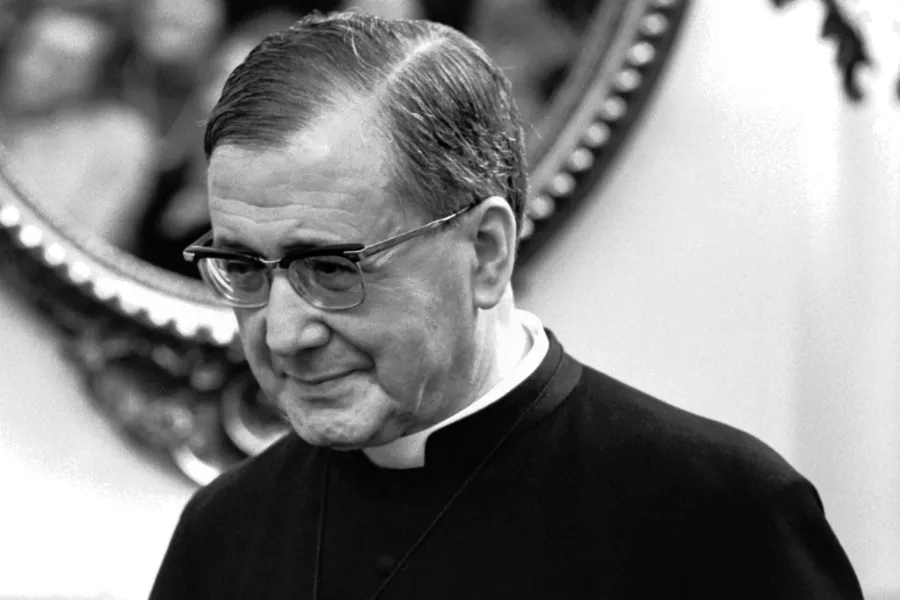
Rome, Italy, Jan 19, 2017 / 09:56 am (CNA/EWTN News).- After the death of Opus Dei Prelate Bishop Javier Echevarría Rodríguez in December, members of the prelature are gathering in Rome in preparation for the election of their new leader, which will take place in the coming days.
Set to begin Jan. 21 with a special session for women, the election process has no definite end date, since after the new prelate’s election, discussion about future governance is expected to last several days.
The former prelate, Bishop Echevarría, died Dec. 12 at the age of 84 in Rome due to respiratory failure several days after being hospitalized with pneumonia. The bishop served as St. Josemaria's secretary from 1953 to 1975, and was ordained a priest of the prelature in 1955, at the age of 23. He was later named secretary general of Opus Dei, and was elected prelate in 1994. He was consecrated a bishop the following year.
Since Echevarría’s death the prelature's ordinary government has been headed by his auxiliary, Msgr. Fernando Ocariz, expected by some to be a natural replacement for the late prelate.
Context
Founded in 1920 by St. Josemaria Escriva, Opus Dei was declared a “personal prelature” by St. John Paul II in 1982, meaning it is a structure that is composed of a prelate, clergy, and lay members united in carrying out certain pastoral activities through a specific spiritual path that isn’t limited to geography, but can be lived no matter where its members are.
Until now, the organization is the only personal prelature in the Catholic Church.
Opus Dei’s spirituality emphasizes that holiness can be achieved by anyone, and is dedicated to spiritual growth and discipleship among the laity, teaching its members to use their work and their ordinary activities as a way to encounter God.
Currently there are roughly 92,000 members of the prelature, of whom 2,083 are priests. Apart from the members of the Priestly Society of the Holy Cross, there are some 1,900 priests who serve in dioceses throughout the world. However, despite the prelature’s many priests, the majority of members are women, who form roughly 57 percent of the prelature.
Once the new prelate has been approved by the Pope, he will become the third successor of St. Josemaria Escriva, whose immediate successor was Bl. Alvaro del Portillo.
In a Jan. 15 article on the Opus Dei website, Msgr. Ocariz said members “are living this period in an attitude of prayer, going especially to the Holy Spirit.”
“We live these days very close to the Holy Father Francis and the whole Church, of which Opus Dei is a small part,” he said, adding that “of course, we feel a strong sense of gratitude for the pastoral work and the good example given by Bishop Javier Echevarría.”
Conditions
For a candidate to be eligible as the next Prelate they must be a priest who is at least 40 years old, has been a part of the prelature for at least 10 years, has been ordained for at least five years, and is a member of the Congress of electors.
Currently there are 94 priests from 45 countries who fit the bill, including many who serve as regional vicars, meaning they represent the Prelate in the countries in which they serve. Other eligible priests have either spent long tenures working in Rome or in one of the 49 circumscriptions that make up the prelature.
According to Opus Dei’s statutes, which list a set of qualities desirable in a prelate, their leader must in short stand out in terms of how he lives the virtues of piety, charity, and prudence, his love for the Church and the Magisterium, as well as his fidelity to the spirit of Opus Dei.
Studies, both civil and ecclesial, are also factors, as well as having competence in pastoral government.
The Process
Elections for a new prelate begin with a plenary meeting of the Central Advisory, the prelature’s women’s council, which will take place Jan. 21.
During this initial stage, each of the women participating will submit the name or names from among the priests in the electoral congress whom they think is best suited for the job. They will then pass these recommendations to the congress, who will vote for a candidate with these suggestions in mind.
The official election process is set to begin Jan. 23.
A total of 194 faithful, all men, involved in Opus Dei pastoral work throughout the world will participate in the actual elections, including both priests and lay people who are at least 32 years old and have been a part of the prelature for at least nine years.
In comments at a Jan. 16 press briefing on the elections, Professor Ines Llorens, a canonist and member of Opus Dei, stressed the importance of the women’s contribution at the start of the process, saying the Central Advisory council “is the central department and has an important role in the government of Opus Dei.”
Referencing their founder, she said St. Josemaria Escriva “wanted women to have a specific part to say things and he wanted this to be manifested in the prelature’s statutes.”
“The fact that we are the first to say our opinions is important. That voice is always listened to.”
Once the elections are over and the new prelate has accepted the position, either he or a representative of the prelature will ask Pope Francis for his confirmation of the candidate, since it is technically the Pope who appoints the Prelate of Opus Dei.
The Pope can reject the new prelate, in which case the electoral congress would go back to the drawing board and propose a new candidate.
However, should Francis accept the new prelate, participants in the congress will then meet for several more days in order to select members of the central councils that assist the prelate in his governance.
Professor Eduardo Baura, also a canonist and member of the prelature who was present at the Jan. 16 briefing, told journalists that “being a personal prelature, Opus Dei is not like dioceses where there is a procedure – the proposals of the nuncios, the relationship with the episcopal conference, the proposals of the Congregation for Bishops.”
“This process isn't there for the Opus Dei Prelate,” he said, noting that when the Pope gave the prelature its statutes, “he chose the canonical method of an electoral congress with an election and then a nomination from the Pope.”
The Pope's decision “is unquestionable,” Baura said, but noted that “it usually confirms what has been decided in the congress.”
In the final stage of the process, members of the congress will make an evaluation of the current state of the prelature and its activities throughout the world.
Plenary sessions will then be held to discuss different proposals determining the guidelines for the new incoming government, who will serve under the new prelate for an eight-year period until the next general congress.
Previous Post

January 19, 2017
College group sues after being denied grant for pro-life speaker
Next Post
January 19, 2017 Pope Francis: The Christian life requires fighting against Satan
Browse Our Archives
Select a Category Americas Asia - Pacific Europe Middle East - Africa Uncategorized US Vatican
Select a Month November 2017 October 2017 September 2017 August 2017 July 2017 June 2017 May 2017 April 2017 March 2017 February 2017 January 2017 December 2016 November 2016 October 2016 September 2016 August 2016 July 2016 June 2016 May 2016 April 2016 March 2016 February 2016 January 2016 December 2015 November 2015 October 2015 September 2015 August 2015 July 2015 June 2015 May 2015 April 2015 March 2015 February 2015 January 2015 December 2014 November 2014 October 2014 September 2014 August 2014 July 2014 June 2014 May 2014 April 2014 March 2014 February 2014 January 2014 December 2013 November 2013 October 2013 September 2013 August 2013 July 2013 June 2013 May 2013 April 2013 March 2013 February 2013 January 2013 December 2012 November 2012 October 2012 September 2012 August 2012 July 2012 June 2012 May 2012
TAKE THE
Religious Wisdom Quiz
Whose sheep did David care for before he became king?
Select your answer to see how you score.
His father's Saul's Pharaoh's His brother's
Related posts from Catholic News

Sixty Vincentians martyred during Spanish Civil War to...

Filipinos gather in Rome to promote bishop's beatification...

UK bishop calls for prayers as MPs urge...

On All Souls' Day, Pope Francis prays for...
TRENDING AT PATHEOS Catholic

The Parable Of The Sower And The Word...
One of Christ’s most famous parables is that of the sower who...

Rejecting Doom: Christian Hope And Human Action
Christianity is a religion of hope. We are to have hope and...

Why I Choose the Eucharist Over the Sermon
Choose the Eucharist, Not the Sermon What are we supposed to get...

5 Design Elements Found in Spiritually Rooted Homes
Putting Spirituality Into Home Decor Our homes are more than our living...

Credo: A Story of God Told with the...
About 10 years ago, I began to imagine a personal "Credo" that...

The Anatomy of Divine Revelation in Catholic Thought
The claim that God has made Himself known to human beings is...
view all Catholic blogs
Ad-Free & Subscriber Log-In Subscription Support
- About Us
- 2026 Calendar
- Videos
- Podcasts
- Library of World Religions
- Faith In Media Tracker
- Advertise With Us
- Write for Us
- Privacy Policy
- Terms of Service
- Do Not Sell My Data
- Contact Us
- Radiant Digital
- Manage Newsletter Subscriptions
- Unsubscribe From Notifications
- Sitemap
Copyright 2008-2026, Patheos. All rights reserved.
Subscription Support Ad-Free & Subscriber Log-In
Follow Patheos