
BuddhistCatholicContemplativeEvangelicalGeneral ChristianHinduJewishLatter-day SaintMuslimNew VisionsProgressive Christian
Beliefs
- Buddhist
- Catholic
- Contemplative
- Evangelical
- General Christian
- Hindu
- Jewish
- Latter-day Saint
- More Voices
- Muslim
- New Visions
- Pagan
- Progressive Christian
Topics
- Religion News
- Food and Religion
- Sports and Religion
- Religious Art
- Religious Music and Entertainment
- Religious Events
- History and Religion
- Style and Religion
- Politics and Religion
- Women in Religion
- Recreation Outdoors and Religion
- Business Finance and Religion
- Careers Workplace and Religion
- Education and Religion
- Family Parenting and Religion
- Health Fitness and Religion
- Home and Religion
- Relationships and Religion
- Technology and Religion
- Travel and Religion
Columnists
- Buddhist Columnists
- Business Finance and Religion Columnists
- Careers Workplace and Religion Columnists
- Catholic Columnists
- Contemplative Columnists
- Education and Religion Columnists
- Evangelists Columnists
- Family Parenting and Religion Columnists
- General Christian Columnists
- Health Fitness and Religion Columnists
- Hindu Columnists
- History and Religion Columnists
- Home and Religion Columnists
- Jewish Columnists
- More Voices Columnists
- Latter Day Columnists
- Muslim Columnists
- New Visions Columnists
- Nonreligious Columnists
- Pagan Columnists
- Politics and Religion Columnists
- Progressive Columnists
- Recreation Outdoors and Religion Columnists
- Relationships and Religion Columnists
- Religion News Columnists
- Religious Art Columnists
- Religious Events Columnists
- Religious Music and Entertainment Columnists
- Sports and Religion Columnists
- Style and Religion Columnists
- Technology and Religion Columnists
- Travel and Religion Columnists
- Women in Religion Columnists
Resource Library
- 2026 Calendar
- Library of World Religions
- The 100 Most Holy Places on Earth
- Patheos Answers
- Podcasts
- Videos
- Faith Leaders Database
- Anglican Episcopalian
- Bahai
- Baptist
- Buddhism
- Christianity
- Confucianism
- Eastern Orthodoxy
- Hinduism
- Holiness and Pentecostal
- ISKCON
- Islam
- Judaism
- Lutheran
- Methodist
- The Church of Jesus Christ of Latter-day Saints
- New Age
- Paganism
- Presbytarian and Reformed
- Protestantism
- Religion Behind the Scenes
- Roman Catholic
- Scientology
- Shia Islam
- Sikhism
- Sufism
- Sunni Islam
- Taoism
- Zen
- See all religions
Research Tools
 Ad-Free & Subscriber Log-In Subscription Support
Ad-Free & Subscriber Log-In Subscription Support
Follow Patheos 

- Trending:
- Forgiveness
- |
- Marriage
- |
- Consciousness
- |
- Death Penalty
- |
- Election
- |
- Halloween
 Catholic News
- Home
- Catholic
- Religion News
- Maltese bishops: Divorced-and-remarried ‘at peace with God’ may receive Communion
Maltese bishops: Divorced-and-remarried ‘at peace with God’ may receive Communion
Last updated on: January 13, 2017 at 6:31 pm by CNA Daily News
Maltese bishops: Divorced-and-remarried ‘at peace with God’ may receive Communion 2017-01-13T18:31:00+00:00 CNA Daily News
Patheos Explore the world's faith through different perspectives on religion and spirituality! Patheos has the views of the prevalent religions and spiritualities of the world.
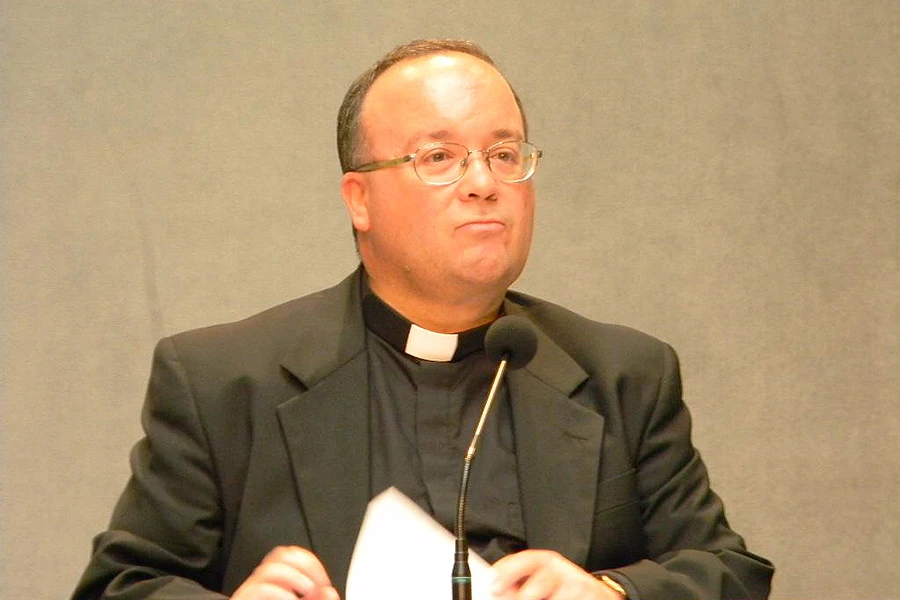
Valletta, Malta, Jan 13, 2017 / 11:31 am (CNA/EWTN News).- As debate over Amoris laetitia continues to gain steam, the Maltese bishops have come out with a new set of pastoral guidelines allowing divorced-and-remarried persons in certain cases, after “honest discernment”, to receive Communion.
The introduction to the guidelines opens by saying that “like the star which led the Magi toward their encounter with Jesus,” Amoris laetitia also “enlightens our families in their journey toward Jesus as his disciples.”
This message also includes couples and families in “complex situations,” such as those who are separated or divorced and have entered into new unions.
While these people might have “lost their first marriage,” many have not lost hope in Christ, and “earnestly desire to live in harmony with God and the Church, so much so that they are asking us what they can do in order to be able to celebrate the sacraments of Reconciliation and the Eucharist.”
Like the Magi “these persons – at times after a strenuous and difficult journey – are able to meet Christ who offers them a future even when it is impossible for them to follow the same route as before,” the bishops said.
Through a process of “accompaniment and honest discernment,” God is able to open new paths to these people, “even if their previous journey may have been one of darkness, marked with past mistakes or sad experiences of betrayal and abandonment.”
Signed by Archbishop Charles Scicluna of Malta and Bishop Mario Grech of Gozo, the guidelines were published Jan. 13 and consist of 14 bullet points priests are to use when accompanying couples in irregular situations.
They cover only Chapter 8 of Amoris laetitia, Pope Francis' 2016 apostolic exhortation, which is dedicated to accompanying, discerning and integrating fragility and is home to the controversial footnote 351.
The chapter deals, among other things, with the pastoral care of the divorced-and-remarried, who have not been admitted to Communion unless they commit to living with their partner “as brother and sister,” forgoing the acts proper to married couples.
Ambiguous language in the chapter has led to uncertainties about this practice and about the teaching and status of the apostolic exhortation. Some have maintained it is incompatible with Church teaching, and others that it has not changed the Church's discipline. Still others read Amoris laetitia as opening the way to a new pastoral practice, or even as a progression in continuity with St. John Paul II.
In their guidelines, the Maltese bishops placed a strong emphasis on discernment and close pastoral accompaniment in the formation of the conscience of divorced couples in second unions, particularly when children are involved.
They encouraged pastors to help couples in these situations to make “an examination of conscience through moments of reflection and repentance,” asking themselves how they reacted when their first marriage spun into crisis, whether or not they tried to reconcile, what has become of their spouse, and what consequences the separation has had on the rest of their family and community.
“This applies in a special way for those cases in which a person acknowledges his or her own responsibility for the failure of the marriage,” they said, encouraging priests to carefully weigh the “moral responsibility” of particular situations.
In this process, special attention ought to be given “to the conditioning restraints and attenuating circumstances,” since certain factors might exist which either limit the ability to make a decision or “diminish the imputability or responsibility for an action,” such as fear, violence, immaturity, anxiety, or various psychological or social factors, the bishops wrote.
Quoting Amoris laetitia, they said that as a result of these “conditioning restraints and attenuating circumstances,” it can no longer “simply be said that all those in any irregular situation are living in a state of mortal sin and are deprived of sanctifying grace.”
It’s possible that even in “an objective situation of sin – which may not be subjectively culpable, or fully such – a person can be living in God’s grace, can love and can also grow in the life of grace and charity, while receiving the Church’s help to this end,” the bishops said, again quoting Amoris laetitia.
Discernment in this area is especially important “since, as the Pope teaches, in some cases this help can include the help of the sacraments.”
“By thinking that everything is black and white, we sometimes close off the way of grace and of growth, and discourage paths of sanctification which give glory to God,” the bishops said.
They called for “more prudent instruction in the law of gradualness” so as to discern the presence and grace of God “in all situations” and to help people draw nearer to God, “even when not in a position to understand, appreciate, or fully carry out the objective demands of the law.”
“Throughout the discernment process, we should also examine the possibility of conjugal continence. Despite the fact that this ideal is not at all easy, there may be couples who, with the help of grace, practice this virtue without putting at risk other aspects of their life together. On the other hand, there are complex situations where the choice of living 'as brothers and sisters' becomes humanly impossible and give rise to greater harm,” the Maltese bishops wrote.
In this, they referred to footnote 329 of Amoris laetitia. This footnote applies the words of Vatican II's pastoral constitution on the Church in the modern world, Gaudium et spes, that “where the intimacy of married life is broken off, its faithfulness can sometimes be imperiled and its quality of fruitfulness ruined” – in its context, speaking about married couples – to “the divorced who have entered a new union.”
Malta's bishops then wrote: “If, as a result of the process of discernment, undertaken with 'humility, discretion and love for the Church and her teaching, in a sincere search for God’s will and a desire to make a more perfect response to it', a separated or divorced person who is living in a new relationship manages, with an informed and enlightened conscience, to acknowledge and believe that he or she are at peace with God, he or she cannot be precluded from participating in the sacraments of Reconciliation and the Eucharist.”
Neither should these couples be excluded from being godparents, they said. However, if on the other hand someone “flaunts an objective sin” as if it were the Christian ideal or tries to impose something contrary to Church teaching, “he or she can in no way presume to teach or preach to others.”
The bishops concluded their guidelines stressing that “in order to avoid any cause for scandal or confusion among the faithful, we must do our utmost in order to inform ourselves and our communities by studying and promoting the teachings of Amoris Laetitia. This teaching requires us to undergo a 'pastoral conversion'. Together with the Pope, we do understand those who would prefer a 'more rigorous pastoral care', but together with him, we believe that 'Jesus wants a Church attentive to the goodness which the Holy Spirit sows in the midst of human weakness, a Mother who, while clearly expressing her objective teaching, 'always does what good she can, even if in the process, her shoes get soiled by the mud of the street''.”
The Maltese bishops issued their guidelines days after Cardinal Gerhard Müller, prefect of the Congregation for the Doctrine of the Faith, said in an interview with an Italian TV station that while Chapter 8 of the document has met with fierce criticism, Amoris laetitia is “very clear” in its doctrine.
He challenged the four cardinal who recently published a letter they had sent to Pope Francis requesting that he “resolve the uncertainties and bring clarity” to the exhortation, particularly Chapter 8. Cardinal Müller said that making the discussion public “does damage to the Church.”
Cardinal Müller has consistently maintained that Pope Francis' 2016 apostolic exhortation on love in the family has not changed the Church's discipline on admission of the divorced-and-remarried to Communion, and that it must be read in continuity with the preceding Magisterium.
In a May 4 speech, he countered arguments that Amoris laetitia eliminated Church discipline on marriage and allowed in some cases the divorced-and-remarried to receive the Eucharist “without the need to change their way of life.” He stated: “This is a matter of a consolidated magisterial teaching, supported by scripture and founded on a doctrinal reason.”
If Pope Francis' exhortation “had wanted to eliminate such a deeply rooted and significant discipline, it would have said so clearly and presented supporting reasons,” Cardinal Müller said during his address at a Spanish seminary.
The dubia and Cardinal Müller's response – and now the norms issued by Archbishop Scicluna and Bishop Grech – demonstrate the varied reception and interpretation of the apostolic exhortation within the Church.
Previous Post

January 13, 2017
Youth to be protagonists in upcoming synod of bishops
Next Post
January 13, 2017 Drowned toddler is making miraculous recovery
Browse Our Archives
Select a Category Americas Asia - Pacific Europe Middle East - Africa Uncategorized US Vatican
Select a Month November 2017 October 2017 September 2017 August 2017 July 2017 June 2017 May 2017 April 2017 March 2017 February 2017 January 2017 December 2016 November 2016 October 2016 September 2016 August 2016 July 2016 June 2016 May 2016 April 2016 March 2016 February 2016 January 2016 December 2015 November 2015 October 2015 September 2015 August 2015 July 2015 June 2015 May 2015 April 2015 March 2015 February 2015 January 2015 December 2014 November 2014 October 2014 September 2014 August 2014 July 2014 June 2014 May 2014 April 2014 March 2014 February 2014 January 2014 December 2013 November 2013 October 2013 September 2013 August 2013 July 2013 June 2013 May 2013 April 2013 March 2013 February 2013 January 2013 December 2012 November 2012 October 2012 September 2012 August 2012 July 2012 June 2012 May 2012
TAKE THE
Religious Wisdom Quiz
How many men did Gideon initially gather?
Select your answer to see how you score.
15,000 20,000 10,000 32,000
Related posts from Catholic News

Sixty Vincentians martyred during Spanish Civil War to...

Filipinos gather in Rome to promote bishop's beatification...

UK bishop calls for prayers as MPs urge...

On All Souls' Day, Pope Francis prays for...
TRENDING AT PATHEOS Catholic

Creation, Preservation, and Teleology in Catholic Theology
As I write this, it is very early Monday morning. Like millions...

The Parable Of The Sower And The Word...
One of Christ’s most famous parables is that of the sower who...

Rejecting Doom: Christian Hope And Human Action
Christianity is a religion of hope. We are to have hope and...

Why I Choose the Eucharist Over the Sermon
Choose the Eucharist, Not the Sermon What are we supposed to get...

5 Design Elements Found in Spiritually Rooted Homes
Putting Spirituality Into Home Decor Our homes are more than our living...

Credo: A Story of God Told with the...
About 10 years ago, I began to imagine a personal "Credo" that...
view all Catholic blogs
Ad-Free & Subscriber Log-In Subscription Support
- About Us
- 2026 Calendar
- Videos
- Podcasts
- Library of World Religions
- Faith In Media Tracker
- Advertise With Us
- Write for Us
- Privacy Policy
- Terms of Service
- Do Not Sell My Data
- Contact Us
- Radiant Digital
- Manage Newsletter Subscriptions
- Unsubscribe From Notifications
- Sitemap
Copyright 2008-2026, Patheos. All rights reserved.
Subscription Support Ad-Free & Subscriber Log-In
Follow Patheos