
BuddhistCatholicContemplativeEvangelicalGeneral ChristianHinduJewishLatter-day SaintMuslimNew VisionsProgressive Christian
Beliefs
- Buddhist
- Catholic
- Contemplative
- Evangelical
- General Christian
- Hindu
- Jewish
- Latter-day Saint
- More Voices
- Muslim
- New Visions
- Pagan
- Progressive Christian
Topics
- Religion News
- Food and Religion
- Sports and Religion
- Religious Art
- Religious Music and Entertainment
- Religious Events
- History and Religion
- Style and Religion
- Politics and Religion
- Women in Religion
- Recreation Outdoors and Religion
- Business Finance and Religion
- Careers Workplace and Religion
- Education and Religion
- Family Parenting and Religion
- Health Fitness and Religion
- Home and Religion
- Relationships and Religion
- Technology and Religion
- Travel and Religion
Columnists
- Buddhist Columnists
- Business Finance and Religion Columnists
- Careers Workplace and Religion Columnists
- Catholic Columnists
- Contemplative Columnists
- Education and Religion Columnists
- Evangelists Columnists
- Family Parenting and Religion Columnists
- General Christian Columnists
- Health Fitness and Religion Columnists
- Hindu Columnists
- History and Religion Columnists
- Home and Religion Columnists
- Jewish Columnists
- More Voices Columnists
- Latter Day Columnists
- Muslim Columnists
- New Visions Columnists
- Nonreligious Columnists
- Pagan Columnists
- Politics and Religion Columnists
- Progressive Columnists
- Recreation Outdoors and Religion Columnists
- Relationships and Religion Columnists
- Religion News Columnists
- Religious Art Columnists
- Religious Events Columnists
- Religious Music and Entertainment Columnists
- Sports and Religion Columnists
- Style and Religion Columnists
- Technology and Religion Columnists
- Travel and Religion Columnists
- Women in Religion Columnists
Resource Library
- 2026 Calendar
- Library of World Religions
- The 100 Most Holy Places on Earth
- Patheos Answers
- Podcasts
- Videos
- Faith Leaders Database
- Anglican Episcopalian
- Bahai
- Baptist
- Buddhism
- Christianity
- Confucianism
- Eastern Orthodoxy
- Hinduism
- Holiness and Pentecostal
- ISKCON
- Islam
- Judaism
- Lutheran
- Methodist
- The Church of Jesus Christ of Latter-day Saints
- New Age
- Paganism
- Presbytarian and Reformed
- Protestantism
- Religion Behind the Scenes
- Roman Catholic
- Scientology
- Shia Islam
- Sikhism
- Sufism
- Sunni Islam
- Taoism
- Zen
- See all religions
Research Tools
 Ad-Free & Subscriber Log-In Subscription Support
Ad-Free & Subscriber Log-In Subscription Support
Follow Patheos 

- Trending:
- Forgiveness
- |
- Marriage
- |
- Consciousness
- |
- Death Penalty
- |
- Election
- |
- Halloween
 Catholic News
- Home
- Catholic
- Religion News
- How India’s ‘unreached’ tribal areas are being evangelized
How India’s ‘unreached’ tribal areas are being evangelized
Last updated on: December 13, 2016 at 10:02 am by CNA Daily News
How India’s ‘unreached’ tribal areas are being evangelized 2016-12-13T10:02:00+00:00 CNA Daily News
Patheos Explore the world's faith through different perspectives on religion and spirituality! Patheos has the views of the prevalent religions and spiritualities of the world.
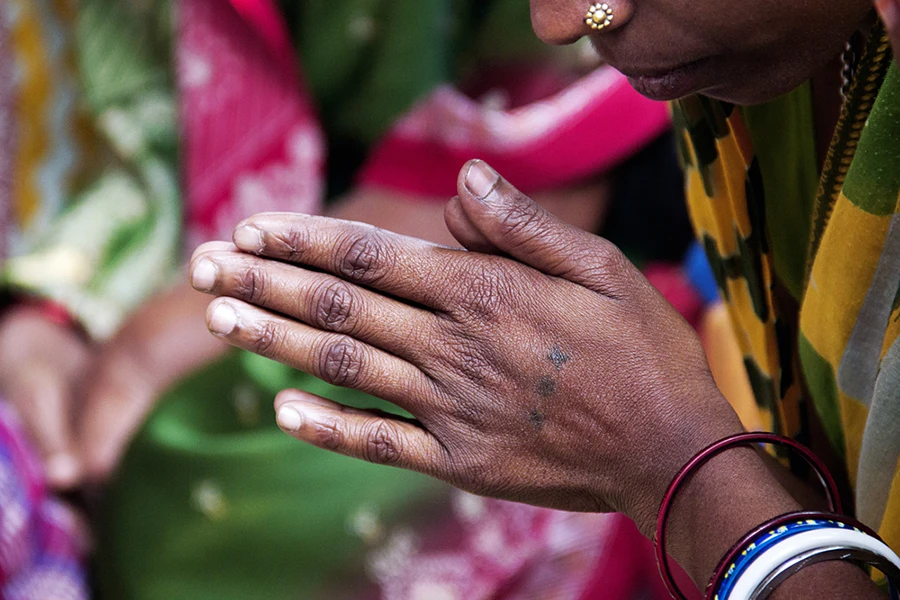
Vatican City, Dec 13, 2016 / 03:02 am (CNA/EWTN News).- Every day in the remote villages of Northeast India courageous priests and nuns are braving the elements of the wild – including tiger attacks and elephant stampedes – to bring the Good News to people who have yet to hear the name of Jesus.
People in these “unreached” areas “are very attracted to a sense of relating in a very human way to a God who loves them and is present with them,” Msgr. John Kozar told CNA Dec. 7.
Part of what makes this “missionary outreach” so important is the fact that the priests and sisters serving in the areas “heroically live in very crude conditions right with the people, in huts made of mud and cow dung, no plumbing and very little privacy.”
“Even their meals are taken with the entire village outside in a common setting on the ground,” Msgr. Kozar said, explaining that the ministry carried out in these areas is primarily one “of presence.”
Rather than building institutional churches, which is the focus in India's southern states, such as Kerala, evangelization in these smaller, tribal regions “is about being with the poor and sharing with them in a very natural way who this Jesus is and how He wants to share His love with all.”
Msgr. Kozar, president of the Catholic Near East Welfare Association (CNEWA), traveled to the Northeast of India, including the country’s Assam State, Nov. 20-Dec. 2 not only to visit with the tribal peoples that live in the area, “who are just being introduced to Jesus,” but also to accompany India’s two Eastern Churches as they serve the poor and needy.
Part of the itinerary, then, was spent assisting two bishops overseeing “the Great North of India” – Archbishop Kuriakose of the Syro-Malabar Diocese of Faridabad and Bishop Jacob Mar Barnabas of the Diocese of Gurgoan – in planning missionary programs.
A second phase of the trip was spent visiting Syro-Malabar projects in both “blighted urban areas” of Delhi and in the neighboring state of Haryana, including a new school, an open school – one that isn’t accredited or recognized by the Education Ministry – in the middle of a ghetto, a special needs facility for children, and a settlement for trash pickers.
Msgr. Kozar recalled that in several of the villages they visited, “we were very warmly” embraced and frequently welcomed with dances and songs, “signs of great love and respect.”
“In some instances I was probably the first person with white skin to ever visit them,” he said, noting that the terrain in the remote tribal areas they visited is rough enough that people are still at risk of attacks by wild animals.
As an example, Msgr. Kozar said that during their trip one woman was mauled to death by a wild tiger, while a man was trampled by a herd of elephants that “poured out of a tea estate and trampled a poor three-wheeled jitney driver.”
“This is a very common occurrence,” Kozar said, noting that he met several people who had lost loved ones in similar incidents. The landscape, he added, “varies from jungle, to forest, to rolling tea estates to plains cultivating rice in paddies.”
He pointed to the “impressive” catechetical work that lay people, both indigenous and from the Syro-Malankara Church, do in the tribal areas.
Since it’s still early on in their formation, courses deal largely with basic concepts of God, Jesus and Mary, teaching the people simple prayers and bible passages, as well as the concept of what it means to pray.
“The people are responding wonderfully and welcomed us with religious singing and even did a religious enactment of the Prodigal Son in their tribal language,” Kozar said, explaining that they are likely on a two-year program to be baptized.
He stressed that there’s no hurry, and it could even take up to a year of more after their baptism before the people are fully introduced to the Eucharist. In this sense, he said the Syro-Malankara Church “is doing the evangelization in a most responsible way and I think in a durable way.”
At one event 575 tribal people came together to participate in a religious ceremony and cornerstone laying for a new Church, he said, noting that they came from different villages and tribes in the area, some of whom traveled 7 hours by truck or jitney (a small bus), or walked several miles on foot simply to welcome the delegation and be present for the event.
During the celebration, “many tribes shared their cultures with each other by dressing in their native handmade woven skirts and performed their ritual dances, perhaps for the first time shared with other tribes.”
“This was in itself probably an historic event for them,” he said, noting that “it was the Church which brought them together.”
One “sad reality” CNEWA is constantly seeking to address in collaboration with the local churches, he said, is the fact that lots of children have no opportunities for education, many because their families work on estates or because from age seven they have had to work long hours in the sun making bricks.
“Many children attend no school, some only attend for five years and drop out because the quality is so sub-standard that they cannot continue to a higher level,” he said.
The Church, then, provides opportunities for schooling via these “open schools” in the ghettos, which, though not officially recognized by the state, provide “some semblance of learning, even if it is very basic literacy class or vocabulary building about certain basic realities in life.”
At times the Church offers classes “in very crude conditions,” Kozar said, recalling how happy children have been when they go to school, particularly the ones who sort garbage outside of Delhi.
These children live “at a ‘mountain’ of garbage which is probably 4-5 hundred feet high in elevation and continues to grow as trucks deliver more garbage,” he said, noting that people there “actually live on compressed garbage – they sort through what arrives daily and some collect metal, some plastic, some cardboard and some, even human hair.”
Msgr. Kozar also cautioned that although the Church is doing a lot, she must be discreet, because “there are some very hardline Hindu nationalists” who consider evangelization as being “anti-Hindu.”
He said that he must also be cautious of his own presence when arriving to airports and public spaces since CNEWA is a pontifical foundation, and as its president he represents the Holy See.
The tribal people “are humble and even protective of us and the priests and sisters,” he said, recalling how one of them told him that if the sisters living with them were ever threatened, “there will be one-hundred tribal men to guard them within a very short time.”
“They greatly love the priests and sisters who live with them and serve them.”
Previous Post

December 13, 2016
Traveling display notes struggle, hope of displaced Ukrainians
Next Post
December 13, 2016 This is how Pope Francis will celebrate his 80th birthday
Browse Our Archives
Select a Category Americas Asia - Pacific Europe Middle East - Africa Uncategorized US Vatican
Select a Month November 2017 October 2017 September 2017 August 2017 July 2017 June 2017 May 2017 April 2017 March 2017 February 2017 January 2017 December 2016 November 2016 October 2016 September 2016 August 2016 July 2016 June 2016 May 2016 April 2016 March 2016 February 2016 January 2016 December 2015 November 2015 October 2015 September 2015 August 2015 July 2015 June 2015 May 2015 April 2015 March 2015 February 2015 January 2015 December 2014 November 2014 October 2014 September 2014 August 2014 July 2014 June 2014 May 2014 April 2014 March 2014 February 2014 January 2014 December 2013 November 2013 October 2013 September 2013 August 2013 July 2013 June 2013 May 2013 April 2013 March 2013 February 2013 January 2013 December 2012 November 2012 October 2012 September 2012 August 2012 July 2012 June 2012 May 2012
TAKE THE
Religious Wisdom Quiz
How should Christians respond to insults?
Select your answer to see how you score.
Insult in return Fight back Bless those who curse you Ignore always
Related posts from Catholic News

How do we help trafficking victims re-enter society?...

More than just giving – World Day of...

New book reveals details of John Paul I’s...

Despite reports, Pope Francis isn’t opening the door...
TRENDING AT PATHEOS Catholic

Creation, Preservation, and Teleology in Catholic Theology
As I write this, it is very early Monday morning. Like millions...

The Parable Of The Sower And The Word...
One of Christ’s most famous parables is that of the sower who...

Rejecting Doom: Christian Hope And Human Action
Christianity is a religion of hope. We are to have hope and...

Why I Choose the Eucharist Over the Sermon
Choose the Eucharist, Not the Sermon What are we supposed to get...

5 Design Elements Found in Spiritually Rooted Homes
Putting Spirituality Into Home Decor Our homes are more than our living...

Credo: A Story of God Told with the...
About 10 years ago, I began to imagine a personal "Credo" that...
view all Catholic blogs
Ad-Free & Subscriber Log-In Subscription Support
- About Us
- 2026 Calendar
- Videos
- Podcasts
- Library of World Religions
- Faith In Media Tracker
- Advertise With Us
- Write for Us
- Privacy Policy
- Terms of Service
- Do Not Sell My Data
- Contact Us
- Radiant Digital
- Manage Newsletter Subscriptions
- Unsubscribe From Notifications
- Sitemap
Copyright 2008-2026, Patheos. All rights reserved.
Subscription Support Ad-Free & Subscriber Log-In
Follow Patheos