
BuddhistCatholicContemplativeEvangelicalGeneral ChristianHinduJewishLatter-day SaintMuslimNew VisionsProgressive Christian
Beliefs
- Buddhist
- Catholic
- Contemplative
- Evangelical
- General Christian
- Hindu
- Jewish
- Latter-day Saint
- More Voices
- Muslim
- New Visions
- Pagan
- Progressive Christian
Topics
- Religion News
- Food and Religion
- Sports and Religion
- Religious Art
- Religious Music and Entertainment
- Religious Events
- History and Religion
- Style and Religion
- Politics and Religion
- Women in Religion
- Recreation Outdoors and Religion
- Business Finance and Religion
- Careers Workplace and Religion
- Education and Religion
- Family Parenting and Religion
- Health Fitness and Religion
- Home and Religion
- Relationships and Religion
- Technology and Religion
- Travel and Religion
Columnists
- Buddhist Columnists
- Business Finance and Religion Columnists
- Careers Workplace and Religion Columnists
- Catholic Columnists
- Contemplative Columnists
- Education and Religion Columnists
- Evangelists Columnists
- Family Parenting and Religion Columnists
- General Christian Columnists
- Health Fitness and Religion Columnists
- Hindu Columnists
- History and Religion Columnists
- Home and Religion Columnists
- Jewish Columnists
- More Voices Columnists
- Latter Day Columnists
- Muslim Columnists
- New Visions Columnists
- Nonreligious Columnists
- Pagan Columnists
- Politics and Religion Columnists
- Progressive Columnists
- Recreation Outdoors and Religion Columnists
- Relationships and Religion Columnists
- Religion News Columnists
- Religious Art Columnists
- Religious Events Columnists
- Religious Music and Entertainment Columnists
- Sports and Religion Columnists
- Style and Religion Columnists
- Technology and Religion Columnists
- Travel and Religion Columnists
- Women in Religion Columnists
Resource Library
- 2026 Calendar
- Library of World Religions
- The 100 Most Holy Places on Earth
- Patheos Answers
- Podcasts
- Videos
- Faith Leaders Database
- Anglican Episcopalian
- Bahai
- Baptist
- Buddhism
- Christianity
- Confucianism
- Eastern Orthodoxy
- Hinduism
- Holiness and Pentecostal
- ISKCON
- Islam
- Judaism
- Lutheran
- Methodist
- The Church of Jesus Christ of Latter-day Saints
- New Age
- Paganism
- Presbytarian and Reformed
- Protestantism
- Religion Behind the Scenes
- Roman Catholic
- Scientology
- Shia Islam
- Sikhism
- Sufism
- Sunni Islam
- Taoism
- Zen
- See all religions
Research Tools
 Ad-Free & Subscriber Log-In Subscription Support
Ad-Free & Subscriber Log-In Subscription Support
Follow Patheos 

- Trending:
- Forgiveness
- |
- Marriage
- |
- Consciousness
- |
- Death Penalty
- |
- Election
- |
- Halloween
 Catholic News
- Home
- Catholic
- Religion News
- You’ve got questions (about death)? The Church has answers.
You’ve got questions (about death)? The Church has answers.
Last updated on: July 6, 2017 at 9:02 am by CNA Daily News
You’ve got questions (about death)? The Church has answers. 2017-07-06T09:02:00+00:00 CNA Daily News
Patheos Explore the world's faith through different perspectives on religion and spirituality! Patheos has the views of the prevalent religions and spiritualities of the world.
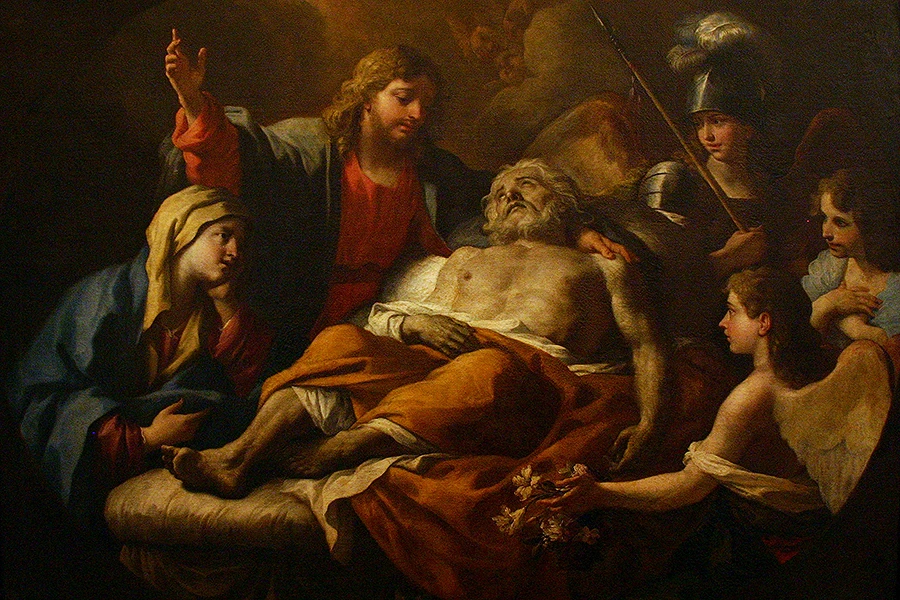
London, England, Jul 6, 2017 / 03:02 am (CNA/EWTN News).- In the 14th century, approximately one third of the population of Europe – or anywhere from 75 million to 200 million people – was wiped out due to what became known as the Black Death.
Characterized by and named for the black, bulbous sores that oozed pus and blood, the affliction typically killed its victims within two to seven days.
The Black Death, also known as the Black Plague, understandably shook the faith of the people of Europe at the time. It was shortly after its reign of terror that an anonymous Dominican friar wrote “Ars moriendi,” or “The Art of Dying,” a six-chapter work explaining the Church’s perspective on a good death.
It included catechesis on why death was not to be feared, how the soul could prepare itself for death, and proper prayers to for the individual and loved ones to say at the time of death. A shorter version translated the book into 11 woodcuts illustrating the work.
Now, more than 600 years later, “The Art of Dying” got a facelift, thanks to the Catholic Church in England and Wales.
The teachings have been translated onto a website, complete with animations, video interviews with experts and priests, and explanations of various aspects of preparing well for death as a Catholic. The new resource was debuted last year, one day before All Souls’ feast day, where the Church remembers and prays for the dead.
“Most people have an instinctive fear of death, but many also have a conviction that something lies beyond, that death does not have the last word,” the website explains.
“The Catholic faith is rooted in the belief that God made us to enjoy eternal life with him.”
The Art of Dying website is split into five categories – What is dying well?, Talking about death, Facing death personally, Losing a loved one, and Caring for the dying.
It also explains the various means of spiritual support available through the Church for a dying person, including the Anointing of the Sick, and final reception of the sacraments of confession and communion.
It also addresses the big questions people often have at the end of their lives the meaning of life, suffering, and the goodness of God.
“Sometimes people wonder, when confronted by tragedy or suffering, why God lets it happen. When we are tempted to echo those words, we need to remember that God is now and forever at the heart of any human suffering,” Fr. Peter Harries, the Catholic chaplain at University College London Hospital, told The Art of Dying.
“The Christ who was cruelly tortured and crucified on Calvary suffers still whenever there is pain, suffering or death, among those he now identifies with. If we ask ‘where was God in all this?’, the answer has to be ‘There, wherever there are human beings’.”
But The Art of Dying is not just for Catholics, the creators of the website explain in their ‘About’ section.
“There is a shared interest in discussing how we can make death more peaceful and meaningful. It is likely that you will share the Church’s concern that sometimes, particularly in hospital, dying patients are subjected to unnecessary medical interventions that prolong suffering,” they said.
“You will probably agree with the Church that they should be kept as comfortable as possible and given appropriate pain relief. You will probably want to know more about what you can do to achieve a good death for you and your loved ones.”
In an age where physician-assisted suicide and euthanasia, both of which the Catholic Church strongly opposes, have become increasingly popular, the updated Art of Dying could serve as a valuable resource for Catholics and people everywhere who are looking for answers to their questions about how to die a good death.
“After centuries of ministering to the dying, the Catholic Church has a fund of experience to share in what was traditionally called the art of dying well,” the website explains.
This article was originally published on CNA Nov. 2, 2016.
Previous Post

November 2, 2016
How Justice Scalia suffered the 'contempt of a sophisticated world'
Next Post
November 2, 2016 In Albania, the Church honors martyrs of the communist era
Browse Our Archives
Select a Category Americas Asia - Pacific Europe Middle East - Africa Uncategorized US Vatican
Select a Month November 2017 October 2017 September 2017 August 2017 July 2017 June 2017 May 2017 April 2017 March 2017 February 2017 January 2017 December 2016 November 2016 October 2016 September 2016 August 2016 July 2016 June 2016 May 2016 April 2016 March 2016 February 2016 January 2016 December 2015 November 2015 October 2015 September 2015 August 2015 July 2015 June 2015 May 2015 April 2015 March 2015 February 2015 January 2015 December 2014 November 2014 October 2014 September 2014 August 2014 July 2014 June 2014 May 2014 April 2014 March 2014 February 2014 January 2014 December 2013 November 2013 October 2013 September 2013 August 2013 July 2013 June 2013 May 2013 April 2013 March 2013 February 2013 January 2013 December 2012 November 2012 October 2012 September 2012 August 2012 July 2012 June 2012 May 2012
TAKE THE
Religious Wisdom Quiz
Who was the last apostle to die?
Select your answer to see how you score.
Peter Paul James John
Related posts from Catholic News

Sixty Vincentians martyred during Spanish Civil War to...

Filipinos gather in Rome to promote bishop's beatification...

UK bishop calls for prayers as MPs urge...

On All Souls' Day, Pope Francis prays for...
TRENDING AT PATHEOS Catholic

Creation, Preservation, and Teleology in Catholic Theology
As I write this, it is very early Monday morning. Like millions...

The Parable Of The Sower And The Word...
One of Christ’s most famous parables is that of the sower who...

Rejecting Doom: Christian Hope And Human Action
Christianity is a religion of hope. We are to have hope and...

Why I Choose the Eucharist Over the Sermon
Choose the Eucharist, Not the Sermon What are we supposed to get...

5 Design Elements Found in Spiritually Rooted Homes
Putting Spirituality Into Home Decor Our homes are more than our living...

Credo: A Story of God Told with the...
About 10 years ago, I began to imagine a personal "Credo" that...
view all Catholic blogs
Ad-Free & Subscriber Log-In Subscription Support
- About Us
- 2026 Calendar
- Videos
- Podcasts
- Library of World Religions
- Faith In Media Tracker
- Advertise With Us
- Write for Us
- Privacy Policy
- Terms of Service
- Do Not Sell My Data
- Contact Us
- Radiant Digital
- Manage Newsletter Subscriptions
- Unsubscribe From Notifications
- Sitemap
Copyright 2008-2026, Patheos. All rights reserved.
Subscription Support Ad-Free & Subscriber Log-In
Follow Patheos