
BuddhistCatholicContemplativeEvangelicalGeneral ChristianHinduJewishLatter-day SaintMuslimNew VisionsProgressive Christian
Beliefs
- Buddhist
- Catholic
- Contemplative
- Evangelical
- General Christian
- Hindu
- Jewish
- Latter-day Saint
- More Voices
- Muslim
- New Visions
- Pagan
- Progressive Christian
Topics
- Religion News
- Food and Religion
- Sports and Religion
- Religious Art
- Religious Music and Entertainment
- Religious Events
- History and Religion
- Style and Religion
- Politics and Religion
- Women in Religion
- Recreation Outdoors and Religion
- Business Finance and Religion
- Careers Workplace and Religion
- Education and Religion
- Family Parenting and Religion
- Health Fitness and Religion
- Home and Religion
- Relationships and Religion
- Technology and Religion
- Travel and Religion
Columnists
- Buddhist Columnists
- Business Finance and Religion Columnists
- Careers Workplace and Religion Columnists
- Catholic Columnists
- Contemplative Columnists
- Education and Religion Columnists
- Evangelists Columnists
- Family Parenting and Religion Columnists
- General Christian Columnists
- Health Fitness and Religion Columnists
- Hindu Columnists
- History and Religion Columnists
- Home and Religion Columnists
- Jewish Columnists
- More Voices Columnists
- Latter Day Columnists
- Muslim Columnists
- New Visions Columnists
- Nonreligious Columnists
- Pagan Columnists
- Politics and Religion Columnists
- Progressive Columnists
- Recreation Outdoors and Religion Columnists
- Relationships and Religion Columnists
- Religion News Columnists
- Religious Art Columnists
- Religious Events Columnists
- Religious Music and Entertainment Columnists
- Sports and Religion Columnists
- Style and Religion Columnists
- Technology and Religion Columnists
- Travel and Religion Columnists
- Women in Religion Columnists
Resource Library
- 2026 Calendar
- Library of World Religions
- The 100 Most Holy Places on Earth
- Patheos Answers
- Podcasts
- Videos
- Faith Leaders Database
- Anglican Episcopalian
- Bahai
- Baptist
- Buddhism
- Christianity
- Confucianism
- Eastern Orthodoxy
- Hinduism
- Holiness and Pentecostal
- ISKCON
- Islam
- Judaism
- Lutheran
- Methodist
- The Church of Jesus Christ of Latter-day Saints
- New Age
- Paganism
- Presbytarian and Reformed
- Protestantism
- Religion Behind the Scenes
- Roman Catholic
- Scientology
- Shia Islam
- Sikhism
- Sufism
- Sunni Islam
- Taoism
- Zen
- See all religions
Research Tools
 Ad-Free & Subscriber Log-In Subscription Support
Ad-Free & Subscriber Log-In Subscription Support
Follow Patheos 

- Trending:
- Forgiveness
- |
- Marriage
- |
- Consciousness
- |
- Death Penalty
- |
- Election
- |
- Halloween
 Catholic News
- Home
- Catholic
- Religion News
- We’ve all got it wrong about women in the Catholic Church
We’ve all got it wrong about women in the Catholic Church
Last updated on: December 26, 2016 at 9:02 pm by CNA Daily News
We’ve all got it wrong about women in the Catholic Church 2016-12-26T21:02:00+00:00 CNA Daily News
Patheos Explore the world's faith through different perspectives on religion and spirituality! Patheos has the views of the prevalent religions and spiritualities of the world.
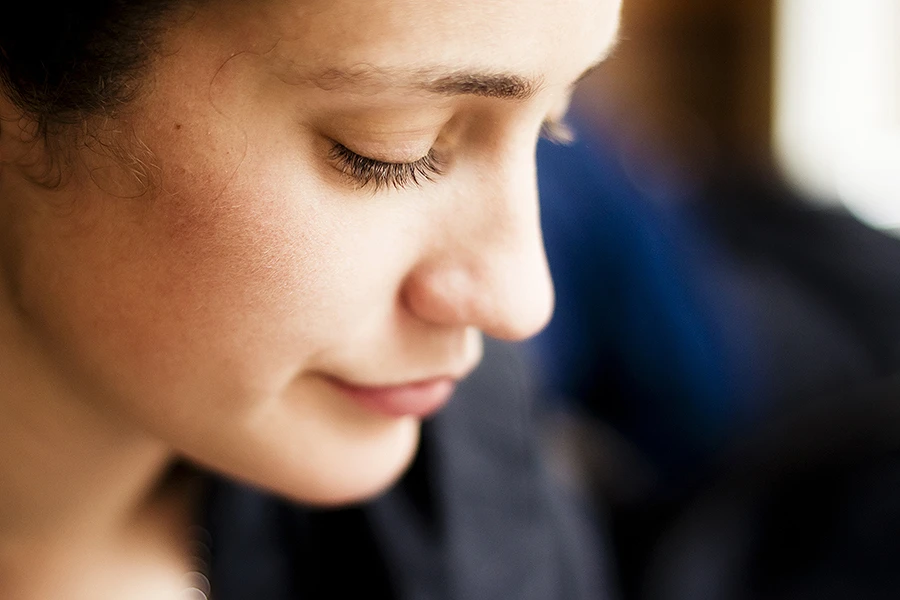
Rome, Italy, Dec 26, 2016 / 02:02 pm (CNA).- When it comes to talking about women and their role in the Church, discussion tends to focus almost exclusively on getting ordained or being placed in high ranking, decision making positions.
However, amid all the buzz, it's easy to get lost in the debate and miss the fact that the entire discussion is rotating around the wrong axis.
In simply addressing ordination or curial positions – a line that reduces both women and the discussion about them to clericalism – everyone on both sides of the issue has overlooked that the question is actually much larger, and demands a much greater involvement on the part of the laity.
Ana Cristina Villa, a consecrated laywoman with the Marian Community of Reconciliation who works in the office for women of the new mega-dicastery for Laity, Family and Life, told CNA that what a woman does in the Church is “not just a role, but a vocation…it’s what God calls women to do in the Church.”
She said that as it stands, women don't really have a big presence in important or decision making positions, “so that should be promoted, and current Canon Law allows this in a good number of ways,” but she also cautioned that the discussion surrounding women in the Church is wider, involving the laity as a whole.
Villa, who is from Colombia but has lived in Italy for close to 20 years, said she sees that many people in their daily lives still move forward with the attitude that “the Church should do this,” but when they refer to the Church, they “are speaking of the clergy.”
“I think that is a big distortion for the vocation of women, because women are obviously not the clergy,” she said, explaining that “when you get into this discussion about women in the Church you have to understand that there is a wider context.”
In her view, Catholic faithful need to grow in their understanding that, “according to their own vocation,” all “baptized are the Church and all baptized are called to feel the Church as their own and to contribute to the Church.”
“It's the laity in the Church,” she emphasized, “and the laity have to grow in their sense of responsibility which comes from their baptism, and their baptism makes them full members of the Church.”
Although a lot of headway has already been made in this area, Villa said the Church “still needs to go much more down that path.”
She emphasized the need for stronger mutual cooperation, “because when laity and clergy collaborate on a mission they bring each other's gifts to problems or situations they need to face, and it is mutually enriching and it makes the Church more present.”
If it is always priests in the Church and never a layperson, and if priests “are always taking responsibility for things where laity are competent, then this mentality that the Church is priests keeps growing and expanding,” she said, noting that this is more common in countries with stronger traditional Catholic roots such Italy and as those in South America.
However, on the other hand, Villa noted that when it comes to women specifically, they are already doing a lot in the Church, most of which is largely unknown.
Women, she said, “are already doing a lot and many times they do it in silence, just responding to God's vocation wherever God puts them…but there is always a lot happening,” especially in mission territories.
Just because a woman teaching catechesis or caring for the sick in a poor country isn't visible to the rest of the world, it “doesn’t mean she isn’t there and that the Church isn’t growing because of her daily work and giving of herself,” Villa said.
It’s important to know that these things are already happening, she said, but cautioned that while on one hand it’s good to make them visible, “on the other hand you wonder, is it really necessary to make them visible? For whom?”
“God knows. God calls them, they are responding and the Church is growing because of them,” she said, explaining that not all women are meant to be in the global spotlight.
“When they come out to the public like Mother Teresa, that’s wonderful, but not all of them are called to have a public dimension to their vocation,” she said, and pointed to the example of women contemplative orders, who are “always hidden,” but sustain the Church constantly with their daily prayer and devotion.
“They are there in the monastery living their daily fidelity…they sustain the Church and nobody knows about it,” she said, explaining that this is part of the beauty of how women serve, and that this must be valued.
Villa’s instinct that a dangerous and largely unrecognized clericalism often drives the discussion on women, as well as her insistence that those who adopt this attitude have got it wrong, mirror Francis’ own take on the issue.
When Pope Francis told journalists on the way back from Sweden Nov. 1 that women will never be ordained priests, he was likely acting against “the ‘disease’ of clericalism, and the danger of clericalism setting the tone for discussions of women in the Church,” John Allen of Crux wrote.
“Despite the fact that he stands today at the apex of the clerical pecking order, there's a sense in which Pope Francis is the most anti-clerical pontiff in Catholic history,” Allen said, adding that “one has the sense when he uses the word 'clericalism' that he's virtually talking about the sin against the Holy Spirit.”
Pope Francis' innate disdain toward clericalism, particularly surrounding women, can be seen from almost the beginning of his pontificate. In an interview with Vatican Insider in December 2013, Francis responded to a question on whether or not he'd ever consider naming a woman a cardinal.
In his answer the Pope said that “I don’t know where this idea sprang from. Women in the Church must be valued not 'clericalised.' Whoever thinks of women as cardinals suffers a bit from clericalism.”
Throughout the three years since, Francis has consistently called for a more “incisive” feminine presence in the Church, yet has refrained from limiting this presence to a mere position.
In a May 16, 2015, speech to men and women consecrated of the diocese of Rome, the Pope said that when people tell him “women must be dicastery heads,” his immediate thought is “Yes, they can, in certain dicasteries they can; but what you are asking is simple functionalism.”
Simply putting a woman in charge of a department “is not rediscovering woman’s role in the Church. It is more profound,” he said, explaining that while women are certainly able to hold leadership positions and that this is happening more often, “this is not a triumph.”
“This is a great thing, (but) a functional thing,” he said, noting that “what is essential to the woman’s role is – speaking in theological terms – acting in a manner which expresses the feminine genius.”
“When we face a problem among men we come to a conclusion, but when we face that same problem with women the outcome will be different. It will follow the same path, but it will be richer, stronger, more intuitive,” he said.
“For this reason women in the Church should have this role, they must clarify, help to clarify the feminine genius in so many ways.”
When we look at what Pope Francis says, it’s obvious that what he envisions for women is not just structural insertion into the Church, but involves opening doors so that the very fiber of what makes a woman “womanly,” her most unique and innate qualities, can flourish.
One of these qualities Francis has never ceased to bring up with praise and adulation is that of intuition and maternity; i.e., that natural maternal instinct each woman has no matter her state or position in life.
In his speech to the men and women consecrated of Rome, the Pope pointed to maternity, saying it isn’t just having children, but involves accompanying people in their growth: “maternity is spending hours next to a sick person, a sick child, a sick brother; it is spending one’s life in love, with that love of tenderness and maternity.”
“On this path we will find even more the woman’s role in the Church. Mary’s love and the love of the Church is a concrete love! Concreteness is the quality of this maternity of women.”
In a speech to theologians in 2014, after appointing several women to the Vatican’s International Theological Commission, an advisory body which assists the Congregation for the Doctrine of the Faith in examining questions of doctrine, he said women have the ability to prompt reflections that men cannot.
“By virtue of their feminine genius, women theologians can take up, for the benefit of all, certain unexplored aspects of the unfathomable mystery of Christ,” he said, and urged commission members to take “full advantage” of the specific contribution that women give to “the intelligence of faith.”
In a 2015 address to the Pontifical Council for Culture, Francis said that women “know how to incarnate the tender face of God, his mercy, which translates into availability to give time more than to occupy spaces, to welcome instead of excluding.”
While speaking to journalists on board his return flight from Sweden Nov. 1, the Pope said that when it comes to theology and the mysticism of the Church, Mary’s role is more important than that of the Apostles on the day of Pentecost.
Women, he said, “can do so many things better than men, even in the dogmatic field,” but he clarified how it is still a separate dimension from that of priests and bishops in the Petrine dimension.
Again and again Pope Francis has repeated the same message that Villa herself expressed: women are more than just what position they hold, and the discussion on them is much wider than what it’s been reduced to.
While the question still looms as to what he will do with the female deaconate, having formed a commission to study the issue and its relevance in modern Church life, it’s clear that he won’t proceed with a “clerical” vision in mind, yet is open and willing to investigate what the different options for women might be.
So, all in all, it’s safe to say that the discussion on women in the Church has so far been fairly limited, and it’s clear that a shift in focus in needed. It seems that we’re only beginning to scratch the surface of what the debate should really entail, and with Francis at the helm, we’re guaranteed to have a few surprises.
This article was originally published on CNA Nov. 16, 2016.
Previous Post

November 16, 2016
What the poor suffer from most happens in developed countries
Next Post
November 16, 2016 Pope reminds Catholics to practice what they preach
Browse Our Archives
Select a Category Americas Asia - Pacific Europe Middle East - Africa Uncategorized US Vatican
Select a Month November 2017 October 2017 September 2017 August 2017 July 2017 June 2017 May 2017 April 2017 March 2017 February 2017 January 2017 December 2016 November 2016 October 2016 September 2016 August 2016 July 2016 June 2016 May 2016 April 2016 March 2016 February 2016 January 2016 December 2015 November 2015 October 2015 September 2015 August 2015 July 2015 June 2015 May 2015 April 2015 March 2015 February 2015 January 2015 December 2014 November 2014 October 2014 September 2014 August 2014 July 2014 June 2014 May 2014 April 2014 March 2014 February 2014 January 2014 December 2013 November 2013 October 2013 September 2013 August 2013 July 2013 June 2013 May 2013 April 2013 March 2013 February 2013 January 2013 December 2012 November 2012 October 2012 September 2012 August 2012 July 2012 June 2012 May 2012
TAKE THE
Religious Wisdom Quiz
What does "Tabernacle" mean?
Select your answer to see how you score.
Dwelling place Holy altar Sacrifice Cupboard
Related posts from Catholic News

Sixty Vincentians martyred during Spanish Civil War to...

Filipinos gather in Rome to promote bishop's beatification...

UK bishop calls for prayers as MPs urge...

On All Souls' Day, Pope Francis prays for...
TRENDING AT PATHEOS Catholic

Creation, Preservation, and Teleology in Catholic Theology
As I write this, it is very early Monday morning. Like millions...

The Parable Of The Sower And The Word...
One of Christ’s most famous parables is that of the sower who...

Rejecting Doom: Christian Hope And Human Action
Christianity is a religion of hope. We are to have hope and...

Why I Choose the Eucharist Over the Sermon
Choose the Eucharist, Not the Sermon What are we supposed to get...

5 Design Elements Found in Spiritually Rooted Homes
Putting Spirituality Into Home Decor Our homes are more than our living...

Credo: A Story of God Told with the...
About 10 years ago, I began to imagine a personal "Credo" that...
view all Catholic blogs
Ad-Free & Subscriber Log-In Subscription Support
- About Us
- 2026 Calendar
- Videos
- Podcasts
- Library of World Religions
- Faith In Media Tracker
- Advertise With Us
- Write for Us
- Privacy Policy
- Terms of Service
- Do Not Sell My Data
- Contact Us
- Radiant Digital
- Manage Newsletter Subscriptions
- Unsubscribe From Notifications
- Sitemap
Copyright 2008-2026, Patheos. All rights reserved.
Subscription Support Ad-Free & Subscriber Log-In
Follow Patheos