
BuddhistCatholicContemplativeEvangelicalGeneral ChristianHinduJewishLatter-day SaintMuslimNew VisionsProgressive Christian
Beliefs
- Buddhist
- Catholic
- Contemplative
- Evangelical
- General Christian
- Hindu
- Jewish
- Latter-day Saint
- More Voices
- Muslim
- New Visions
- Pagan
- Progressive Christian
Topics
- Religion News
- Food and Religion
- Sports and Religion
- Religious Art
- Religious Music and Entertainment
- Religious Events
- History and Religion
- Style and Religion
- Politics and Religion
- Women in Religion
- Recreation Outdoors and Religion
- Business Finance and Religion
- Careers Workplace and Religion
- Education and Religion
- Family Parenting and Religion
- Health Fitness and Religion
- Home and Religion
- Relationships and Religion
- Technology and Religion
- Travel and Religion
Columnists
- Buddhist Columnists
- Business Finance and Religion Columnists
- Careers Workplace and Religion Columnists
- Catholic Columnists
- Contemplative Columnists
- Education and Religion Columnists
- Evangelists Columnists
- Family Parenting and Religion Columnists
- General Christian Columnists
- Health Fitness and Religion Columnists
- Hindu Columnists
- History and Religion Columnists
- Home and Religion Columnists
- Jewish Columnists
- More Voices Columnists
- Latter Day Columnists
- Muslim Columnists
- New Visions Columnists
- Nonreligious Columnists
- Pagan Columnists
- Politics and Religion Columnists
- Progressive Columnists
- Recreation Outdoors and Religion Columnists
- Relationships and Religion Columnists
- Religion News Columnists
- Religious Art Columnists
- Religious Events Columnists
- Religious Music and Entertainment Columnists
- Sports and Religion Columnists
- Style and Religion Columnists
- Technology and Religion Columnists
- Travel and Religion Columnists
- Women in Religion Columnists
Resource Library
- 2026 Calendar
- Library of World Religions
- The 100 Most Holy Places on Earth
- Patheos Answers
- Podcasts
- Videos
- Faith Leaders Database
- Anglican Episcopalian
- Bahai
- Baptist
- Buddhism
- Christianity
- Confucianism
- Eastern Orthodoxy
- Hinduism
- Holiness and Pentecostal
- ISKCON
- Islam
- Judaism
- Lutheran
- Methodist
- The Church of Jesus Christ of Latter-day Saints
- New Age
- Paganism
- Presbytarian and Reformed
- Protestantism
- Religion Behind the Scenes
- Roman Catholic
- Scientology
- Shia Islam
- Sikhism
- Sufism
- Sunni Islam
- Taoism
- Zen
- See all religions
Research Tools
 Ad-Free & Subscriber Log-In Subscription Support
Ad-Free & Subscriber Log-In Subscription Support
Follow Patheos 

- Trending:
- Forgiveness
- |
- Marriage
- |
- Consciousness
- |
- Death Penalty
- |
- Election
- |
- Halloween
 Catholic News
- Home
- Catholic
- Religion News
- New Venezuelan cardinal says country’s crisis prompted red hat
New Venezuelan cardinal says country’s crisis prompted red hat
Last updated on: November 18, 2016 at 6:05 pm by CNA Daily News
New Venezuelan cardinal says country’s crisis prompted red hat 2016-11-18T18:05:00+00:00 CNA Daily News
Patheos Explore the world's faith through different perspectives on religion and spirituality! Patheos has the views of the prevalent religions and spiritualities of the world.
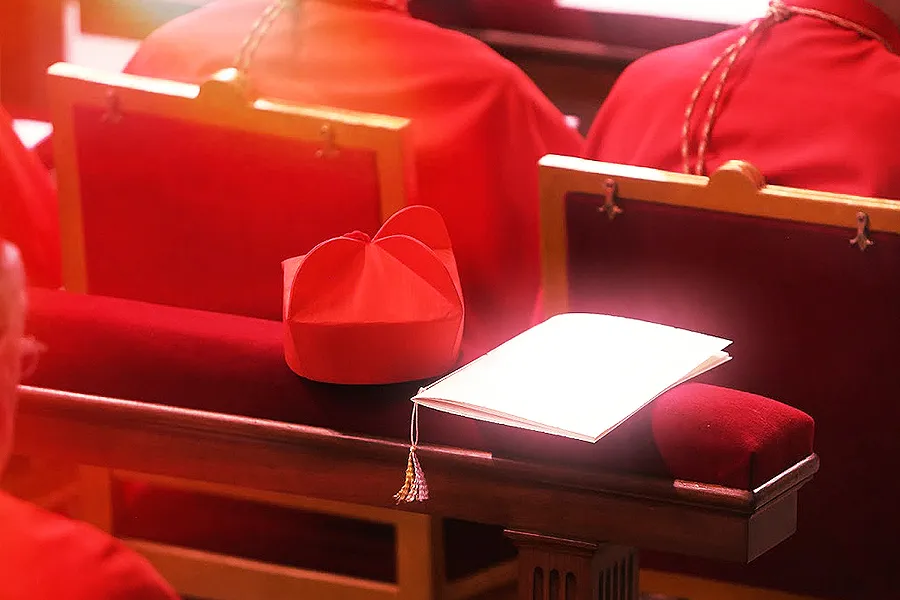
Rome, Italy, Nov 18, 2016 / 11:05 am (CNA/EWTN News).- Venezuelan Archbishop Baltazar Enrique Porras Cardozo is one of the Pope's picks from the peripheries who will get a red hat this weekend, which the new cardinal-elect says is a sign of the Vatican's concern for the people amid the country’s ongoing crisis.
“The Holy Father has shown a special interest for Venezuela,” Cardinal-elect Porras told journalists Nov. 15.
“I think that never as now, here in the Vatican, have there been senior leaders who have had a direct or close relationship with the reality of Venezuela,” he said, adding that “undoubtedly the situation of the country” is what influenced the Pope’s decision to name him cardinal.
This round of consistory red-hatters “is a bit special” in the context of the Jubilee of Mercy, he said, noting that the majority of his fellow cardinal-elects are “’outsiders,’ we come from dioceses or sees which traditionally have never had cardinals.”
On Oct. 9 Pope Francis announced that Archbishop Porras and 16 other priests and bishops would be named cardinals Nov. 19, the eve of the close of the Jubilee of Mercy. His nomination makes him one of just two cardinal-electors from Venezuela, meaning he is eligible to vote in the next conclave, alongside fellow Venezuelan Cardinal Jorge Urosa Savino.
Porras, Archbishop of Merida, spoke to journalists about his nomination in the context of Venezuela’s current social and economic situation Nov. 15, just days before he is set to be elevated as cardinal by Pope Francis.
He recalled receiving a letter from the Pope, which didn't simply offer congratulations, but provided “a program” for how to carry out ministry in his new role.
The letter, he said, cautioned against getting “carried away” by the excitement and compliments for his appointment. To be a cardinal, it read, “is not for a worldly joy, but to know that it’s a responsibility that has to do mainly with the poor.”
The new cardinal-elect spoke about the significance of having two electors from Venezuela for the first time, which he said is due to the fact that the Church is “the strongest and most unified” institution in Venezuela.
“The loss of institutions in Venezuela is very serious. Everything works discretionally in power,” he said, noting that the Church in Venezuela “has been a very critical voice in denouncing the problems that exist in the country.”
Venezuela is currently on the point of a humanitarian emergency in which fundamental necessities are inaccessible and many, including children, die due to the lack of basic foods and medicines.
In the aftermath of Chavez’s stormy reign and the takeover of his successor, Nicolas Maduro, in 2013, Venezuela has been marred by violence and social and economic upheaval. Poor economic policies, including strict price controls, coupled with high inflation rates, have resulted in a severe lack of basic necessities such as toilet paper, milk, flour, diapers and medicines.
Venezuela's socialist government is widely blamed for the crisis. Since 2003, price controls on some 160 products, including cooking oil, soap and flour, have meant that while they are affordable, they fly off store shelves only to be resold on the black market at much higher rates.
The Venezuelan government is known to be among the most corrupt in Latin America, and violent crime in the country has spiked since Maduro took office after former president Chavez died from cancer in 2013. The regime is known to have committed gross abuses, including violence, against those who don’t share their political ideologies.
When it comes to the stance of the Church in the crisis, Porras noted that since the bishops frequently speak out against the Maduro regime, they are labeled as siding with the opposition. However, he stressed that “The Church in Venezuela is not with the opposition, it’s with the people.”
“The hierarchy is with the people,” he said, noting that according to documentation from 1531 when Venezuela first received a bishop until now, the Church has always pointed out the problems that need to be solved.
“All governments, from Romulo Betancourt to now have seen us as the opposition,” he said, insisting that the Church’s behavior, particularly in the past 50 years, “has been in continuity” with her attitude in the past.
“We are on the side of the people and not on the side of any political bias,” he said, explaining that in their meetings with people from both government and opposition parties, “we usually say things quite clearly. And there are those who receive it and those who don’t.”
Porras also spoke about Pope Francis and his Latin American roots, which he says are at the heart of the Pope’s closeness to the people.
In both Europe and North America, Pope Francis’ style “is sometimes seen as something like a good pastor who doesn’t have much depth in thought, that he is simply a good pastor.”
This attitude “is a mistake,” Porras said, saying that if there’s one virtue the Church in Latin America has “it is closeness, simplicity and presence in the midst of problems.”
Different currents of thought since the Second Vatican Council such as liberation theology and the theology of the people, “which Pope Francis represents,” has a lot to do with this cultural sense of closeness, Porras said.
The 'theology of the people' was popular in Argentina in the 1950s as an alternative to radical liberation theology. While radical liberation theologians looked to Marxist interpretations of the Gospel, theology of the people was founded on common peoples' culture and devotion, including their spirituality and sense of justice.
A true “pastoral theology,” Porras said, can be understood by looking to the concept of an internist doctor in medicine, who is the one that has “a fairly general vision” of things, and as such is able to take the richness of other areas of theology “and always relate them to reality, to daily life.”
“This is one of the great contributions” Latin American theology has, Porras said, explaining that the true value of it “is clearly expressed in the thought and actions of Pope Francis.”
He spoke about the Pope’s frequent call for pastors to take on “smell of the sheep,” which is something “we have to be permanently,” particularly given the country’s current situation.
“Unfortunately, in Latin America and Venezuela also, those who arrive at the government remain isolated in a kind of capsule and have very little relation with the people, with real problems,” he said, noting that as bishops, staying close to their flock is a key way “to be able to see what reality” is like.
Many say Venezuela is a rich country, “but what Venezuela has had throughout the 21st century is a rich government, but not a rich population,” the archbishop said, explaining that currently “everything is the opposite.”
“Imagine at this moment that there is no food, where there are no medicines, where violence is unleashed and where impunity and corruption are evident because the mere presence of works and people of the Church is already a call to what should be.”
When asked about the recent election of Donald Trump as the next president of the United States, Porras said Trump’s pre-election rhetoric on immigration has “a short circuit,” especially given the fact that there are many Latinos who live in the U.S.
“Simplistic readings of this should not be made,” he said, noting that in the context of a changing world, when the needs of the people are at least in some way “recognized by political diligence,” the politicians “must also look for solutions to these problems.”
Previous Post

November 18, 2016
Close of Jubilee at heart of new papal interview
Next Post
November 18, 2016 Like money too much? It'll ruin your life, Pope Francis warns priests
Browse Our Archives
Select a Category Americas Asia - Pacific Europe Middle East - Africa Uncategorized US Vatican
Select a Month November 2017 October 2017 September 2017 August 2017 July 2017 June 2017 May 2017 April 2017 March 2017 February 2017 January 2017 December 2016 November 2016 October 2016 September 2016 August 2016 July 2016 June 2016 May 2016 April 2016 March 2016 February 2016 January 2016 December 2015 November 2015 October 2015 September 2015 August 2015 July 2015 June 2015 May 2015 April 2015 March 2015 February 2015 January 2015 December 2014 November 2014 October 2014 September 2014 August 2014 July 2014 June 2014 May 2014 April 2014 March 2014 February 2014 January 2014 December 2013 November 2013 October 2013 September 2013 August 2013 July 2013 June 2013 May 2013 April 2013 March 2013 February 2013 January 2013 December 2012 November 2012 October 2012 September 2012 August 2012 July 2012 June 2012 May 2012
TAKE THE
Religious Wisdom Quiz
What does Proverbs say about a soft answer?
Select your answer to see how you score.
It brings wealth It is useless It turns away wrath It starts a fight
Related posts from Catholic News

Sixty Vincentians martyred during Spanish Civil War to...

Filipinos gather in Rome to promote bishop's beatification...

UK bishop calls for prayers as MPs urge...
On All Souls' Day, Pope Francis prays for...
TRENDING AT PATHEOS Catholic

Creation, Preservation, and Teleology in Catholic Theology
As I write this, it is very early Monday morning. Like millions...

The Parable Of The Sower And The Word...
One of Christ’s most famous parables is that of the sower who...

Rejecting Doom: Christian Hope And Human Action
Christianity is a religion of hope. We are to have hope and...

Why I Choose the Eucharist Over the Sermon
Choose the Eucharist, Not the Sermon What are we supposed to get...

5 Design Elements Found in Spiritually Rooted Homes
Putting Spirituality Into Home Decor Our homes are more than our living...

Credo: A Story of God Told with the...
About 10 years ago, I began to imagine a personal "Credo" that...
view all Catholic blogs
Ad-Free & Subscriber Log-In Subscription Support
- About Us
- 2026 Calendar
- Videos
- Podcasts
- Library of World Religions
- Faith In Media Tracker
- Advertise With Us
- Write for Us
- Privacy Policy
- Terms of Service
- Do Not Sell My Data
- Contact Us
- Radiant Digital
- Manage Newsletter Subscriptions
- Unsubscribe From Notifications
- Sitemap
Copyright 2008-2026, Patheos. All rights reserved.
Subscription Support Ad-Free & Subscriber Log-In
Follow Patheos