
BuddhistCatholicContemplativeEvangelicalGeneral ChristianHinduJewishLatter-day SaintMuslimNew VisionsProgressive Christian
Beliefs
- Buddhist
- Catholic
- Contemplative
- Evangelical
- General Christian
- Hindu
- Jewish
- Latter-day Saint
- More Voices
- Muslim
- New Visions
- Pagan
- Progressive Christian
Topics
- Religion News
- Food and Religion
- Sports and Religion
- Religious Art
- Religious Music and Entertainment
- Religious Events
- History and Religion
- Style and Religion
- Politics and Religion
- Women in Religion
- Recreation Outdoors and Religion
- Business Finance and Religion
- Careers Workplace and Religion
- Education and Religion
- Family Parenting and Religion
- Health Fitness and Religion
- Home and Religion
- Relationships and Religion
- Technology and Religion
- Travel and Religion
Columnists
- Buddhist Columnists
- Business Finance and Religion Columnists
- Careers Workplace and Religion Columnists
- Catholic Columnists
- Contemplative Columnists
- Education and Religion Columnists
- Evangelists Columnists
- Family Parenting and Religion Columnists
- General Christian Columnists
- Health Fitness and Religion Columnists
- Hindu Columnists
- History and Religion Columnists
- Home and Religion Columnists
- Jewish Columnists
- More Voices Columnists
- Latter Day Columnists
- Muslim Columnists
- New Visions Columnists
- Nonreligious Columnists
- Pagan Columnists
- Politics and Religion Columnists
- Progressive Columnists
- Recreation Outdoors and Religion Columnists
- Relationships and Religion Columnists
- Religion News Columnists
- Religious Art Columnists
- Religious Events Columnists
- Religious Music and Entertainment Columnists
- Sports and Religion Columnists
- Style and Religion Columnists
- Technology and Religion Columnists
- Travel and Religion Columnists
- Women in Religion Columnists
Resource Library
- 2026 Calendar
- Library of World Religions
- The 100 Most Holy Places on Earth
- Patheos Answers
- Podcasts
- Videos
- Faith Leaders Database
- Anglican Episcopalian
- Bahai
- Baptist
- Buddhism
- Christianity
- Confucianism
- Eastern Orthodoxy
- Hinduism
- Holiness and Pentecostal
- ISKCON
- Islam
- Judaism
- Lutheran
- Methodist
- The Church of Jesus Christ of Latter-day Saints
- New Age
- Paganism
- Presbytarian and Reformed
- Protestantism
- Religion Behind the Scenes
- Roman Catholic
- Scientology
- Shia Islam
- Sikhism
- Sufism
- Sunni Islam
- Taoism
- Zen
- See all religions
Research Tools
 Ad-Free & Subscriber Log-In Subscription Support
Ad-Free & Subscriber Log-In Subscription Support
Follow Patheos 

- Trending:
- Forgiveness
- |
- Marriage
- |
- Consciousness
- |
- Death Penalty
- |
- Election
- |
- Halloween
 Catholic News
- Home
- Catholic
- Religion News
- How Europe’s bishops plan to guide the Church through murky waters
How Europe’s bishops plan to guide the Church through murky waters
Last updated on: October 14, 2016 at 2:02 am by CNA Daily News
How Europe’s bishops plan to guide the Church through murky waters 2016-10-14T02:02:00+00:00 CNA Daily News
Patheos Explore the world's faith through different perspectives on religion and spirituality! Patheos has the views of the prevalent religions and spiritualities of the world.
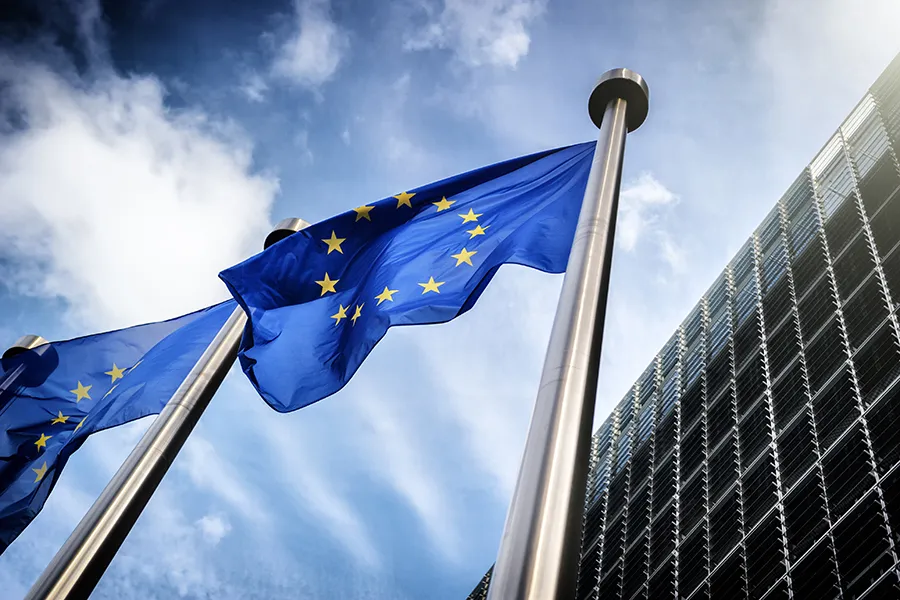
Rome, Italy, Oct 13, 2016 / 08:02 pm (CNA/EWTN News).- Cardinal Angelo Bagnasco has been elected the new President of the European Bishops Conference – a move which makes a clear statement in terms of how the continent's leaders plan on facing a broad spectrum of current crises.
An outspoken voice on many current issues, Bagnasco has come out as a hard-hitter on several biggies, including gender theory, abortion, civil unions and communion for the divorced and remarried.
He has a powerful presence in the European Church, and his election can be seen as planting the Church's foot firmly toward the right in a socio-economic context pulling hard to the left.
Also the President of the Italian Bishops Conference and Archbishop of Genoa, Bagnasco was elected by the Council of Catholic Episcopal Conferences in Europe (CCEE) during their Oct. 6-9 Plenary Assembly and will take over for Hungarian Cardinal Peter Erdo, who has been at the helm since 2006.
The CCEE is a gathering of the presidents of the individual European Bishops Conferences. In his role as president, Bagnasco will be responsible not so much for political procedures, but will head a wide range of activities the individual bishops conferences oversee, including catechesis.
Alongside him were the significant elections of two vice presidents: Cardinal Vincent Nichols, Archbishop of Westminster, and Archbishop Stanislaw Gadecki of Poznan, Poland.
In front of the backdrop of shady proposals made during the recent Synod of Bishops on the Family that deviate from Church doctrine as well as the increase of secularism in Europe, the selections altogether make a clear statement as to which direction the continent's leaders want the Church to go.
In one sense the bishops are striving toward unity, particularly in the appointment of Nichols, who serves as a bridge between Europe and the UK in the age of Brexit and within an increasingly fractured Europe rife with problems caused by migration and economic instability.
Gadecki, for his part, is a significant pick given his stance in the recent 2014-2015 Synod of Bishops on the Family.
With several pockets, primarily from among the German bishops, pushing for a change in the Church's position on both homosexuality and communion for the divorced and remarried, Gadecki represents the opposite, coming from among those Eastern European bishops who stood firmly in favor of Church doctrine during the two-year gathering.
The individual profiles of Bagnasco, Nichols and Gadecki, and the election of the trio to head the CCEE sends a clear signal as to the tone Europe's bishops want to set for the discussion.
Effective immediately upon their election, the new president and vice presidents will serve a five year term, either stepping down at the next voting session, or staying on should they be re-elected.
Considered by some to be “papabile” – meaning he's in the running to be elected Pope during the next conclave – Cardinal Bagnasco’s personal positions are similar to those of Francis himself, from pastoral action to political involvement.
In 2008 he urged Catholics to be more active in the public square, taking on a more courageous and coherent presence, as Francis has often done.
“Catholics must bring the contribution of spiritual and ethical values into the public square,” he said in an interview published in L'Osservatore Romano.
“The presence (in the public square) must be assumed by Catholics with greater persuasiveness and a greater capacity to respectfully explain our convictions, knowing that they come both from the Gospel and from a common understanding of the value of life,” he added.
Catholics “do not want to impose a religious vision of society, but to propose universal values,” he said, adding that “the most credible argument, of course is the witness of our own personal life.”
Bagnasco has consistently taken his own words to heart. A year later, when Italian healthcare officials in 2009 approved the sale of the abortion drug RU-486, he urged doctors opposed to the drug to exercise their right to conscientious objection, calling for “an end to corruption and injustice.”
More recently, in 2014 the cardinal responded to threats on the life of an anti-mafia priest, offering his support and calling for an end to corruption and injustice.
In May of this year, Bangasco came in swinging at the push for civil unions in Italy, throwing a firm punch at the bill approving civil unions which had just passed in the nation’s parliament.
In a powerful speech ahead of the annual Plenary Assembly of the Italian Bishops' conference, he stressed that the law “certifies an equivalence” between civil unions and marriage, even “though the law affirms that civil unions and marriage are different things.”
Such “differences are only tricks of terminology or juridical artifacts, which can be easily bypassed.”
The cardinal said the topic of civil unions is of trivial interest to most, and that people “want the parliament to be committed” to tackling real issues, such as Italy’s high unemployment rate and poverty.
“These are the real problems of the country, of the people. So, is not understandable why (the Italian Parliament) spent so much emphasis and energy on causes that do not tackle these issues, and merely respond to ideological schemes.”
When it comes to touchy subjects brought up more recently such as communion for the divorced and remarried, Bagnasco has been a strong opponent of the “Kasper Proposal,” referring to German Cardinal Walter Kasper’s push to allow access on a case by case basis, particularly in the lead-in to the 2014 Synod of Bishops on the Family.
However, long before Amoris Laetitia and the 2014-2015 Synod, Bagnasco was already speaking out on the issue, presenting theories as to how the Church could be more mother-like while still not allowing access to the Eucharist.
In June 2008, while presenting a book on the visit of Pope Benedict XVI to Genoa, Bagnasco came out in strong opposition to the reception of communion for the divorced and remarried, saying it was “impossible” for couples in the state to receive the Sacrament.
The fact that these couples can't receive “does not depend on an external disposition but rather comes from the interior of the sacrament of the Eucharist itself, the sacrament of the perennial unity between the love of Christ and humanity,” he said.
He pointed to the example of Catholics who are separated and who “suffer from this difficult situation, but nonetheless live in fidelity to the indissolubility of the sacrament and desire to meet and pray together, to exchange experiences and encourage one another.”
This situation “is one of the ways in which the maternity of the Church is expressed,” he added.
He has also spoken out about Christian persecution and assisted suicide, which are both things Pope Francis himself has harshly condemned.
In his speech at the Eucharistic Congress in Genoa in September, Bagnasco said these things are the result of “a world order without God.”
“Even today Christians experience martyrdom,” not only in the bloody, “classical” way, but also in new forms, “refined, but not less cruel; legalized, but not less unjust,” he said, referring to the legalized killing of Christians in countries such as Pakistan, whose blasphemy laws still allow the practice.
Cardinal Bagnasco pointed his finger at a Europe that considers Christianity as “divisive” and at the world which “in the name of values like equality, tolerance and rights” claims to “marginalize Christianity” and establish “a world order without God.”
In comments to CNA at the time, he criticized the practice of assisted suicide, citing the recent euthanasia of a minor in Belgium – a terminally ill 17 year-old boy – as “definitely one of the outcomes of a world order without God.”
Clearly on top of current issues and fearless in speaking out on them, Cardinal Bagnasco has proven himself to be a solid figure that won’t be easily moved.
Though he tends toward the Church’s more conservative side, he takes a balanced approach and is willing to listen, yet won’t back down from a fight if needed, even if it should come from within the Church itself.
The election of Bagnasco alone is proof that many of Europe’s individual bishops’ conferences are well aware of the issues at stake, and have made it clear how they want to tackle them. And if Bagnasco’s tenure so far is any indication, it won’t take long for him or his two sidekicks to get to work.
Previous Post

October 13, 2016
When American Catholic politics split the Church
Next Post
October 14, 2016 Nun who witnessed multiple Eucharistic miracles on path to sainthood
Browse Our Archives
Select a Category Americas Asia - Pacific Europe Middle East - Africa Uncategorized US Vatican
Select a Month November 2017 October 2017 September 2017 August 2017 July 2017 June 2017 May 2017 April 2017 March 2017 February 2017 January 2017 December 2016 November 2016 October 2016 September 2016 August 2016 July 2016 June 2016 May 2016 April 2016 March 2016 February 2016 January 2016 December 2015 November 2015 October 2015 September 2015 August 2015 July 2015 June 2015 May 2015 April 2015 March 2015 February 2015 January 2015 December 2014 November 2014 October 2014 September 2014 August 2014 July 2014 June 2014 May 2014 April 2014 March 2014 February 2014 January 2014 December 2013 November 2013 October 2013 September 2013 August 2013 July 2013 June 2013 May 2013 April 2013 March 2013 February 2013 January 2013 December 2012 November 2012 October 2012 September 2012 August 2012 July 2012 June 2012 May 2012
TAKE THE
Religious Wisdom Quiz
Who was the last apostle to die?
Select your answer to see how you score.
Peter Paul James John
Related posts from Catholic News

Sixty Vincentians martyred during Spanish Civil War to...

Filipinos gather in Rome to promote bishop's beatification...

UK bishop calls for prayers as MPs urge...

On All Souls' Day, Pope Francis prays for...
TRENDING AT PATHEOS Catholic

Creation, Preservation, and Teleology in Catholic Theology
As I write this, it is very early Monday morning. Like millions...

The Parable Of The Sower And The Word...
One of Christ’s most famous parables is that of the sower who...

Rejecting Doom: Christian Hope And Human Action
Christianity is a religion of hope. We are to have hope and...

Why I Choose the Eucharist Over the Sermon
Choose the Eucharist, Not the Sermon What are we supposed to get...

5 Design Elements Found in Spiritually Rooted Homes
Putting Spirituality Into Home Decor Our homes are more than our living...

Credo: A Story of God Told with the...
About 10 years ago, I began to imagine a personal "Credo" that...
view all Catholic blogs
Ad-Free & Subscriber Log-In Subscription Support
- About Us
- 2026 Calendar
- Videos
- Podcasts
- Library of World Religions
- Faith In Media Tracker
- Advertise With Us
- Write for Us
- Privacy Policy
- Terms of Service
- Do Not Sell My Data
- Contact Us
- Radiant Digital
- Manage Newsletter Subscriptions
- Unsubscribe From Notifications
- Sitemap
Copyright 2008-2026, Patheos. All rights reserved.
Subscription Support Ad-Free & Subscriber Log-In
Follow Patheos