
BuddhistCatholicContemplativeEvangelicalGeneral ChristianHinduJewishLatter-day SaintMuslimNew VisionsProgressive Christian
Beliefs
- Buddhist
- Catholic
- Contemplative
- Evangelical
- General Christian
- Hindu
- Jewish
- Latter-day Saint
- More Voices
- Muslim
- New Visions
- Pagan
- Progressive Christian
Topics
- Religion News
- Food and Religion
- Sports and Religion
- Religious Art
- Religious Music and Entertainment
- Religious Events
- History and Religion
- Style and Religion
- Politics and Religion
- Women in Religion
- Recreation Outdoors and Religion
- Business Finance and Religion
- Careers Workplace and Religion
- Education and Religion
- Family Parenting and Religion
- Health Fitness and Religion
- Home and Religion
- Relationships and Religion
- Technology and Religion
- Travel and Religion
Columnists
- Buddhist Columnists
- Business Finance and Religion Columnists
- Careers Workplace and Religion Columnists
- Catholic Columnists
- Contemplative Columnists
- Education and Religion Columnists
- Evangelists Columnists
- Family Parenting and Religion Columnists
- General Christian Columnists
- Health Fitness and Religion Columnists
- Hindu Columnists
- History and Religion Columnists
- Home and Religion Columnists
- Jewish Columnists
- More Voices Columnists
- Latter Day Columnists
- Muslim Columnists
- New Visions Columnists
- Nonreligious Columnists
- Pagan Columnists
- Politics and Religion Columnists
- Progressive Columnists
- Recreation Outdoors and Religion Columnists
- Relationships and Religion Columnists
- Religion News Columnists
- Religious Art Columnists
- Religious Events Columnists
- Religious Music and Entertainment Columnists
- Sports and Religion Columnists
- Style and Religion Columnists
- Technology and Religion Columnists
- Travel and Religion Columnists
- Women in Religion Columnists
Resource Library
- 2026 Calendar
- Library of World Religions
- The 100 Most Holy Places on Earth
- Patheos Answers
- Podcasts
- Videos
- Faith Leaders Database
- Anglican Episcopalian
- Bahai
- Baptist
- Buddhism
- Christianity
- Confucianism
- Eastern Orthodoxy
- Hinduism
- Holiness and Pentecostal
- ISKCON
- Islam
- Judaism
- Lutheran
- Methodist
- The Church of Jesus Christ of Latter-day Saints
- New Age
- Paganism
- Presbytarian and Reformed
- Protestantism
- Religion Behind the Scenes
- Roman Catholic
- Scientology
- Shia Islam
- Sikhism
- Sufism
- Sunni Islam
- Taoism
- Zen
- See all religions
Research Tools
 Ad-Free & Subscriber Log-In Subscription Support
Ad-Free & Subscriber Log-In Subscription Support
Follow Patheos 

- Trending:
- Forgiveness
- |
- Marriage
- |
- Consciousness
- |
- Death Penalty
- |
- Election
- |
- Halloween
 Catholic News
- Home
- Catholic
- Religion News
- Georgian Catholics started from zero. What’s next after the papal visit.
Georgian Catholics started from zero. What’s next after the papal visit.
Last updated on: October 3, 2016 at 10:05 pm by CNA Daily News
Georgian Catholics started from zero. What’s next after the papal visit. 2016-10-03T22:05:00+00:00 CNA Daily News
Patheos Explore the world's faith through different perspectives on religion and spirituality! Patheos has the views of the prevalent religions and spiritualities of the world.
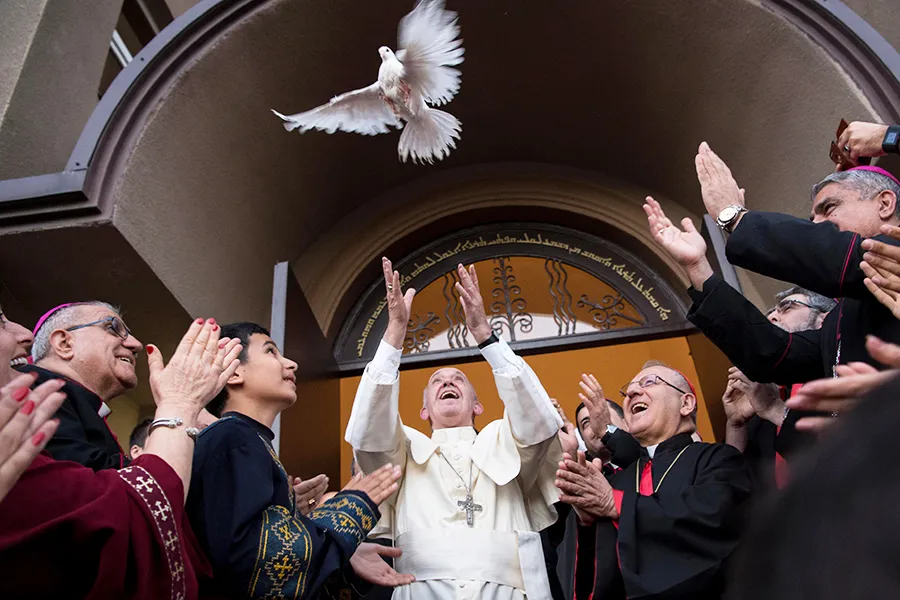
Tbilisi, Georgia, Oct 3, 2016 / 04:05 pm (CNA/EWTN News).- The tiny community of the Catholic Church in Georgia was barely surviving just decades ago.
Now it has an opportunity to regenerate itself following Pope Francis' model of the “Church of consolation,” the local Catholic bishop has said.
“During his Mass, Pope Francis did not speak of a strong and powerful Church, but rather of a Church able to give consolation. And I thought: this is the Church I like, a Church that has openings and does not get used to things,” Bishop Giuseppe Pasotto explained.
Bishop Pasotto is an Italian religious of the Stigmatine congregation. He moved to Georgia in 1993, was appointed apostolic administrator of the Caucasus region in 1996.
“The path of our Christian community was beautiful and exciting. We started from zero,” he told CNA.
“Back in 1993, there were Christian communities, but we had to teach them Mass again, as they were only used to praying the Rosary. So, we drafted the Missal and prepared new catechesis. We had a wonderful feedback.”
He then stressed that “perhaps Catholics in Georgia are less enthusiastic, but this is normal. It is just like a plane: it takes off quickly, but then it has to keep the route. I am not worried.”
Bishop Pasotto keeps this optimistic view also for what concern ecumenical relations, despite the tensions experienced between Catholics and Orthodox Christians during the last years.
The Pope’s visit to Georgia included meetings with Georgian Orthodox Patriarch Illa II.
Bishop Pasotto recounted: “After the Pope left, I asked Patriarch Ilia if he was really happy about the visit. Patriarch Ilia replied: ‘I am very happy the Pope came here. I met a good man.’ The Pope told me the same thing about Ilia Saturday, while we were together in the car: ‘Do you know that this Patriarch is really a good man?’ Both of them used the same words, by chance, with no knowledge of what the other said.”
Certainly, the Church of Georgia faces some hard situations, and further theological discussion is needed.
For example, the phenomenon of re-baptism is always increasing. Orthodox Christians in the country baptize for a second time Catholics who marry Orthodox Christians, as they do not recognize the Catholic baptisms.
“I spoke once with an Orthodox bishop and I noted that it was a bad thing that my baptism was not recognized,” Bishop Pasotto reflected. “He said that this was a Georgian Orthodox Synod decision. I replied that this meant I was not Christian then, nor was the Pope. In response to his protest that I was Christian because I believed in Christ, I explained to him that those who believe in Jesus Christ are catechumens, but as long as they are not baptized they are not Christian. And he agreed some further reflection was needed.”
The dialogue is not easy, though things were not so bad in the past. Patriarch Ilia was the first Georgian Orthodox Patriarch to visit the Pope in Rome, back in 1980. Then the situation worsened.
After the fall of Communism, some priests coming from the Russian Orthodox Church spread a notion of ecumenism that did not allow any ecumenical relations.
“This new ‘philosophy’ of closed ecumenism was opposite of the Georgian habit, which is generally tolerant toward every denomination. But this new thought spread, and there were pressures from some of the monasteries that put at risk the unity of the Georgian Orthodox Church, with the threat of schism,” the bishop said.
“So Patriarch Ilia had to make a step back, in order to preserve the unity of the Church."
Despite the difficulties, there is now a community that feels strengthened by the Pope’s visit.
“After the Pope’s visit, the cathedral was filled with people and everyone had a special story to tell about the Pope and how they met him or they saw him,” recounted Bishop Pasotto.
“Our challenge now is to value this enthusiasm, so that it does not go wasted.”
Previous Post

October 3, 2016
Archbishop to public officials: Rely on the Holy Spirit
Next Post
October 3, 2016 Vermont law blasted for pushing doctors to discuss 'benefits' of suicide
Browse Our Archives
Select a Category Americas Asia - Pacific Europe Middle East - Africa Uncategorized US Vatican
Select a Month November 2017 October 2017 September 2017 August 2017 July 2017 June 2017 May 2017 April 2017 March 2017 February 2017 January 2017 December 2016 November 2016 October 2016 September 2016 August 2016 July 2016 June 2016 May 2016 April 2016 March 2016 February 2016 January 2016 December 2015 November 2015 October 2015 September 2015 August 2015 July 2015 June 2015 May 2015 April 2015 March 2015 February 2015 January 2015 December 2014 November 2014 October 2014 September 2014 August 2014 July 2014 June 2014 May 2014 April 2014 March 2014 February 2014 January 2014 December 2013 November 2013 October 2013 September 2013 August 2013 July 2013 June 2013 May 2013 April 2013 March 2013 February 2013 January 2013 December 2012 November 2012 October 2012 September 2012 August 2012 July 2012 June 2012 May 2012
TAKE THE
Religious Wisdom Quiz
True or False: The parable of the Prodigal Son appears only in Luke's Gospel.
Select your answer to see how you score.
TRUE FALSE
Related posts from Catholic News

Sixty Vincentians martyred during Spanish Civil War to...

Filipinos gather in Rome to promote bishop's beatification...

UK bishop calls for prayers as MPs urge...

On All Souls' Day, Pope Francis prays for...
TRENDING AT PATHEOS Catholic

Creation, Preservation, and Teleology in Catholic Theology
As I write this, it is very early Monday morning. Like millions...

The Parable Of The Sower And The Word...
One of Christ’s most famous parables is that of the sower who...

Rejecting Doom: Christian Hope And Human Action
Christianity is a religion of hope. We are to have hope and...

Why I Choose the Eucharist Over the Sermon
Choose the Eucharist, Not the Sermon What are we supposed to get...

5 Design Elements Found in Spiritually Rooted Homes
Putting Spirituality Into Home Decor Our homes are more than our living...

Credo: A Story of God Told with the...
About 10 years ago, I began to imagine a personal "Credo" that...
view all Catholic blogs
Ad-Free & Subscriber Log-In Subscription Support
- About Us
- 2026 Calendar
- Videos
- Podcasts
- Library of World Religions
- Faith In Media Tracker
- Advertise With Us
- Write for Us
- Privacy Policy
- Terms of Service
- Do Not Sell My Data
- Contact Us
- Radiant Digital
- Manage Newsletter Subscriptions
- Unsubscribe From Notifications
- Sitemap
Copyright 2008-2026, Patheos. All rights reserved.
Subscription Support Ad-Free & Subscriber Log-In
Follow Patheos